Doe Castle: A Medieval Stronghold in County Donegal
Site at a Glance
- Popularity
- High
- Country
- Ireland
- Primary era
- Medieval
- Eras represented
- Medieval
- Civilizations
- Irish
- Site type
- Military
- Remains
- Castle
On this page7 sections
History
Quinn and MacSweeney rule
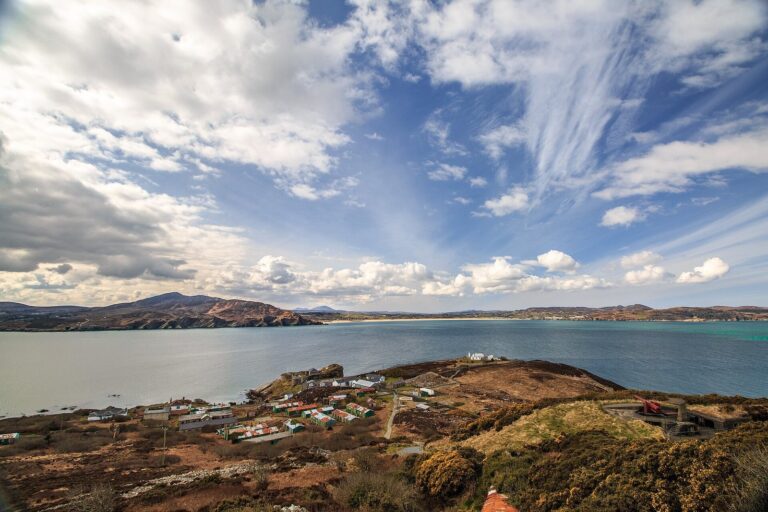
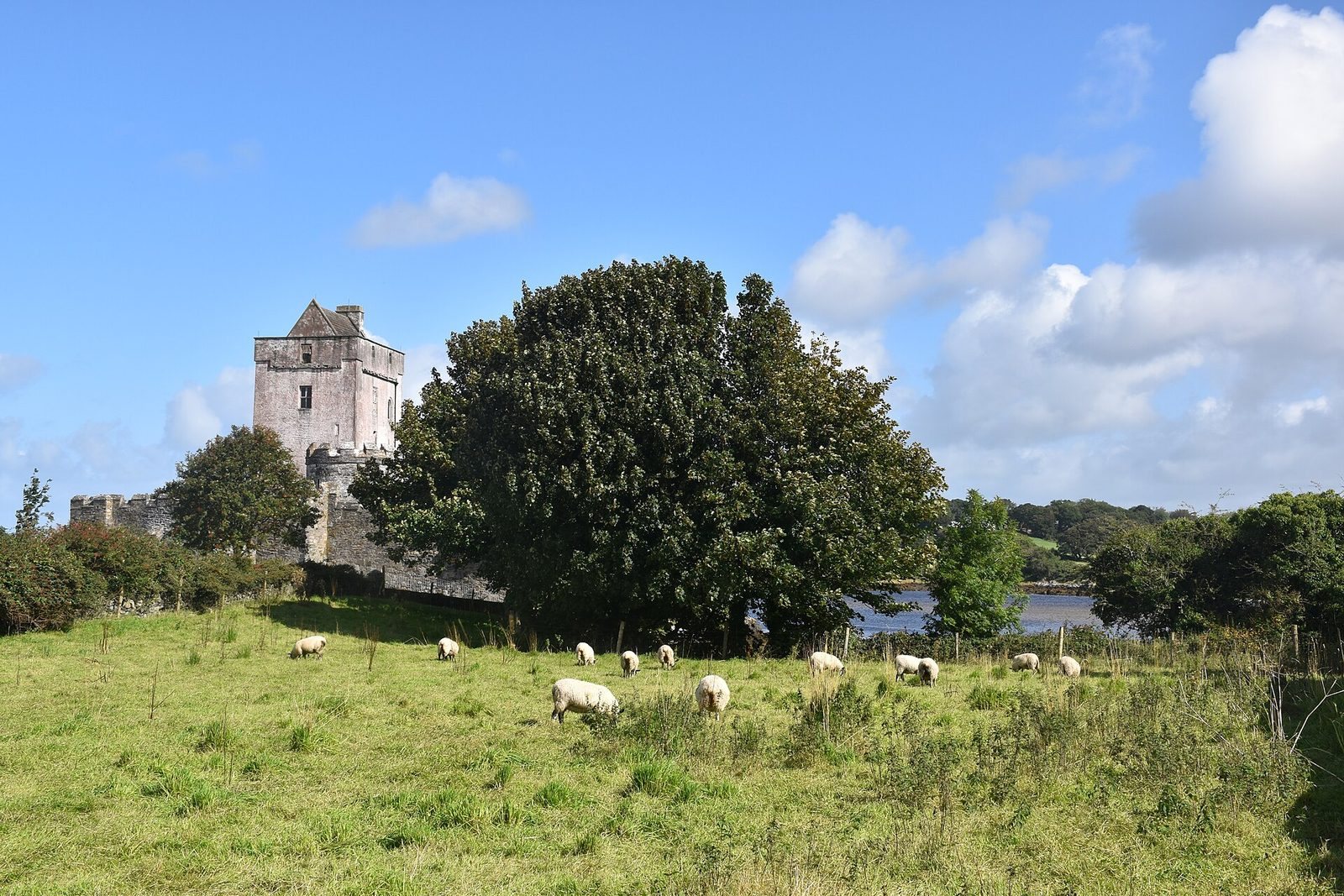
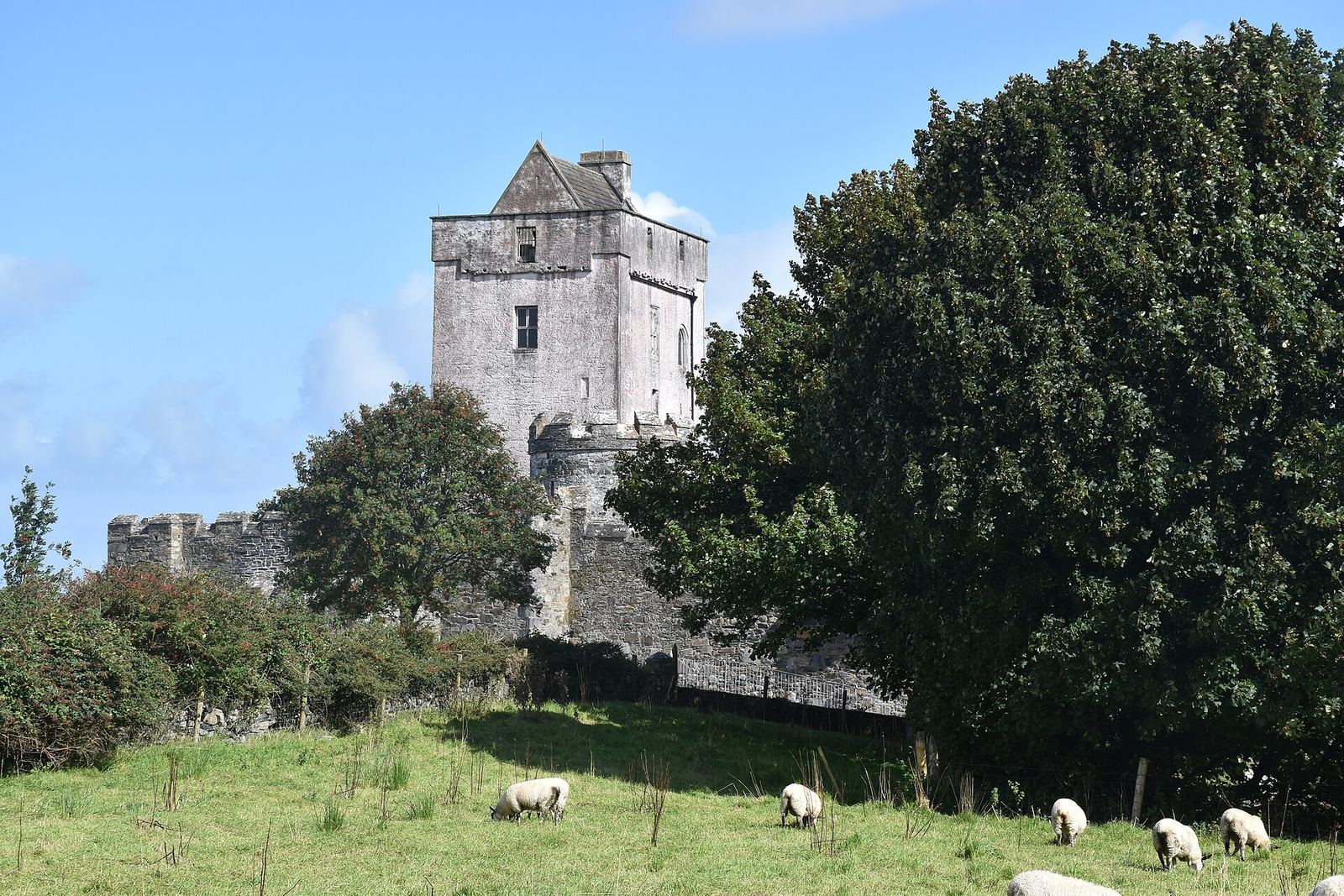
Doe Castle is a medieval fortified residence on a small peninsula in Sheephaven Bay, near Creeslough in County Donegal, Ireland. The Quinn family probably built it around 1420. By the 1440s, the castle had passed to the MacSweeneys, a Gaelic Irish clan associated with gallowglass, professional, heavily armed warriors who served Irish lords. It became the stronghold of the branch known as Mac Sweeney Doe, or Mac Suibhne na d’Tuath, which held it for almost two centuries. The castle was regarded as one of the better fortresses in north-west Ireland.
Seizure and seventeenth-century conflict
After the MacSweeneys rebelled, King James VI of Scotland seized the castle. He also ruled England and Ireland as James I. During the Plantation of Ulster, an early seventeenth-century settlement and colonization project involving English and Scottish settlers, James granted Doe Castle and other lands to Sir John Davies on 7 March 1613. Davies was Ireland’s senior government law officer. He sold the castle on 31 December 1614 to Captain John Sandford, an English settler from Shropshire.
In 1642, Owen Roe O’Neill returned from exile to Doe Castle to lead the Ulster Army of the Irish Confederate forces during the Wars of the Three Kingdoms, interconnected conflicts in England, Scotland, and Ireland. He intended to pursue Irish freedom from the castle. Doe Castle changed hands repeatedly in the seventeenth-century struggle for control of Ireland. Sir Charles Coote, governor of Londonderry, took possession in 1650.
Later ownership and preservation
Sir George Vaughan Hart later bought the castle, and his family lived there until 1843. It passed to the Land Commission in 1932. In 1934, Doe Castle was declared a National Monument and acquired by the Office of Public Works.
Remains
Peninsula and enclosure
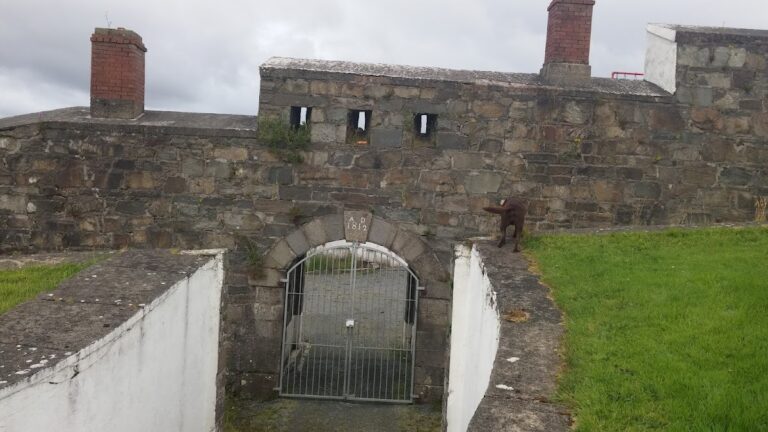
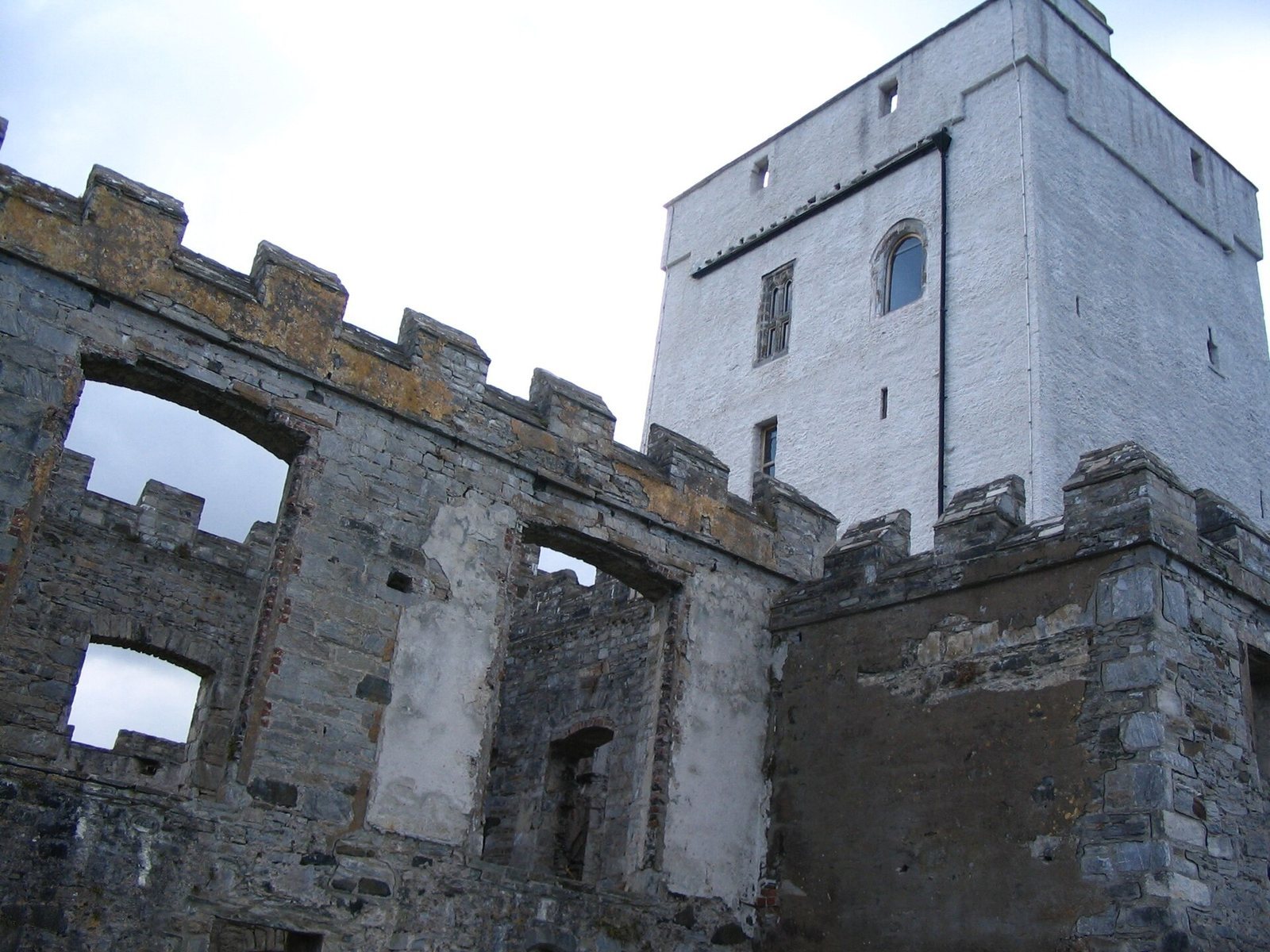
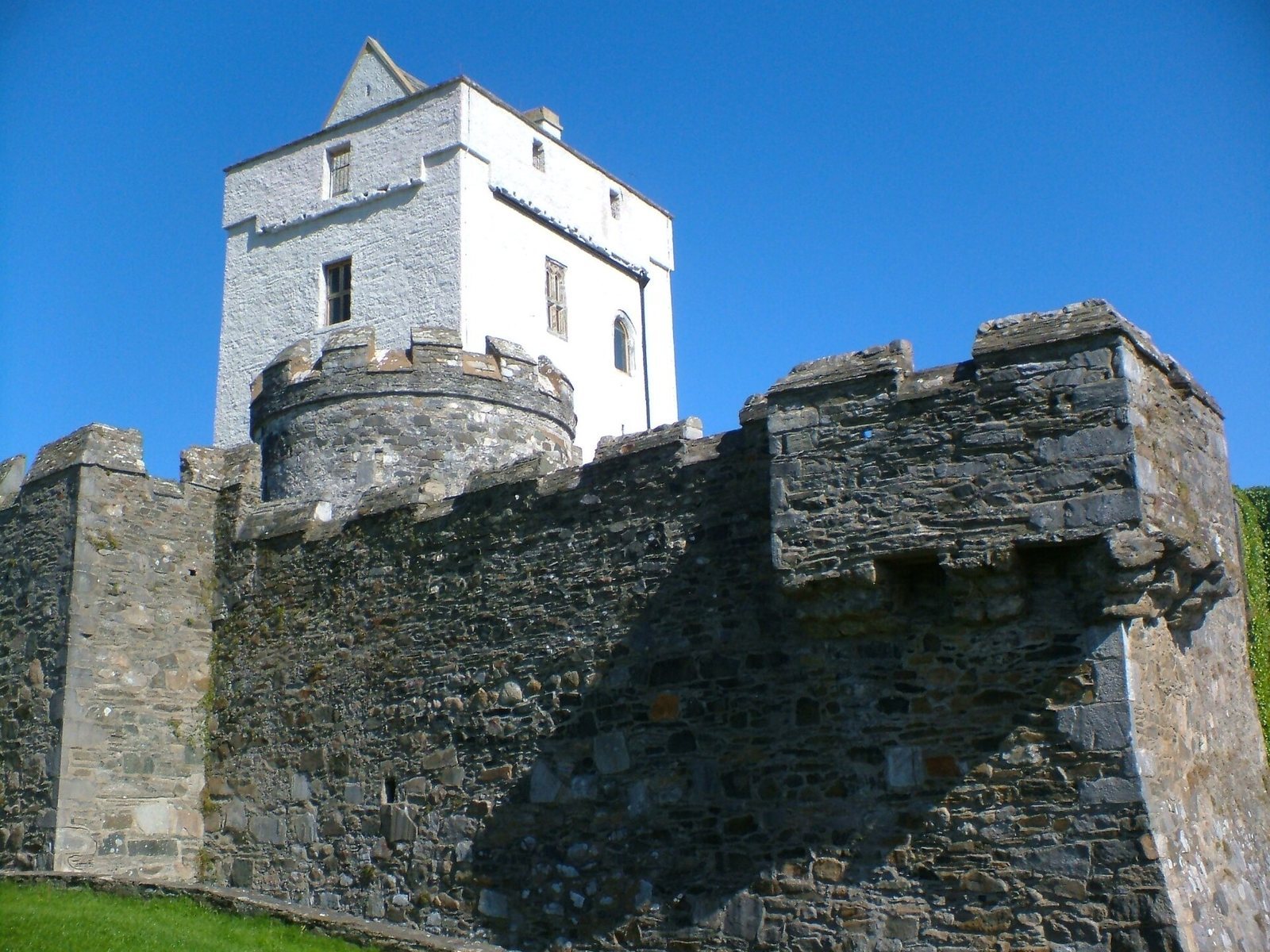
The castle occupies a small peninsula in Sheephaven Bay, with water on three sides. On the landward side, a moat cut into the rock forms part of its defenses. High outer walls enclose an inner courtyard. The castle is built of plastered masonry.
Tower house
Within the enclosure stands a four-storey tower house, a fortified residence built around a multistorey tower, also described as a keep. Its design has parallels with Scottish tower houses. The castle is well preserved, and the tower-house section underwent a major restoration in the 1990s.