Bargate: Southampton’s Medieval Town Gateway
Site at a Glance
- Popularity
- High
- Country
- United Kingdom
- Primary era
- Medieval
- Eras represented
- Medieval, Early Modern, Modern
- Civilizations
- British, English
- Site type
- Military
- Remains
- Gate
On this page15 sections
History
Bargate is a medieval gatehouse in Southampton, United Kingdom, built around 1180 as the city’s main gateway and as part of its town walls. It served not only as an entrance but also, over later centuries, as a prison and a centre of civic life.
Medieval gateway and prison
Bargate’s upper room hosted a banquet in 1434 and initially served as Southampton’s guildhall, a building for civic affairs. The date when the gate first became a prison is uncertain, but the earliest records of its use in that role date to 1439. In 1415, two men convicted of plotting against Henry V, king from 1413 to 1422, were beheaded outside the gate. In 1458, the prison held Southampton’s Genoese population in response to a Genoese attack on an English trading expedition.
A 1468 survey of the town’s guns listed two weapons loaded through the rear of the barrel and a brass gun loaded through its open end. The upper room continued as a guildhall until the 1770s, when Southampton began expanding north of Bargate.
Civic and judicial functions
Sometime in the sixteenth century, Southampton’s court leet began meeting at Bargate. This local court handled administrative as well as judicial matters. Meetings alternated between the gate and Cutthorn mound on Southampton Common until 1670, and the court continued to meet at Bargate until 1856. A bell at the building served as the city’s curfew and alarm bell. In 1644, the panels depicting Bevis of Hampton and Ascapart were repainted.
New archways were made in 1764 and 1774. A pedestrian passage was cut through the eastern side of the arch in 1765, followed later by another on the west. These changes temporarily ended the building’s use as a prison. After Southampton established a police force in February 1836, the upper room was again used as a prison. A criminal court was established within Bargate in 1852.
Modern use and protection
Growing road traffic and the introduction of trams led to a proposal to demolish Bargate in 1899, but the council rejected it. Demolition was considered again in 1914 and 1923. The court’s functions moved to the new Civic Centre law courts in 1933. During the Second World War, Bargate served again as the city’s police headquarters.
A local-history museum opened in the building in 1951 as part of the Festival of Britain celebrations, with the Bevis and Ascapart panels among its collection; the museum later closed. From 2006 to 2012, the building housed the Bargate Monument Gallery. Bargate is owned by Southampton City Council. It was listed in 1953 as a Grade I building, a designation for buildings of exceptional national architectural or historic interest in England, and is also a scheduled monument, a legally protected archaeological or historic site.
Remains
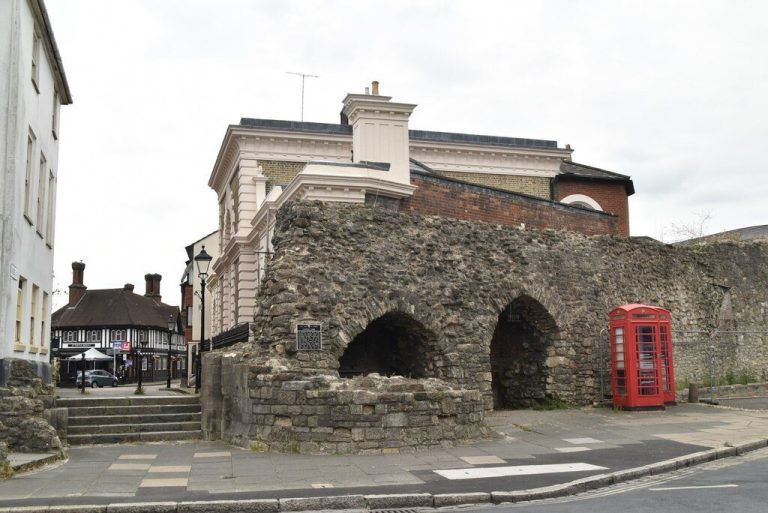
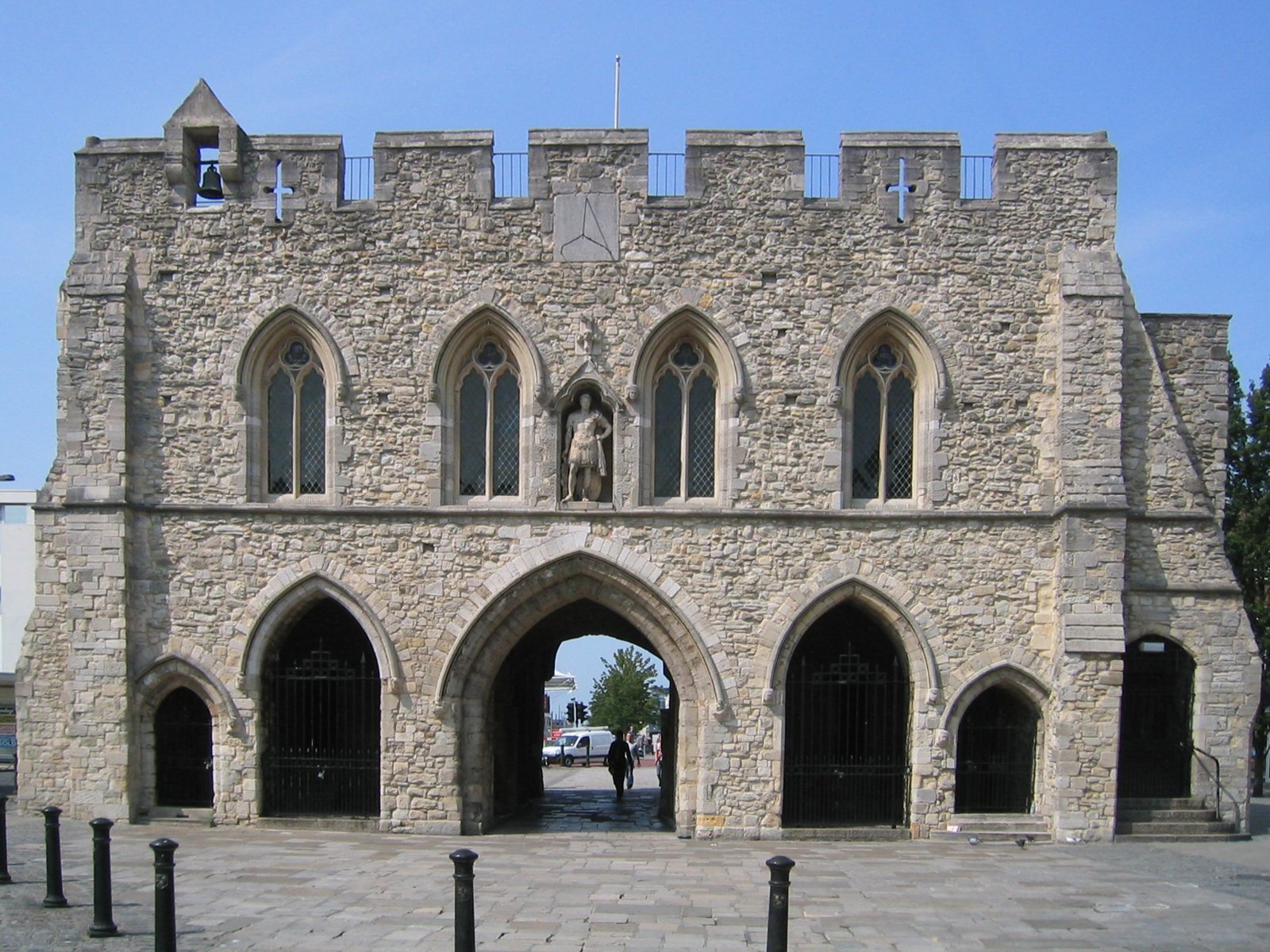
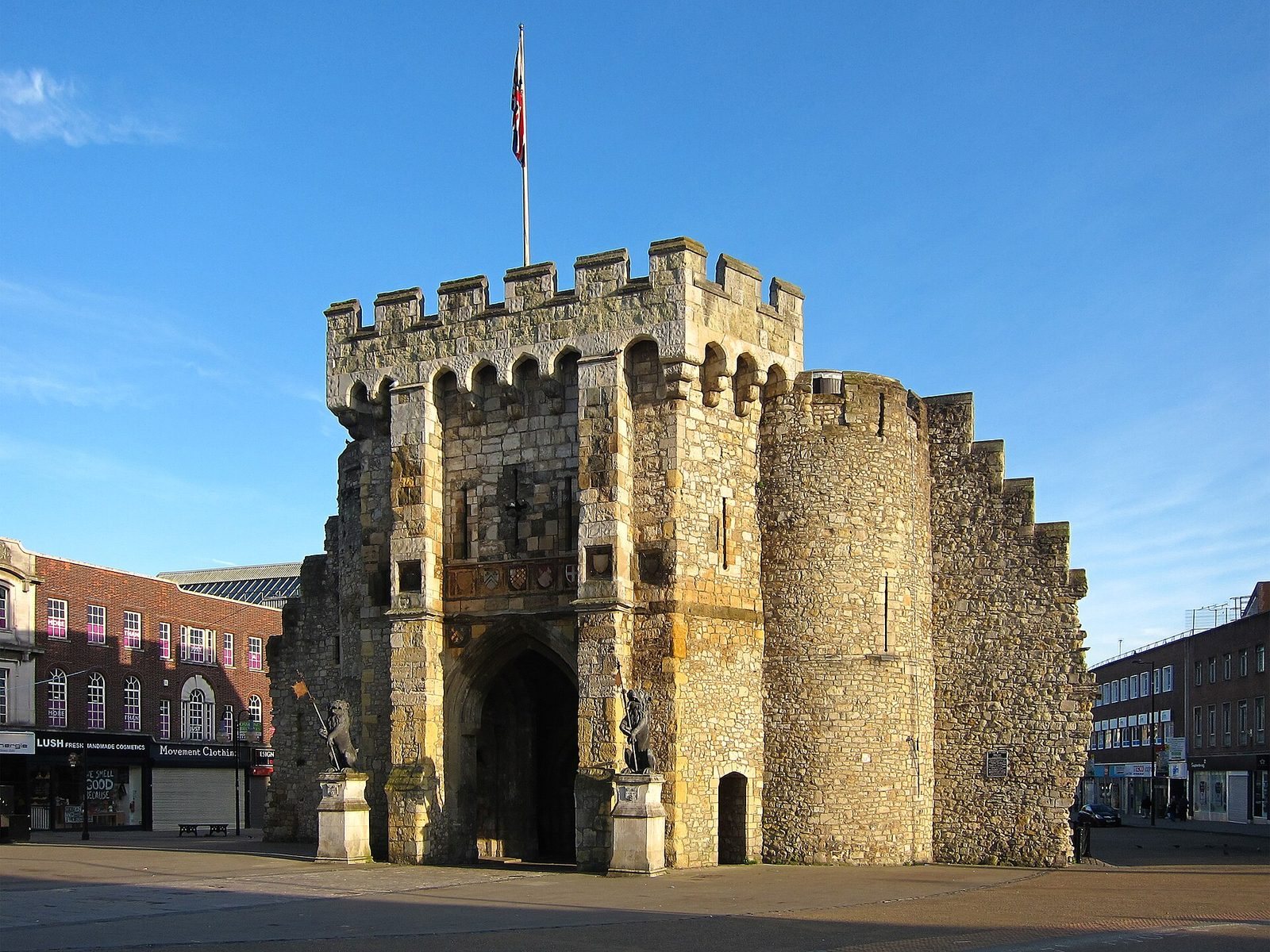
The surviving gatehouse is built of stone and flint. Its fabric combines the medieval gateway with later towers, extensions, decorative features, and civic additions. The building was separated from the adjoining town walls in stages, on the east in 1932 and on the west in 1937.
Medieval fabric
Gateway and north towers
The stone-and-flint gatehouse formed part of Southampton’s town walls. Around 1290, large round towers were added on its north side, with narrow openings for shooting arrows. The north front, with a battlemented top formed by alternating raised sections and gaps, dates to around 1400.
South extension and upper spaces
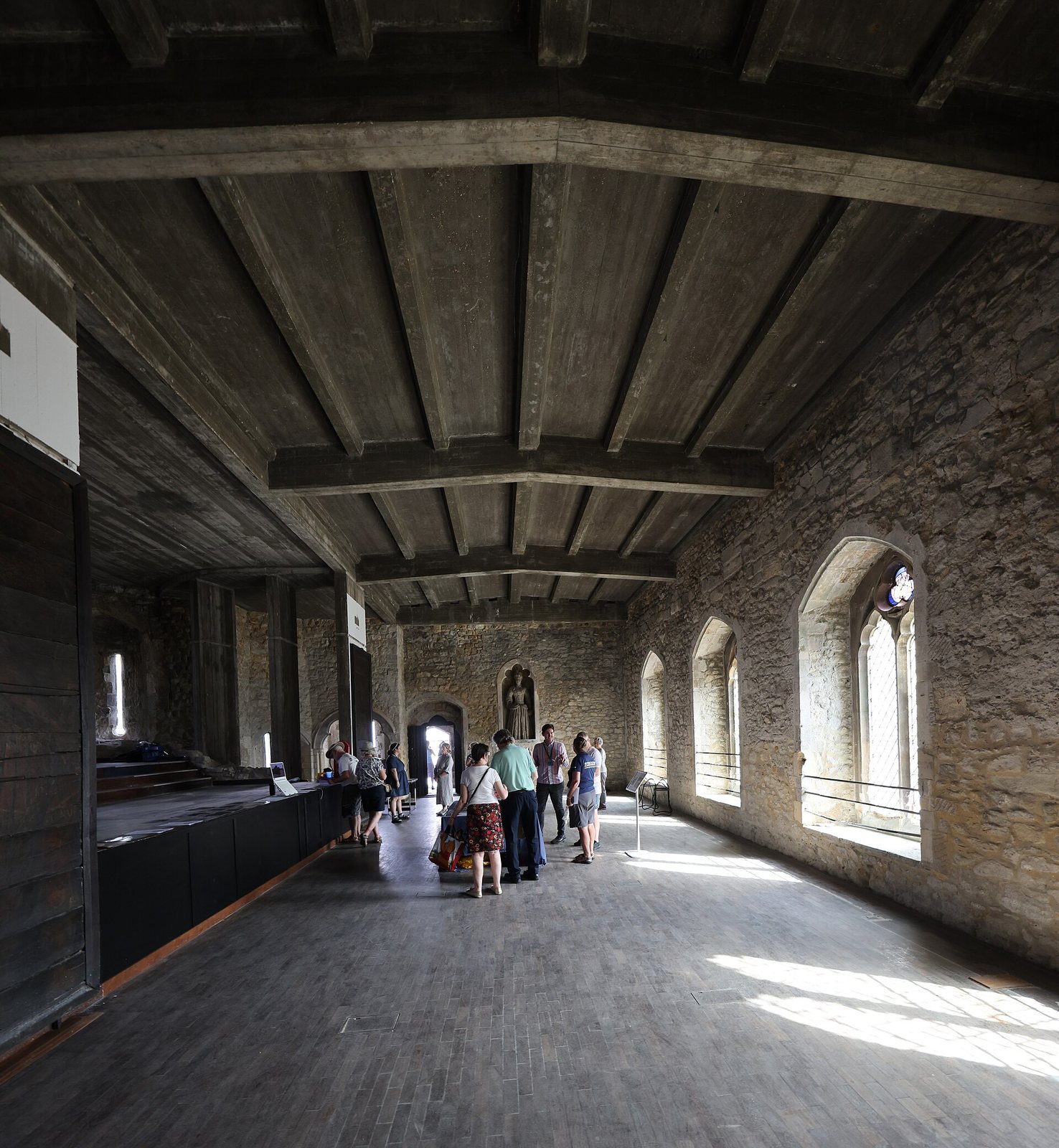
A two-storey extension was added on the south side toward the end of the thirteenth century. Four windows lit its upper room, where stone fireplaces were installed during that century. A distinct room above the gateway was probably added shortly after 1400.
Panels, shields, and sculpture
Painted panels and heraldic features
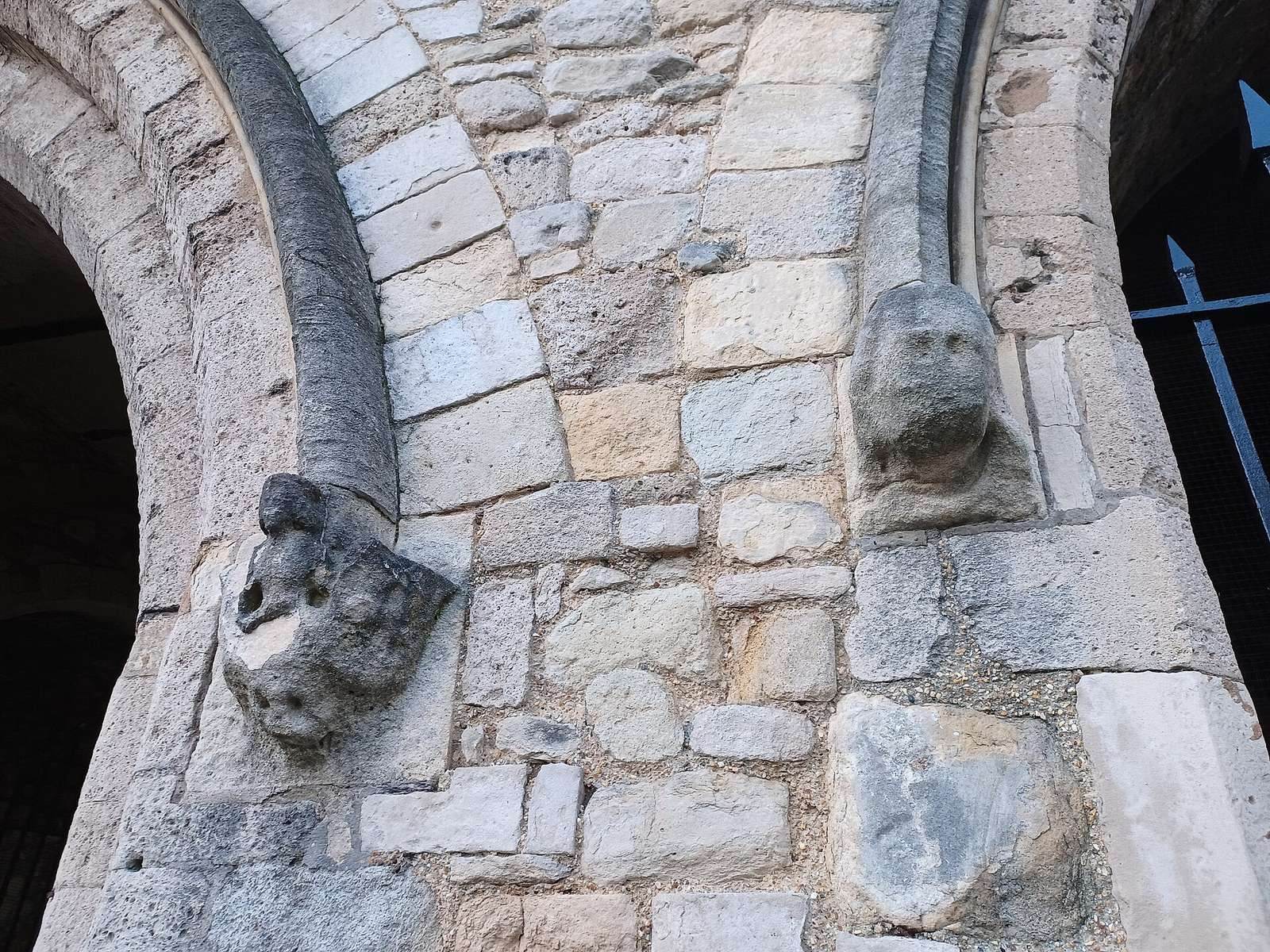
Wooden panels depict Bevis of Hampton, a legendary hero of medieval English romance, and Ascapart, a giant in those stories. Five panels bearing painted shields and a sundial were added in the eighteenth century. On the north side, eleven heraldic shields include the crosses of Saints George and Andrew, traditionally associated with England and Scotland, and the arms of prominent local families from the late seventeenth and early eighteenth centuries. The original shields had largely decayed by the early nineteenth century and were replaced with pale Caen limestone. Damp then damaged these replacements; mortar repairs held with iron failed, as did further repairs in the 1990s.
Lions and the statue of George III
Wooden lion sculptures probably stood in front of Bargate by the sixteenth century. Southampton’s 1594 mayoral accounts record payment for new lions, suggesting earlier figures had already been there. The wooden sculptures were replaced by lead ones in the mid-eighteenth century. Corrosion damaged the lead figures, and one lion’s tail fell off in September 2018. The sculptures were removed for repair in November 2020, fitted with stainless-steel internal supports, and returned to public display in March 2021 in colours believed to be original.
A statue of George III in Roman dress stands between the four windows on the south side. Made of Coade stone, a durable artificial ceramic resembling stone, it replaced a wooden statue of Queen Anne in 1809. The statue was given to the town by John Petty, who held the hereditary rank of 2nd Marquess of Lansdowne.
Bell
A bell was installed at the building by 1579. The present bell, on the southwest corner, bears the date 1605.
Civic additions and conservation
Criminal court
The guildhall built within Bargate in 1852 was designed for use as a criminal court. It added a judicial function to the gatehouse’s long civic use.
Stonework and interior changes
Portland cement applied during work in the 1930s trapped water and damaged the stone. In 2016 it was removed and replaced with lime-based mortar, and the parapet, the low protective wall at the top of the building, was waterproofed to limit further water penetration. Interior partitions installed for the gallery use between 2006 and 2012 were removed in 2022.