Political Martyrs’ Monument: A Memorial to Reform Campaigners in Edinburgh
Site at a Glance
- Popularity
- High
- Country
- United Kingdom
- Primary era
- Modern
- Eras represented
- Modern
- Civilizations
- British
- Site type
- Civic
- Remains
- Monument
On this page7 sections
History
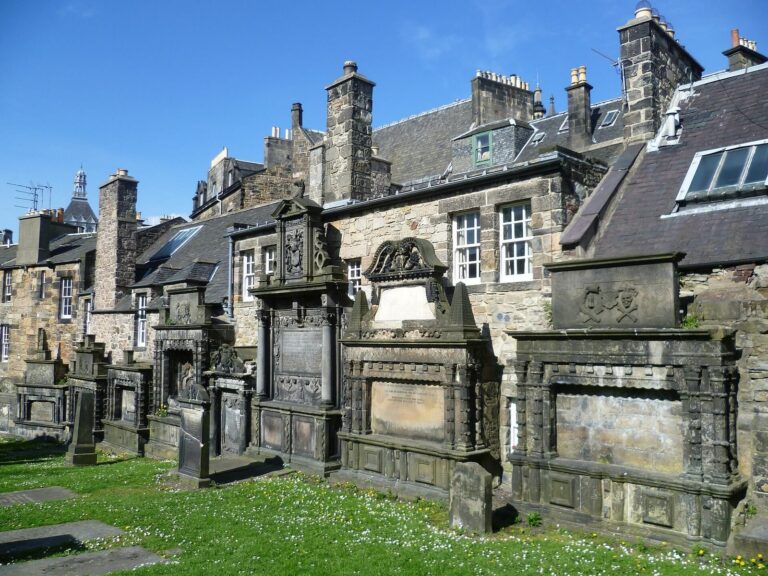
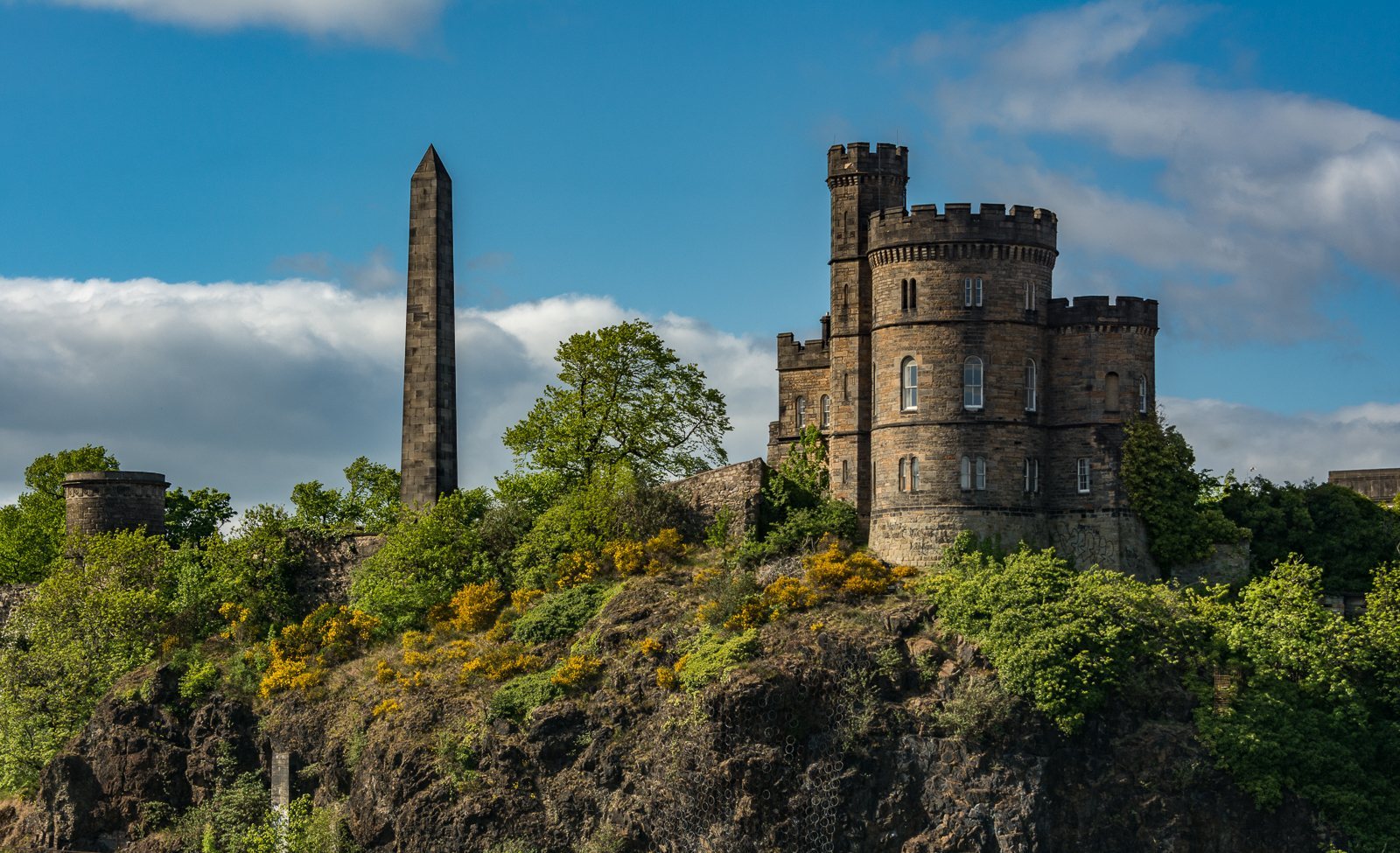
The Political Martyrs’ Monument is an 1844 memorial in Old Calton Burial Ground on Calton Hill in Edinburgh, Scotland, United Kingdom. Designed by Scottish architect Thomas Hamilton, it commemorates five political reform campaigners whose demands and prosecutions were shaped by the ideas of the French Revolution, a major political upheaval in France that influenced movements elsewhere.
Reform agitation and transportation
The five men were Thomas Muir, Thomas Fyshe Palmer, William Skirving, Maurice Margarot and Joseph Gerrald. Two were Scottish and three English. They supported Palmer’s 1793 address calling for universal suffrage, or voting rights for all eligible adults, and annual parliaments, meaning elections each year. Authorities treated these proposals as incendiary. The campaigners were tried for sedition in 1793 and 1794 and sentenced to penal transportation, the forced removal of convicts to an overseas colony, in New South Wales.
All except Gerrald travelled together on the convict ship Surprize; he followed later aboard the Sovereign. Palmer and Margarot alone completed their full 14-year sentences and were released. Palmer remained in New South Wales and established a successful brewery near Sydney Cove. He died of fever while sailing back to England on a trading voyage. Margarot left the colony when his sentence ended and was the only one of the five to return to the British Isles.
Muir escaped in early 1796 by hiding aboard an American ship and eventually reached revolutionary France, where he died on 26 January 1799. Gerrald died at Port Jackson on 16 March 1796 from tuberculosis, aggravated by a weakness associated with excessive drinking. Skirving died three days later, either from dysentery or from an overdose of laudanum, an opium-based medicine.
Campaign for a memorial
In 1837, radical politician and Member of Parliament Joseph Hume began the memorial project and chaired a London committee that collected public subscriptions. He selected Edinburgh as its site. That year, Edinburgh publisher William Tait wrote to the city’s Lord Provost on the committee’s behalf to seek land on Calton Hill. Hamilton designed the monument, which was erected in 1844. Hume laid its foundation stone on 21 August before a gathering of 3,000 people.
In February 1852, Hume initiated a second memorial to the five men at Nunhead Cemetery in London. This was a similar but smaller obelisk, standing 10 metres tall. The Political Martyrs’ Monument forms part of Old Calton Burial Ground, which received Category A listed status in 1966. Category A is Scotland’s highest listed-building category, for buildings of national or international importance.
Remains
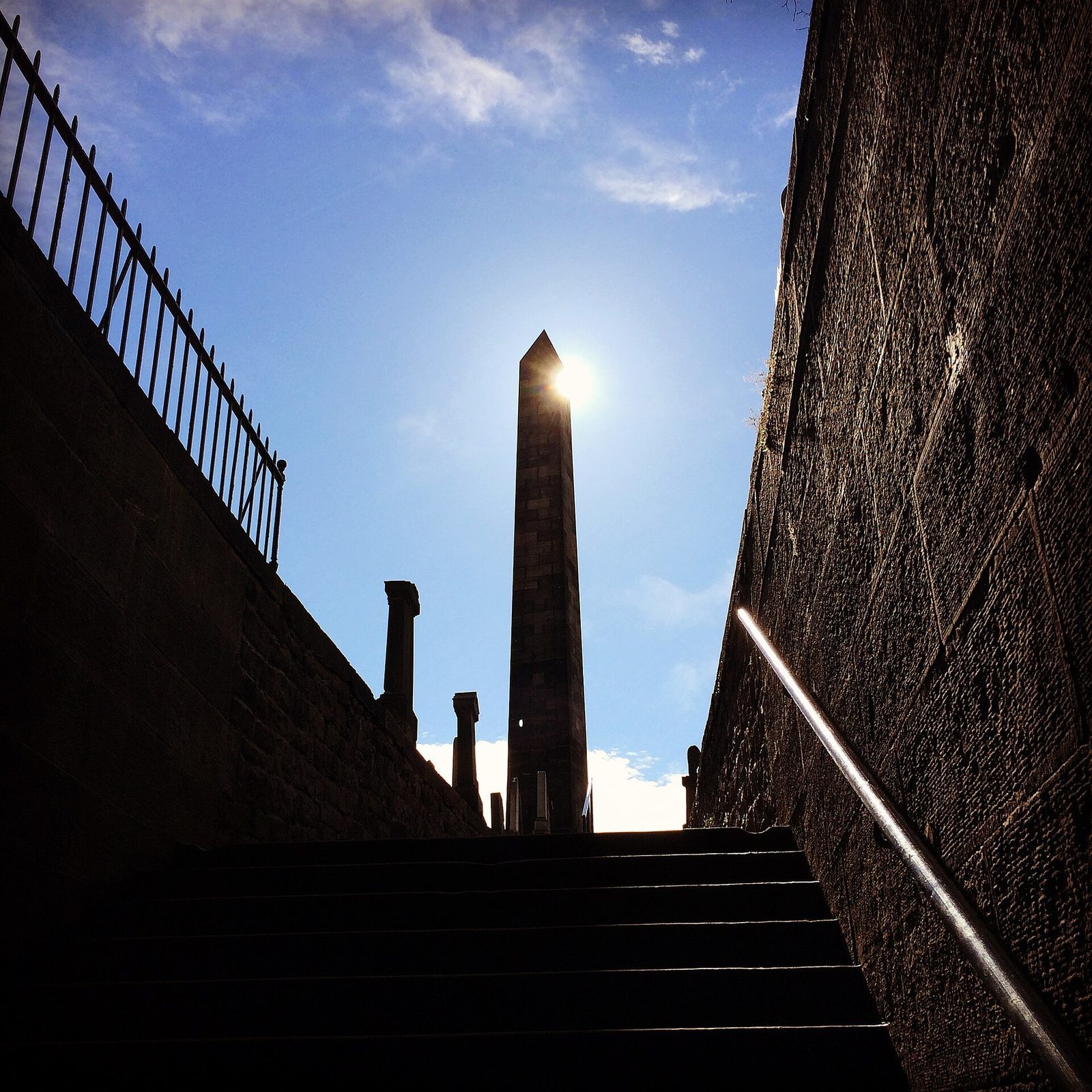
The monument is a 27-metre obelisk, a tall, tapering, four-sided structure, rising from a square-plan plinth, or supporting base. It is built of ashlar sandstone, finely dressed blocks fitted together in regular courses.
Monument and inscriptions
Obelisk and base
The obelisk stands within Old Calton Burial Ground on Calton Hill. Its square base supports the sandstone shaft, which reaches 27 metres (90 feet) in height.
Inscribed faces
One face names Muir, Palmer, Skirving, Margarot and Gerrald, and states that the monument was erected by “the Friends of Parliamentary Reform In England and Scotland” in 1844. Another face carries two quotations. The first, attributed to Muir’s speech at the Court of Justiciary, Scotland’s highest criminal court, on 30 August 1793, reads: “I have devoted myself to the cause of The People. It is a good cause—it shall ultimately prevail—it shall finally triumph.” The second, attributed to Skirving’s speech in the same court on 7 January 1794, reads: “I know that what has been done these two days will be Re-Judged.”