Greyfriars Kirkyard: Edinburgh’s Historic Burial Ground
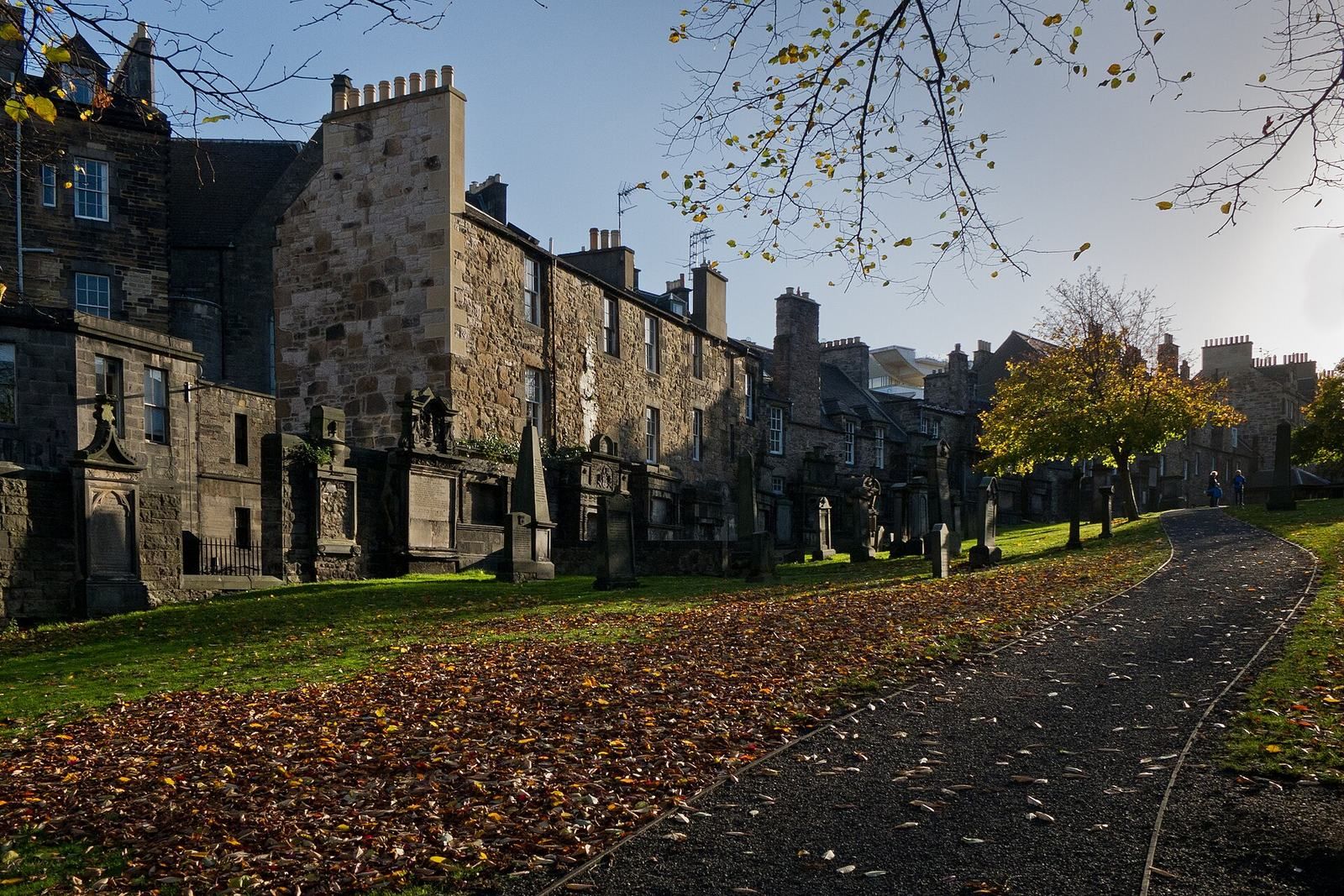
Site at a Glance
- Popularity
- Very High
- Country
- United Kingdom
- Primary era
- Early Modern
- Eras represented
- Early Modern, Modern
- Civilizations
- British, Kingdom of Scotland
- Site type
- Burial
- Remains
- Necropolis
On this page13 sections
History
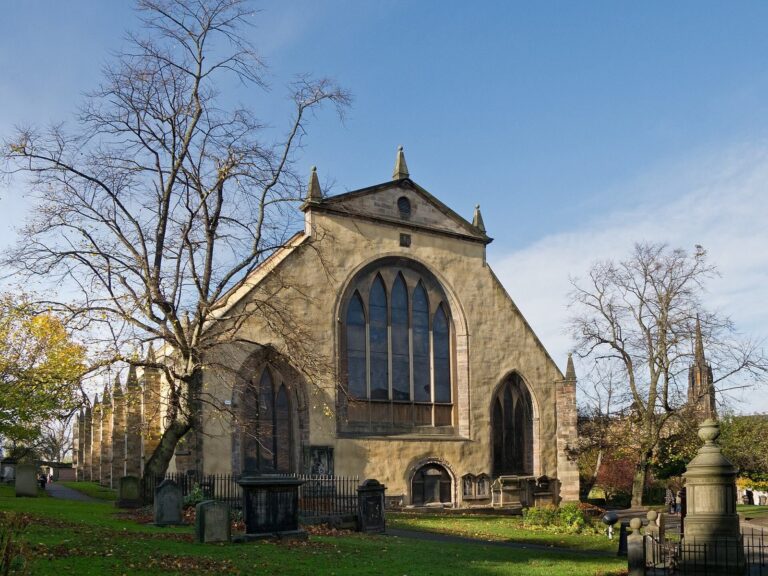
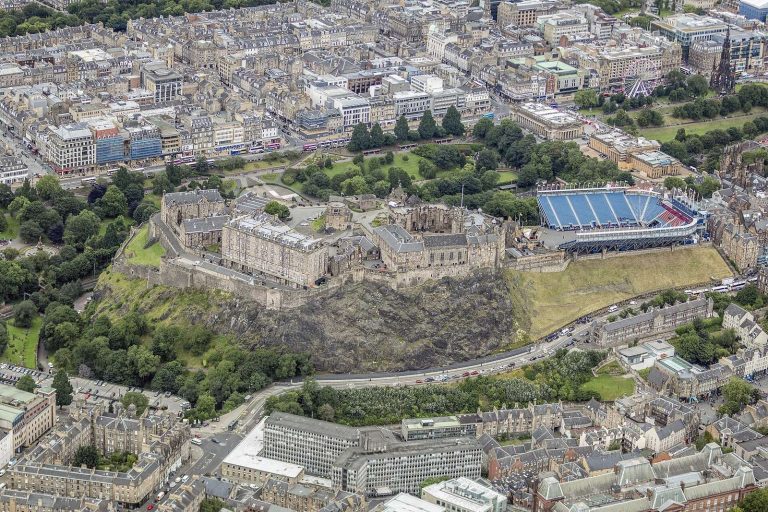
Greyfriars Kirkyard is a historic burial ground in Edinburgh, Scotland, United Kingdom, established in 1561–1562 with royal approval. Its name comes from a Franciscan friary once on the site. The Franciscans were members of a Catholic religious order whose friars in Scotland were known as Grey Friars for their grey clothing. The friary was dissolved in the mid-sixteenth century, and burials have taken place at the kirkyard since the late sixteenth century.
On 23 April 1561, Edinburgh’s burgh council called for burials inside St Giles’ Cathedral to stop and sought a secure burial place farther from the town centre. Overcrowding, summer smells and other inconveniences were among the concerns. The former burial ground at St Giles’ fell out of use around 1600. Greyfriars subsequently became the resting place of many prominent Edinburgh residents.
The Covenanters and the prison field
The Covenanters were Scottish Presbyterians who pledged support for the National Covenant, a religious and political commitment. On 28 February 1638, the Covenant was signed at Greyfriars. The kirkyard also served as a place for public assembly. Conflict between the Covenanters and the Crown led to persecution and executions.
After the Covenanters’ defeat at the Battle of Bothwell Bridge on 22 June 1679, about 1,200 prisoners were brought to Edinburgh. Around 400 who could not be held elsewhere were confined for about four months in a makeshift prison in a field south of the kirkyard. Many endured poor conditions, with little food and no shelter. Some died, escaped or were executed for treason; the others were released after swearing allegiance to the British Crown.
In the eighteenth century, part of the former prison field became part of the kirkyard and was known as the Covenanters’ Prison. Edinburgh’s city asylum, called Bedlam, had been built over much of the field around 1690. A remaining strip was used for additional burials from about 1700.
Photography and later history
During the 1840s, pioneering Scottish photographers David Octavius Hill and Robert Adamson used the kirkyard for portraits and staged scenes, including The Artist and the Gravedigger.
Sir George Mackenzie’s tomb was broken into in 1999 by a homeless man who used it as a night shelter. In 2003, two teenagers entered through a rear ventilation opening, reached its lower vault, broke open coffins and stole a skull. They narrowly avoided imprisonment on a charge of violating sepulchres. The memorial to Duncan Ban MacIntyre was renovated in 2005 after a fundraising campaign lasting more than a year.
The kirkyard and its monuments are protected as a Category A listed building, Scotland’s highest listing category. A burial associated with Thomas Riddell has also been suggested as a possible inspiration for Tom Riddle in the Harry Potter series.
Remains
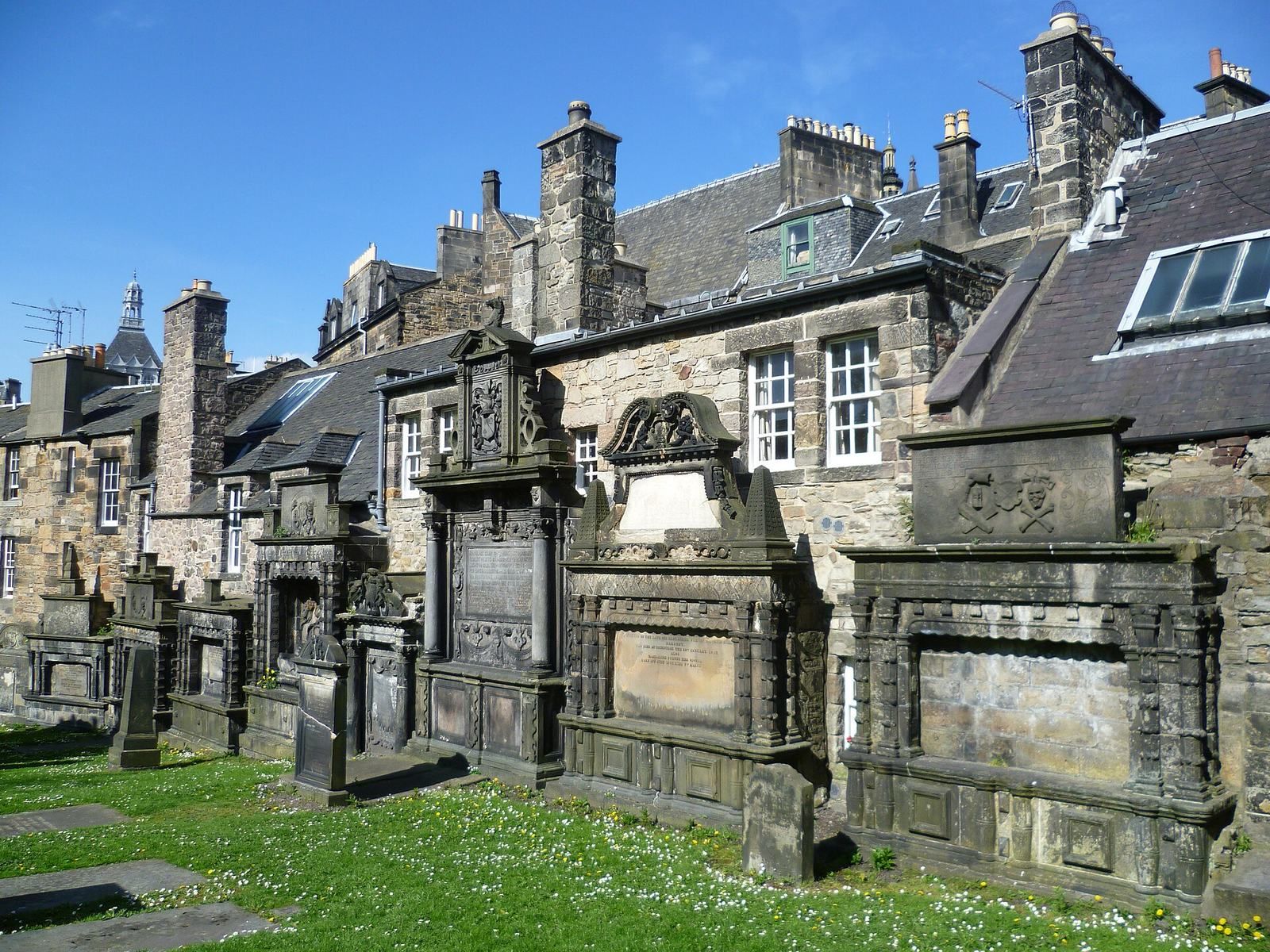
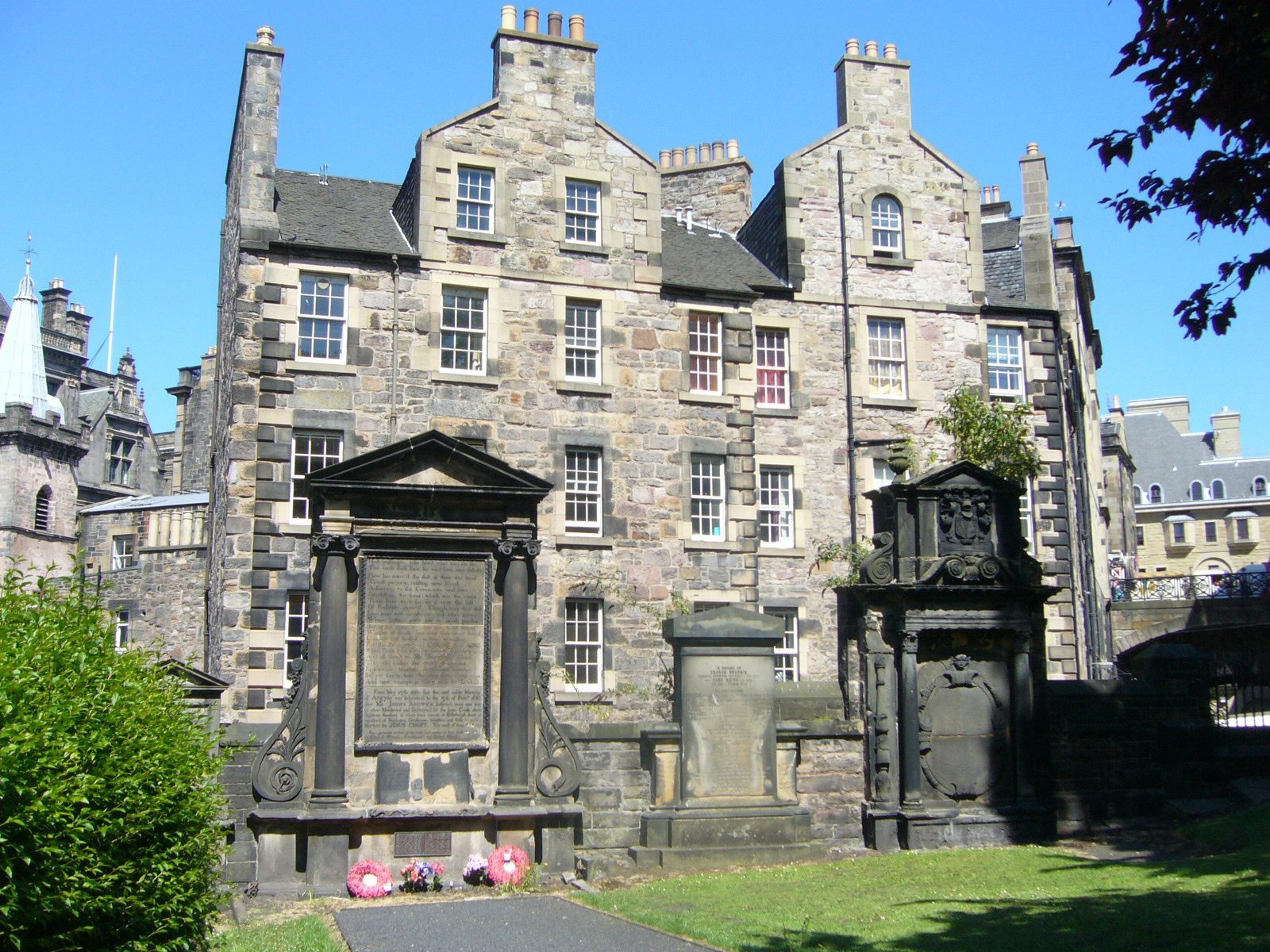
The surviving layout combines enclosed burial plots, vaults and grave-protection structures with memorials set against the old burial ground’s walls. The plots and monuments preserve a range of burial forms and commemorative features within the kirkyard.
Burial plots and protections
Enclosures and the prison field
Enclosed burial plots cluster along the kirkyard’s southern edge and within the Covenanters’ Prison. Their boundaries are made of solid stone walls or iron railings, built to deter grave robbers, a serious problem in the eighteenth century. The remaining strip between Bedlam, Edinburgh’s city asylum, and George Heriot’s School is dominated by enclosed vaults. The former prison field lay south of the kirkyard. The Flodden Wall, Edinburgh’s historic defensive town wall, enclosed it on two sides; George Heriot’s high school wall formed its western boundary, while a guarded picket fence separated it from the kirkyard.
Mortsafes
Two low iron cages in the kirkyard are known as mortsafes, protective structures placed over graves to deter body theft. They were leased to discourage resurrection men, people who stole corpses to supply Edinburgh Medical College for dissection.
Memorials and tombs
Mural monuments
Mural monuments, memorials attached to or set against a wall, are found mainly along the east and west walls of the old burial ground north of the kirkyard. Those dating to the early seventeenth century include imagery concerned with mortality and immortality, such as the Death Head, the Angel of the Resurrection and the King of Terrors, a traditional personification of death.
Covenanters’ memorials
The Martyr’s Monument commemorates Covenanters executed during the Killing Time, the period of persecution and executions between 1661 and 1688. A separate memorial honours Duncan Ban MacIntyre, a Gaelic poet.
Mackenzie’s tomb
Sir George Mackenzie, Scotland’s Lord Advocate and the Crown’s chief legal officer in the country, has a distinctive domed tomb in an Italian-inspired style. Scottish architect James Smith designed it after Donato Bramante’s small Renaissance chapel at San Pietro.
Other named memorials
John Byres of Coates’s monument, dated 1629, was among the last works of William Wallace, a senior stoneworker serving the Crown. The kirkyard also has a seventeenth-century tomb for John Bayne of Pitcairlie, a tomb for surgeon James Borthwick, who died in 1676, and an epitaph for George Buchanan, a Scottish humanist scholar, historian and reformer.
Greyfriars Bobby and John Gray
A headstone installed by the Dog Aid Society at the kirkyard entrance in 1981 marks Greyfriars Bobby’s reputed burial place. The dog is said to have kept vigil for 14 years at his owner John Gray’s grave. Because the kirkyard is consecrated, Bobby is also believed to have been buried under a tree outside the gates, to the right of the present main entrance. A statue of the dog stands opposite the gate at the junction of George IV Bridge and Candlemaker Row. Gray’s grave is on the eastern path, about 30 metres north of the entrance. Its stone is modern; the grave was originally unmarked.