Lutheran Church in Necpaly: A Classical Evangelical Church in Slovakia
Site at a Glance
- Popularity
- Very Low
- Country
- Slovakia
- Primary era
- Modern
- Eras represented
- Early Modern, Modern
- Civilizations
- Austria-Hungary, Austrian Empire, Habsburg, Hungarian
- Site type
- Religious
- Remains
- Church
On this page8 sections
History
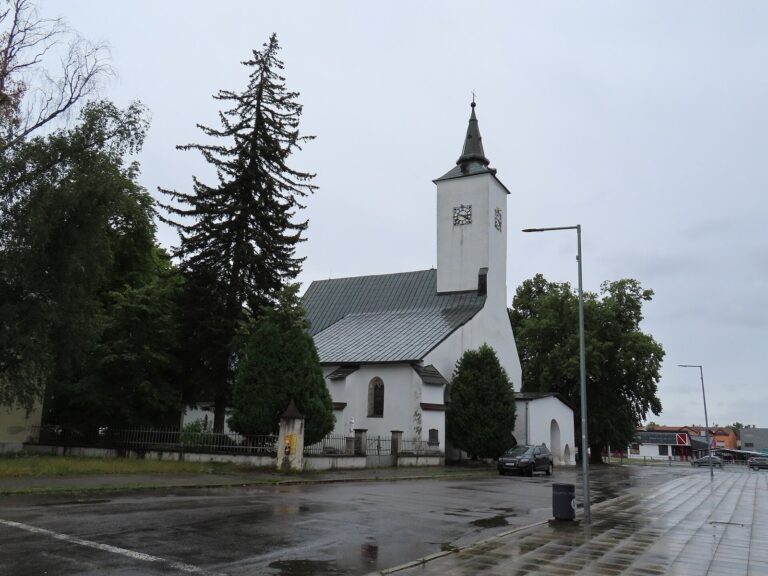
The Lutheran Church in Necpaly, Slovakia, is a Classical-style place of worship for the Evangelical, or Lutheran Protestant, community, built from 1835 to 1843. Necpaly’s first Evangelical pastor served there in 1593, and local Protestant worship has a long history. An earlier wooden church served Evangelicals throughout Lower Turiec.
Protestant worship and the wooden church
Until 1681, local Evangelicals worshipped in the older Church of St. Ladislaus. That year, the Diet of Sopron, a meeting of the Hungarian estates, upheld the removal of churches from Protestant use. It nevertheless allowed up to two Evangelical churches in each county, subject to strict conditions. Necpaly and Ivančiná became the permitted locations in Turiec. Necpaly’s wooden church was an articular church, a Protestant church allowed under the restrictions following the settlement, and served Evangelicals across Lower Turiec. Royal commissioner Jozef Erdődy selected its site in 1689.
In 1752, Juraj Erdődy gave the Just family in Necpaly an altar from the chapel at Orava Castle, which had been refitted in Baroque style. The wooden church was enlarged to accommodate the altar, which was installed during a formal ceremony.
The present building and later use
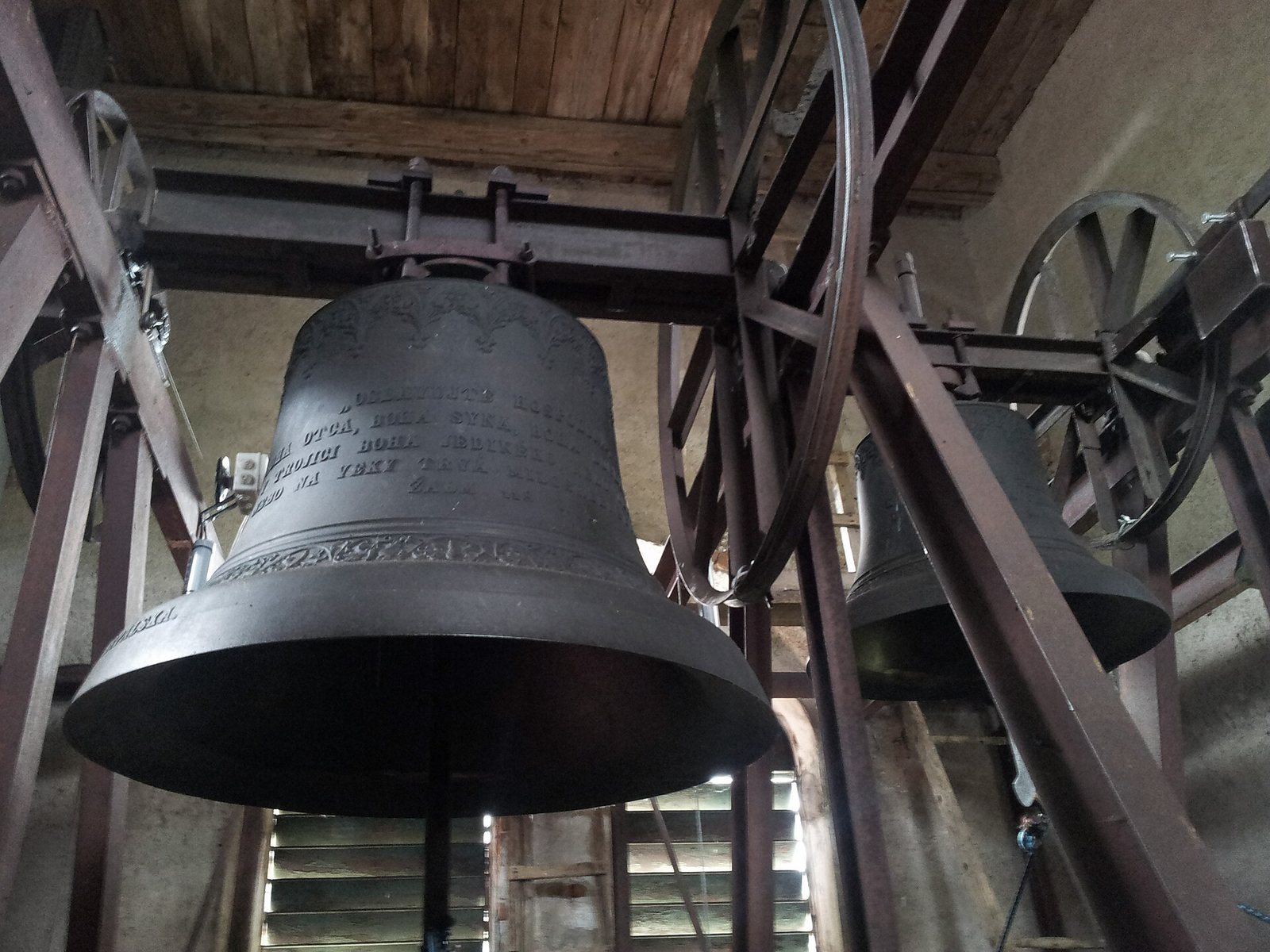
After restrictions on building Evangelical churches ended and masonry churches became permissible, the wooden church was dismantled in 1835. Construction of its replacement began that year, but a vault collapse near the altar delayed completion until 1843. A tower was added in 1863, when its bell tower was also consecrated.
The church was declared a Slovak National Cultural Monument on 26 November 1963. It underwent restoration in 2002–2006, while its altar paintings were restored in 2003–2006. The congregation is based in Necpaly and belongs to the Evangelical Church of the Augsburg Confession in Slovakia, a Lutheran Protestant church, within its Eastern District and Turiec Seniorate.
Remains
Setting, plan, and exterior
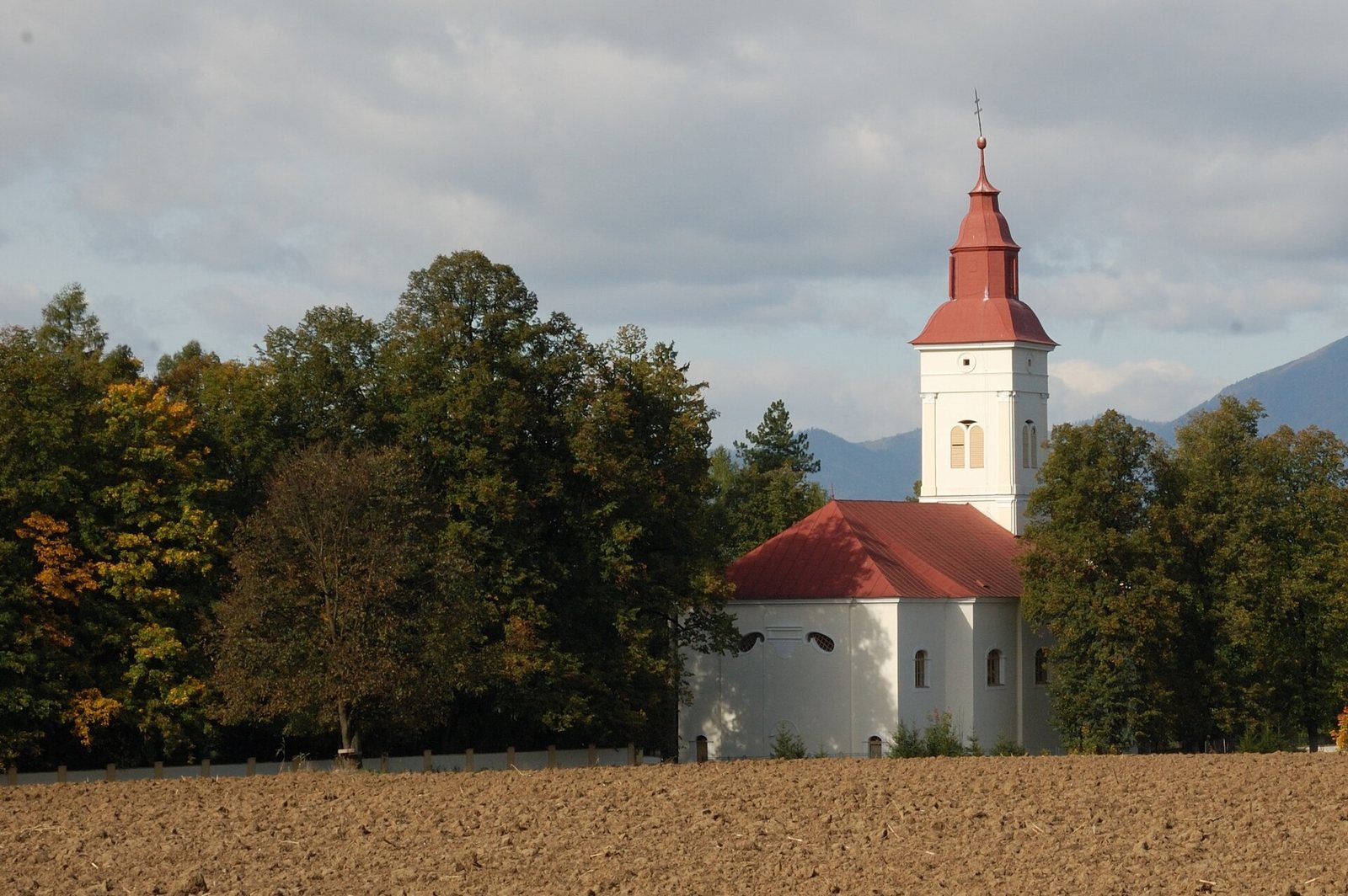
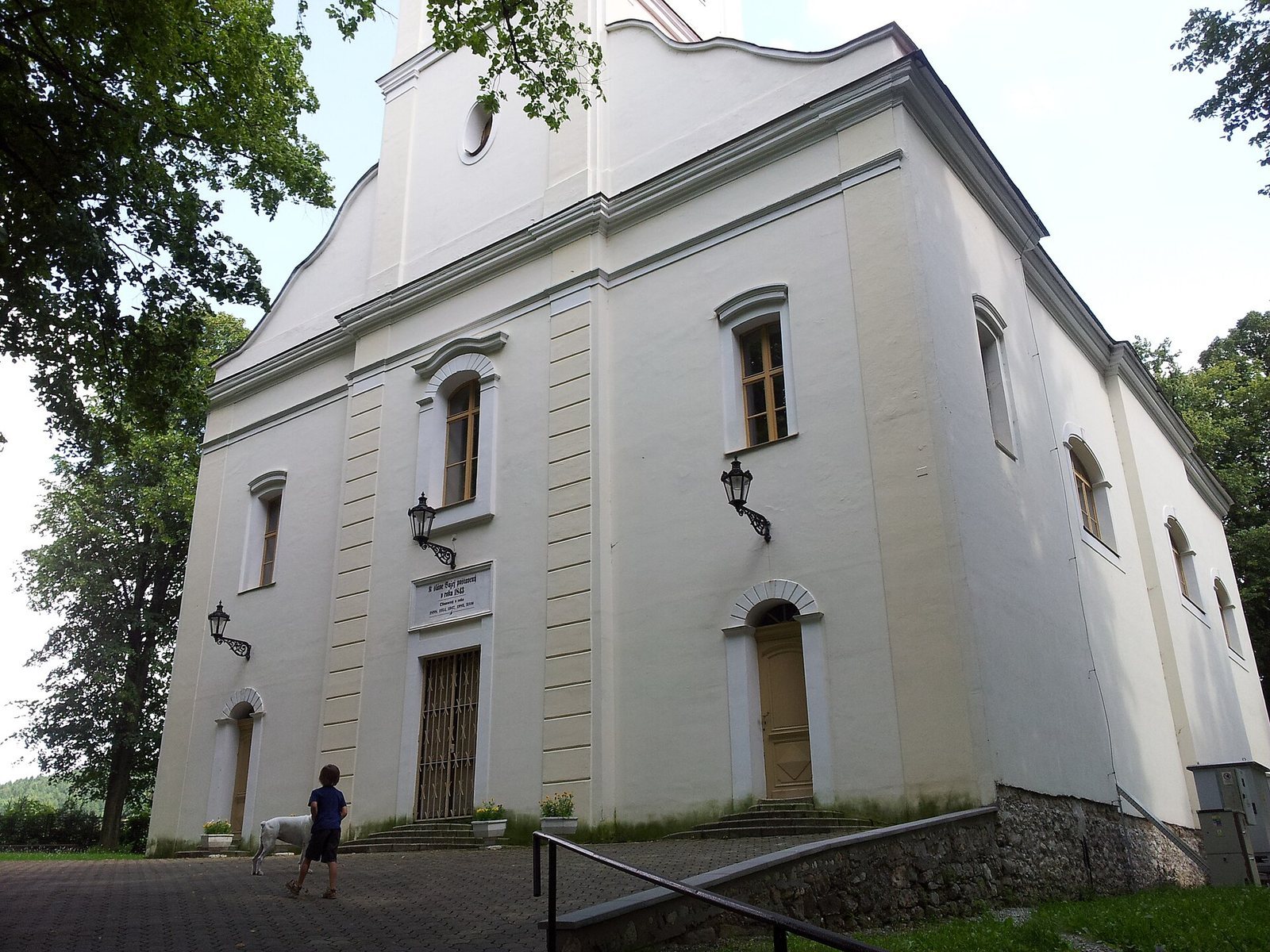
The church stands on elevated ground at the edge of Necpaly, in the former garden of the Just family manor, and dominates the surrounding landscape. Its axis runs northwest to southeast. The building has a rectangular plan, a single nave, and a sanctuary with a straight end; the tower is incorporated into the main structure. Pilasters, shallow rectangular projections resembling columns, divide the principal facade, where the windows have surrounds and shallow arched tops. The tower’s pilasters have Ionic-style tops, and its bell chamber has a paired window with a shutter. Above it, a bell-shaped spire carries a small lantern, a finial, and a double cross.
Interior and furnishings
The altar and its paintings
The church’s altar, Speculum Iustificationis (Mirror of Justification), dates to 1611 and is a prominent Renaissance work. Its form uses an edicule, a small architectural frame, with a predella, the lower section of an altarpiece. The central section holds the main painting between two columns; above it, an interrupted triangular top frames another painted panel. The arms of Juraj Turzo and his wife, Alžbeta Coborová, appear beside this upper section, supported by sculptures of two reclining figures. Turzo was a senior royal official in the Kingdom of Hungary and a supporter of the Reformation.
The predella shows the Last Supper and has octagonal panels depicting manna and Moses striking the rock. The side wings portray Jonah cast out by the whale, Samson wrestling with a lion, the Expulsion from Paradise, and the Crucifixion. The upper section depicts the Last Judgment. In the central painting, Turzo’s confession of faith expresses the Lutheran teaching of justification, the belief that a sinner can be made right with God through faith. A hexagram appears within a circle surrounded by God the Father, Jesus, and Adam, with a dove representing the Holy Spirit at its center. Beneath it, an allegorical woman standing on a serpent represents Love. Three symmetrical bands include John the Baptist, Hope and Faith, Moses with the tablets of the Law, Conscience, and Repentance. Round medallions show an angel holding a child for God’s mercy, an angel with scales, a sword, and a skull for Justice, and further images of mercy, consolation at death, sin, and damnation. The painting’s interlinked symbols and design are exceptional in Slovakia.
Pulpit, font, and other furnishings
The late-Classical pulpit carries late-Baroque paintings from the earlier church, showing Christ, Saint Paul, and the Evangelists with their attributes. The baptismal font dates from the construction of the present building. The church also contains a painting made for the 200th anniversary of the Augsburg Confession, the foundational statement of Lutheran belief presented in 1530; the painting probably dates to 1730. A historicist-style organ dates to the turn of the nineteenth and twentieth centuries.