Palamu Fort: Two Historic Strongholds in Jharkhand
Site at a Glance
- Popularity
- High
- Country
- India
- Primary era
- Early Modern
- Eras represented
- Early Modern
- Civilizations
- Unclassified
- Site type
- Military
- Remains
- Castle
On this page13 sections
History
Palamu Fort is a pair of ruined forts in Medininagar, Jharkhand, India, generally attributed to the Chero rulers, one of Palamu’s regional ruling houses. The plains fort is also said to have been built by a Raksel ruler, another regional house, and may predate Chero rule. The forts’ history includes 17th-century Chero rebuilding and conflict with Mughal forces.
Mughal pressure and Chero rule
The Mughals, rulers of an empire that controlled much of the Indian subcontinent, invaded Palamu in 1574 under Raja Man Singh, a Rajput general in Mughal service. After Emperor Akbar’s death, a Mughal contingent in Palamu was defeated in 1605. During the reign of Jahangir, Akbar’s successor, a Mughal provincial governor at Patna and Palamu demanded tribute from the Raksel rulers. Their refusal prompted three Mughal attacks.
In 1613, while Raja Man Singh was away from his capital, Chero leader Bhagwant Rai and allied chiefs invaded Raksel territory and seized power. Man Singh withdrew to Surguja, where he established a Raksel dynasty.
Medini Ray and the Mughal campaign
Medini Ray ruled Palamu from 1658 to 1674 and extended his authority into South Gaya and Hazaribagh. He rebuilt the old fort as a defensive stronghold. After defeating Raghunath Shah, ruler of the Nagvanshi, another regional ruling lineage, at Doisa, Medini Ray used the war bounty to build a lower fort near Satbarwa.
Daud Khan, a Mughal military commander, began his invasion from Patna on 3 April 1660 and reached the forts on 9 December. The Cheros rejected his demands for surrender and tribute, which included converting all Hindus under Chero rule to Islam. After repeated attacks, Mughal forces occupied both forts. The Cheros fled to the forests, Hindus were driven out, and temples were destroyed. Medini Ray built the hill fort in 1673.
After Medini Ray’s death, rivalries within the Chero royal family, encouraged by court ministers and advisers, contributed to the dynasty’s decline. Gopal Rai, a nephew of Chitrajeet Rai, betrayed him, enabling the Patna Council of the British East India Company to move against the fort.
East India Company rule and later resistance
The British East India Company, originally a trading company that came to exercise military and political authority in India, attacked the hill fort on 28 January 1771 under Captain Camac. A shortage of water forced Chero soldiers to withdraw to the old fort. The British took the hill fort without a fight and used its position to fire cannons at the old fort. They besieged the old fort on 19 March 1771 and occupied it in 1772.
The Company later imprisoned Narayan Peshwa of Tiroha and Raja Harsh Dubey, also known as Subedar Aftab Singh, as men it identified as participants in the 1857 uprising, a major revolt against Company rule. Peshwa was a senior ministerial title in Maratha polities; subedar was a title for a high-ranking military officer or provincial governor. In 1882, British forces repulsed a rebellion by Chero and Kharwar people.
Remains
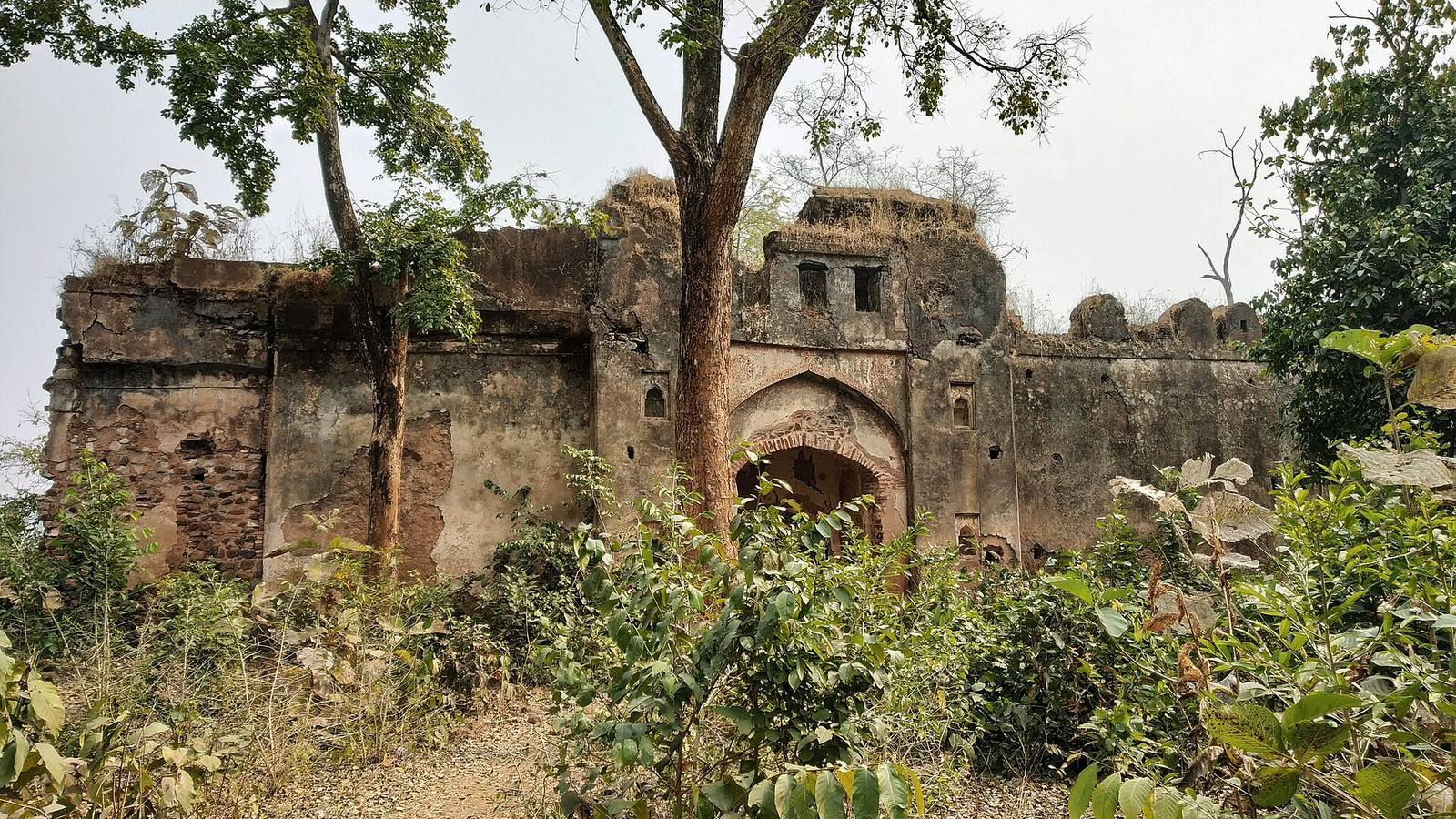
The plains fort covers about 3 square kilometres and lies beside the hill fort, which stands to its west. Both overlook the meandering Auranga River, also called the Ornaga River. Exposed rock across the riverbed gives it a jagged appearance. The name Palamau may mean place of the fanged river. The plains fort’s defensive circuit includes ramparts and outer walls, while the nearby hill fort remains incomplete.
The plains fort
Walls and gates
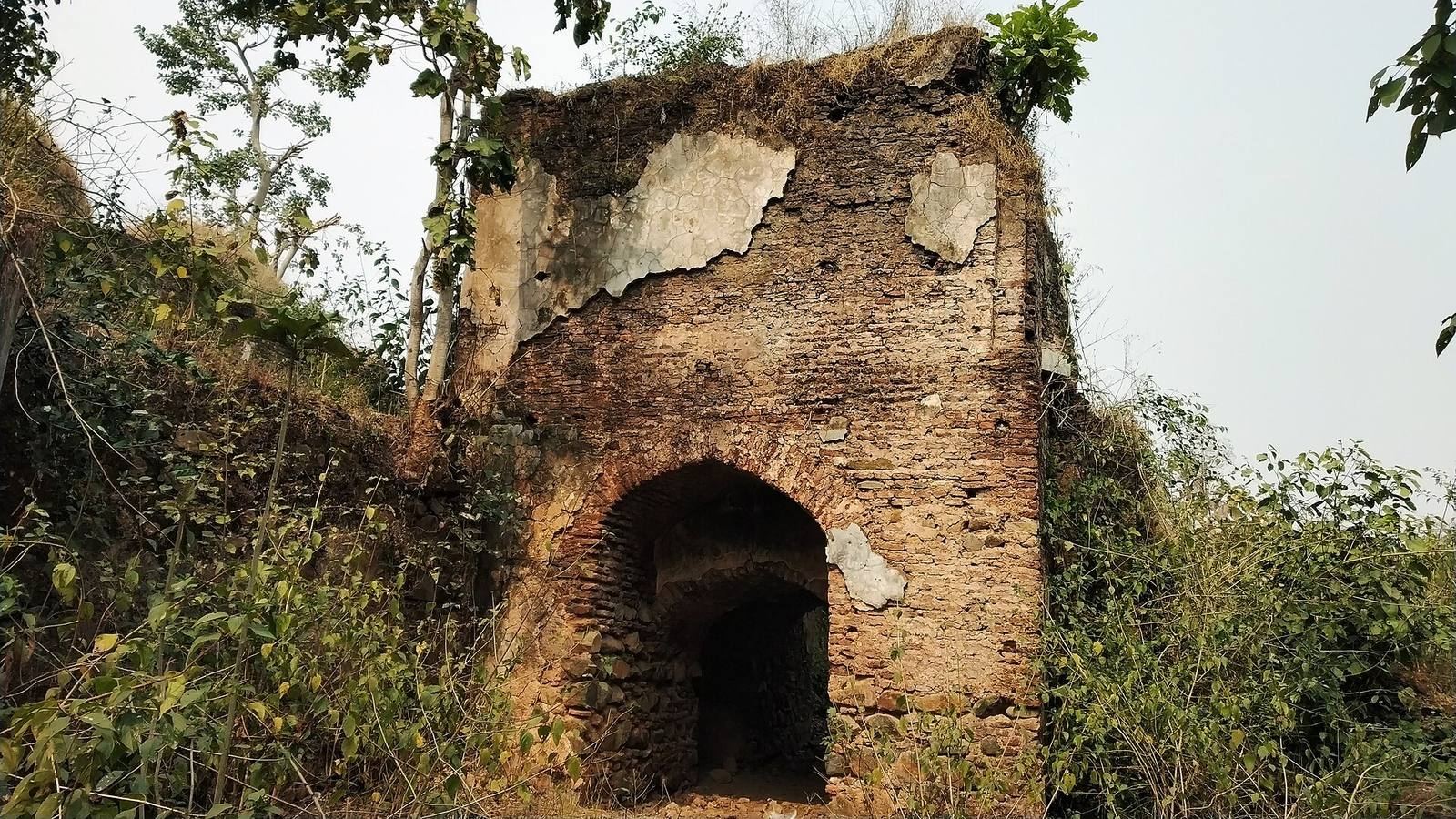
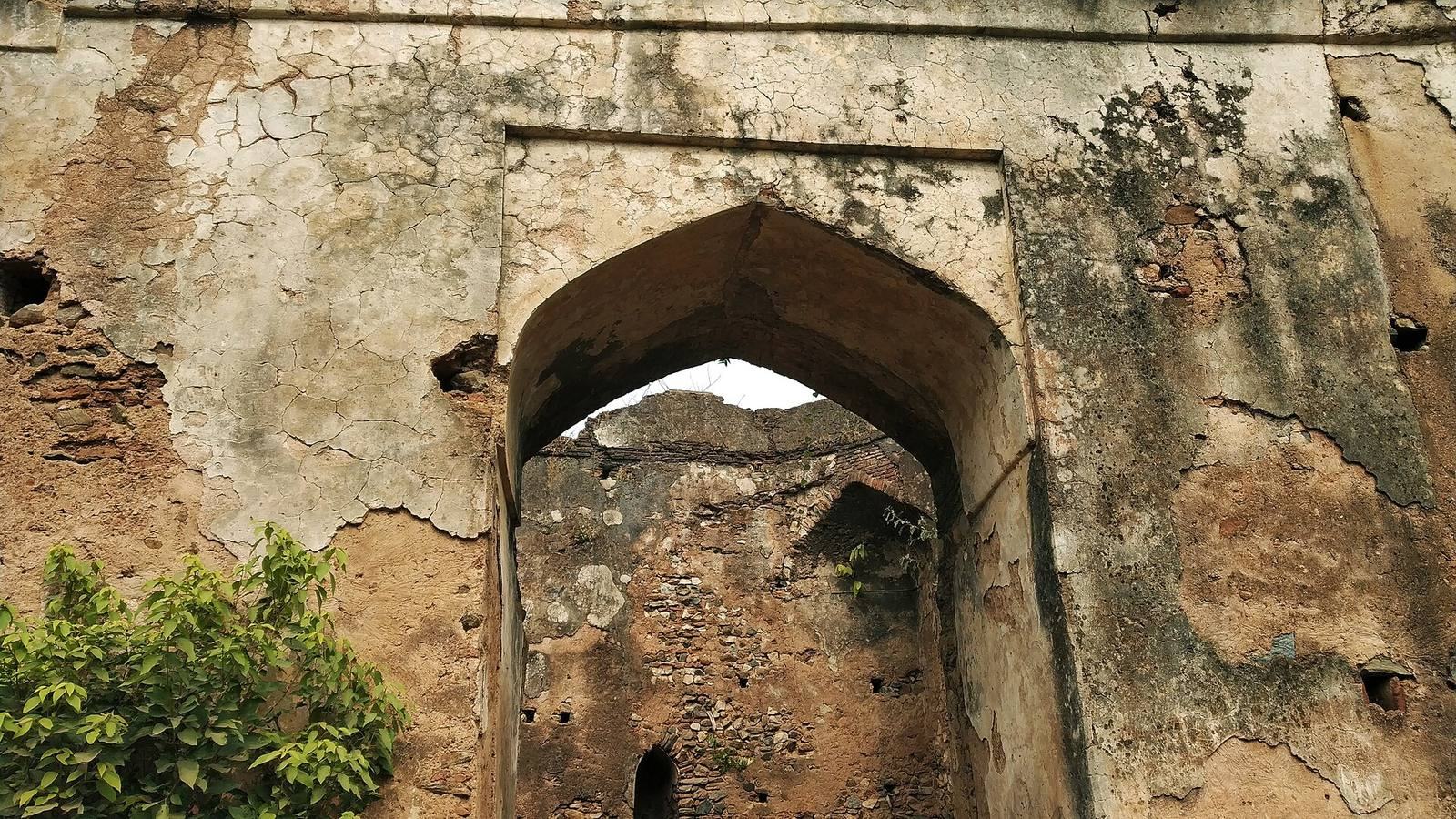
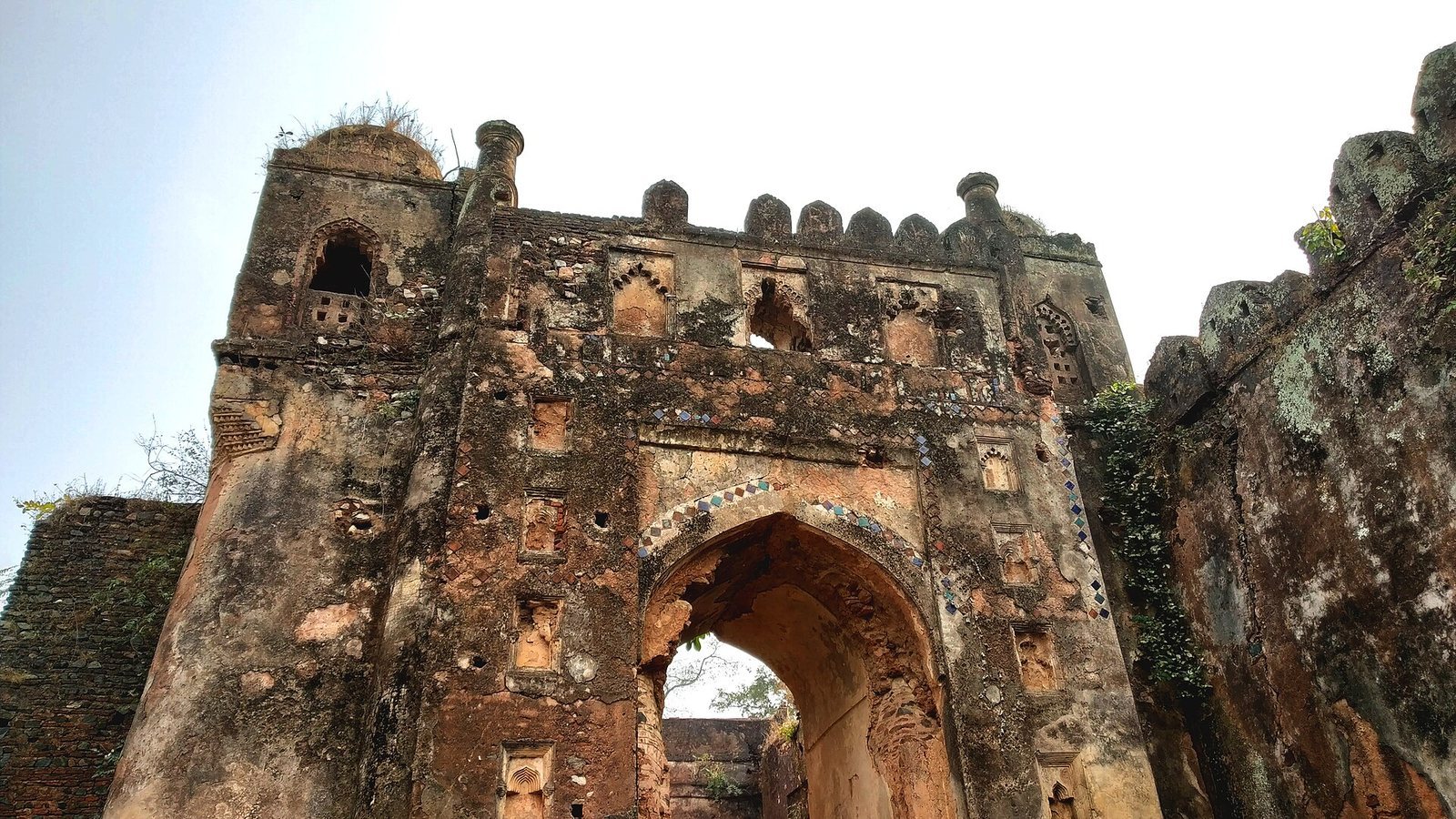
The outer walls are made of flat, elongated bricks dried in the sun and bonded with lime mortar containing powdered brick. The ramparts are about 7 feet wide. Three gates pierce the defences, with the central entrance, called Singh Dwar, the largest.
Court building and water supply
A two-storey building at the fort’s centre served as a place where the king held court. A ruined aqueduct once carried water for people and animals inside the fort.
Temples
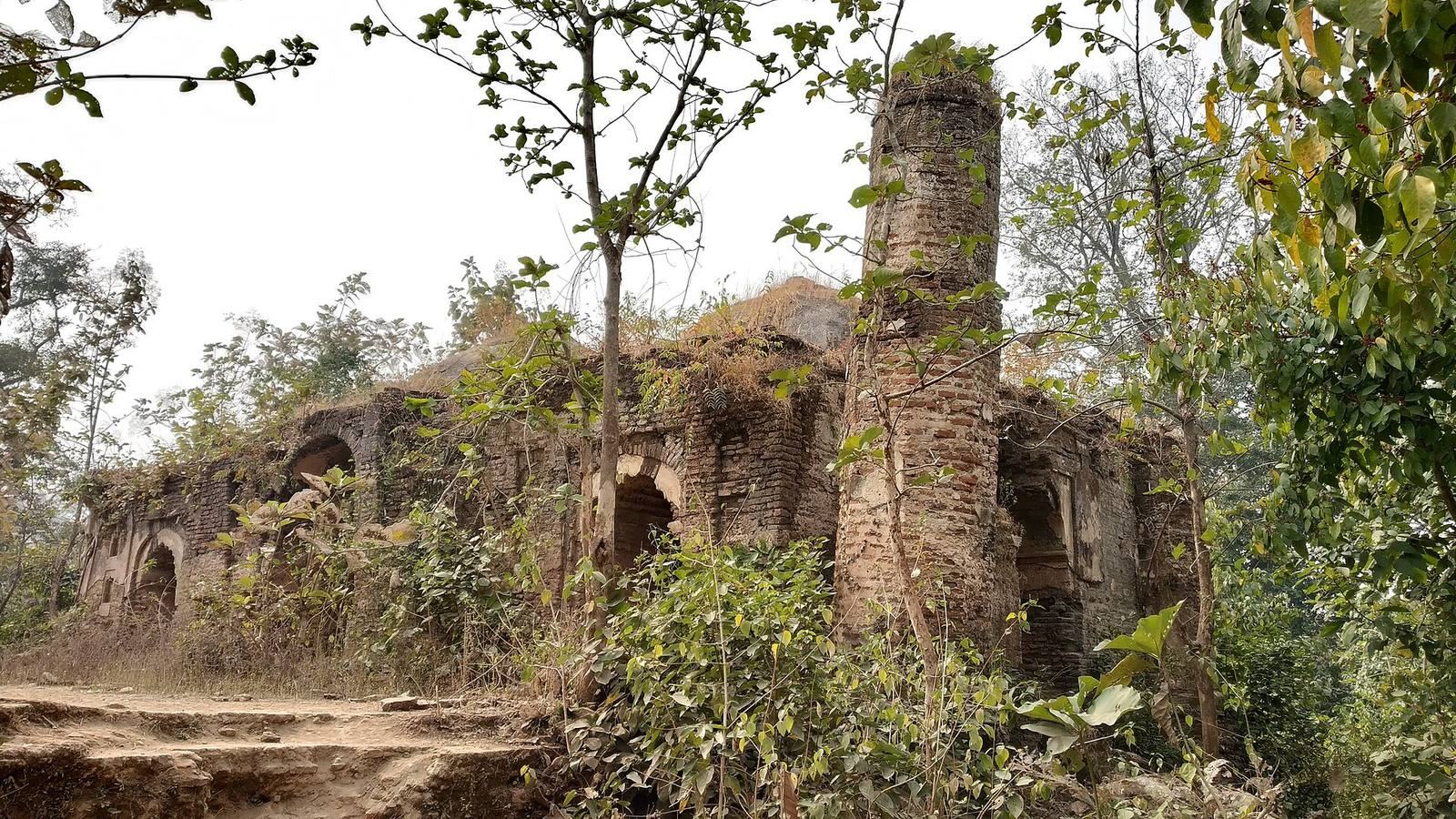
Beyond the second gate stood three Hindu temples. After Daud Khan’s occupation, they were partly converted into mosques.
Stream and watchtowers
On the fort’s southwestern side, a small stream called Kamadah Jheel supplied water for the royal women’s daily washing. Two watchtowers on the hilltop between the stream and the fort were used to detect enemy incursions. One contains a small temple dedicated to a goddess.
The hill fort
Entrance
The unfinished fort is entered through a carved Nagpuri gate, followed by a smaller main gate flanked by stone pillars. The carvings are said to draw on the Nagpuri style associated with the Chota Nagpur region.
Pillar inscriptions
Inscriptions in Arabic or Persian and Sanskrit on the pillars are attributed to Banmali Mishra, Medini Ray’s guru, or spiritual guide. They state that construction began in Magh, a month in Hindu calendars, and that Medini Ray intended the fort for his heir, Pratap Rai. Pratap Rai later tried unsuccessfully to complete it at Betla.