Church of the Holy Trinity, Trnava: A Baroque Roman Catholic Parish Church
Site at a Glance
- Popularity
- Medium
- Country
- Slovakia
- Primary era
- Early Modern
- Eras represented
- Early Modern, Modern
- Civilizations
- Austria-Hungary, Habsburg, Hungarian
- Site type
- Religious
- Remains
- Church
On this page7 sections
History
The Church of the Holy Trinity, Trnava, is a Roman Catholic parish church in Trnava, Slovakia, built in the Baroque style for the Trinitarians, a Catholic order named for the Christian belief in one God in three persons. It is associated with the Trnava Archdiocese and the Trnava-St Nicholas parish.
Trinitarian foundation
Construction of the church and its monastery began in 1710. The Trinitarians settled in Trnava in 1712, and work proceeded slowly with chief support from János Okolicsányi, a canon of Esztergom who later became a bishop. He consecrated the church in 1729. Finishing work continued afterward: a chronogram, an inscription whose selected letters encode a date, beneath the entrance coat of arms gives the year 1734.
Transfer and later use
Habsburg ruler and Holy Roman Emperor Joseph II suppressed the Trinitarian order in 1782, and the church subsequently changed hands. The Society of Jesus, commonly known as the Jesuits, took it over in 1835 and carried out repairs in 1875. The Saint Joseph chapel was added in 1900. The church has been protected as a national cultural monument of Slovakia since 1963. In 1995 Pope John Paul II canonized the priests Melchior Grodziecki and Stefan Pongracz, who are venerated as martyrs associated with Košice.
Remains
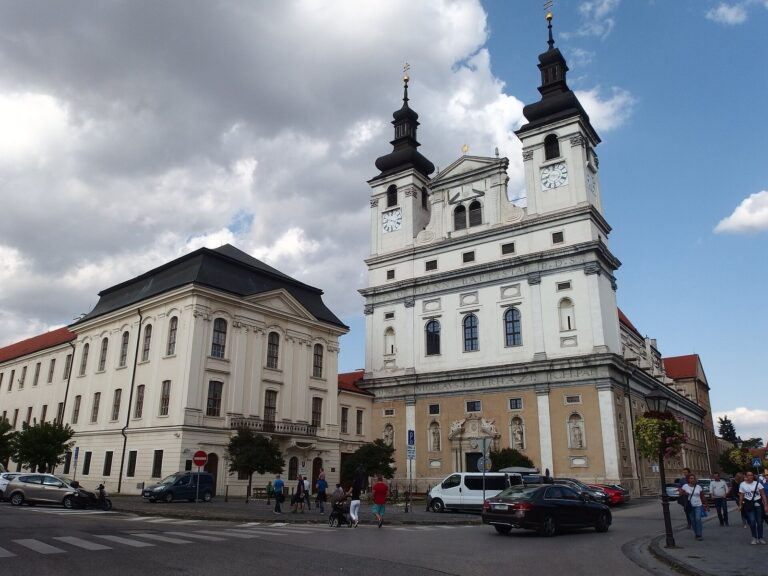
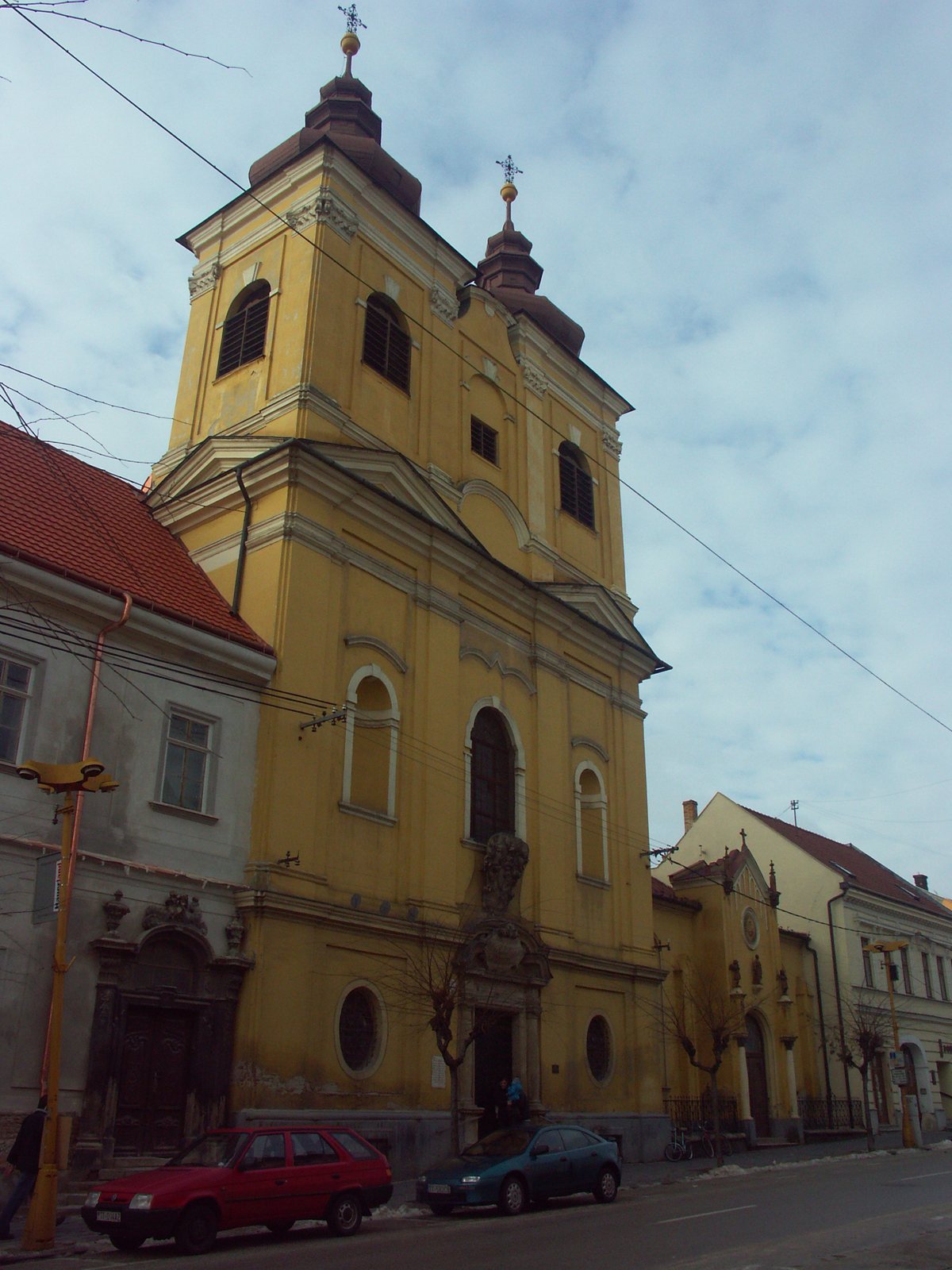
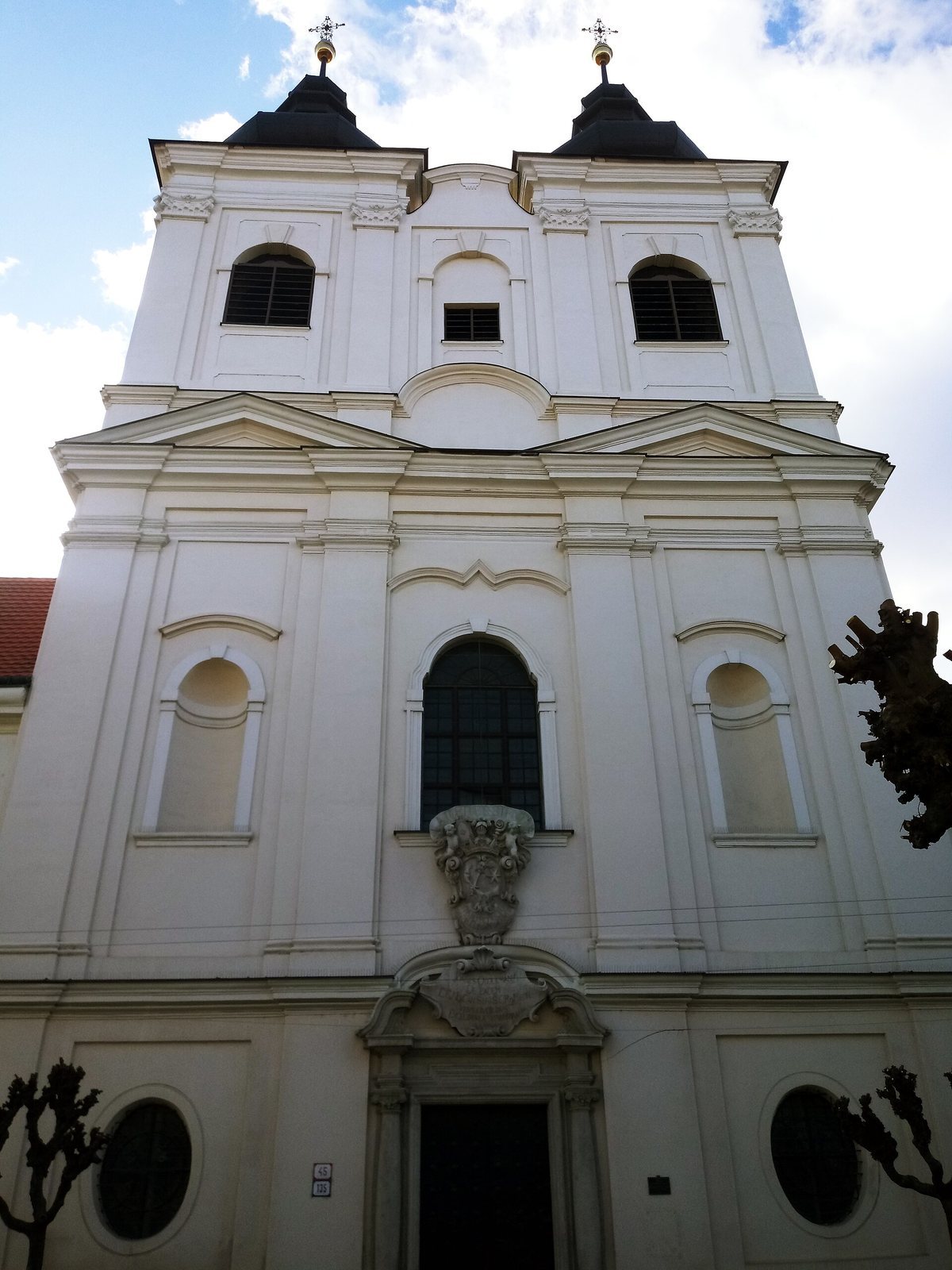
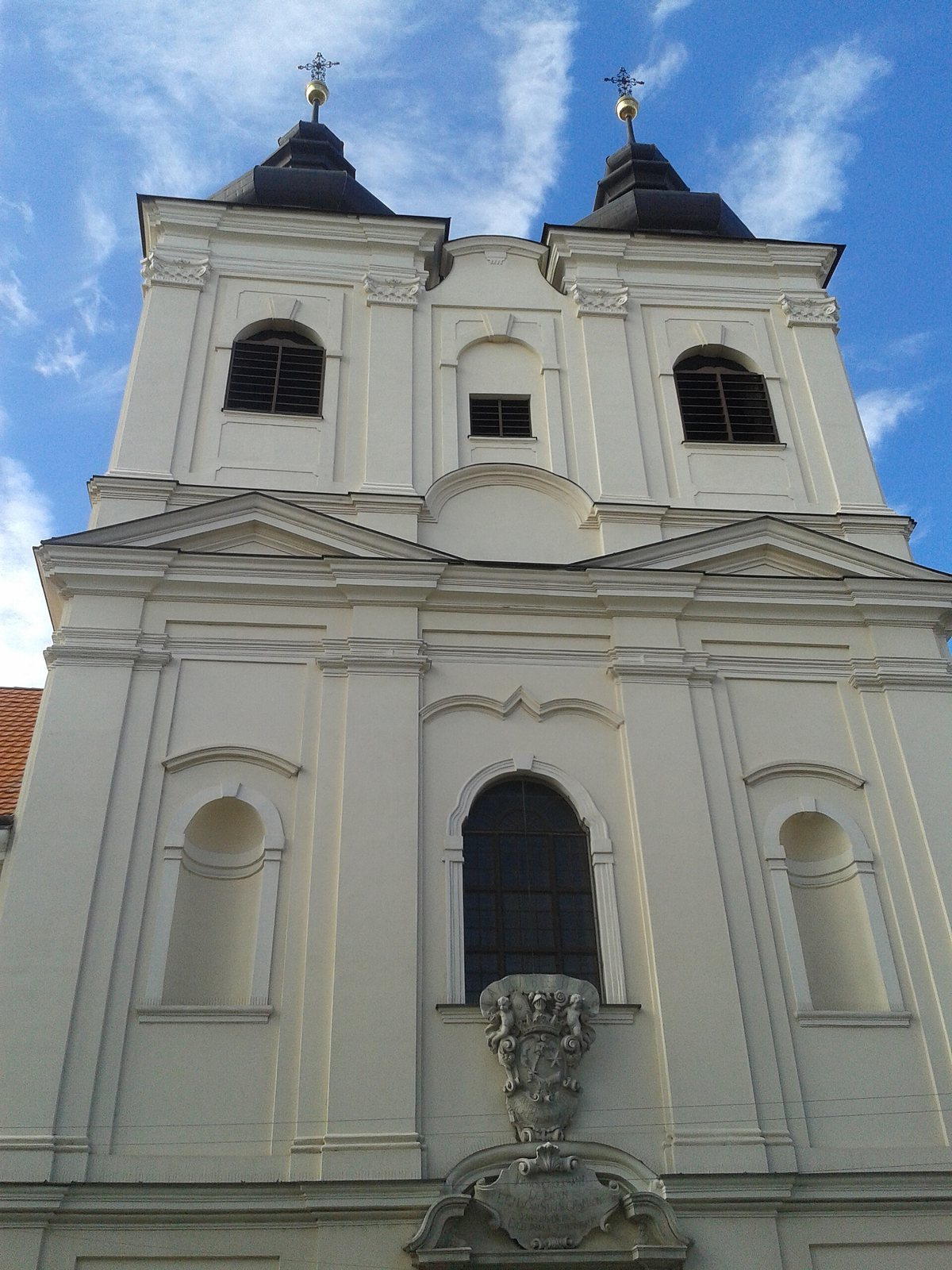
The church is a stone-built, single-nave structure in the Baroque style. Its façade incorporates two square towers of equal height, while the interior combines a vaulted nave, a shallow presbytery, a sculpted high altar, and the attached Saint Joseph chapel.
Facade and towers
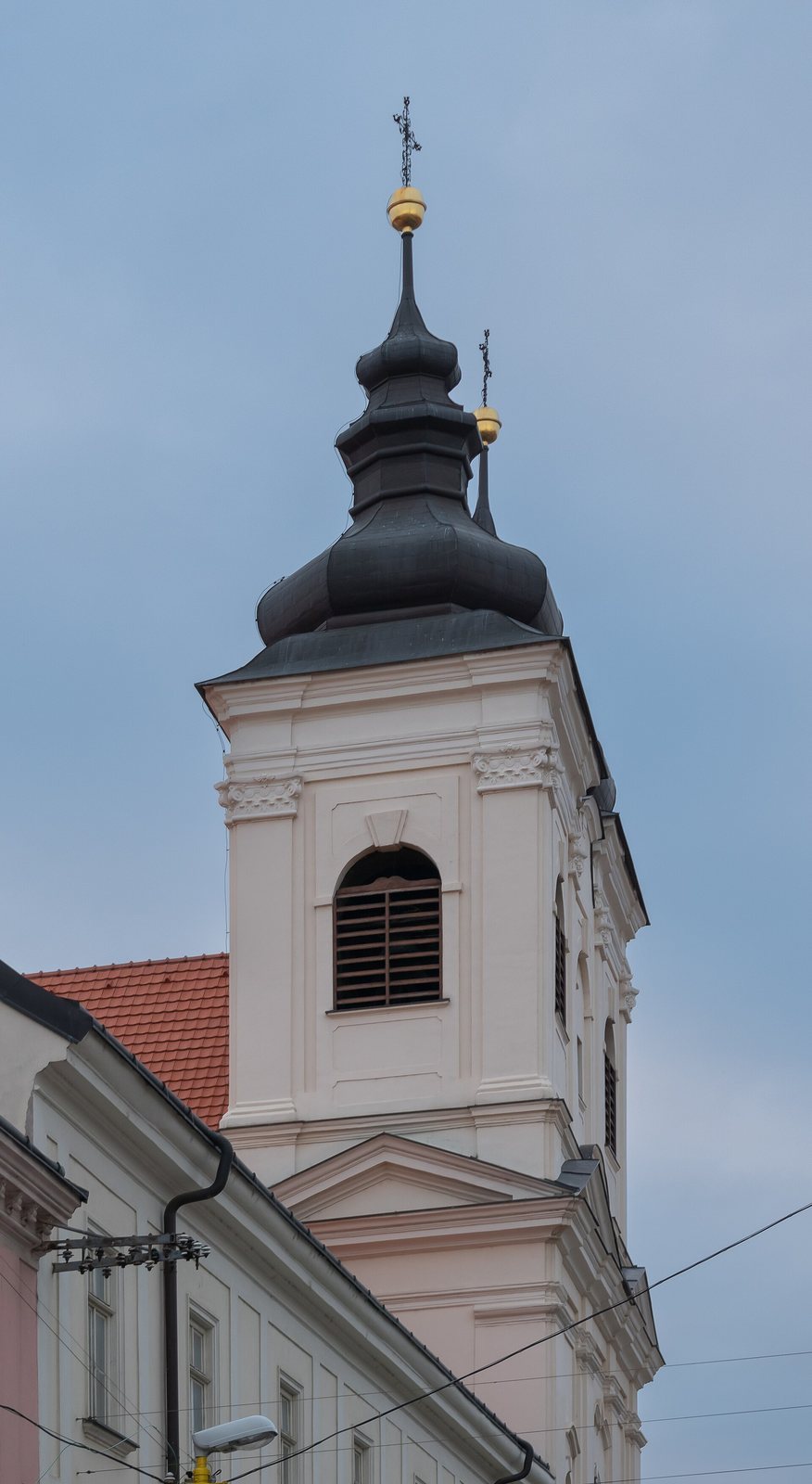
Pilasters, shallow column-like projections, mark the corners of the towers. Heavy cornices divide the façade into three tall levels, with low tympana, the central fields of pediments, above the cornices at the second level of each tower. Onion-shaped domes crowned by lanterns, small structures atop domes, complete the towers. The entrance portal is topped by János Okolicsányi’s coat of arms, with the chronogram immediately below it.
Nave and high altar
The nave has a lunette vault, a barrel vault intersected by smaller vaults, supported by broad pilasters and extended cornices. These supports form shallow recesses for side chapels. At the east end, a shallow presbytery, the area around the main altar, has one interior division and a rectangular end wall. A richly sculpted Baroque high altar fills this wall. Its central painting, made in 1778 by Austrian painter Franz Anton Maulbertsch, depicts Saint John of Matha and Saint Felix of Valois, traditionally identified as founders of the Trinitarian order. On the south side of the nave, a glass reliquary at the Virgin Mary altar holds the remains of Grodziecki and Pongracz.
Saint Joseph chapel
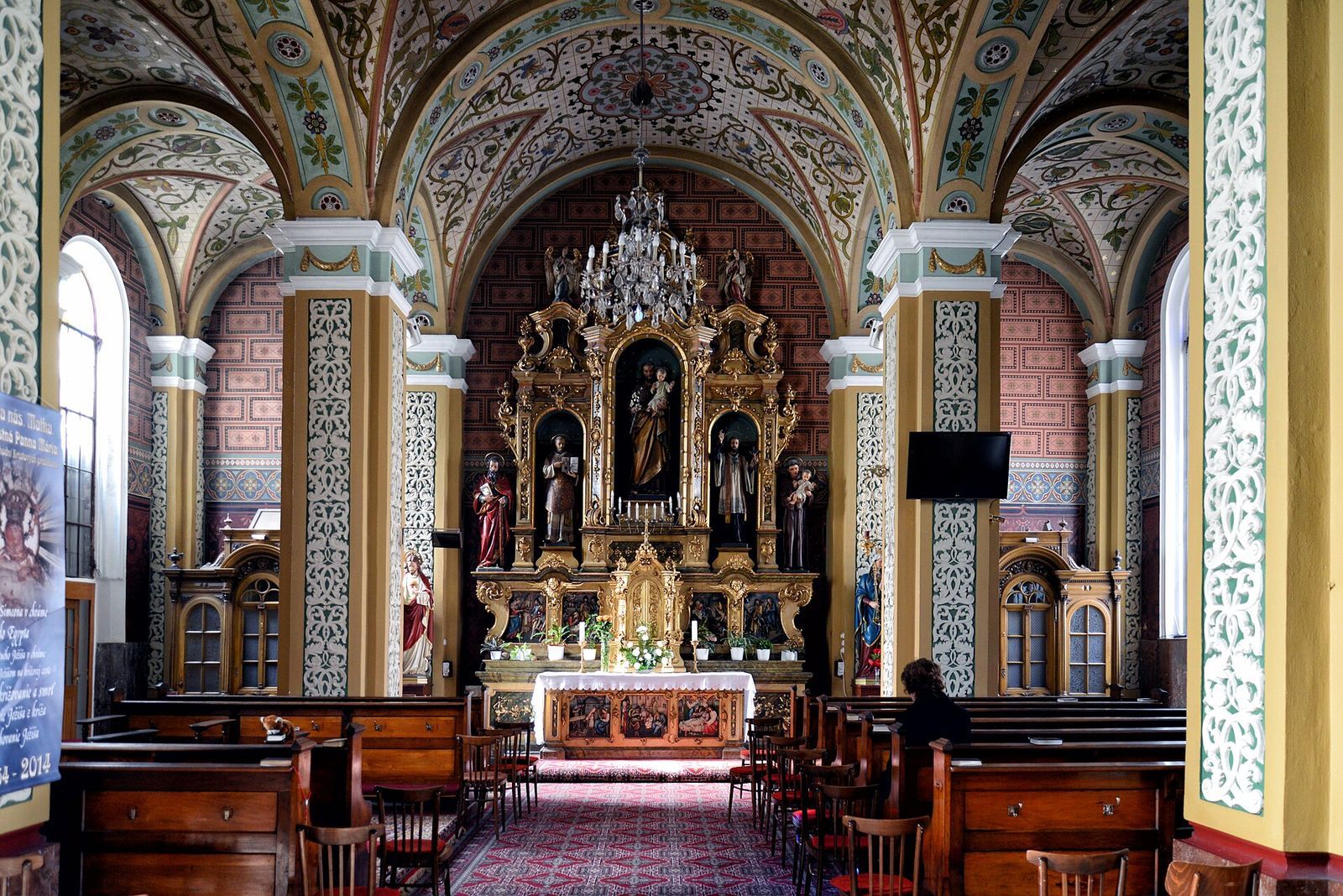
Attached to the church’s right side when viewed from the front, the chapel is a hall with three aisles and two interior divisions. Its very shallow presbytery ends in a rectangular wall, and its aisles have vaults. Extensive paintings of figures and plant forms cover the walls and vaults. The chapel’s richly decorated high altar includes numerous sculptural details.