Altenburg Castle: A Medieval Stronghold in Germany
Site at a Glance
- Popularity
- Medium
- Country
- Germany
- Primary era
- Early Modern
- Eras represented
- Medieval, Early Modern
- Civilizations
- Duchy of Bavaria, Electorate of Bavaria, Holy Roman Empire
- Site type
- Military
- Remains
- Castle
On this page7 sections
History
Altenburg Castle stands in Germany. A watchtower is said to have stood at Altenburg in Roman times, and the place appears around 750 in a property register of the Fagana, an early medieval Bavarian noble family. The noble Falkensteiners built a castle here in 1050. Duke Otto II of Bavaria later razed it, and the Lords of Schalchdorf rebuilt it on a larger scale around 1258. Count Otto II of Maxlrain acquired and enlarged the castle in 1434. In 1560, Duke Albrecht of Bavaria had it remodelled into its present form.
Conflict and later ownership
During the Thirty Years’ War, a major European conflict fought from 1618 to 1648, the castle withstood Swedish attacks. It was the only castle in Bavaria to do so. After several changes of ownership, it passed in 1879 from the Barons Friedrich zu Hofstetten to Count Georg Wilding von Königsbrück, Prince of Radali, who used it as a summer residence.
Institutional uses and modern ownership
An evangelical mission service bought the castle in 1953 and established a school for women training for social-care professions. After 1992, it served as a seminar and meditation centre called the House of Silence until the end of 2011. Cosmetic surgeon Werner Mang acquired the property in 2012 and proposed a treatment centre for psychosomatic illnesses, but the plan was not carried out. He resold the castle at the end of 2014 or the beginning of 2015.
The castle is protected as an architectural monument, meaning a structure officially recognized for its heritage value. The castle area and its former estate farm are also registered as an archaeological monument, a protected archaeological site.
Remains
Castle complex and setting
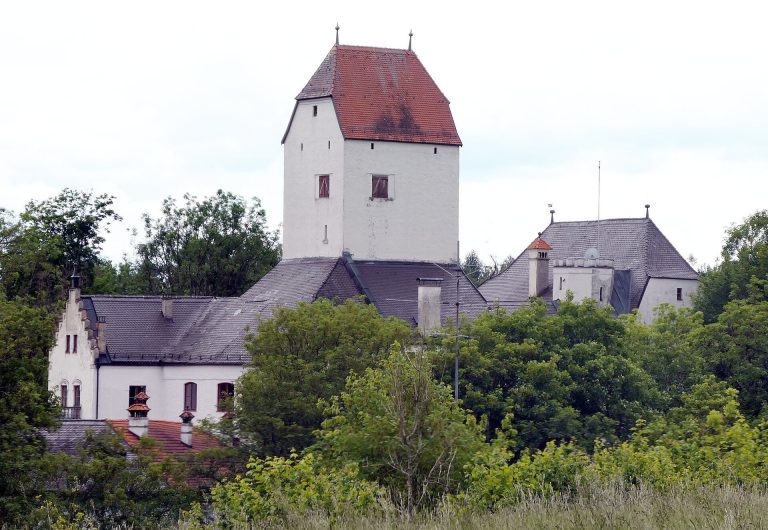
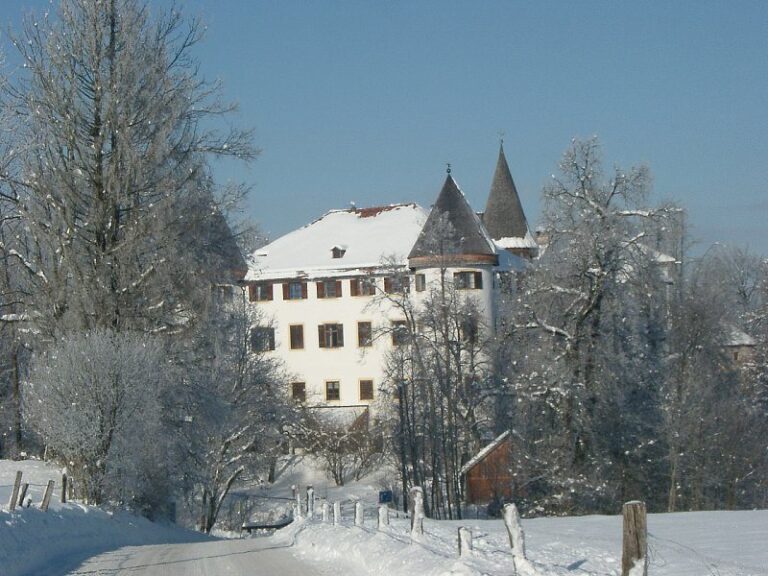
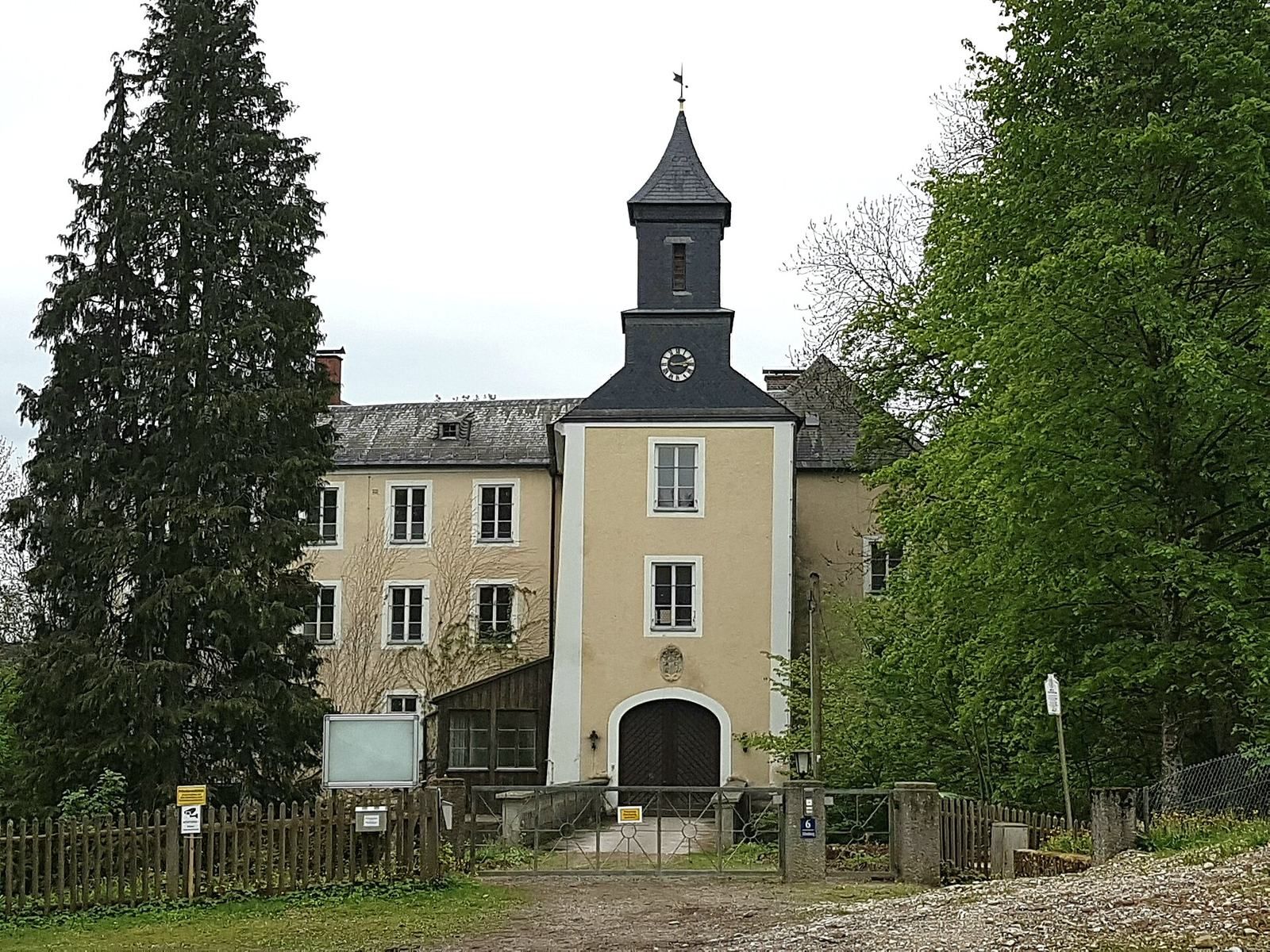
Altenburg Castle stands on the high bank of the Mangfall, west of Feldkirchen-Westerham and south of Aschbach, at 633 metres above sea level. The four-wing complex encloses an inner courtyard. Its ranges rise three storeys and have roofs that slope down on all sides. A central section projects from the southwest side; a projecting, three-storey gatehouse stands to the northeast, topped by a small roof turret and a tent-shaped roof. The castle’s core dates to the mid-16th century. It was altered in the 18th century and restored and remodelled in 1879. Interior fittings also remain.
Moat, garden, and estate
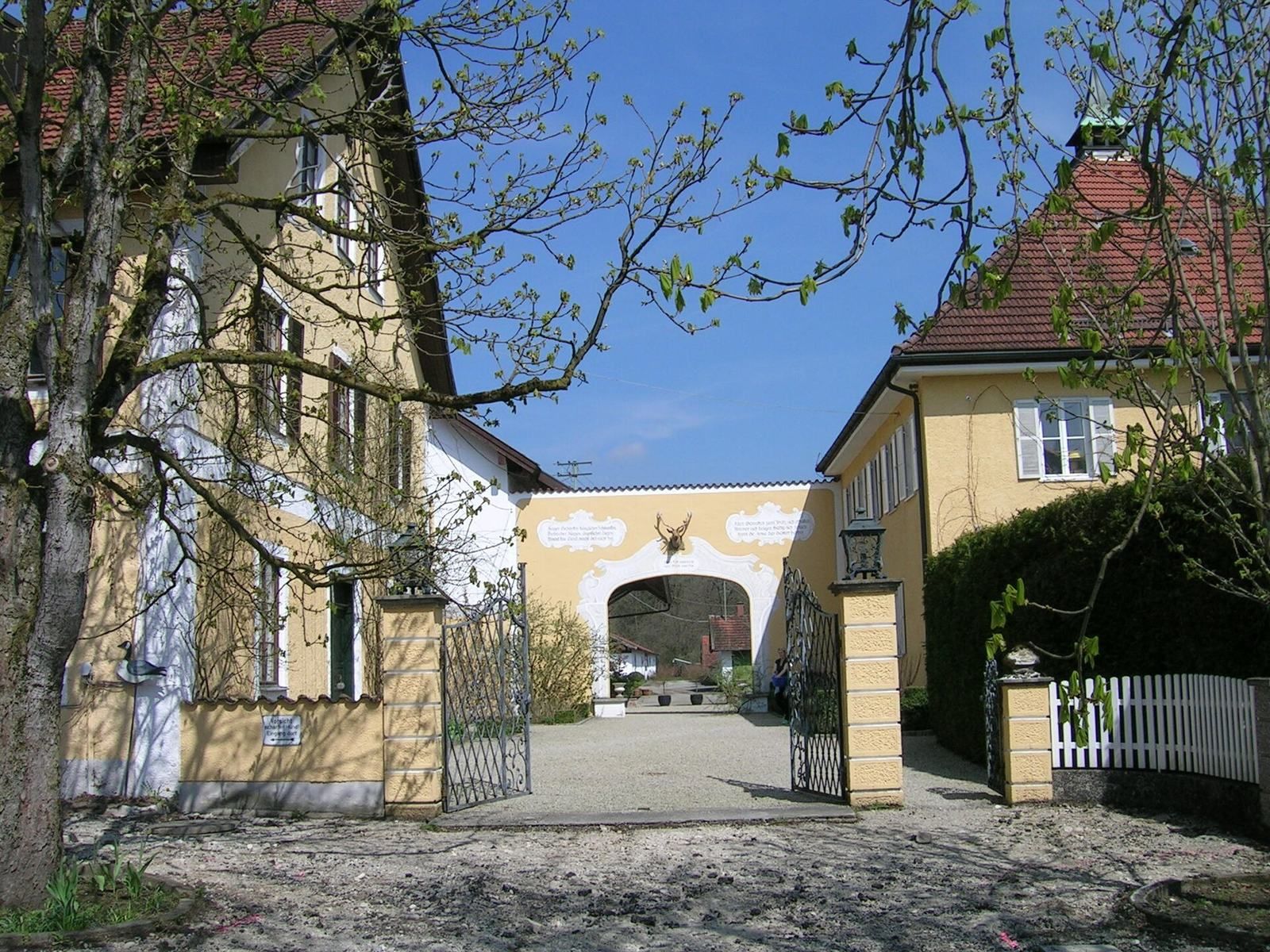
An 18th-century bridge crosses the former moat. The landscape garden, created in the second half of the 19th century, extends into adjoining woodland. Below the castle, in the Mangfall valley, lies Niederaltenburg, the former estate that once belonged to it.
Buried remains
Buried evidence dating to the medieval and early modern periods is associated with the castle, its predecessor buildings, and the former estate farm.