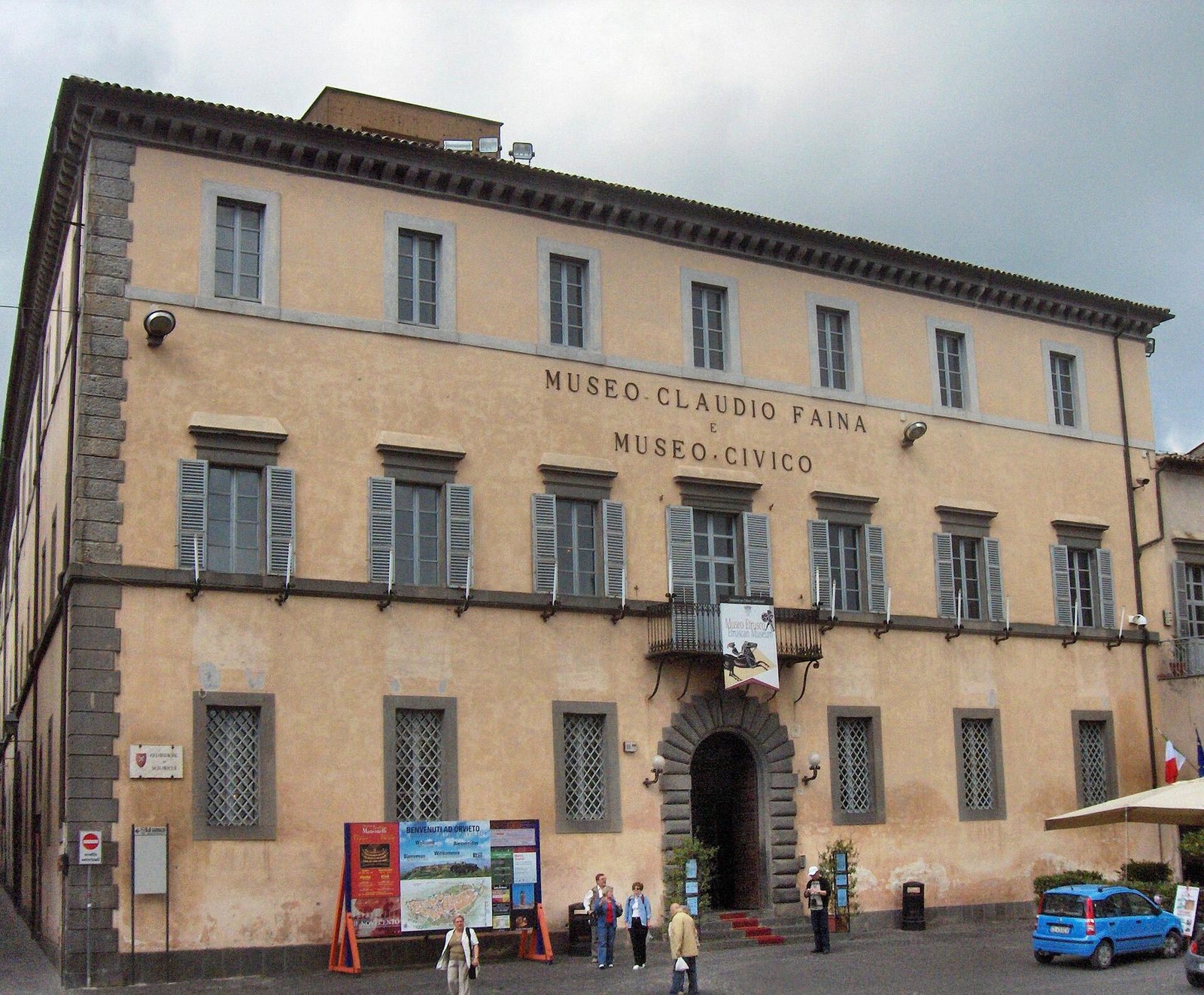
Museo Claudio Faina: An Archaeological Museum in Orvieto
Site at a Glance
- Popularity
- Low
- Country
- Italy
- Primary era
- Medieval
- Eras represented
- Medieval, Modern
- Civilizations
- Italian
- Site type
- Domestic
- Remains
- Elite Residence
On this page7 sections
History
Origins and growth
Museo Claudio Faina is an archaeological museum in Orvieto, Italy, developed from a private collection Count Mauro Faina began assembling in 1864. An oral tradition traces its initial impetus to 34 ancient vases given to Mauro by Princess Maria Bonaparte, daughter of Lucien Bonaparte, Napoleon’s brother. The vessels came from a cemetery at Vulci, an ancient city of the Etruscans, a people of central Italy. Mauro enlarged the collection chiefly by buying antiquities and took part in acquiring a group of 3,000 ancient coins.
Mauro and his nephew, Count Eugenio Faina, built up the archaeological collection from the 1860s into the 1880s. Eugenio preferred finds from local excavations to purchases from dealers, and objects from the Crocifisso del Tufo cemetery appear to have entered the collection during his work. The collection was first kept in the Faina family palace in Perugia.
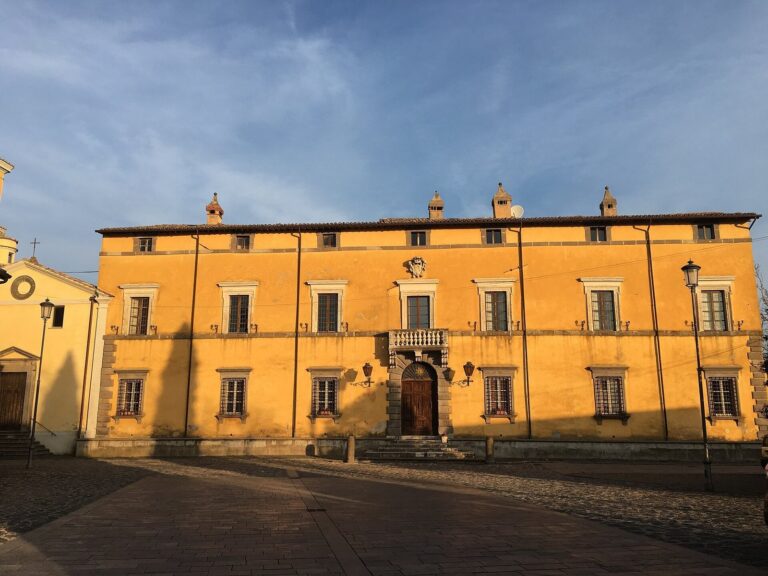
A Faina count had bought a medieval palace in Orvieto in 1855–56. It had belonged to the Monaldeschi family and had already undergone several refurbishments. The collection was later transferred there, and the museum took the name of Claudio Faina.
Private collection and later displays
The collection remained privately held in the palace under Claudio Faina until the 1950s. Before then, visitors apparently had to ask the count for permission to see it, probably paying a fee. Later, objects from the Civic Museum were added to the ground-floor displays.
Remains
The museum occupies medieval Palazzo Faina on Piazza del Duomo, opposite the façade of Orvieto Cathedral. The palace’s southern side runs along Via Lorenzo Maitani, where Palazzo Netti stands several houses to the west. The Faina Museum is separate from the National Archaeological Museum, which occupies part of a thirteenth-century Gothic papal palace.
Palace interiors
Rooms on the piano nobile, the palace’s principal upper floor, were decorated with frescoes by Italian painter Annibale Angelini in 1865–66.
Archaeological collections
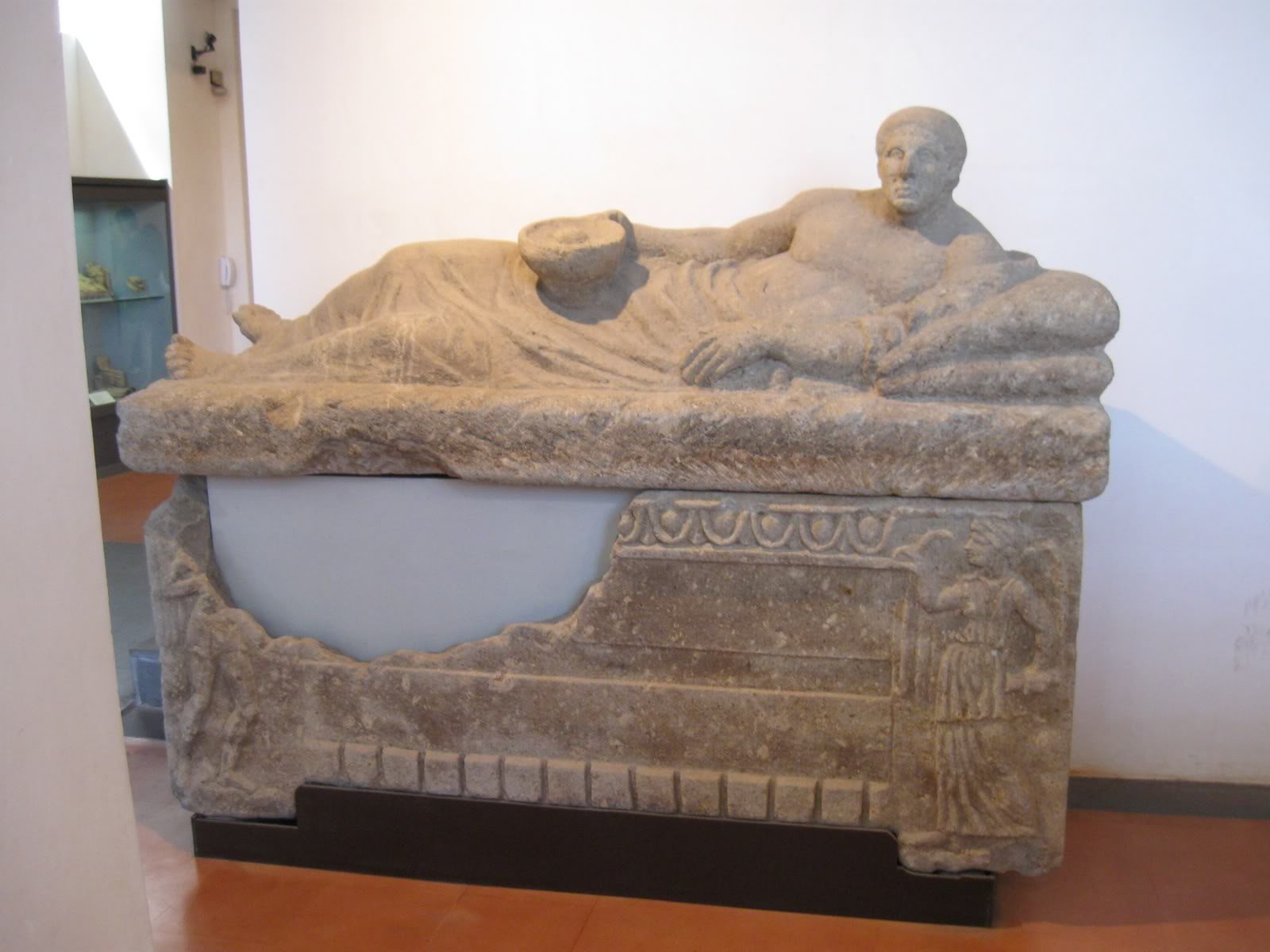
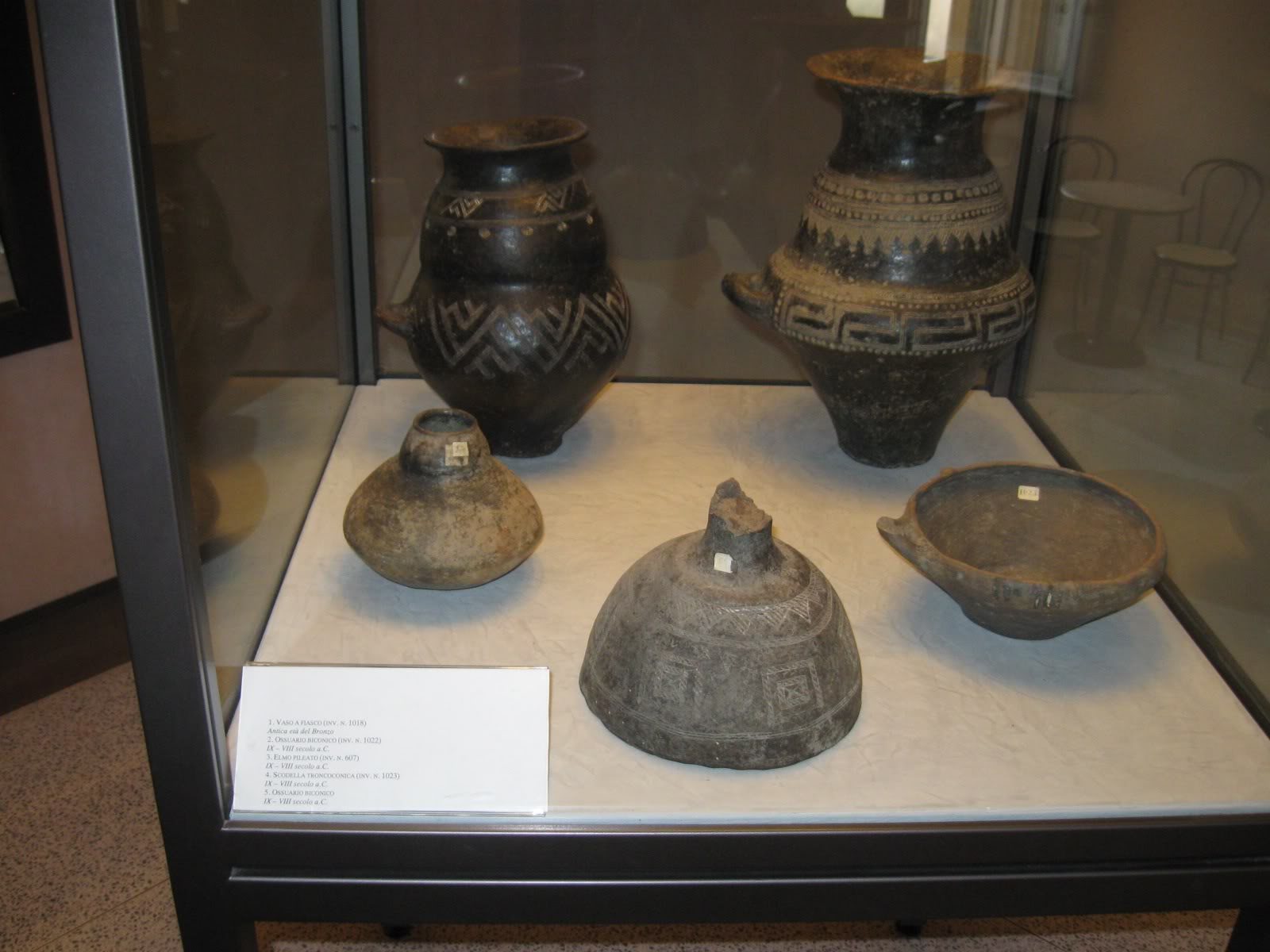
The holdings include prehistoric finds, ancient Greek objects, Etruscan grave goods from tombs around Orvieto, bronze figures dedicated in religious practice, vases, coins, and an Etruscan sarcophagus. The pottery includes Attic wares, associated with Athens and its surrounding region, as well as Etruscan vessels. Black-figure and red-figure painting, two different vase-decoration techniques, appear on pottery dating to the sixth and fifth centuries BCE. Greek black-figure amphorae are among the objects in the collection.
Ground-floor displays
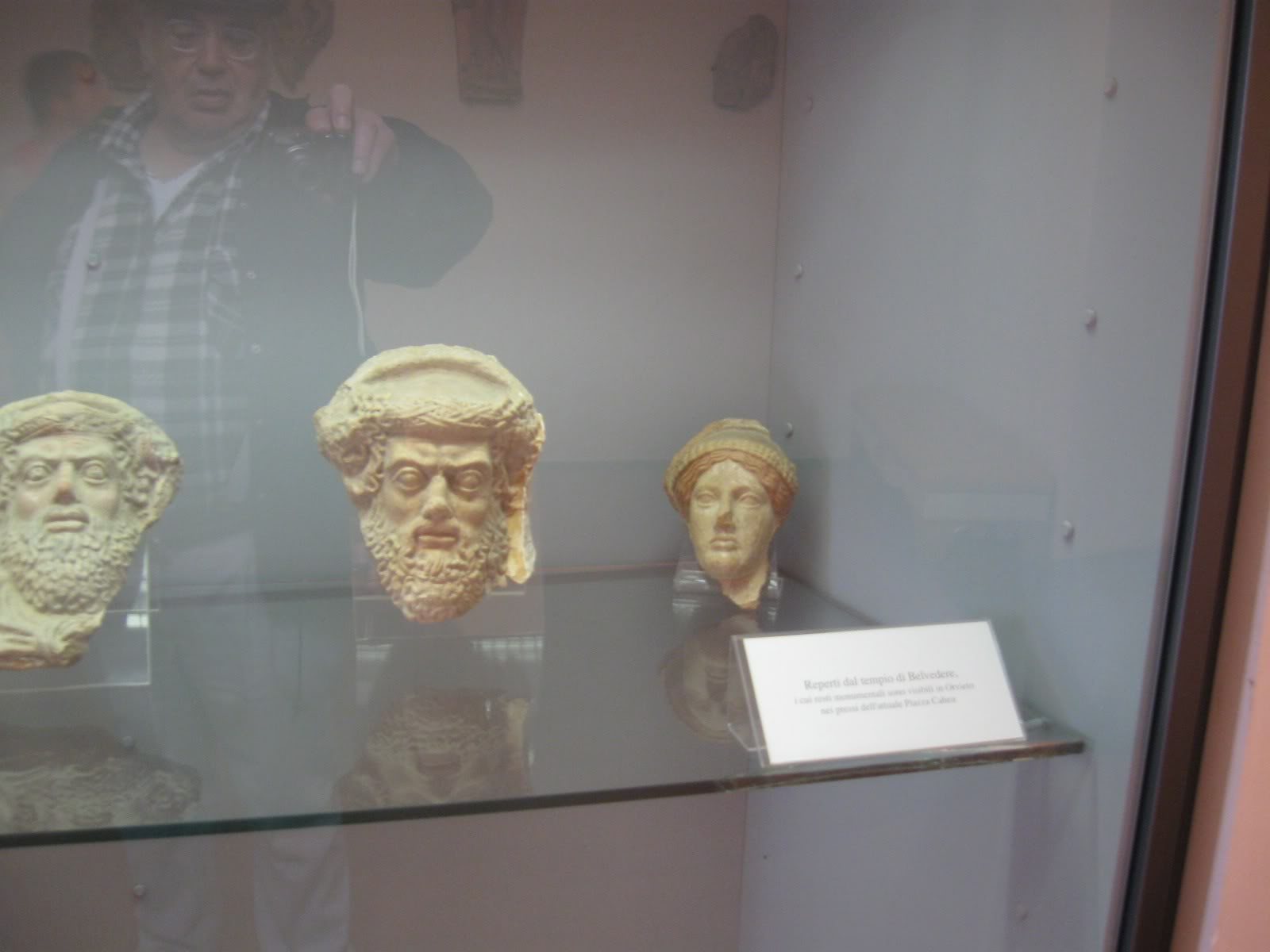
The ground floor preserves the pediments, or decorated gable ends, from Orvieto’s Temple of Belvedere. It also displays the Venus of Cannicella, a statue found in a sanctuary within the Cannicella cemetery, and a warrior-head cippus, an upright stone marker often used as a grave monument. The cippus bears an Etruscan inscription and came from the Crocifisso del Tufo cemetery.