Maaltebrugge Castle: A Historic Residence and Event Venue in Ghent
Site at a Glance
- Popularity
- Low
- Country
- Belgium
- Primary era
- Early Modern
- Eras represented
- Early Modern, Modern
- Civilizations
- Belgian, Habsburg, Holy Roman Empire
- Site type
- Domestic
- Remains
- Castle
On this page10 sections
History
Early residence
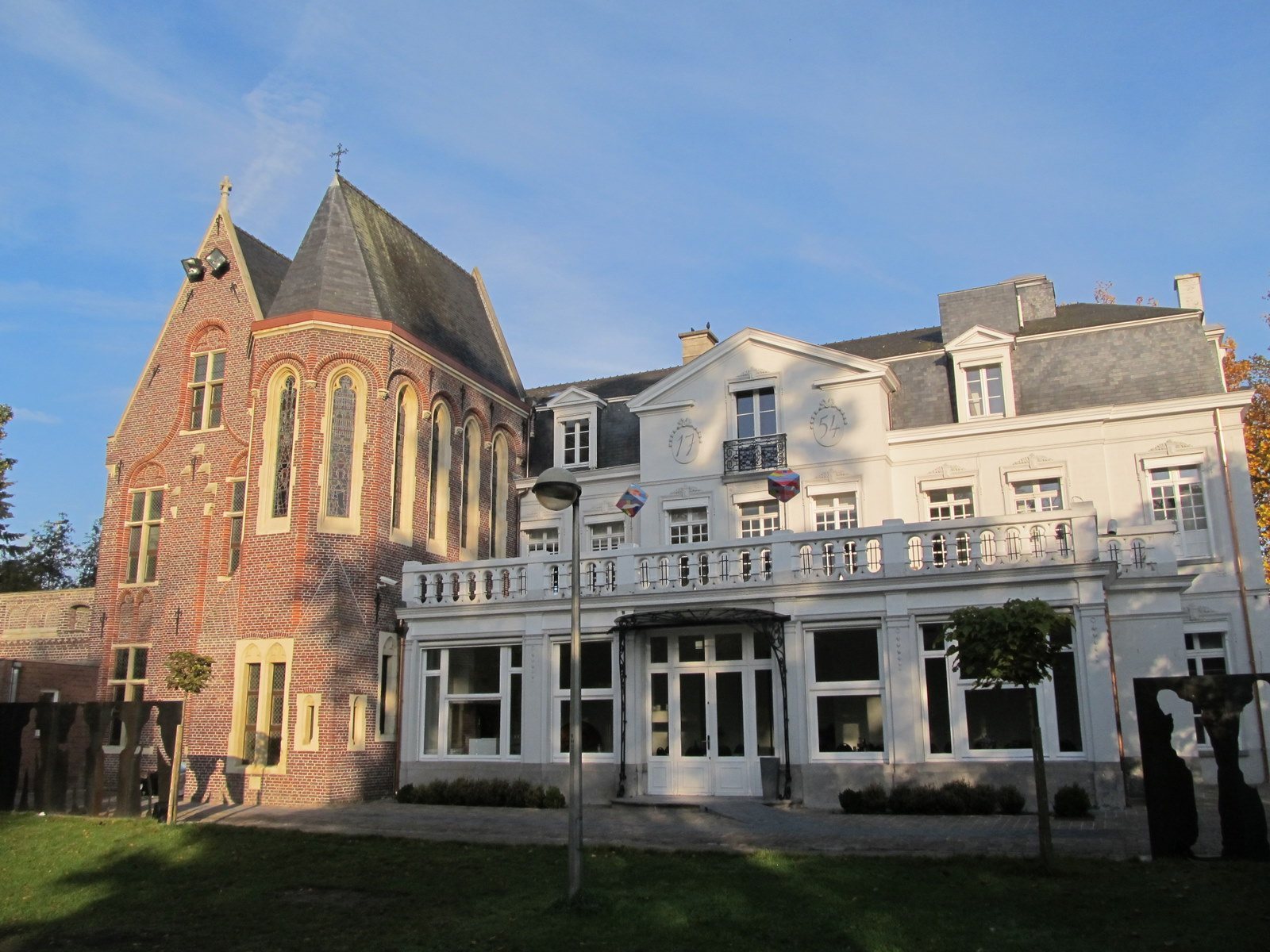
Maaltebrugge Castle stands in Maaltebrugge Park on the outskirts of Ghent, Belgium, and probably dates to 1754. Its main building is in the classical style, with balanced forms and proportions inspired by classical antiquity.
In the early nineteenth century, Ghent textile manufacturer Hubert Lousbergs acquired the castle and made it a summer residence. He renamed it Château de Maaltebrugghe. In 1815, Lousbergs gave the property to his daughter Henriette on her marriage to Félix de Hemptinne. The castle later served as a summer residence for the de Hemptinne family.
The de Hemptinne family
After Félix’s death, the castle passed to his son Joseph. Around 1860, Joseph enlarged it to house his eight children. His son Charles inherited the property after Joseph’s death and was the last family member to live there. Charles left in 1940.
War and later use
During the Second World War, Charles moved the chapel’s altarpiece to the church at Afsnee, where it remains. In 1955, Charles’s son Jacques sold the castle and park to the City of Ghent. The castle was later used as a retirement home and fell into disrepair. Frank De Palmenaer bought it in 1999 and renovated it; it began operating as an event venue in 2005.
Remains
The castle’s buildings include a classical main structure, a later Neo-Gothic section, and an adjoining chapel. The grounds include a park reshaped as an English landscape garden, designed to create a naturalistic, park-like setting.
Buildings and grounds
Classical main building
The main building is classical in style. Its eastern side façade bears the coat of arms of the de Hemptinne family.
Neo-Gothic section
A section designed by Jean-Baptiste Bethune was added around 1860 in the Bruges Neo-Gothic style, a regional nineteenth-century revival of medieval Gothic architecture. Bethune was a Belgian architect and designer associated with the Gothic Revival.
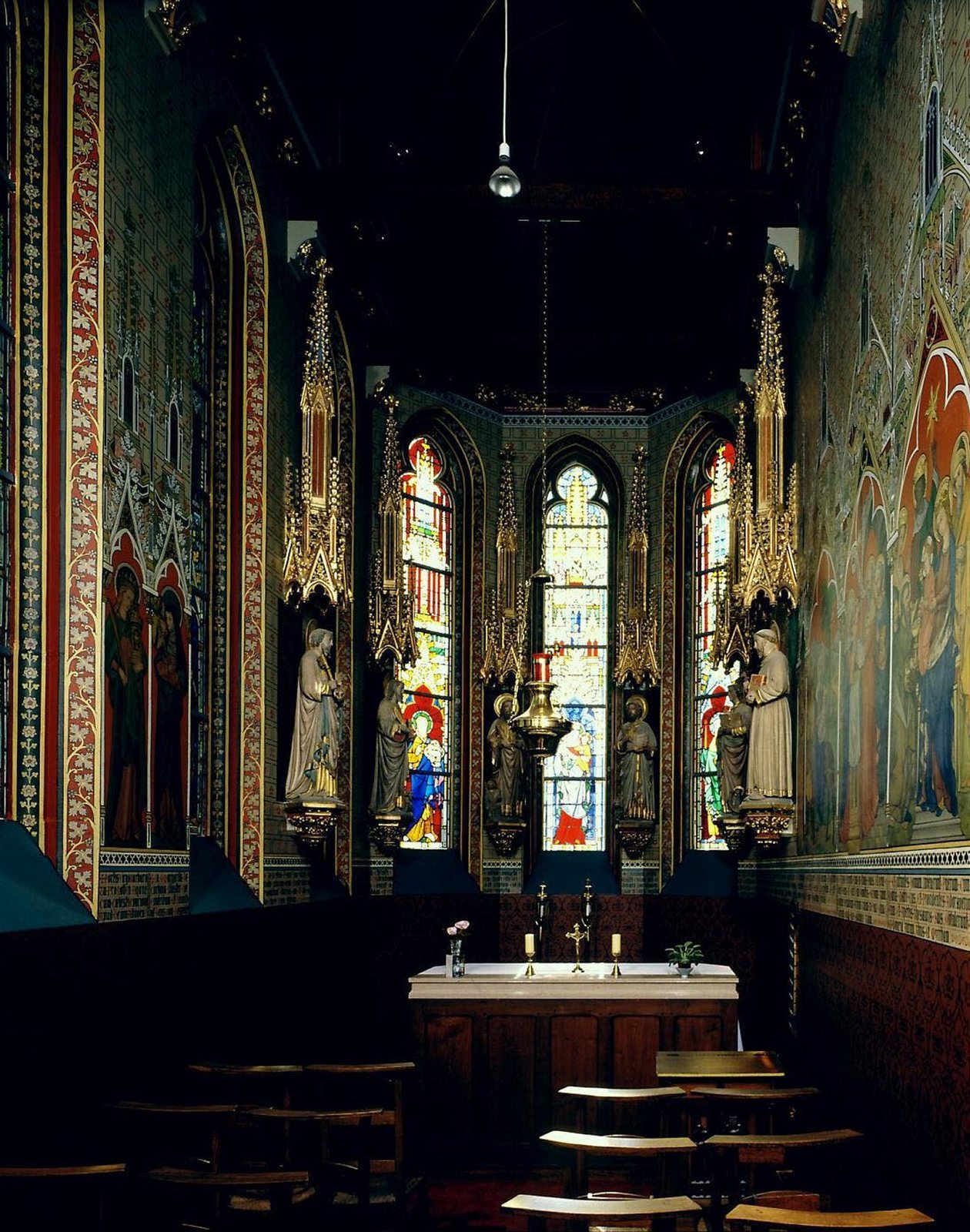
Chapel
The adjoining chapel is Neo-Gothic. Bethune’s workshop designed and made its stained-glass windows, while the Bressers-Blanchaert workshop, known for church art and decoration, produced its wall paintings. Bethune designed the chapel’s altarpiece, and Blanchaert worked on it for 40 years. Charles de Hemptinne moved the altarpiece to the church at Afsnee during the Second World War, and it remains there.
Park and fountain
Maaltebrugge Park was transformed into an English landscape garden. The fountain in front of the castle was made after this change and was formerly a bubbling spring.