Raubschloss Liebenstein: A Medieval Castle Ruin in Germany
Site at a Glance
- Popularity
- Low
- Country
- Germany
- Primary era
- Medieval
- Eras represented
- Medieval
- Civilizations
- Unclassified
- Site type
- Military
- Remains
- Castle
On this page5 sections
History
Raubschloss Liebenstein is a medieval castle ruin on a rocky spur in the Schwarzwassertal near Pobershau, Germany. Probably built in the 12th century, the fortification stood here into the 14th century and may have helped protect a road through the valley.
The site may have served as the seat of a village lord’s estate, perhaps held by a Bohemian vassal, a landholder under a superior ruler. That connection is uncertain, since the area was then forest and uninhabited. The abandoned village of Ullersdorf is thought to have been associated with the fortification. Together, the settlement and stronghold may have supported the spread of settlement in the region from the second half of the 12th century. This expansion appears to have been aided by a route known as the Bohemian track, associated with travel from or through Bohemia.
The name Liebenstein appears on later maps. In local usage, the ruins were called Raubschloss, meaning “robber’s castle.”
Remains
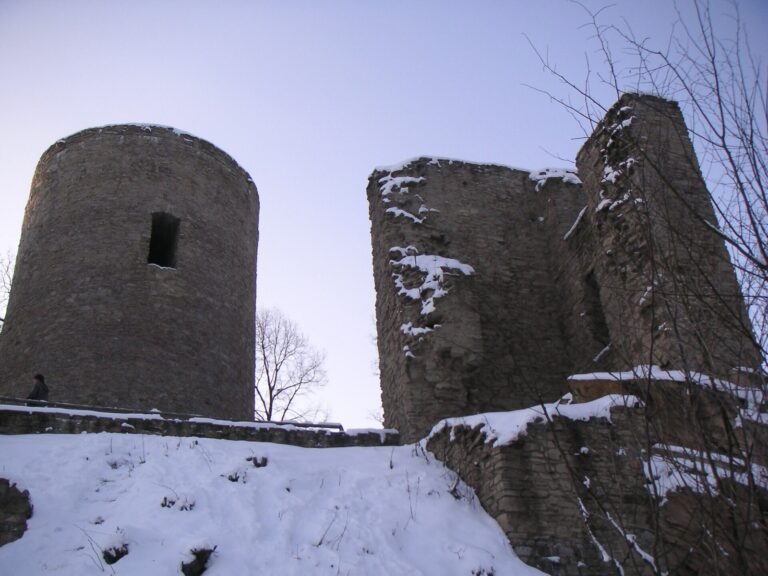
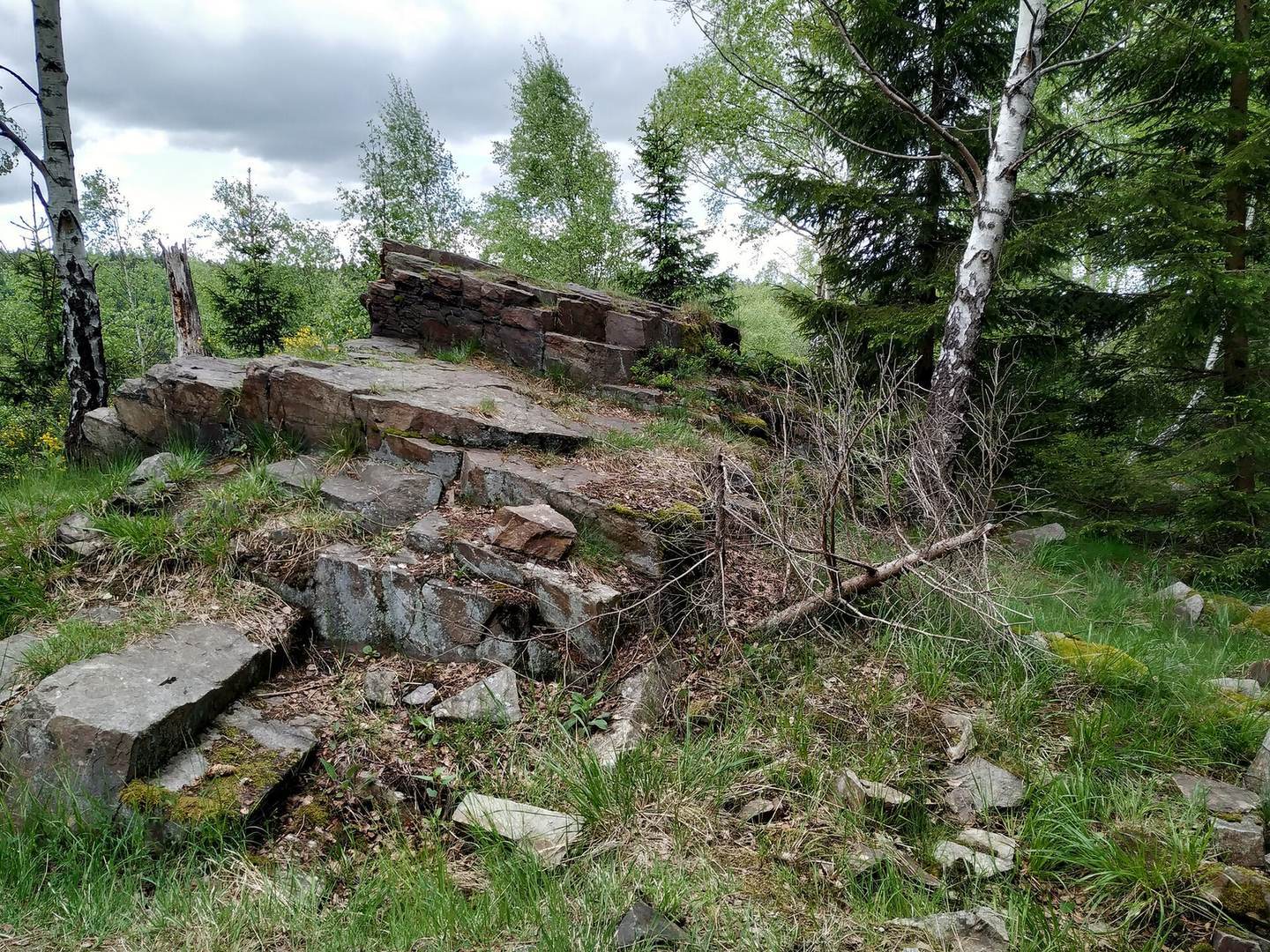
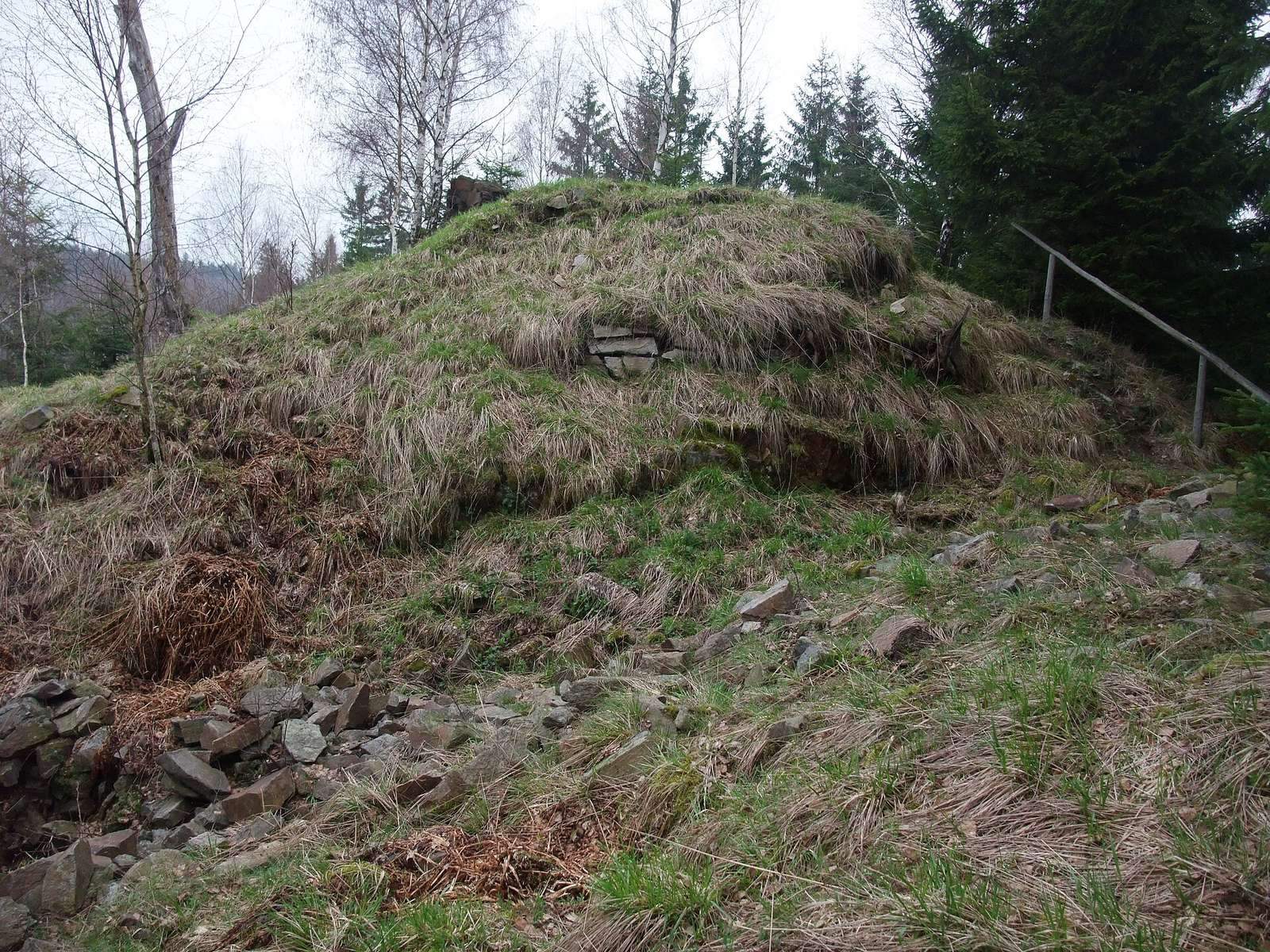
The fortification occupies a northwest-facing rocky spur within a bend of the Schwarze Pockau. It measured about 90 metres long and 25 metres wide, combining earthwork defenses with a masonry-faced rocky core.
Fortified layout
Outer defenses and approach
Two earth ditches, with an earthen bank between them, blocked the fortification off from the hinterland. A fortified approach led to the site from the northwest.
Raised core stronghold
The interior included an almost square area and a raised central stronghold, separated by a cross-ditch. The stronghold used a rocky cliff partly faced with stonework laid without mortar. A substantial tower appears to have remained visible until the 18th century. Today, wall remnants and shaped stones survive. Finds from the site date from the 12th to the 14th century.