Kelvingrove Art Gallery and Museum: Glasgow’s Art and Natural History Museum
Site at a Glance
- Popularity
- Very High
- Country
- United Kingdom
- Primary era
- Modern
- Eras represented
- Medieval, Early Modern, Modern
- Civilizations
- Dutch, French
- Site type
- Museum
On this page6 sections
History
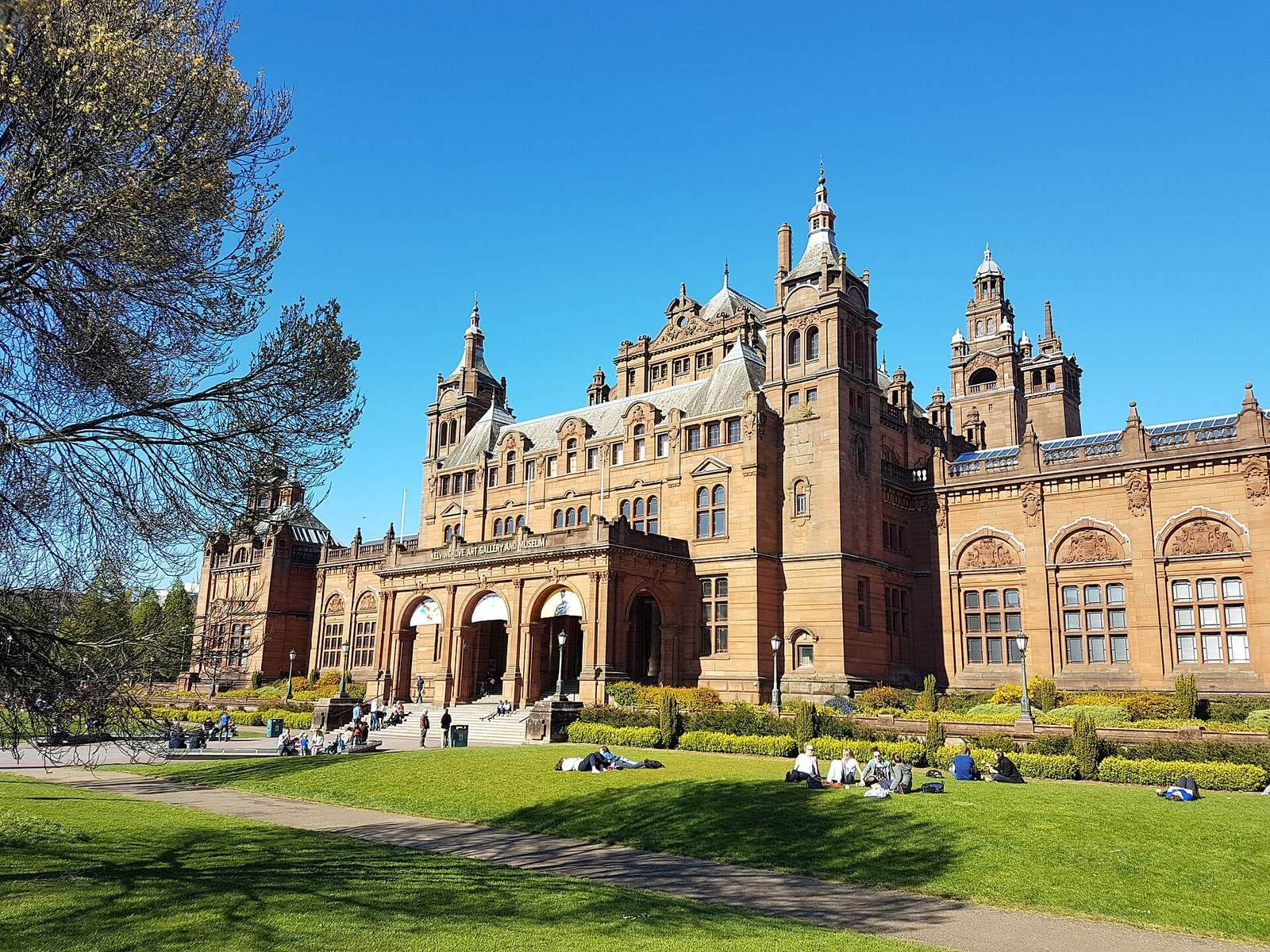
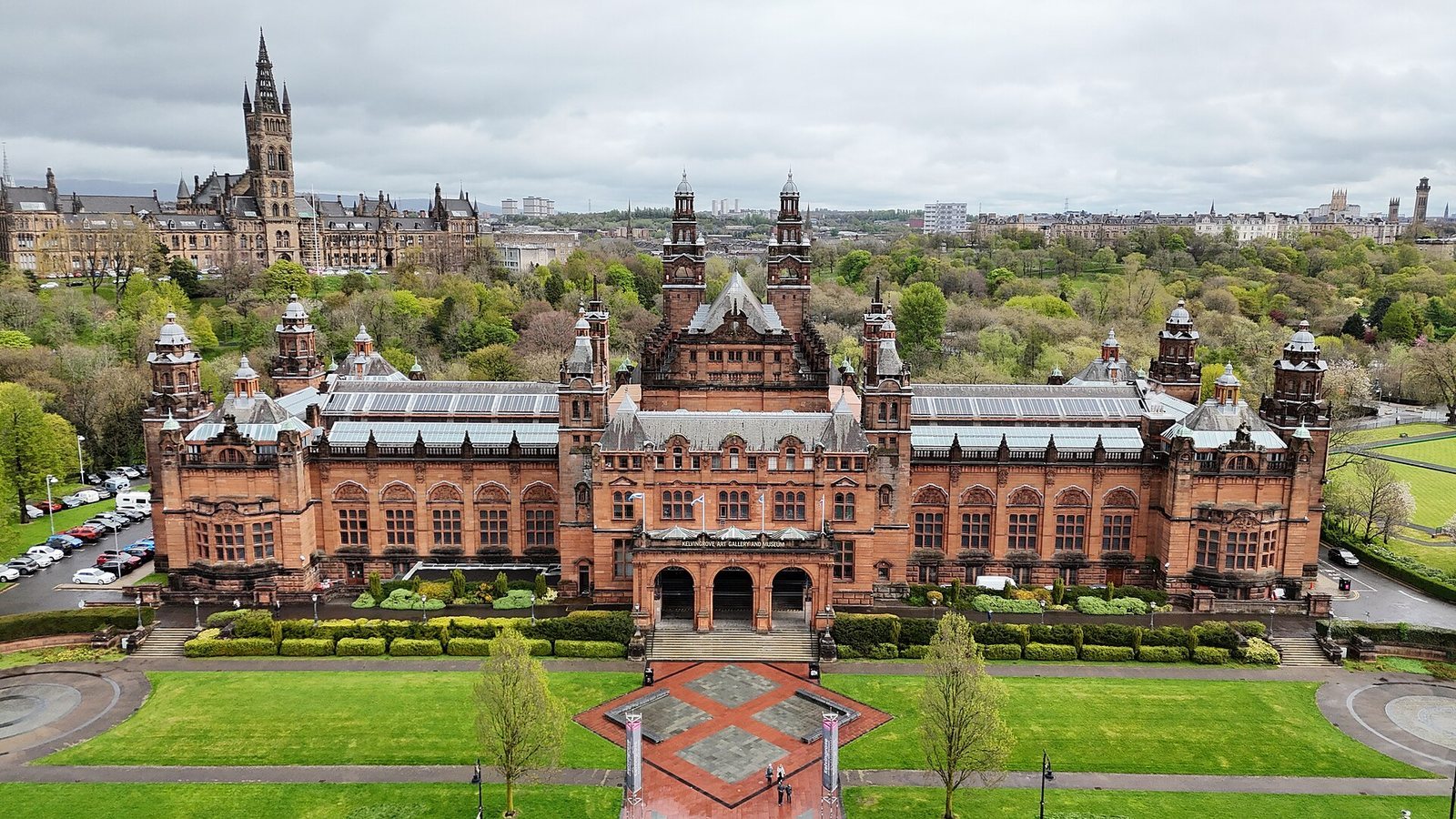
Kelvingrove Art Gallery and Museum is a museum in Glasgow, United Kingdom, opened in 1901 in a building designed by John William Simpson and E. J. Milner-Allen. Its Spanish Baroque-inspired design draws on an architectural style associated with the Baroque period in Spain. Proceeds from the 1888 International Exhibition in Kelvingrove Park funded construction, and the museum opened to house art assembled for the Glasgow International Exhibition.
Construction and opening
The collection’s core came from Glasgow’s former McLellan Art Gallery, with further holdings transferred from the former Kelvingrove House Museum. A local tale claims that an architect discovered the building’s front and rear had been reversed and tried to leap from a tower. The story is false.
Refurbishment and later history
The museum closed for refurbishment in 2003 and reopened on 11 July 2006, with Queen Elizabeth II formally reopening it. The director had bought the copyright to Salvador Dalí’s Christ of Saint John of the Cross after discussing the painting with the artist. From 1993 until the refurbishment was complete in 2006, the painting was held at the St Mungo Museum of Religious Life and Art.
Remains
Building and fittings
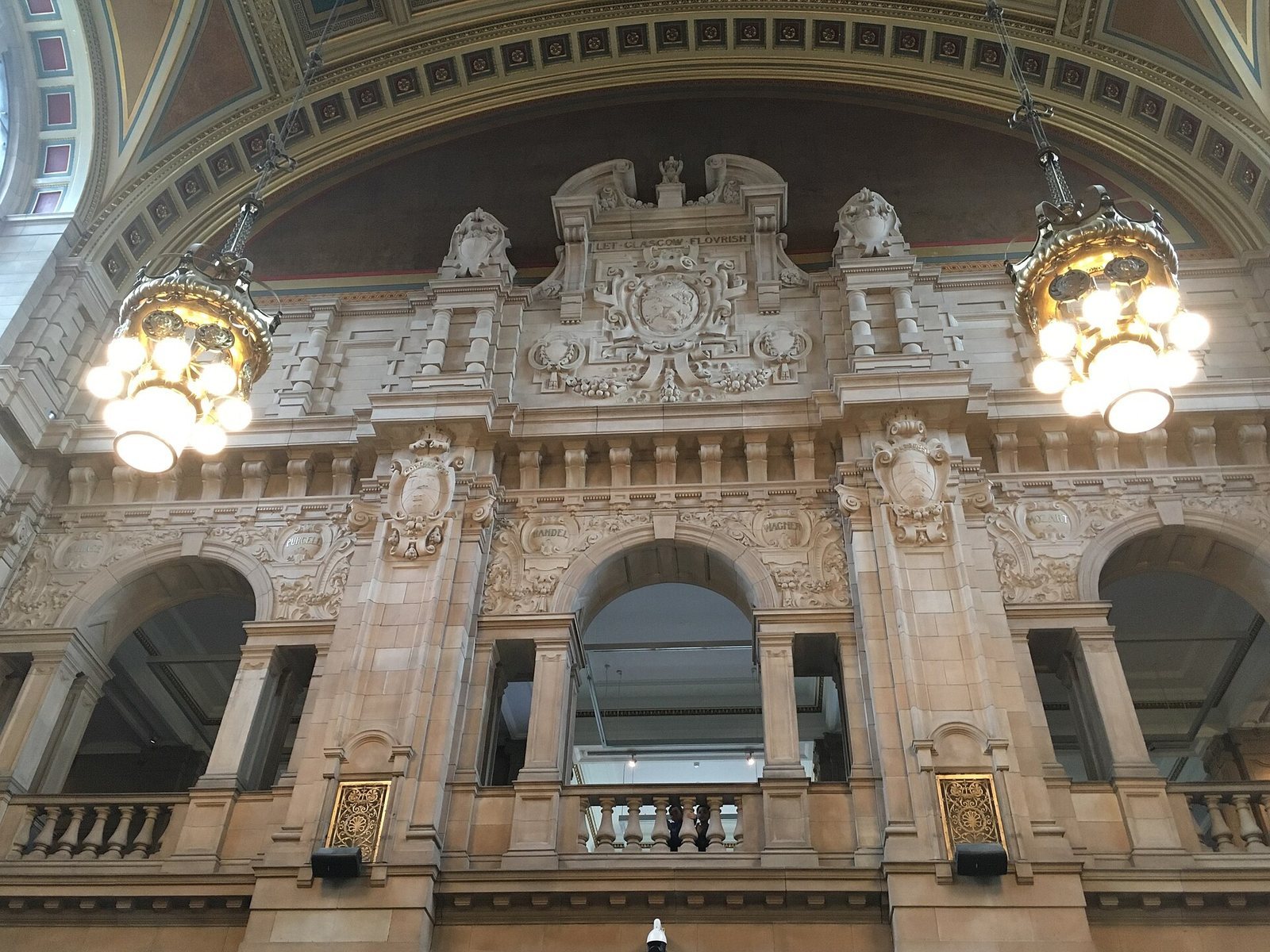
At Glasgow’s western end, the museum stands beside Kelvingrove Park and the River Kelvin, facing Argyle Street and near the University of Glasgow. Its red-sandstone design includes sculptural decoration by George Frampton and Francis Derwent Wood. The central hall contains a large pipe organ made by Lewis & Company in 1901. Refurbishment enlarged the basement and raised the number of items on display to 8,000.
Collections and displays
The museum’s collection comprises 9,000 works across European art, natural history, and arms and armour. Its art includes Old Masters, respected European painters of earlier periods, and French Impressionists associated with a nineteenth-century art movement. Other holdings include Dutch Renaissance artists, the Scottish Colourists, a group of Scottish painters, and the Glasgow School, artists and designers associated with Glasgow around 1900. In the West Court, a Spitfire Mk.21, a variant of the British fighter aircraft identified as LA198 and formerly associated with Glasgow’s 602 Squadron, hangs above taxidermy displays, where animal specimens have been prepared and preserved.