Castle of Taggia: A Medieval Defensive Fortress in Italy
Site at a Glance
- Popularity
- Medium
- Country
- Italy
- Primary era
- Medieval
- Eras represented
- Medieval, Early Modern, Modern
- Civilizations
- Genoese, Holy Roman Empire, Italian
- Site type
- Military
- Remains
- Castle
On this page11 sections
History
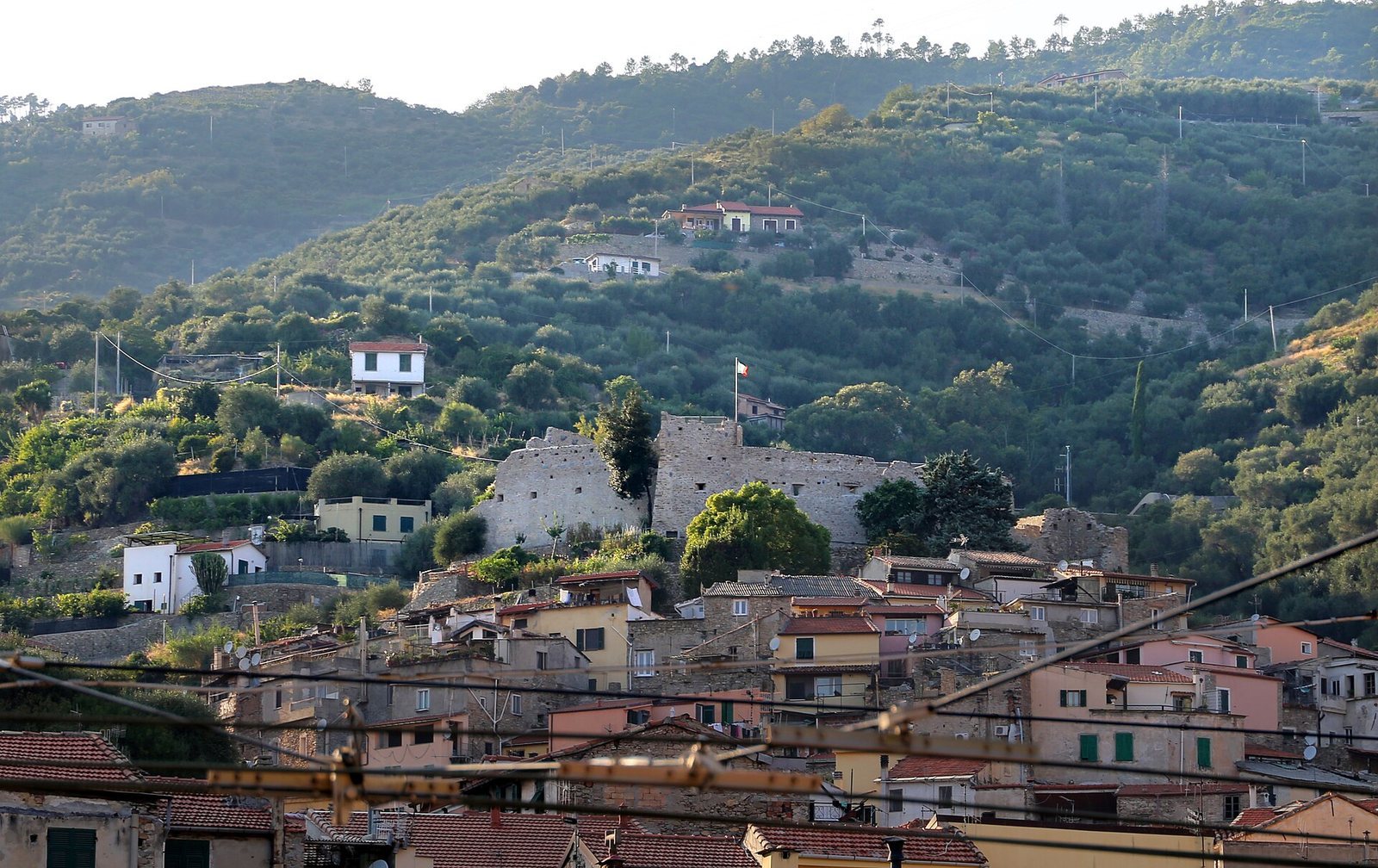
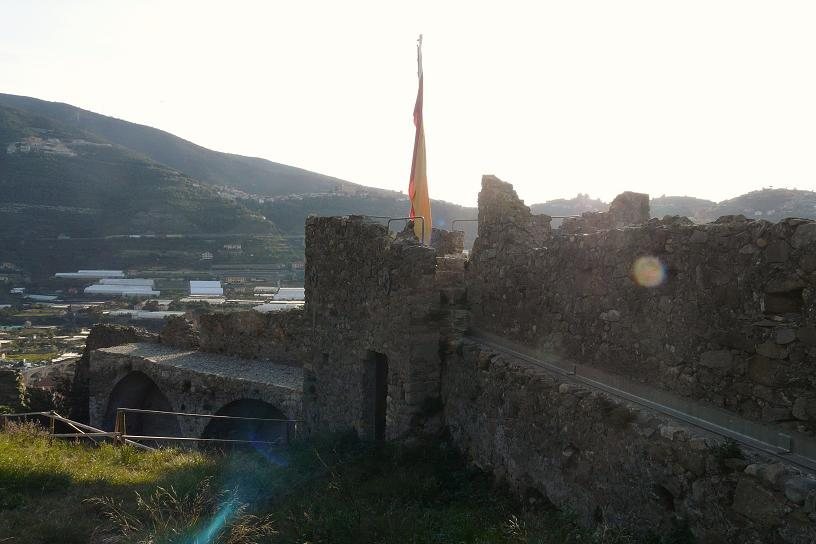
The Castle of Taggia is a ruined defensive complex on a hill west of Taggia’s historic center in Italy. The elevated site may have served as a defensive or supervisory post in Roman times or earlier, though this remains uncertain. The castle itself was probably built around the 11th century by the Clavesana, a noble family that held feudal lordship over Taggia. During the medieval period, settlement spread increasingly to the east and south of the castle.
Genoese rule and rebuilding
In 1228, Taggia came under the Republic of Genoa, a maritime republic that governed Genoa and surrounding territories. Genoese forces destroyed the castle, and damage to the Tower of the Clavesana at the summit is attributed to that attack.
During the 16th and 17th centuries, Genoese authorities and the local community enlarged and altered the ruined complex. In the 16th century, the walls were extended to include the Convent of San Domenico, a Dominican religious house associated with the Order of Preachers. The castle remained in its expanded form until the 18th century.
Later uses and conservation
Alongside its military role and use as a garrison, the castle later served other purposes. In the 1960s, it housed tanks for the municipal aqueduct. More recent conservation and restoration work renewed appreciation of the medieval complex, and a theatre for cultural events was built there in 2016.
Remains
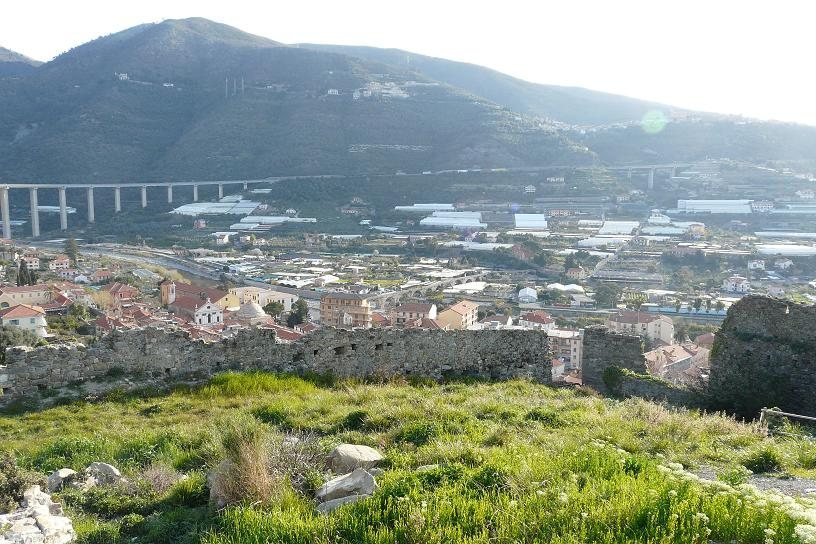
The surviving complex occupies a hill west of Taggia’s historic center, between the Santa Lucia stream to the south and the Barbarasa stream to the north. Its defensive layout combined walls around the site with structures positioned along the summit.
Defensive structures
Walls and bastions
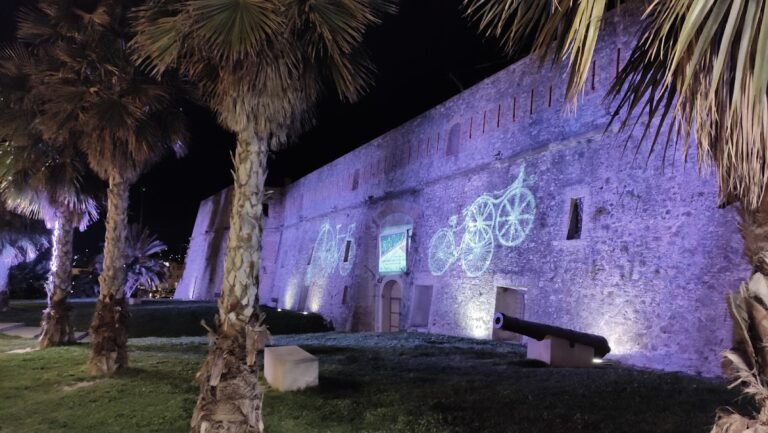
The original defenses included eight gates and eight bastions, projecting fortifications that strengthen a wall. The Orso, or Bear, and Ciazzo bastions remain visible. The walls also enclosed the Convent of San Domenico.
Tower of the Clavesana
The truncated Tower of the Clavesana stands along the summit of the castle hill.
Depictions and later features
Historic depictions
A painting preserved in the municipal palace and a map by Matteo Vinzoni, an 18th-century Italian cartographer, show the castle in its entirety.
Excavated material
Excavations yielded objects and materials dating from the pre-Roman period through the Middle Ages, mostly pottery fragments. They are now kept in storage at the Sanremo Archaeological Museum.
Theatre
Built in 2016, the theatre forms part of the castle complex and is used for cultural events.