Hohenhewen Castle: A Medieval Stronghold in Engen, Germany
Site at a Glance
- Popularity
- Medium
- Country
- Germany
- Primary era
- Medieval
- Eras represented
- Medieval, Modern
- Civilizations
- German, Holy Roman Empire
- Site type
- Military
- Remains
- Castle
On this page14 sections
History
Origins and the Lords of Hewen
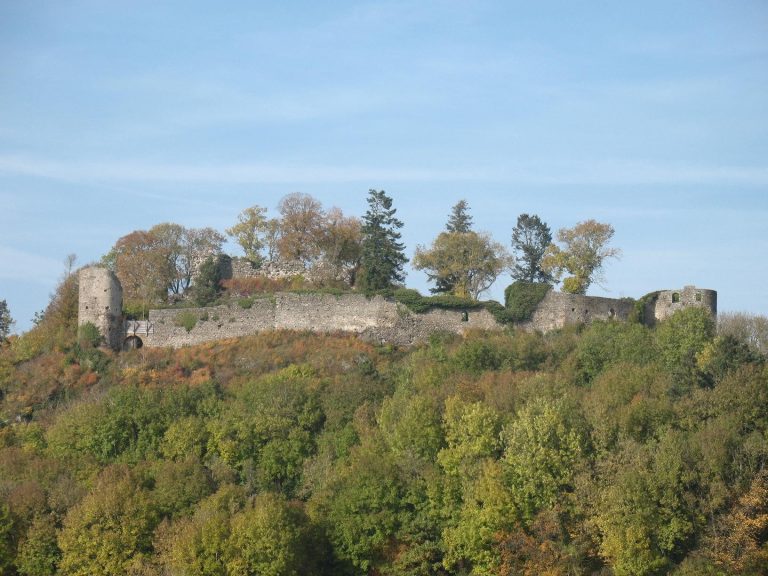
Hohenhewen Castle is a ruined hilltop fortress in Engen, Baden-Württemberg, Germany. The Lords of Engen probably built it in the early twelfth century, and no later than 1170. The castle became the family’s residence and gave its lords a new name: Walter of Hewen was the first to take a name from it in 1152. The family, first named in a 1050 charter of the Count of Nellenburg, thereafter became known as the Barons of Hewen. The castle is also called Hohenhöwen; forms of its name in 1189 include Hewin and Hewen.
From the thirteenth century, the Lords of Hewen made Engen their residence town. Their lands included several other castles, among them Neuhewen, Hewenegg, Boll, Tudoburg and Wildenstein in the Danube valley.
Transfers and sieges
In 1291, Hohenhewen became a fief of the Duchy of Austria. A fief was land held under a ruler’s authority. The indebted brothers Peter and Wölflin of Hewen pledged the castle to the Habsburgs in 1398, transferring control as security for their obligations. The Habsburgs pledged the lordship to the Counts of Lupfen-Stühlingen in 1404. Around 1415 it became an imperial fief, a grant held under the authority of the Holy Roman Empire. The counts later acquired it outright in exchange for the Lordship of Tyrol.
Under the counts, Hohenhewen gained a reputation as a stronghold of “robber knights,” a term for knights accused of using force against merchants or travellers. After the counts attacked merchants from Ulm in 1441, the Swabian League, an alliance of imperial cities, besieged the castle during the War of the Cities but failed to capture it. Swiss forces also failed to take Hohenhewen during the Swiss War of 1499. The castle was not captured in the German Peasants’ War of 1524–25, a broad uprising in German-speaking lands.
Destruction and later history
The Hewen family ended in 1570. When the Engen-Lupfen line came to an end in 1582, Hohenhewen passed as a pledge to Count Conrad of Pappenheim, whose family held the hereditary office of marshal at court. In 1639, during the Thirty Years’ War, a major European conflict, Bavarian mercenary infantry besieged and destroyed the castle. That same year, it passed by marriage to the Lords of Fürstenberg. They did not rebuild it, and the ruins decayed.
On 3 May 1800, French troops drove Austrian forces from positions they had occupied in the ruins. The Black Forest Association in Engen cleared the site in 1937. Between 1957 and 1959, the Fürstenbergs sold the castle to the state of Baden-Württemberg; the Hewenhof farmstead remained in their ownership until 1959. A television relay station was built in the castle in 1963. Since 1999, the Hohenhewen working group has maintained the ruin.
Remains
Summit setting and layout
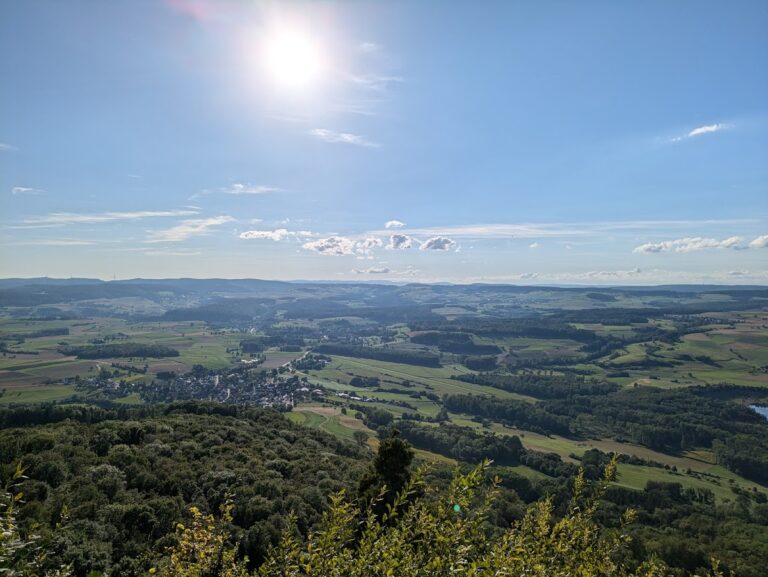
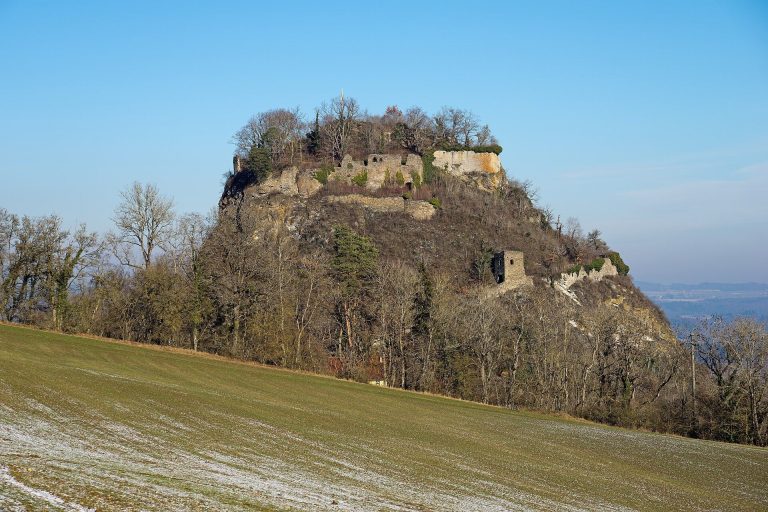
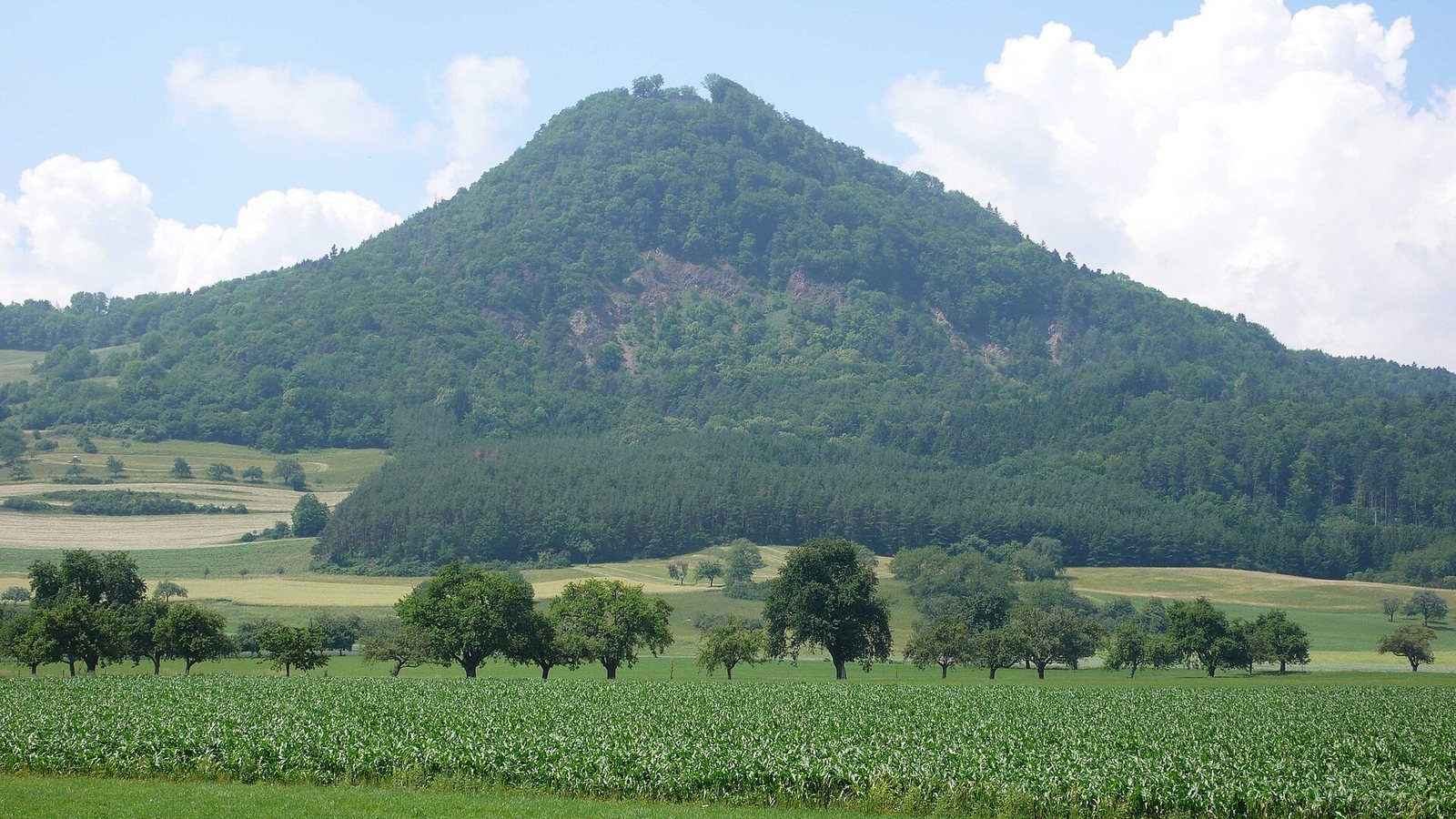
The castle stands on the wooded summit of Hohenhewen, southwest of Anselfingen, within Engen. The mountain is a steep-sided basalt cone reaching 845.3 metres above sea level and rising about 300 metres above its surroundings. The castle complex measured approximately 250 by 60 metres. Its main castle had an elongated plan with an outline between polygonal and oval. A large residential building probably stood to the north, with a tower to the south.
Walls and buildings of the main castle
Gate and defensive wall
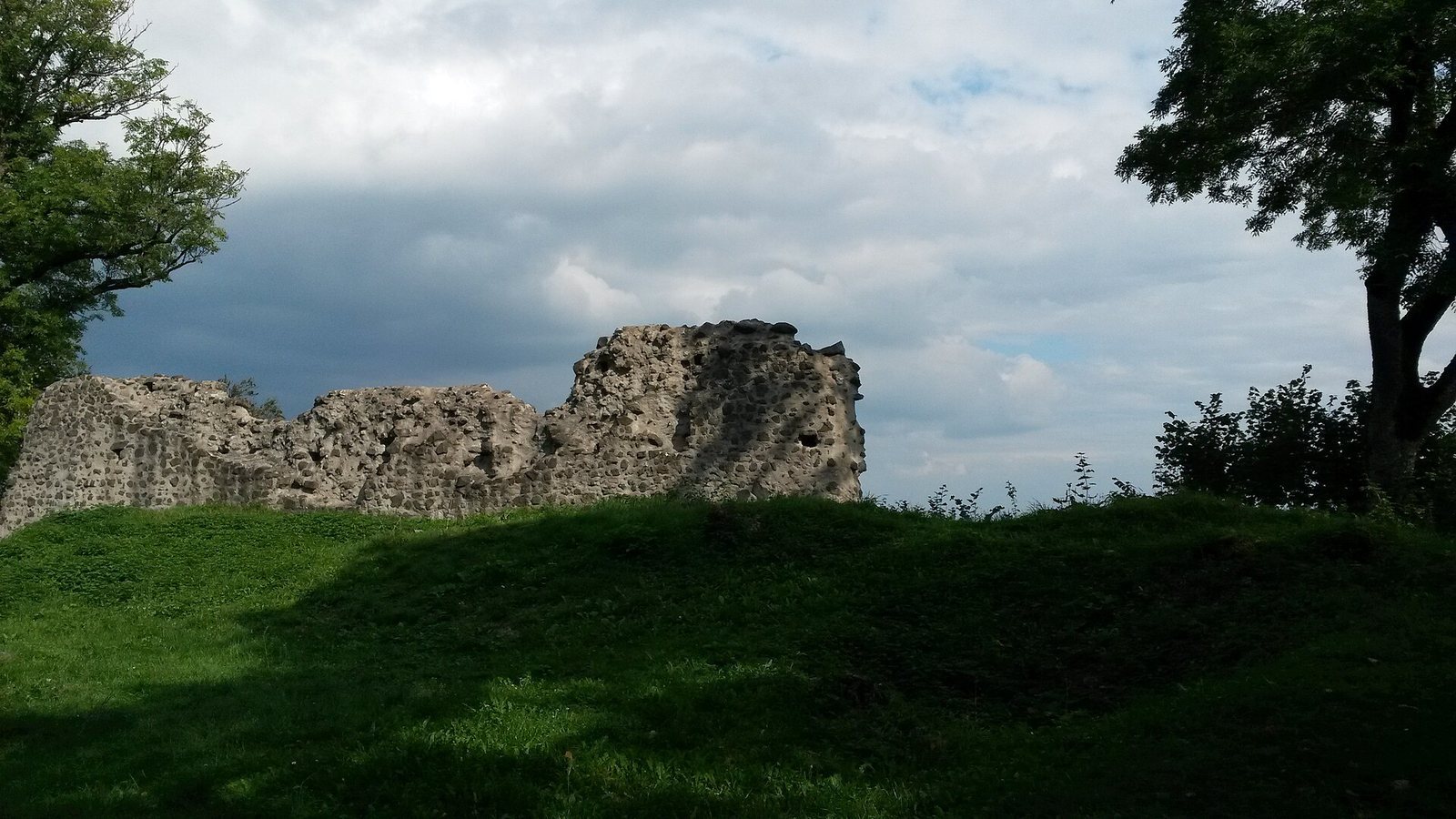
Parts of the gate and the outer defensive wall survive. The wall enclosed the southern and western sides of the main castle, while the steep eastern slope formed a natural defensive boundary.
Residential and service buildings
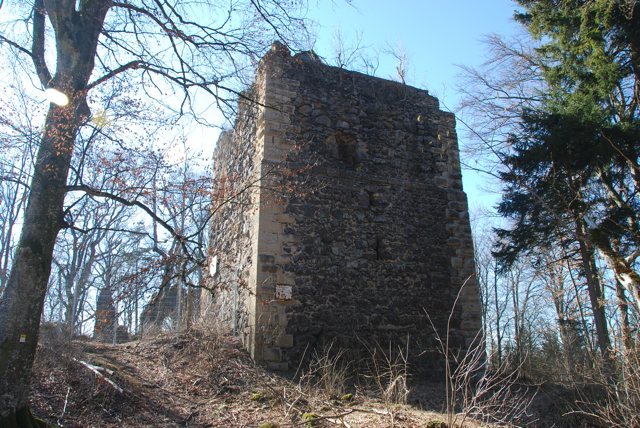
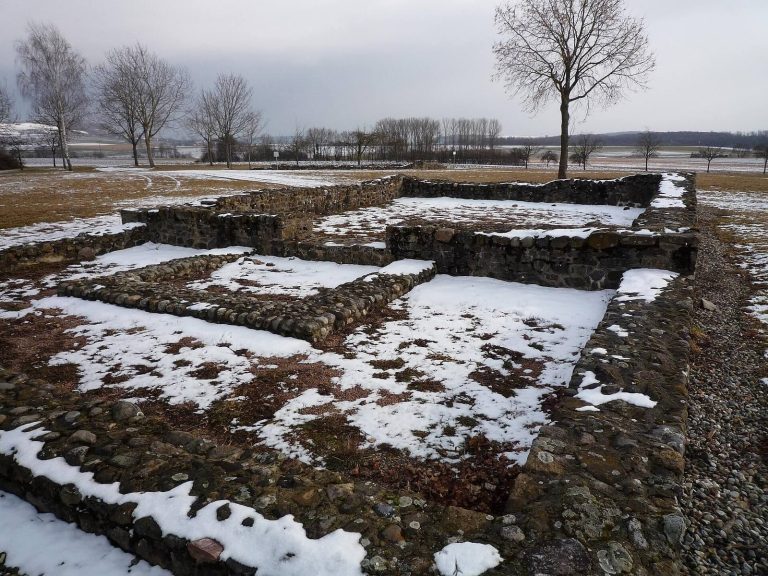
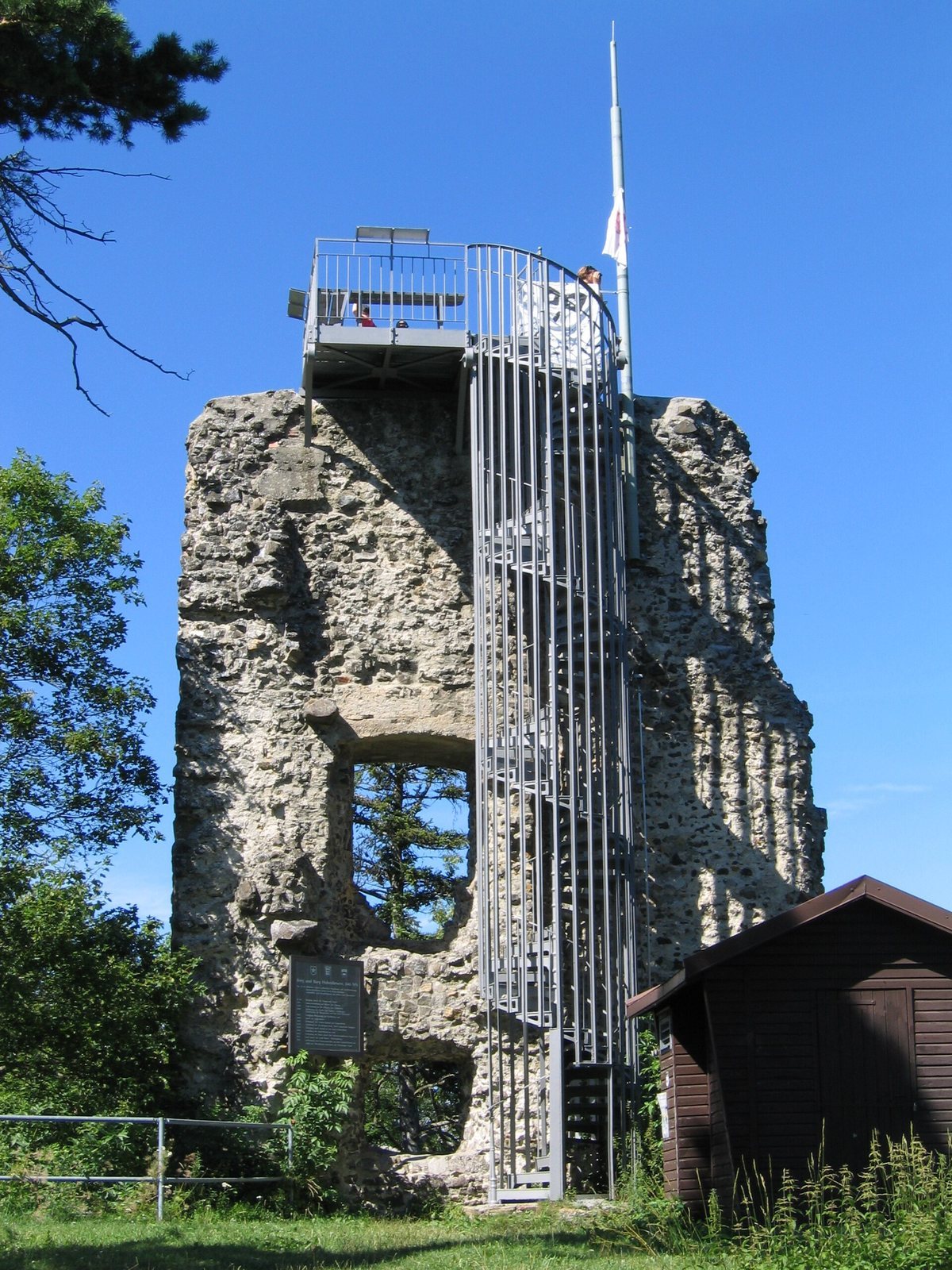
Foundation walls mark the servants’ houses. A surviving wall of the residential tower stands at the highest point of the ruin and now serves as a viewing platform, reached by a spiral staircase.
Chapel
Slight remains of the chapel survive within the castle complex.
Mountain-side structures and memorial
Hewenhof
The Hewenhof is a detached farmstead belonging to the castle complex, positioned about halfway up the mountain.
Memorial cross
A cross on the mountain’s southern side, beside the steep path to the ruin, commemorates Josef Hoh, a local historian and priest who died in an accident.
Television relay station
The relay station occupies the northern part of the main castle.