Radovašnica Monastery: A Serbian Orthodox Monastic Community
Site at a Glance
- Popularity
- Medium
- Country
- Serbia
- Primary era
- Medieval
- Eras represented
- Medieval, Modern
- Civilizations
- Serbian
- Site type
- Religious
- Remains
- Monastery
On this page8 sections
History
Radovašnica Monastery is a Serbian Orthodox monastic community in its namesake village in Serbia. Its church belongs to the Raška school, a medieval Serbian church-architecture tradition, within the Serbo-Byzantine tradition shaped by Byzantine forms. The monastery predates Ottoman rule and held a prominent position before that period. Tradition links its foundation to King Stefan Dragutin, a medieval Serbian king whose reign lasted from 1282 to 1316; the nun Evgenija Abt is also identified as its founder and patron.
Early records and names
A local record refers to the monastery indirectly in 1541, while its earliest explicit written mention appears in an Ottoman census of 1548. Census entries from 1600 and 1624 use the alternative name Kosanik, which may be connected to ruins of an old town on the summit of Mount Cer. Older records also call it the Temple of the Holy Archangel Michael, or of Michael and Gabriel, on the Radovanščica or Radovantica River.
Ottoman-era and wartime destruction
Ottoman forces burned the monastery several times. It was burned again during the First World War and restored in 1929. In October 1941, Nazi forces blew it up during a punitive operation.
Rebuilding and religious life
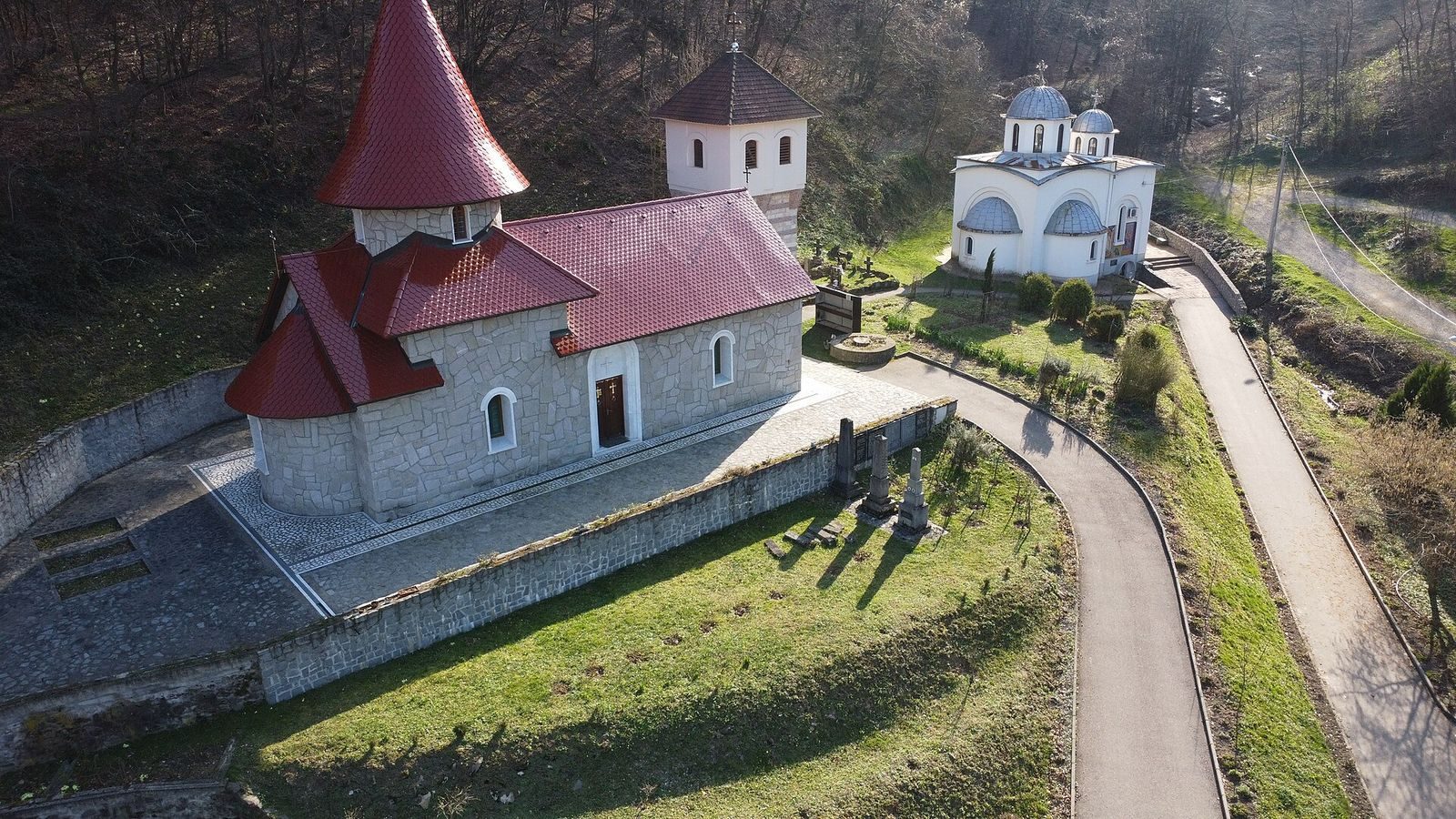
A chapel was built within the enclosure in 1948 and restored in 1987–1988. Archaeological excavations took place in 1991, and work to restore the old church began in April 2011 under the Valjevo Institute for Heritage Protection.
The monastery belongs to the Diocese of Šabac, a territorial jurisdiction of the Serbian Orthodox Church, and has a monastic community. It observes two slavas, institutional celebrations of patron saints: the Synaxis of the Holy Archangel Gabriel, an Orthodox feast for a saint or group of saints, on July 26 (New Calendar), and the Protection of the Most Holy Mother of God on October 14. Its preslava, an additional associated folk gathering, is held on August 2, the feast day of the biblical prophet Elijah. The monastery is protected as a cultural monument in Serbia and classified as immovable cultural property, a legal category for heritage fixed to a location.
Remains
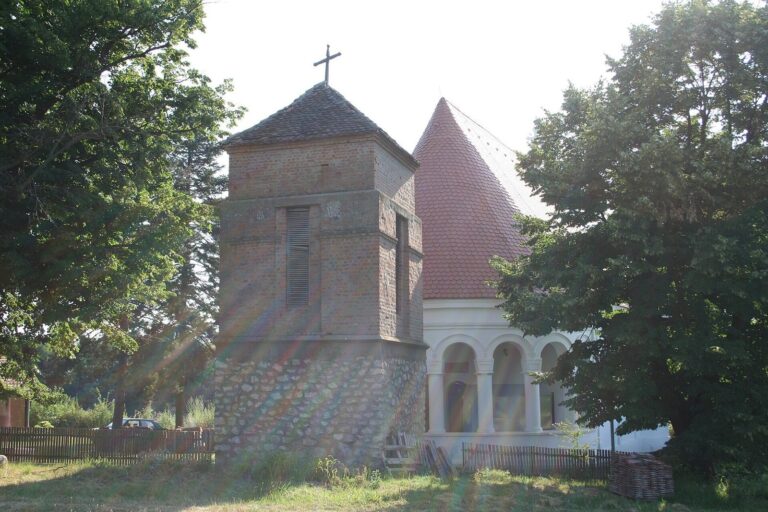
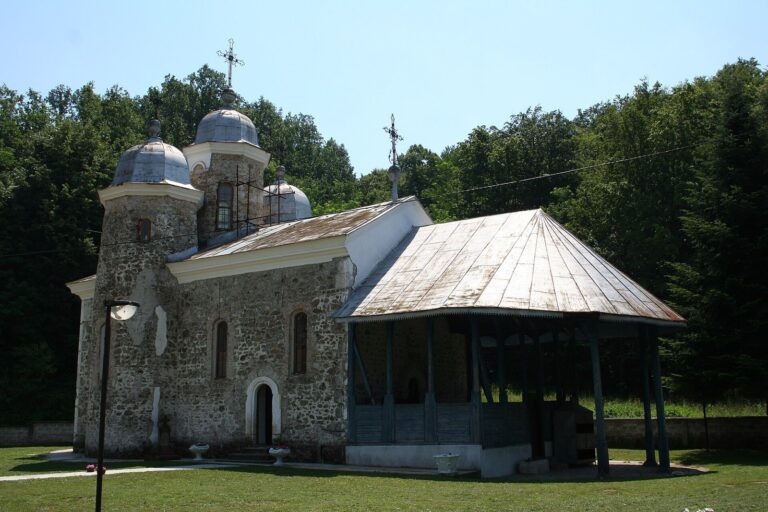
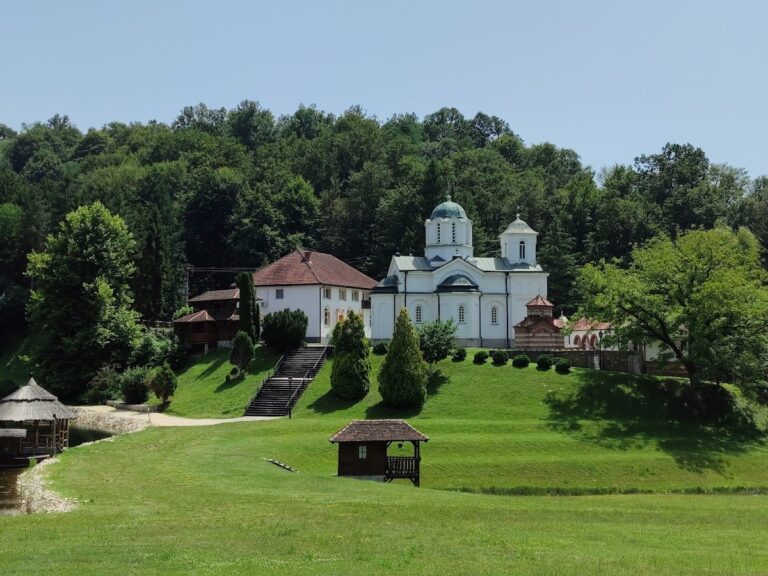
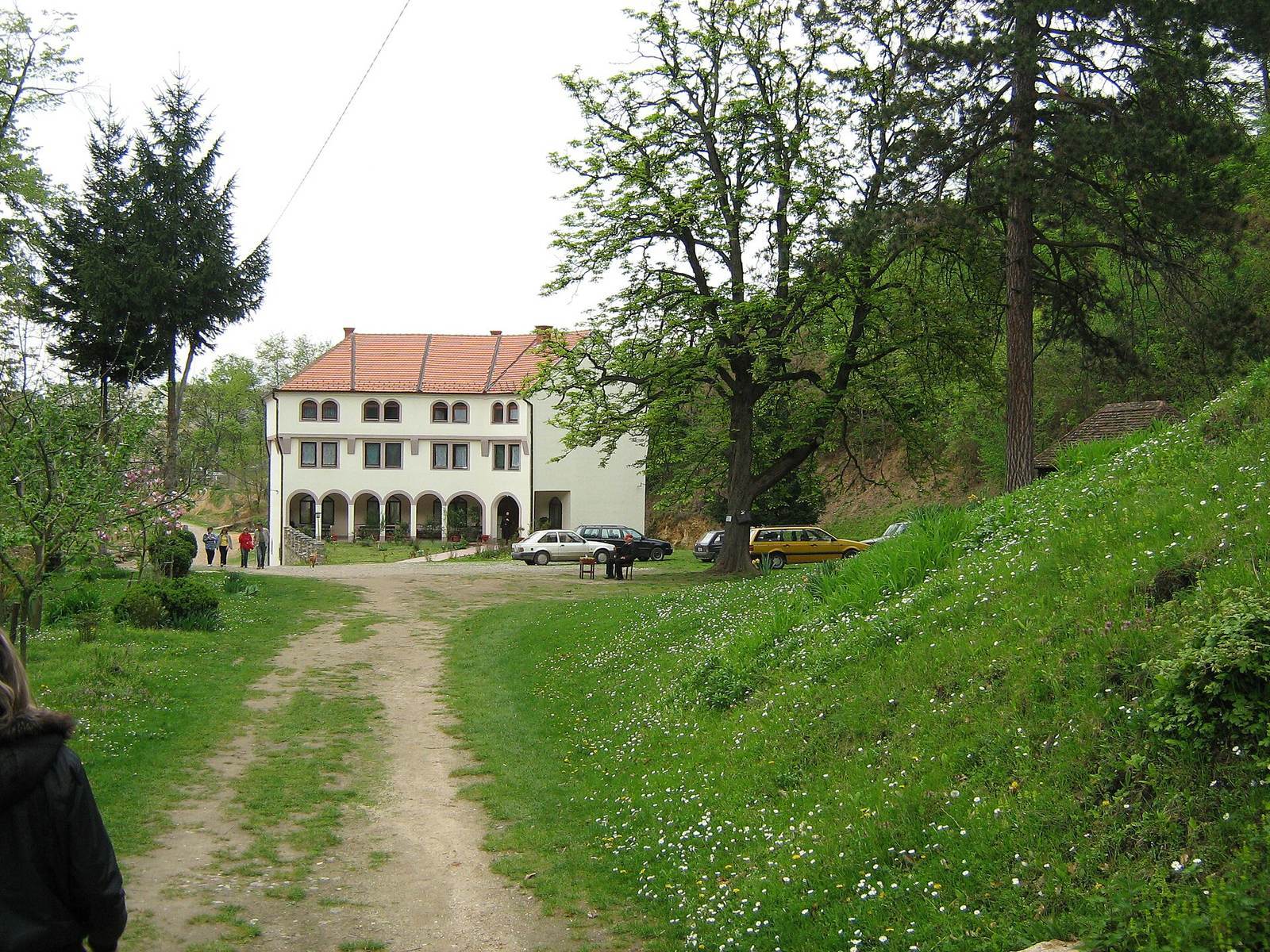
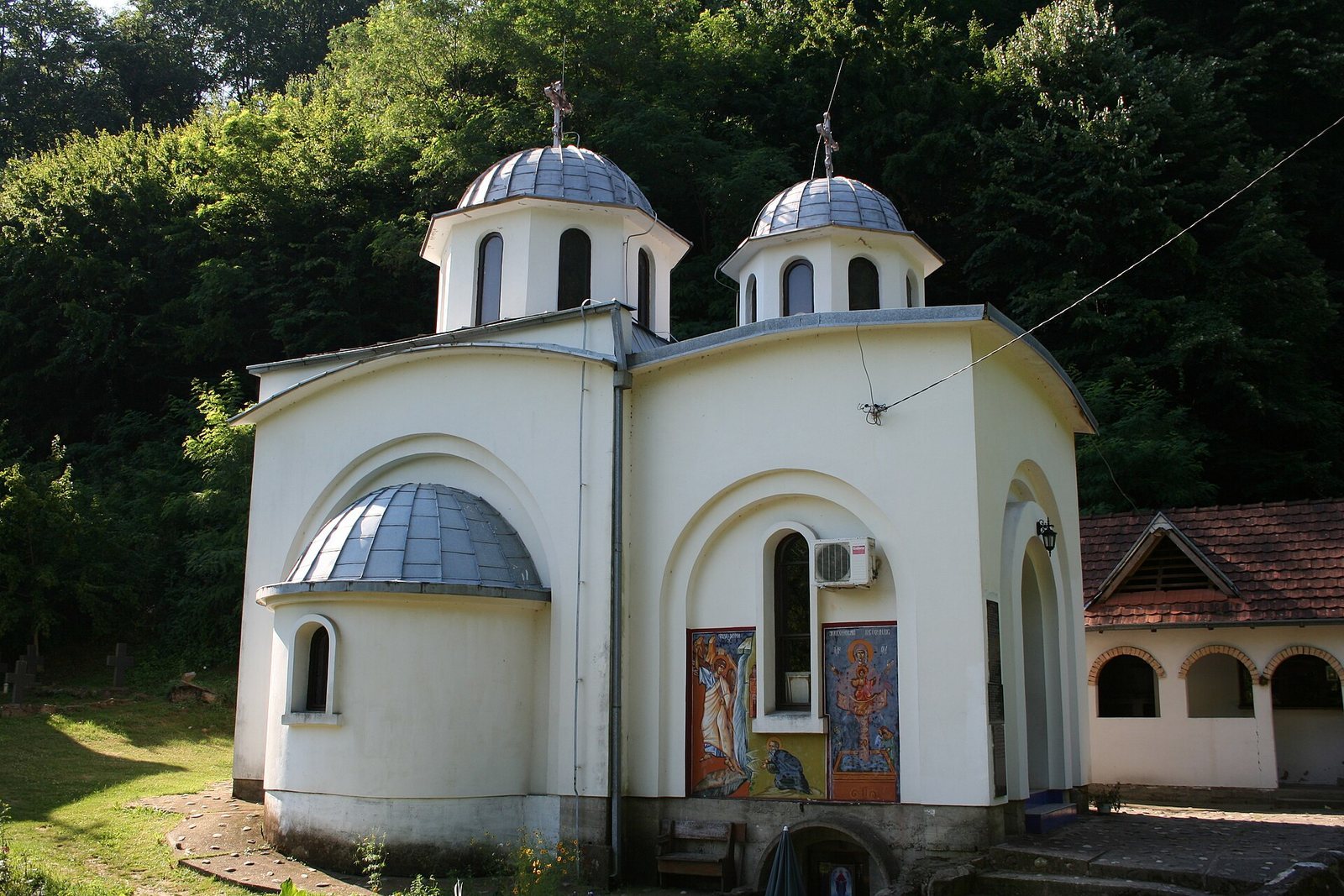
At the foot of the northern side of Mount Cer, oak, beech, and linden trees surround the monastery. Its grounds include the principal church and a chapel, alongside remains of an older church. The main church is built of rubble stone beneath a shingle roof and has a plan formed by two intersecting rectangles.
Monastery church
The church has a narthex (entrance vestibule) and a rounded apse (projecting altar area). Its dome is circular on the outside and supported inside by wall pilasters, shallow vertical supports attached to a wall. Pillars rise into arches that carry a square base beneath the dome, a feature strongly emphasized on the exterior.
Excavated old church
The construction date of the old church remains uncertain. Its stone-and-brick walls stood between 0.5 and 1.5 metres above ground. The building had a trefoil plan (three lobes arranged like a cloverleaf), with a semicircular apse extending from the nave and a dome above. Fragments of sculptural decoration survived. Its architectural character belongs to the Morava school, a tradition of medieval Serbian church architecture.
Chapel
The chapel stands within the monastery enclosure.