Castelberg Castle: A Medieval Family Residence in Switzerland
Site at a Glance
- Popularity
- Low
- Country
- Switzerland
- Primary era
- Medieval
- Eras represented
- Medieval
- Civilizations
- Holy Roman Empire
- Site type
- Military
- Remains
- Castle
On this page6 sections
History
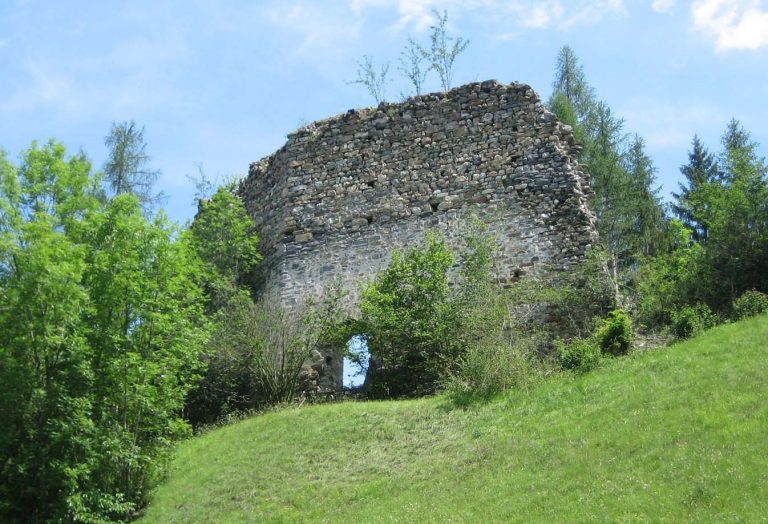
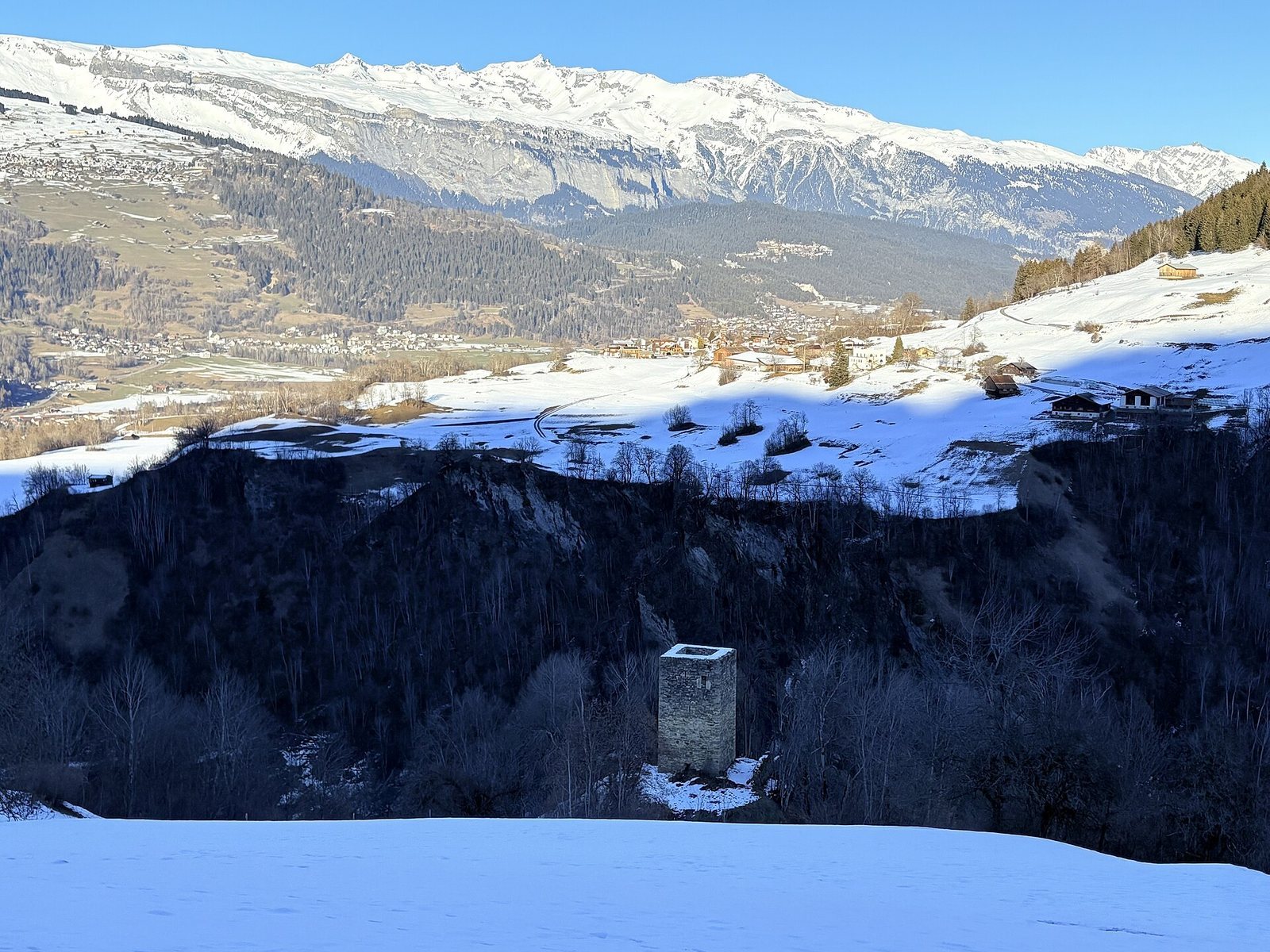
Castelberg Castle is a medieval castle ruin on a wooded hill below Luven in Switzerland, built in the first half of the 13th century as the residence of the Castelberg family. It was one of several castles constructed near Ilanz, a major town on the Vorderrhein River.
The castle and its medieval owners
The Castelbergs were a ministerialis family, a group of unfree knights serving a higher lord, in this case the Bishop of Chur. The family first appears in a record in 1289, when Wilhelm is named.
The family’s growing holdings are linked to the castle’s probable abandonment in the early 14th century, although the role of a fire in its departure is uncertain. Castelberg was already in ruins by the late Middle Ages and was described as a ruin in the 16th century. A Luven estate recorded in 1391 is identified with Castelberg. By 1400, the family owned Surcasti, Löwenstein and Baldenstein castles, as well as Castelberg’s ruins.
The family later held estates in Lugnez, the Groub valley, Schams, Domleschg and Vorarlberg. Rudolf von Castelberg served as the bishop’s bailiff in Lugnez in 1461–62 and again in 1468.
Branches and later service
Around 1500, the family divided into branches. The Protestant branch remained in the Groub region and Ilanz, while the Catholic branch was driven from Ilanz to Disentis during the Protestant Reformation, a 16th-century movement that led to the formation of Protestant churches and divisions within Western Christianity. The Disentis branch produced three abbots of Disentis Abbey, a Benedictine monastery, and ten members who held the Grey League’s highest executive office thirty times in total. The Grey League was one of three regional leagues that later formed the Three Leagues, a political alliance in what is now Graubünden. Other Castelbergs served as Swiss officers for the kings of France, Sardinia and Naples. The castle remains in the family’s ownership.
Remains
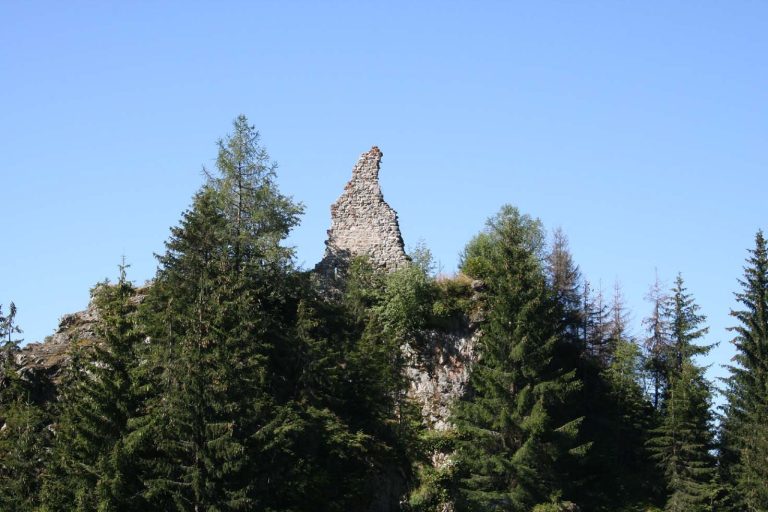
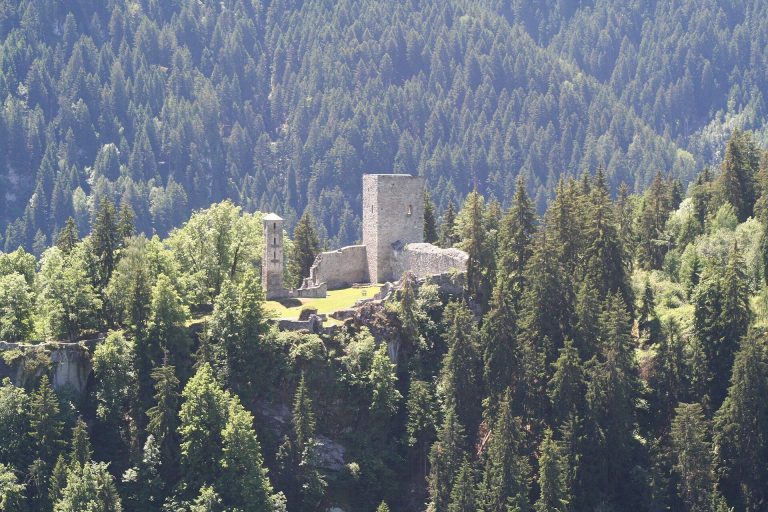
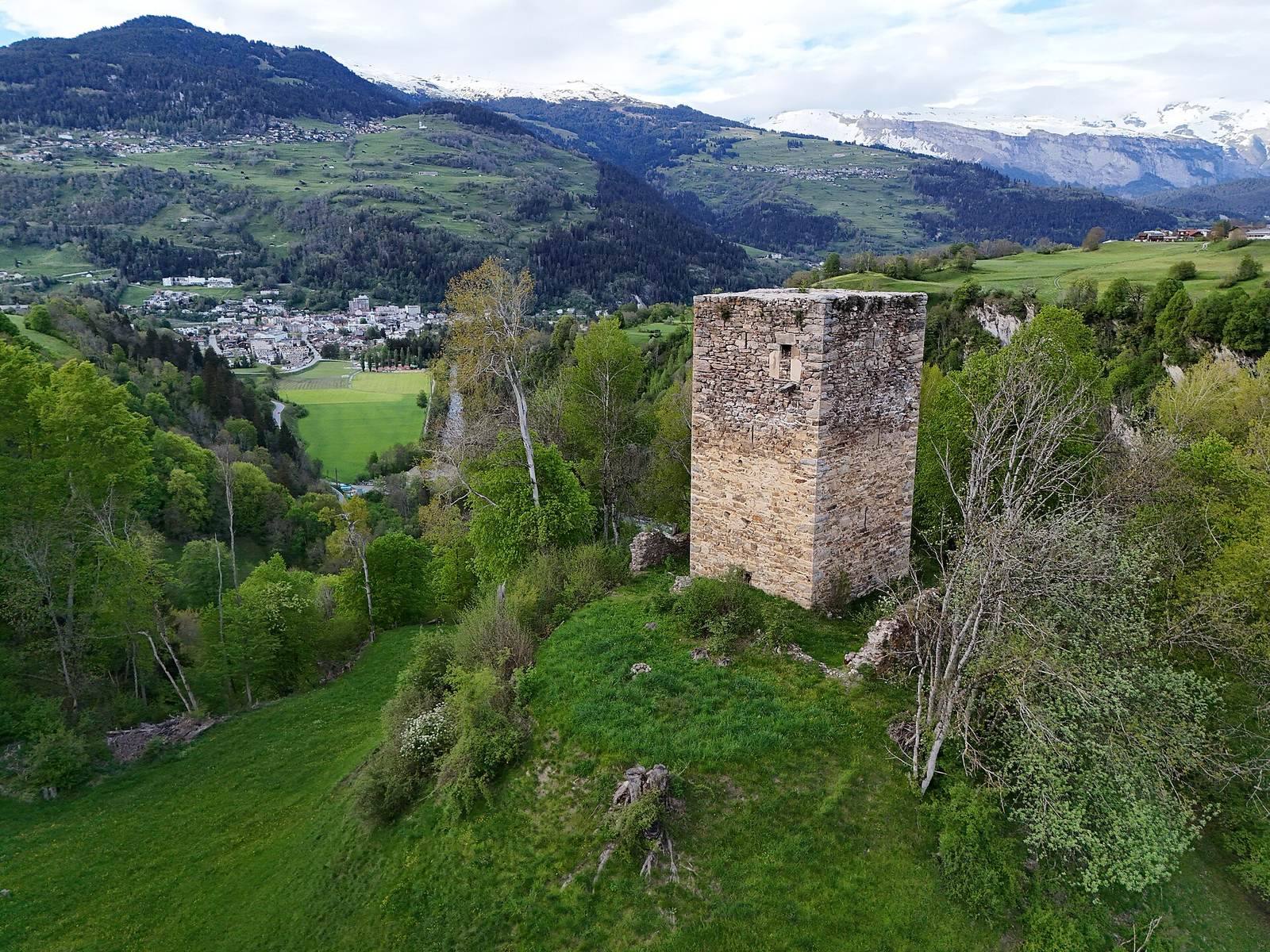
The ruin occupies a small wooded hill below Luven, on the left side of the valley at the edge of the Glennertobel, near the entrance to Val Lumnezia, at about 855 metres above sea level. Its main structure is a stone keep within an enclosure marked by a ring wall.
The keep
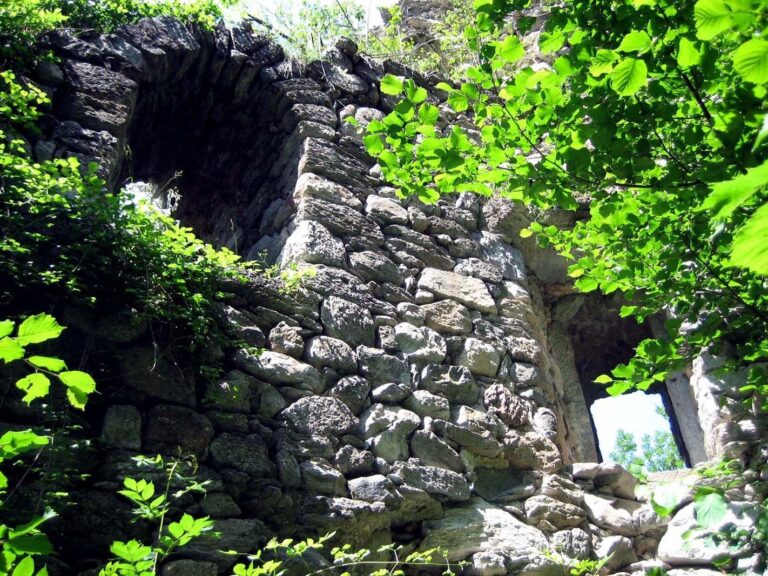
The keep is a square, four-storey tower, with sides about 9 metres long and walls approximately 1.8 metres thick. Its irregular masonry uses boulders and rubble stone. Some corner blocks have raised, roughly dressed faces and are made of tuff, a rock formed from consolidated volcanic ash.
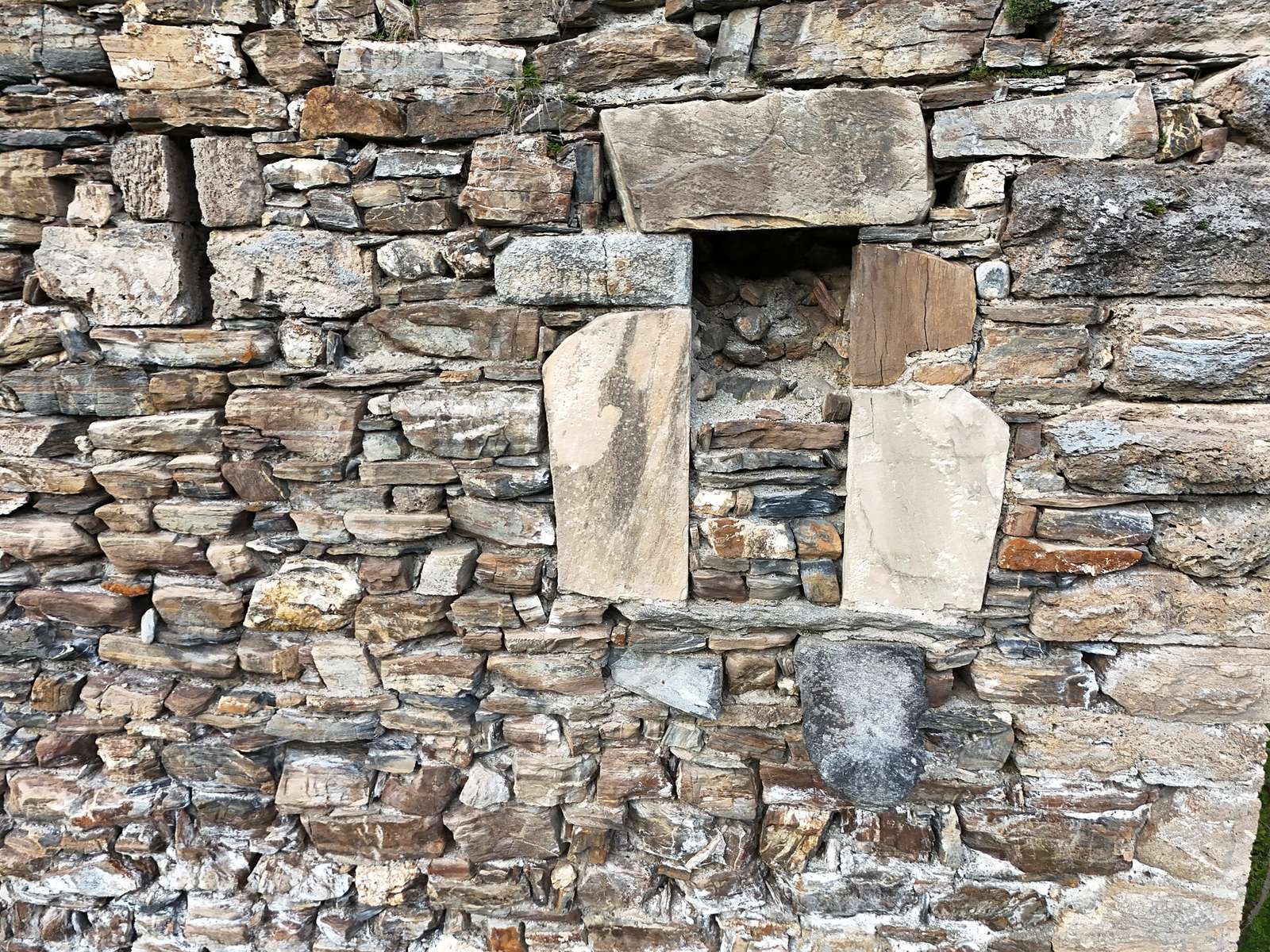
A well-preserved, round-arched entrance occupies the northeast wall at the third-storey level. Its side stones are tuff, and a projecting wooden upper structure probably crowned the tower. On the southwest side, stone supports survive at the fourth-storey level beside a garderobe, a medieval latrine; its doorway was later bricked up, and the feature remains visible from outside. The tower also has a small number of narrow slit windows, while beam holes can be seen inside through an opening.
The enclosure and archaeological evidence
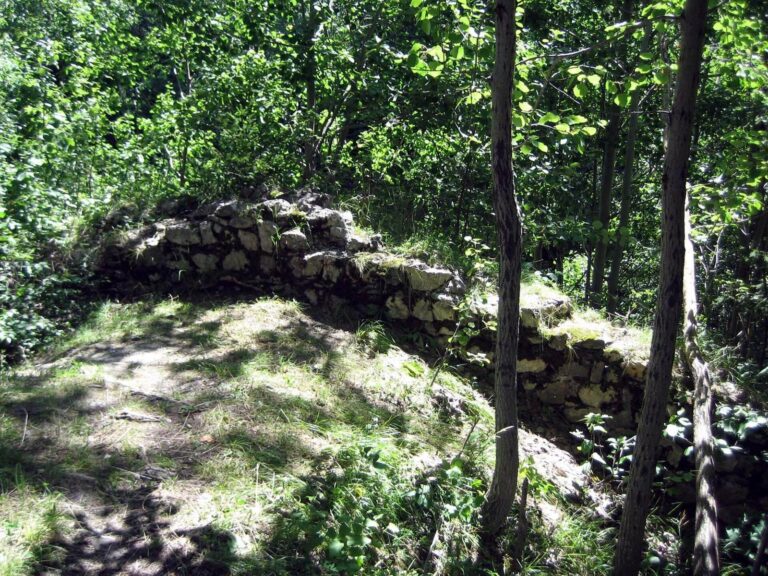
An overgrown, crumbling rectangular ring wall, about 1 metre thick, stands roughly 5–10 metres from the keep. Faint traces of another stone building survive at one corner of the enclosure, though its purpose is uncertain.
Excavations in 1968–69 recovered a small group of finds, including a knife blade dated to around 1300, animal bones and a pottery fragment. The limited finds suggest that the castle was occupied for a relatively short time. Reddening remains visible inside the tower, indicating exposure to a major fire, but it is unclear whether the fire came before or after the family left.