Porta Metronia: A Secondary Gate in Rome’s Aurelian Walls
Site at a Glance
- Popularity
- High
- Country
- Italy
- Primary era
- Classical
- Eras represented
- Classical, Medieval, Early Modern, Modern
- Civilizations
- Italian, Papal States, Roman
- Site type
- Military
- Remains
- Gate
On this page9 sections
History
Porta Metronia is a secondary gate in the Aurelian Walls in Rome, Italy, built by the Romans around AD 271–275 under Emperor Aurelian. It formed part of Rome’s late-antique defensive circuit, but served chiefly as a practical opening for local movement and access to agricultural land.
Roman gate and name
The opening may occupy the site of Porta Querquetulana, a gate in Rome’s earlier Servian Wall. During repairs around AD 402, Emperor Honorius’s administration raised Porta Pinciana and Porta Asinaria to the status of full gates, while Porta Metronia remained a utility passage.
The name appears in several historical forms. A medieval text uses Metrovia, while letters of Pope Gregory the Great refer to Metroni. Porta Gabiusa was another name, associated with the route toward the ancient town of Gabii, along the road of today’s Via Gallia. The origin of “Metronia” is uncertain: proposed explanations connect it with the ancient Via Metronia or with Metrobius or Metronianus, perhaps landowners in late antiquity.
Water channel and medieval repairs
In the tenth century, marshland outside the gate was known as the Prata Decii or Decenniae. In 1122, Pope Callixtus II ordered the Aqua Mariana, a medieval water channel also called the Marrana di San Giovanni, to pass through the opening. Ordinary passage was closed, and the gate became a fortified entrance for the waterway. The channel came from the Squarciarelli area near present-day Grottaferrata and approached Rome between the Via Appia Nuova and Via Tuscolana. After passing through the gate, it joined a stream from the Lateran. Iron-rich water from the combined flow gave the area between Porta Asinaria and Porta Metronia the name Ferratella. The watercourse continued toward the Circus Maximus and the Tiber, near the Cloaca Maxima, Rome’s major ancient sewer.
A wall collapse attributed to age prompted repairs in 1157, recorded in an inscription beside the gate. The work was undertaken by the Senate and People of Rome, the city’s communal civic authorities, on the initiative of about ten senators, or councillors. It took place amid a political crisis: a movement associated with the reformer Arnold of Brescia challenged papal and feudal authority, Pope Adrian IV excommunicated Rome, Frederick Barbarossa’s army was stationed at St Peter’s, and street fighting accompanied the revolt. The repairs have been linked to the Senate’s need to defend the city during this unrest.
Closure and later alterations
The gate was bricked up at an uncertain date, no later than the mid-fifteenth century, and was closed by the end of the Middle Ages. A second inscription records repairs in 1579 and the gate’s transfer from the Sant’Angelo district to Campitelli. One councillor named in it descended from Nicola Mannetto, whose name appears in the earlier repair record. In 1601, a severe epidemic was attributed to the unhealthy conditions of the marshy area beyond the gate.
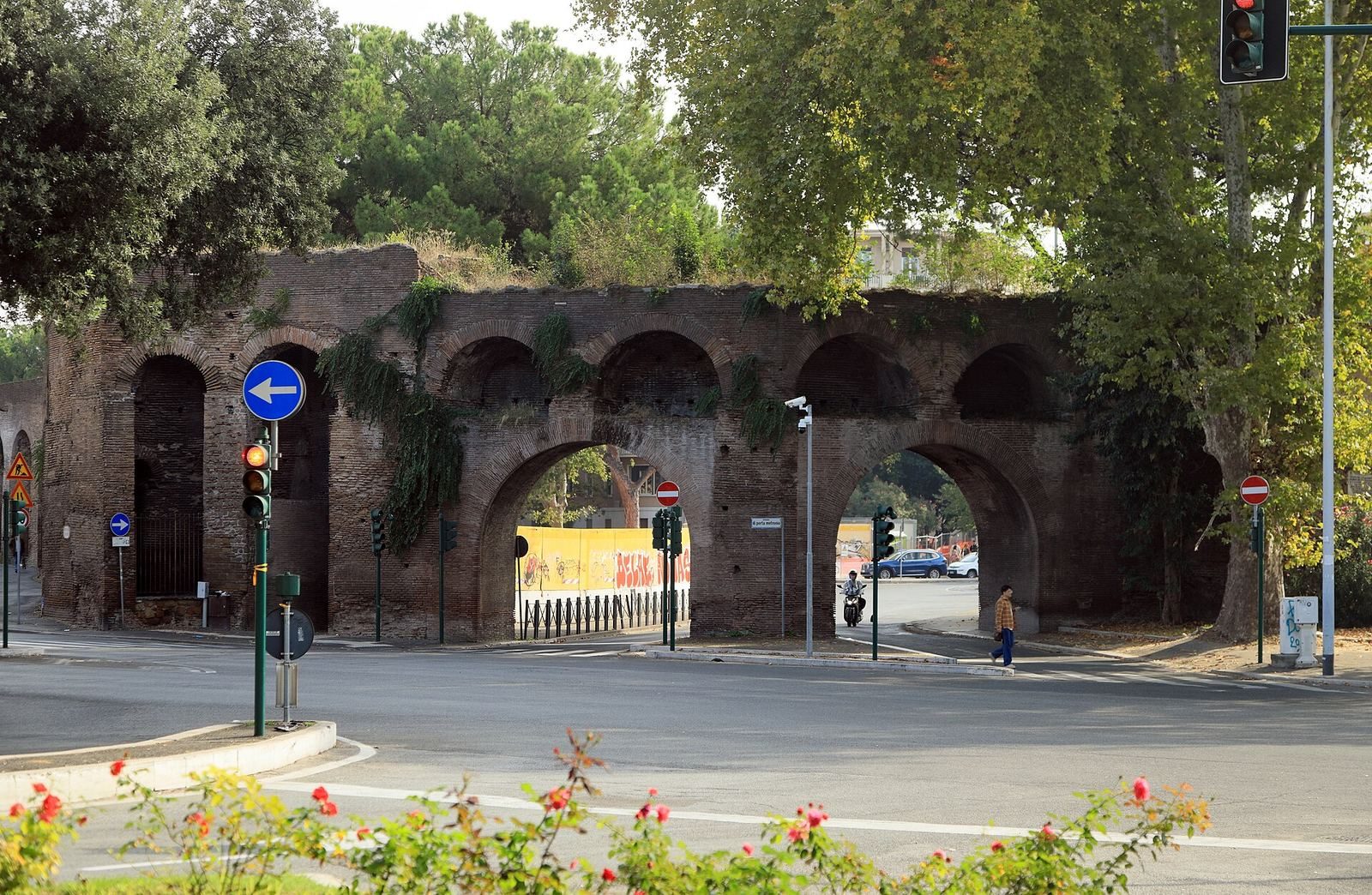
Twentieth-century work associated with Rome’s Archaeological Promenade raised the ground around the gate and buried the channel of the Aqua Mariana. The gate was partly excavated and restored, particularly during urban-planning works in the 1930s. Four openings for modern traffic were made beside it in two phases, from the Fascist period, the years of Mussolini’s regime from 1922 to 1943, into the postwar years. The ancient opening no longer serves as a defensive or traffic passage.
Remains
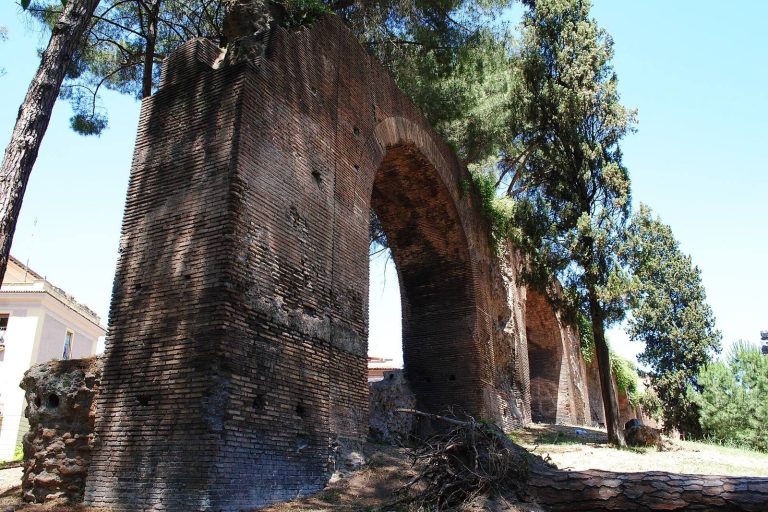
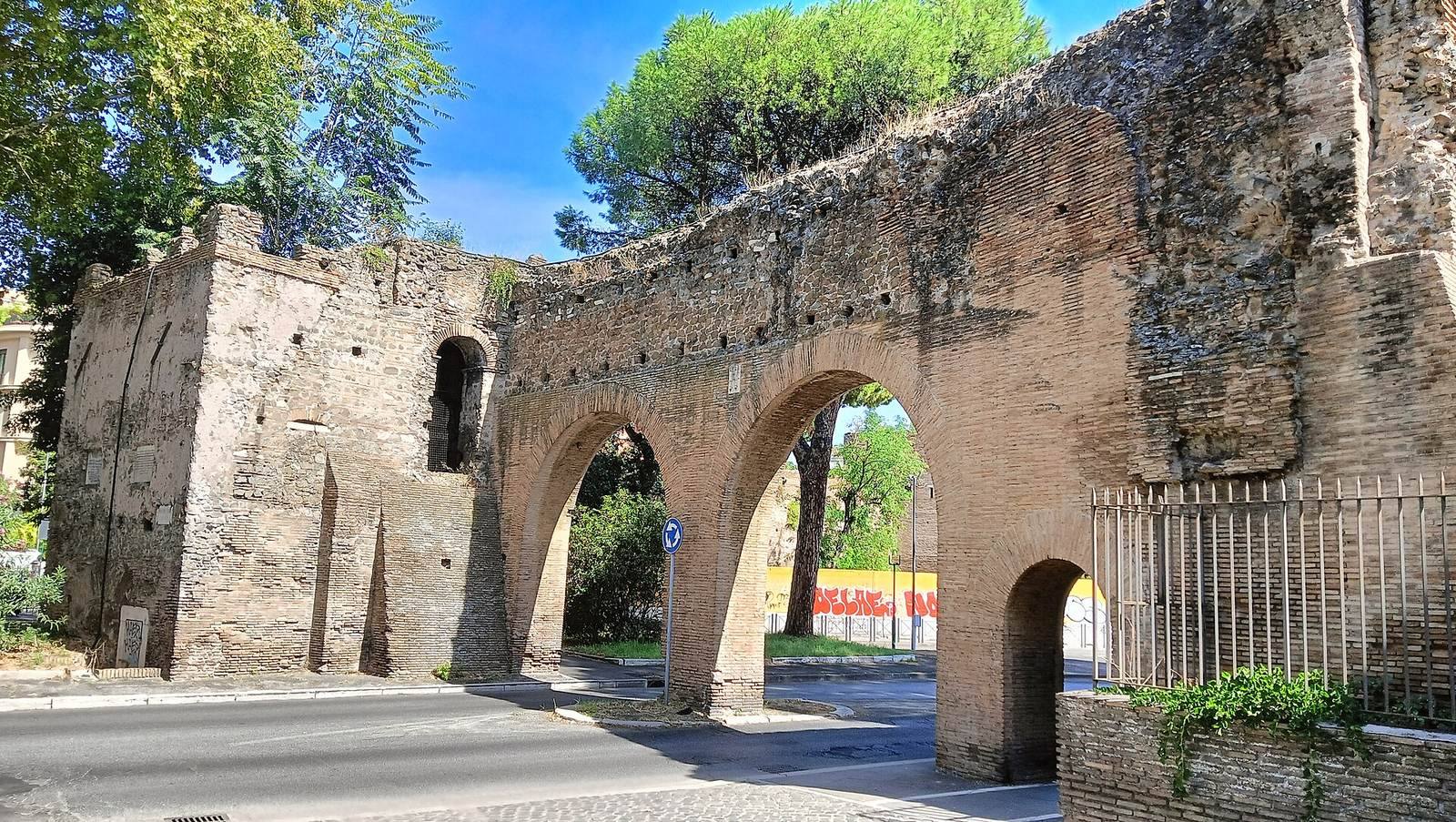
Porta Metronia stands in the southern stretch of the Aurelian Walls, between Porta San Giovanni to the east and Porta Latina to the south. Its original form is a single arched opening set directly into the wall’s brickwork, facing toward the Caelian, one of Rome’s hills. The arch remains visible from both sides, but its passage is sealed. The surrounding ground has risen substantially, leaving part of the original opening below ground level.
Inscriptions
Earlier repair inscription
The earlier inscription is set into the inner face of the wall beside the gate. It survives almost intact and remains legible, although its wording is difficult to decipher. Its lettering is described as elegant in a style associated with the thirteenth century.
Later repair inscription
A second inscription is positioned beside the earlier one. It records another phase of wall repairs and a change in the gate’s district assignment.
Modern traffic openings
Four modern traffic arches flank the sealed ancient opening and carry urban traffic. Their later construction contrasts with the single, brick-built passage of Porta Metronia.