Beit She’arim National Park: An Ancient Jewish Settlement and Necropolis
Site at a Glance
- Popularity
- High
- Country
- Israel
- Primary era
- Classical
- Eras represented
- Classical, Medieval
- Civilizations
- Byzantine, Roman
- Site type
- Burial
- Remains
- Necropolis
On this page20 sections
History
Founding and rabbinic center
Beit She’arim National Park in Israel preserves an ancient Jewish settlement and its extensive cemetery. Founded in the late first century BCE during the reign of Herod, a Roman client king of Judaea, Beit She’arim was an agricultural community and an important center of Jewish learning. Pottery points to earlier Iron Age activity in the area, which may have belonged to the Hasmonean dynasty, a Jewish ruling house in Judea. The oldest surviving building remains date to the Herodian period.
The first written mention of Beit She’arim comes from the Jewish historian Josephus, who described it as the center of the estates of Berenice, the sister of Agrippa II. Grain gathered from nearby villages was stored there. Although major routes eastward crossed the wider area, the settlement itself was not an important transit point. Rabbi Yohanan ben Nuri, a Jewish sage of the early rabbinic period, lived at Beit She’arim in the first half of the second century. Jewish migration to Galilee after the Bar Kokhba revolt, a major uprising against Roman rule, added to the town’s standing.
After the Second Temple was destroyed in 70 CE, the Sanhedrin, the principal Jewish council and court, moved from Jerusalem through Jabneh, Usha, and Shefar’am before reaching Beit She’arim. Rabbi Judah ha-Nasi, also called Judah the Prince and traditionally associated with compiling the Mishnah, an early collection of Jewish oral law, brought the council to the town. He settled there in the mid-second century, although the exact date is uncertain. A tradition says that a Roman emperor who was his friend granted him land, and Beit She’arim may have been among his properties. Under Judah’s leadership, the settlement became a major Jewish center and flourished between the second and fourth centuries. Its inhabitants also adopted elements of Greek culture.
A major burial place and later settlement
For health reasons, Judah spent the final 17 years of his life at Sepphoris, and the Sanhedrin moved there with him. He had prepared a family tomb at Beit She’arim after his daughter died, and chose burial there. He was interred around 220 CE. His burial helped make the cemetery sacred and drew Jewish burials from across the region and beyond, including Babylonia, Syria, Phoenicia, and Himyar in southern Arabia. After Jews were barred from the Mount of Olives in 135 CE, Beit She’arim also served as an alternative burial place.
The settlement was probably burned and damaged during the revolt against Roman emperor Gallus in 351–352 CE, a fourth-century Jewish uprising. Later interpretation has suggested the damage may have been more limited than once thought. An earthquake in 363 CE may also have caused some harm. Buildings and mosaics from the sixth century indicate that settlement revived to some extent under Byzantine rule, the eastern continuation of the Roman Empire, but Beit She’arim did not regain its earlier prominence.
Settlement grew sparse from the beginning of the early Islamic period. A glassmaking workshop operated there in the ninth century. An Arabic elegy found in the Cave of Hell is dated either to 900 or 902 CE and names the poet Umm al-Qasim. The inscription has prompted the suggestion that the site may then have been treated as a shrine associated with Sheikh Bureik; burial there at that time, and possibly later, has also been proposed. During the Mamluk period, when a medieval sultanate ruled Egypt and parts of the eastern Mediterranean, Arab shepherds used the Cave of the Coffins as shelter. Activity in the nearby village and cemetery during the twelfth-century Crusader era may have involved travelers or temporary settlement.
Village, excavation, and heritage
A small Arab village called Sheikh Bureik stood above the cemetery by at least the late sixteenth century. It appears on a map of Napoleon’s 1799 campaign, and a 1922 census counted 111 Muslim residents. In the early 1920s, the Sursock family sold village land, including the necropolis, to the Jewish National Fund through Yehoshua Hankin. The transaction also involved land from two other Arab villages. In total, 59 Arab tenants from the three villages were evicted and paid 3,314 pounds in compensation. In 1925, the religious Zionist movement Hapoel HaMizrachi established an agricultural settlement on the remains of Sheikh Bureik; the group later moved to Sde Ya’akov.
Surveys in the 1870s and 1880s examined tombs but did not excavate them. British surveyor Claude Reignier Conder visited in 1872, described the Cave of Hell, and found a coin of Agrippa. In 1903, researchers from the German Oriental Society identified Roman-period tombs and an inscription, but further work did not follow immediately. Alexander Zaïd, who settled in the area in 1926, searched the hill for antiquities. He brought a burial cave with inscriptions and carvings to wider attention in 1936, although Nahum Maron later also claimed to have found the caves and informed Zaïd. Historian Yitzhak Ben-Zvi proposed identifying the site as Beit She’arim in April 1936; archaeologist Benjamin Mazar and historian Samuel Klein subsequently supported the identification.
Mazar began excavations on 15 October 1936, following a permit issued in June and funding from Alfred Mond. Work continued through 1940, mainly on the hill’s western slopes. Archaeologist Nahman Avigad led four seasons in 1953–1955 and 1958, concentrating on the northern slopes. Mazar also excavated in 1956 and 1959, uncovering a large public building in the town’s southwest and further burials. Excavations resumed in 2014 under University of Haifa archaeologist Adi Erlich, focusing on the ancient town atop the hill, and continued at least through 2021.
During the 1950s, officials and religious leaders debated whether to treat Beit She’arim chiefly as a sacred place or as an archaeological site and national park; the latter position prevailed. Landscape architects Lipa Yahalom and Dan Zur designed the park during that decade. The necropolis was inscribed on the UNESCO World Heritage List in 2015 as the Necropolis of Beit She’arim: A Landmark of Jewish Renewal, under criteria ii and iii.
Remains
The hilltop settlement
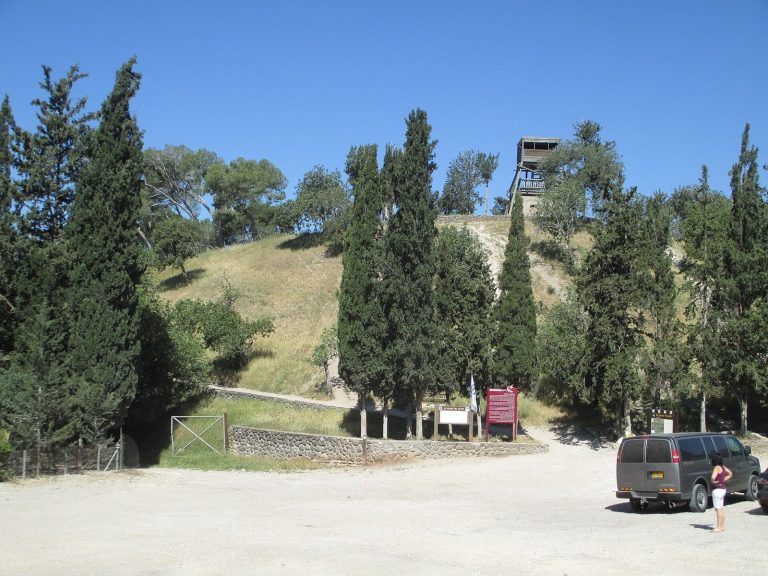
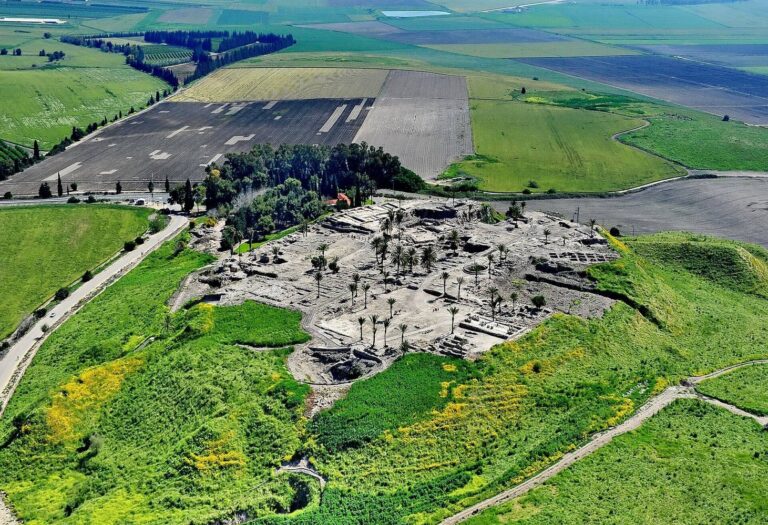
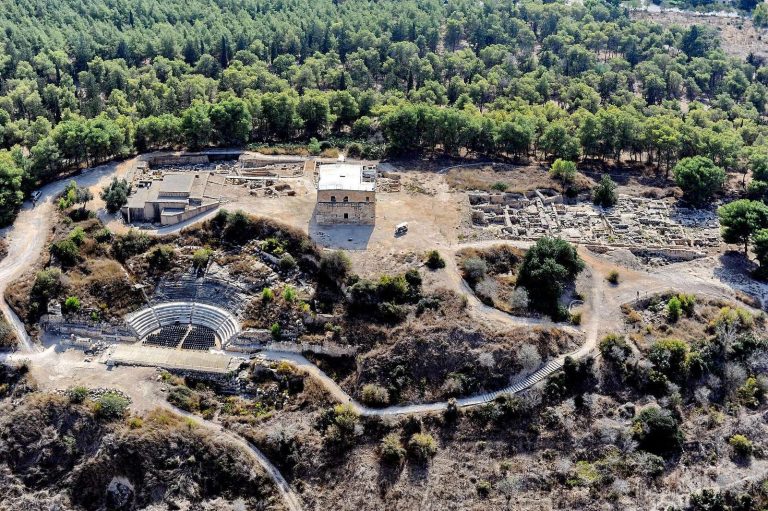
The site covers 12.2 hectares on Sheikh Abreik hill, a southern spur of the Lower Galilee, 74 metres above sea level. The Jezreel Valley lies to the southeast and Mount Carmel to the west. Remains of the ancient town occupy the hilltop, while its cemetery is cut into the softer limestone slopes below. Excavated areas of the settlement include public and residential buildings, a synagogue, a city gate, and water installations.
Town buildings and enclosure
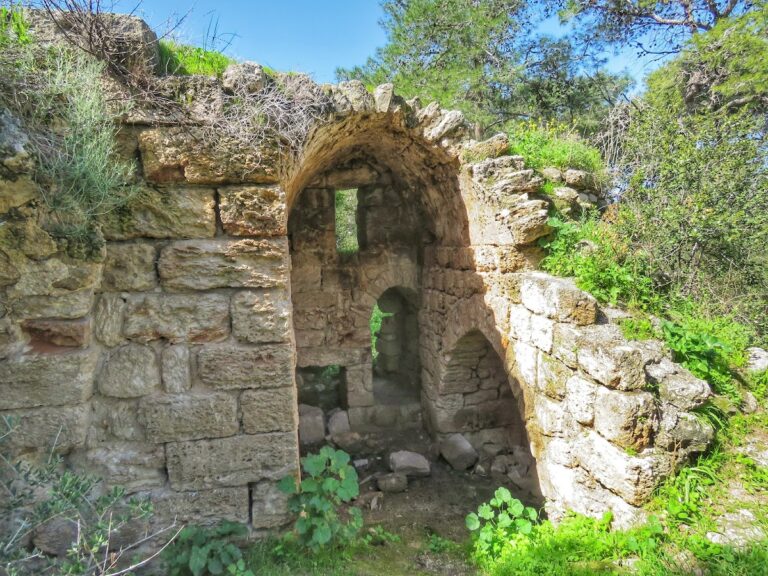
The oldest surviving building remains use small dressed stones with rough, projecting centers. Other excavated remains include a large public building, a large rectangular hall with an adjoining study hall, a city gate beside an ancient olive press, and a residential quarter containing a synagogue. A threshold about four metres wide, found in 2017, belonged to a wall that probably enclosed the settlement in the second century CE.
The synagogue
On the northeastern side of the hill, the synagogue measures 35 by 15 metres and has an adjoining courtyard. Its finely dressed stone walls enclosed a long, basilica-shaped hall, meaning a rectangular space divided into a central area and side aisles. The façade faced Jerusalem and had three large openings. Three entrances led inside, where two rows of columns separated the central space from the aisles. A raised platform stood at the rear of the central area.
In a later phase, plaster covered the hall’s walls, which were painted, and marble panels with inscriptions and decoration were set into the plaster. Most inscriptions are in Greek and commemorate donors and synagogue officials. A small building nearby contains two inscriptions: one honors two people involved in burial, while another names Jacob of Caesarea as head of the synagogue of Pamphylia. Its final word, ‘peace,’ is written in Hebrew.
Water installations
The reservoir known as the Cave of as-Sih is 26 metres long and held more than 1,000 cubic metres of water. It supplied the settlement from the second to the fourth centuries CE. During the British Mandate, the Haganah, a Jewish defense organization, used it as a weapons store and firing range.
Excavations in 2013–2014 uncovered a separate reservoir and water tunnel near the Horseman’s Cave. The reservoir dates to the first century CE, measures about 25 by 7 by 6 metres, and held roughly 1,000 cubic metres. Its plaster was characteristic of that century, and runoff from a nearby valley supplied it. About 15 metres to the west, water entered a plastered, stepped settling basin, which may earlier have served as a Jewish ritual bath. An exposed 20-metre section of the tunnel was first an open channel and was later covered with stone slabs. The Haganah cache damaged the water inlet and part of the tunnel.
The necropolis
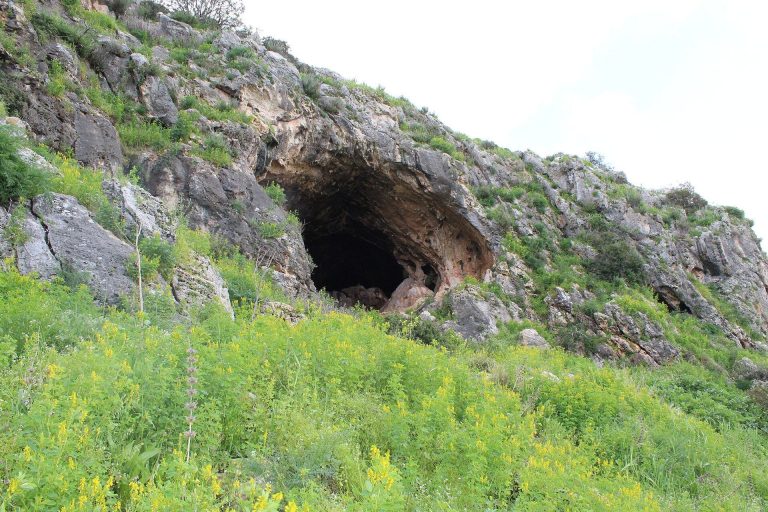
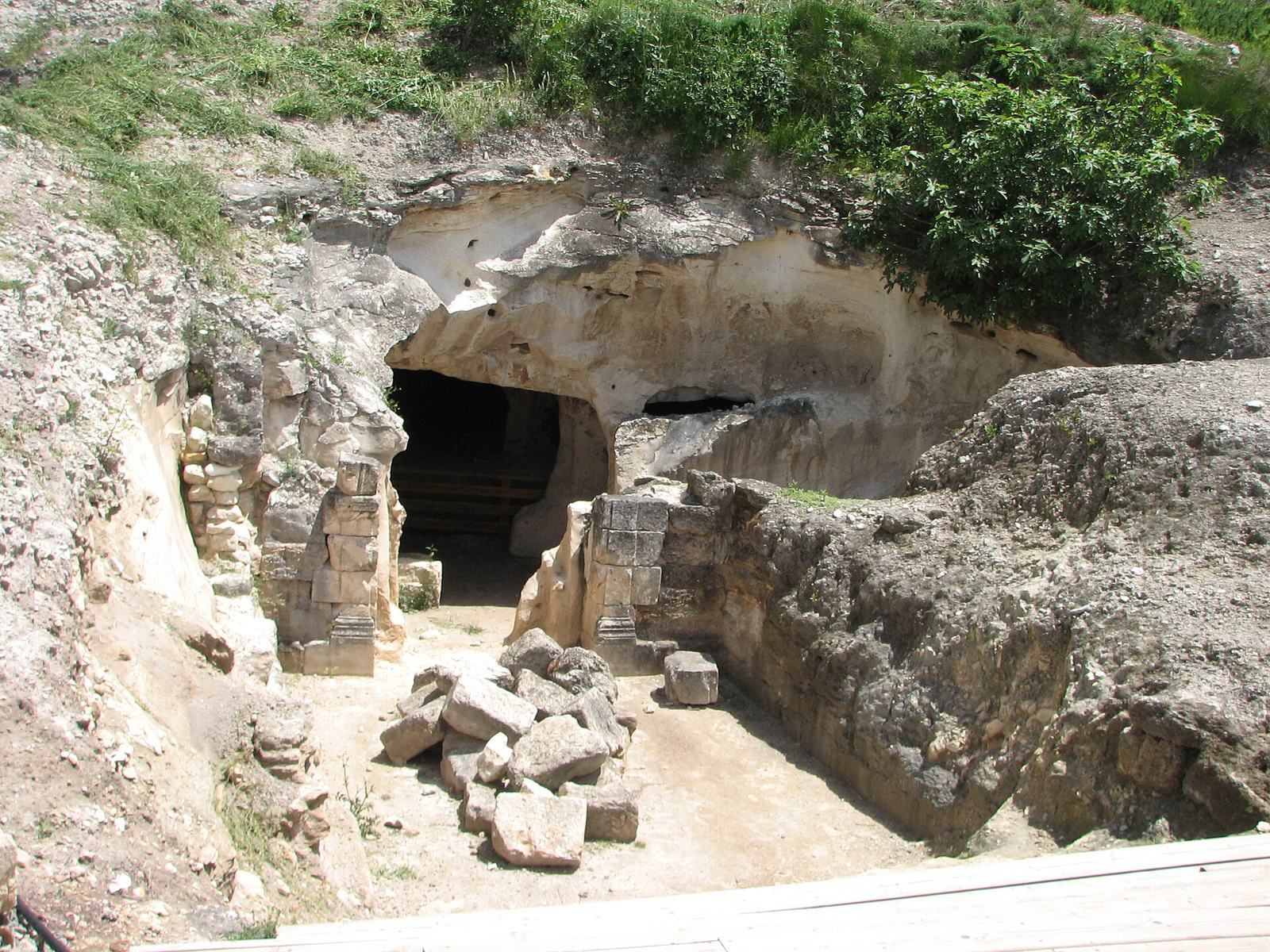
More than 30 underground burial systems, or catacombs, are cut into the limestone slopes below the town. They form two main groups: a larger complex and a second group, the Menorah Cave complex, to its southwest. Some tombs extend across two levels down the hillside. Grave robbing disturbed many tombs and stone coffins, while finds from the burial areas include jewelry, pottery, glass vessels, and coins.
Burial inscriptions and decoration
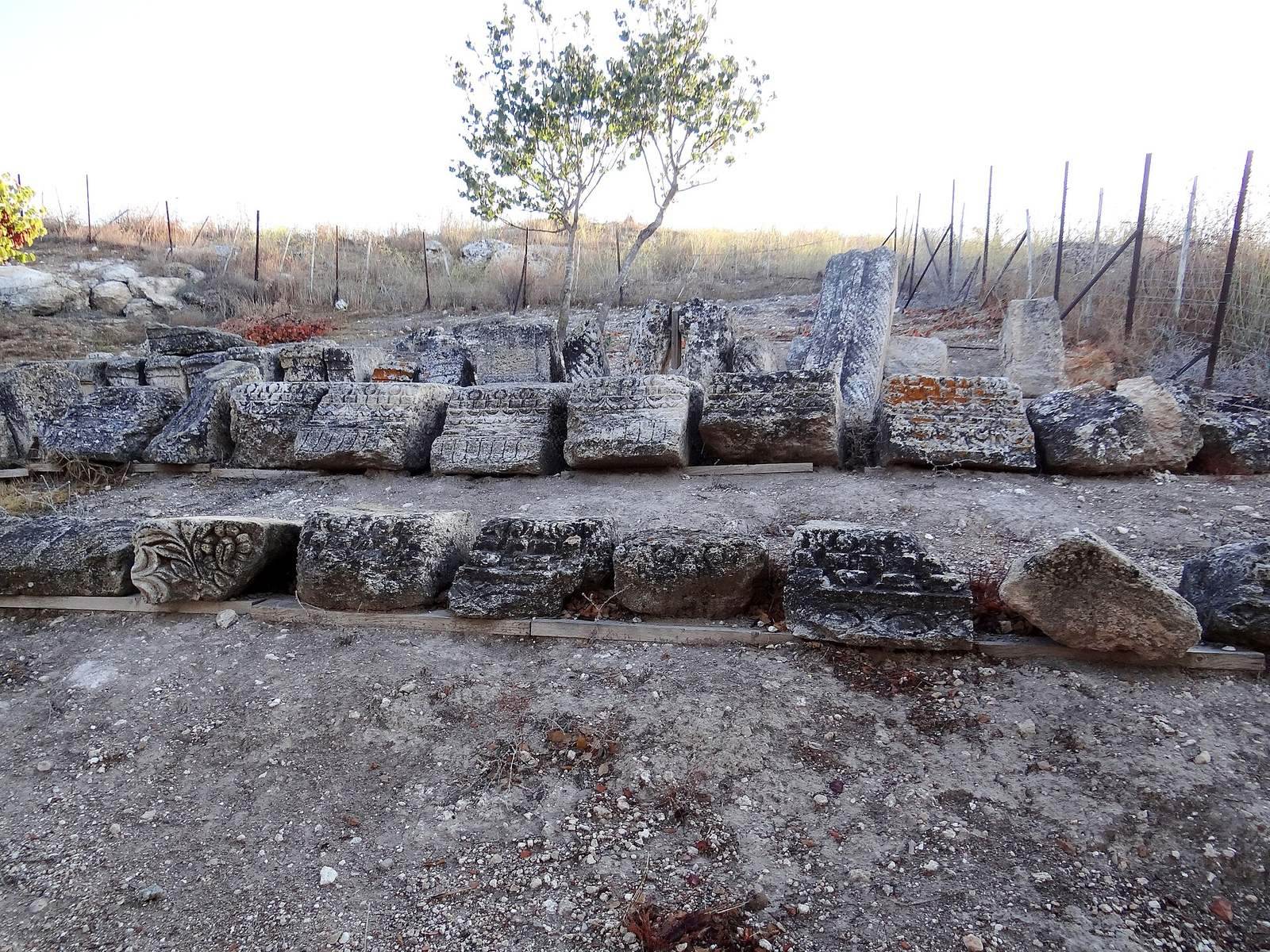
Inscriptions on tombs, monumental tombs, and stone coffins appear in Greek, Hebrew, Aramaic, and Palmyrene Aramaic, a form associated with the ancient city of Palmyra. Their carved or painted decoration ranges from Jewish symbols and geometric patterns to animals and figures from Greek myth and religion. Some Greek funerary verses draw on Homer. Inscriptions name people from Beit She’arim and from places including Caesarea, Sepphoris, Tyre, Sidon, Beirut, Byblos, Antioch, Tadmor, Nehardea, southern Babylonia, Ezion-Geber, and Himyar.
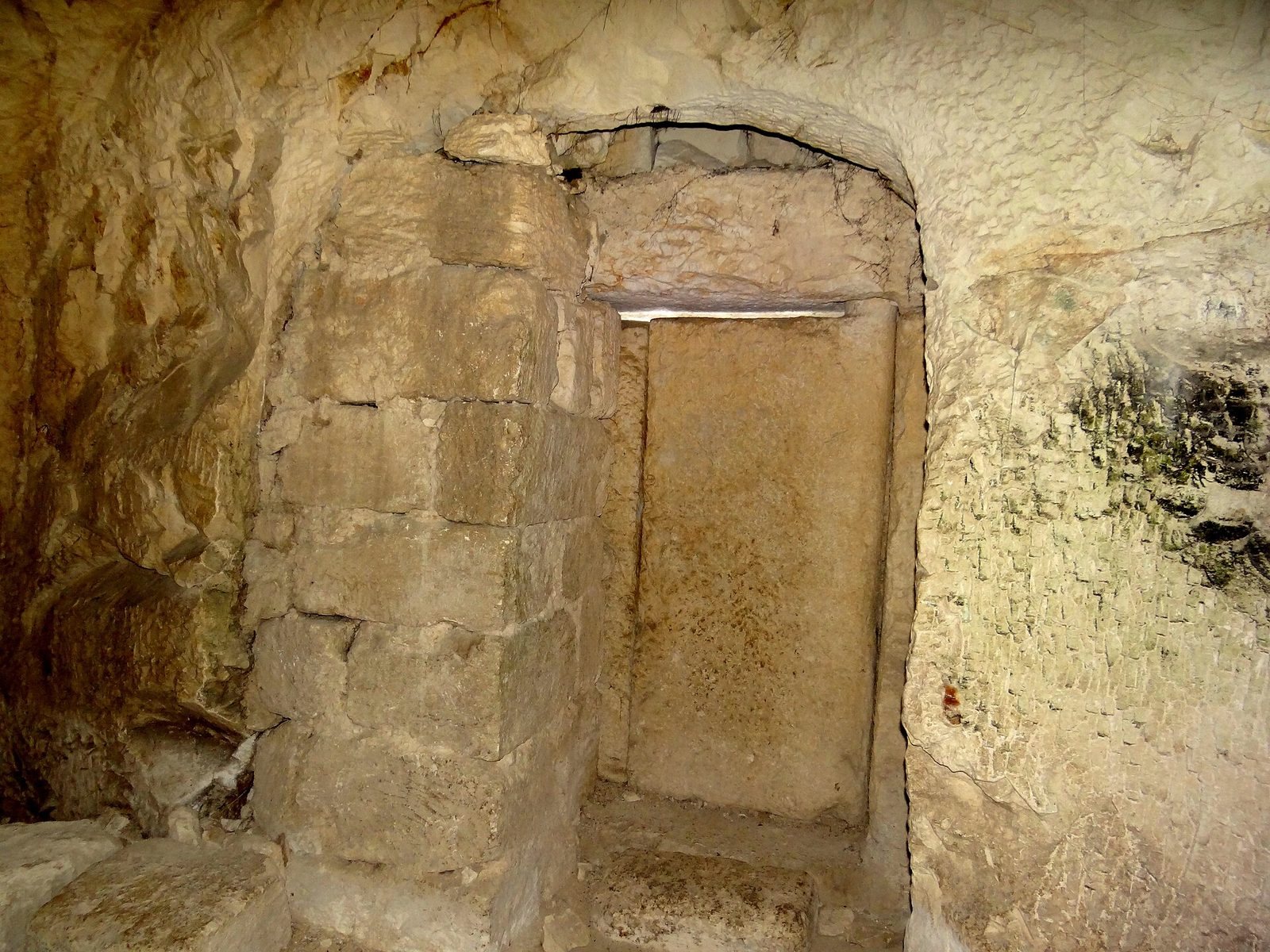
A marble slab measuring 21 by 24 by 2 centimetres commemorates Leo, the father of a rabbi described as a comforter, and Julian, a goldsmith at court. Many burial chambers also had stone doors that turned on pivots, some of which can still move.
Catacomb 14
Catacomb 14 is traditionally identified as the tomb of Judah ha-Nasi, though the identification remains uncertain. Its decorated entrance façade has three arched openings. Inscriptions above graves name Rabbi Shimon, Rabbi Anania, and Rabbi Gamaliel, who have been associated with Judah’s sons Shimon and Gamaliel and his student Hanania bar Hama. In the innermost hall, two unusual rectangular graves lie side by side in the earth beneath stone slabs.
Catacomb 20, the Cave of the Coffins
This extensive network of connected rooms and passages measures about 75 metres in both length and width. It contained 135 limestone coffins, 35 of them decorated, each weighing about four to five tonnes. The many inscriptions are mostly Hebrew. Men’s names are almost all Hebrew, while women’s names are generally Greek or Roman names written in square Hebrew letters. The recurring title ‘Rabbi’ and the names have been interpreted as evidence that many of the dead belonged to learned families whose spoken language was Hebrew.
Carved reliefs show lions, eagles, birds, bull heads, and Nike, the Greek goddess of victory. A menorah is carved into an inner cave wall 1.9 metres above the floor.
Other tombs in the larger complex
Catacomb 12 consists of two adjoining caves reached by stairs. The Cave of Curses, opposite the stairway, has 12 inscriptions in Aramaic and Greek, some warning anyone who opens a tomb. A menorah is carved beside the entrance to the neighboring cave. An inscription there identifies a burial chamber belonging to the head of a council of elders, a man from Antioch, and names other family members buried with him. Catacomb 21 has four halls, and a Greek inscription on a basalt lintel identifies the burial place of Theodisia, also called Sar, from Tyre.
Catacomb 18, the Cave of the Lulavs, has two halls and carvings of a lulav, a palm branch used in Jewish ritual, on either side of an arch’s lintel. Greek inscriptions ask God to remember a female servant and a male servant. Catacomb 15 is a corridor lined with arched burial niches; a surviving fragment of a red Greek inscription reads, ‘Here rests the dear … Esther.’ In the eastern hall of Catacomb 19, the Cave of the Textile Merchants, inscriptions identify Benjamin, son of Julius and the distinguished Macrobius, as a cloth merchant, and Sabiris, son of Sabinus, as a chief textile dyer.
Catacomb 28 and glassmaking
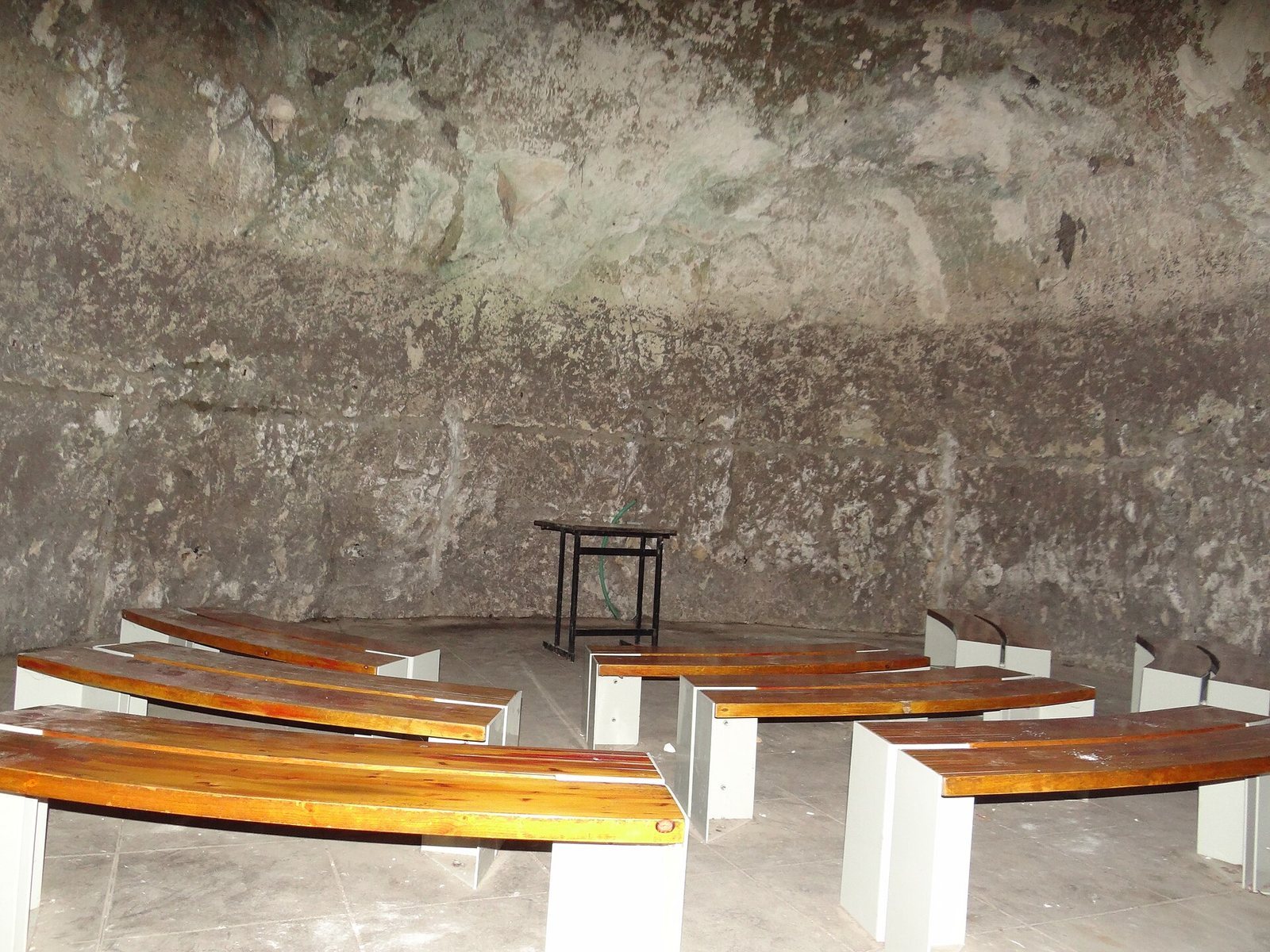
Catacomb 28, now used as a museum, began as a water reservoir and later became a glassmaking workshop. A rectangular block of opaque purple glass found there measures about 3.5 by 2 by 0.5 metres and weighs approximately 8.8 tonnes. Large blocks were made to be broken into smaller pieces for glass workshops; a defect may explain why this one was left behind. Niches cut into the cave walls gave workers a place to shelter from the heat.
The Menorah Cave complex
Southwest of the larger group, this complex contains six burial caves. Its tombs have carved symbols and inscriptions associated with Jewish communities from across the region.
Catacomb 1, the Horseman’s Cave
The largest burial complex at Beit She’arim, the Horseman’s Cave has a narrow corridor branching into 16 halls at different levels. The halls contain about 380 graves of several types, most commonly arched niches cut into the walls; others are set into walls or floors. Stone doors turning on pivots provided access to the halls. Hebrew and Greek inscriptions and carvings show menorahs, shofars, ritual horns traditionally made from a ram’s horn, lulavs, etrogs, ritual citrons, ships, and lions. A relief of a mounted horseman gives the cave its name. Inscriptions also identify burials of Jews from Tadmor.
The Cave of Hell
A breach connects the Cave of Hell with the Horseman’s Cave. Engravings of merchant ships and geometric designs cover its walls. The cave’s Arabic elegy, dated either to 900 or 902 CE, names Umm al-Qasim.
Warrior and Torah ark caves
Catacomb 3, the Warrior and His Menorah Cave, has five halls and about 80 graves. Its name refers to a relief showing a warrior beneath a three-legged menorah; other menorah carvings and inscriptions concerning Jews from Tadmor were also found there. Catacomb 4, the Ark of the Torah Cave, has four halls and about 100 burials. A recessed carving of a Torah ark in its main hall gives the cave its name. The neighboring Jewish Gladiator Cave has an inscription identifying Germanus son of Isaac as a Palmyrene.
Other burial caves
The Cave of the Jews of Himyar, numbered 7, has 40 small burial niches branching from a main hall. Its inscriptions connect the burials with Jews from Himyar. One man, Menahem, is described in Greek as a community elder; an interpretation of his title as ‘prince of Himyar’ remains uncertain.
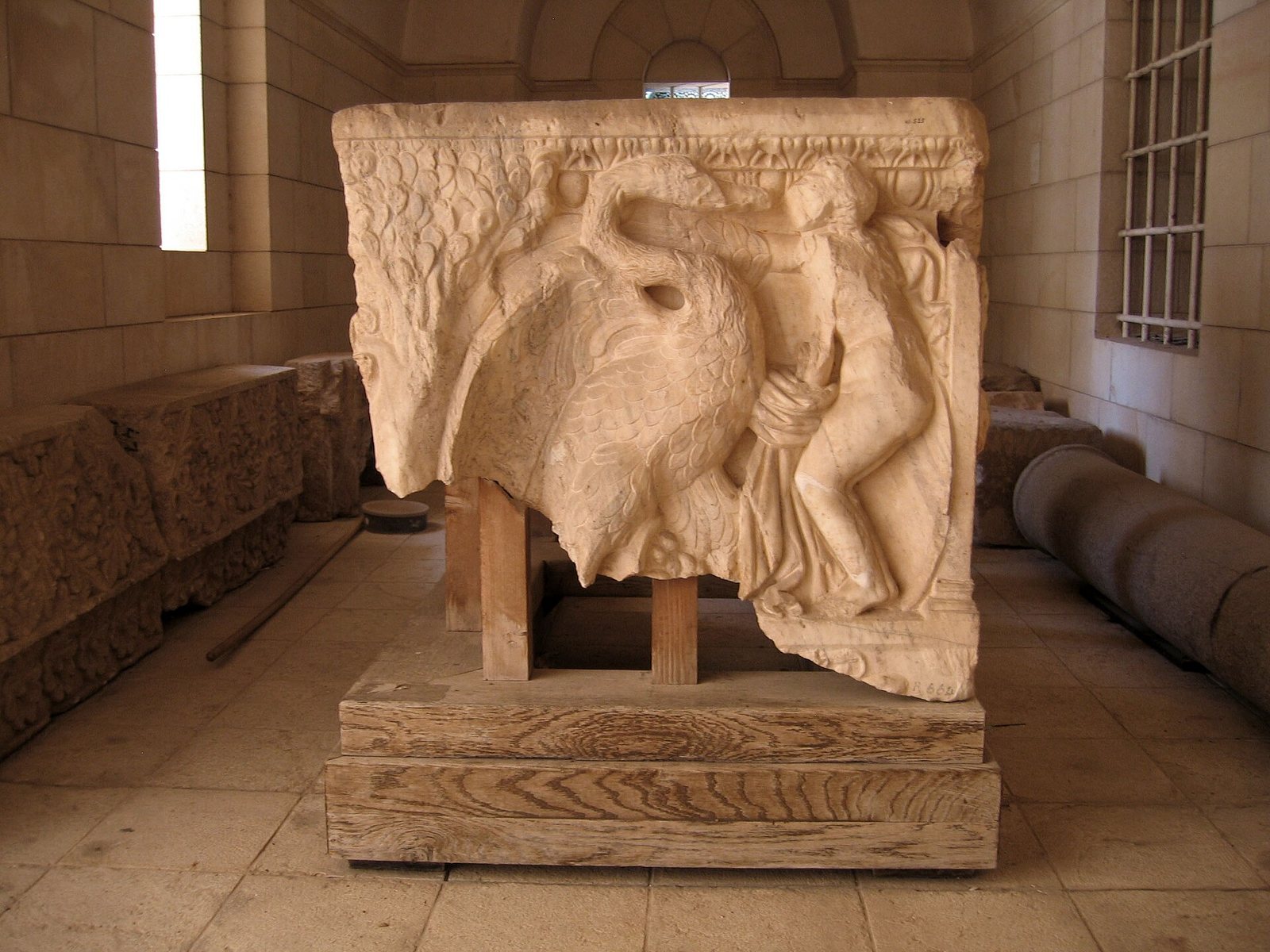
Catacomb 11 includes a burial cave with a mosaic floor and a four-sided building of finely dressed stone beside it. A niche contained part of a frieze decorated with animals. Finds included a marble coffin carved with Leda and the Swan and a marble inscription naming Justus, son of Leonitus. The inscription mentions Besara, an ancient name for Beit She’arim, and helped confirm the site’s identification. Other named caves include the Cave of Niches, the Magnificent Cave, and the Painted Cave.