Eflatunpınar: A Hittite Sacred Pool Monument in Türkiye
Site at a Glance
- Popularity
- High
- Country
- Turkey
- Primary era
- Bronze Age
- Eras represented
- Bronze Age, Classical
- Civilizations
- Hittite, Roman
- Site type
- Religious
- Remains
- Sanctuary
On this page11 sections
History
Hittite monument and interpretations
Eflatunpınar is a Hittite sacred-pool monument at Sadıkhacı in Türkiye. The Hittites were an ancient Anatolian people whose empire flourished during the Late Bronze Age, the later phase of the Bronze Age. The pool was built during the Hittite imperial period, broadly dated between the 15th and 13th centuries BCE, with a more specific estimate placing it in the second half of the 13th century BCE. It was dedicated to worship focused on springs and their sacred associations.
The pool has been identified with the “spring pool of Arimatta,” named in a treaty between Hittite king Tudhaliya IV and Kurunta, ruler of Tarhuntassa. The treaty survives on a bronze tablet discovered at Hattusa, the Hittite capital. Eflatunpınar marks the southwesternmost point of Hittite expansion and is one of the few known Hittite sites with human figures shown facing forward.
Interpretations of the monument differ. James Mellaart considered it an Arzawa sanctuary dedicated to a storm god and a sun goddess. Kurt Bittel instead understood it as a victory monument from Tudhaliya IV’s reign. Mellaart also proposed that an unfinished sculpture at Fasıllar, another Hittite site in central Anatolia, was intended for Eflatunpınar. It shows a storm god standing above a mountain god, flanked by two lions. The resemblance to lion sculptures at Eflatunpınar informed the proposal that the sculpture was meant to stand above the monument’s large winged sun disk.
Later use and modern recognition
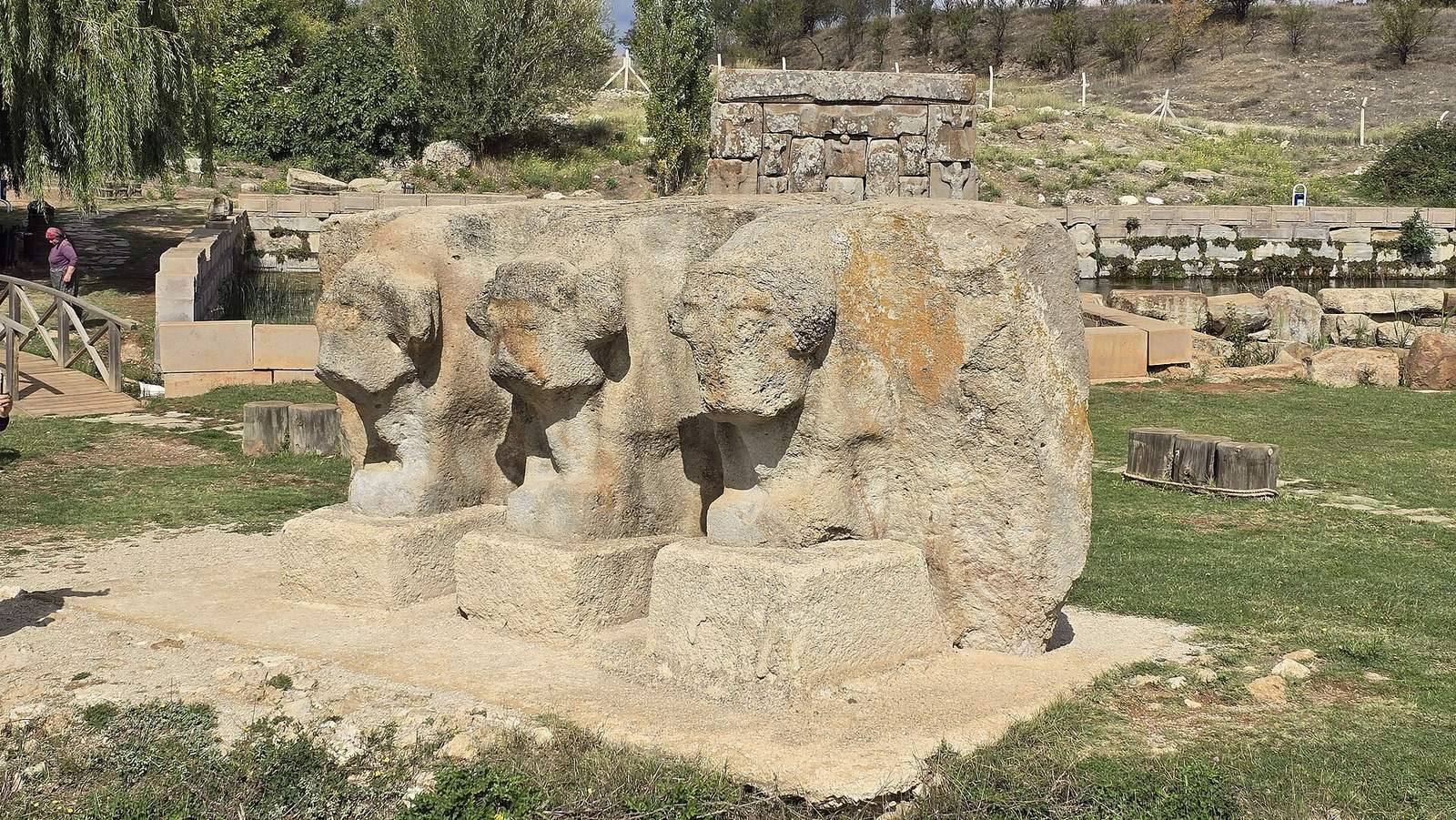
During the Roman period, a dam was built on the pool’s southwestern side, and a block carved with three bulls was used as fill. In the Seljuk period, the monument was interpreted as a shrine to Plato, the ancient Greek philosopher. This association gave rise to the alternative name “Plato’s Spring”; the Turkish name is also rendered “Violet Spring.”
Archaeologist Lucia Nixon of the University of Oxford briefly examined Eflatunpınar in a paper concerning Çatalhöyük, drawing on Frederick William Hasluck’s early-20th-century work. The site remains largely unexplored. Since 2014, it has been included on UNESCO’s Tentative World Heritage List, a register of places that a country may consider nominating for World Heritage status.
Remains
Pool and carved sanctuary
Pool and setting
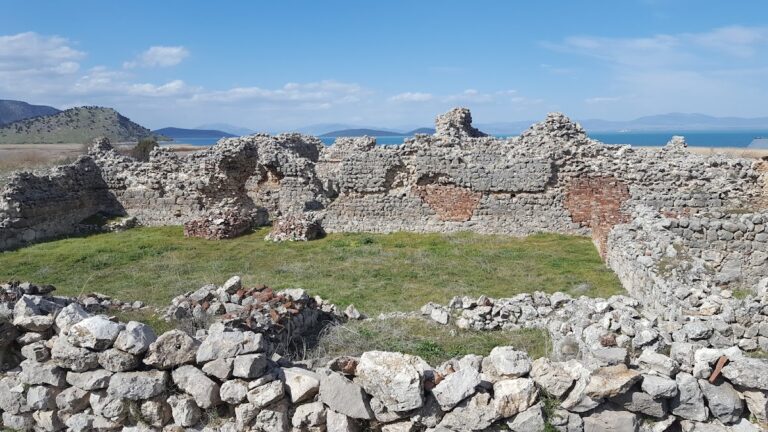
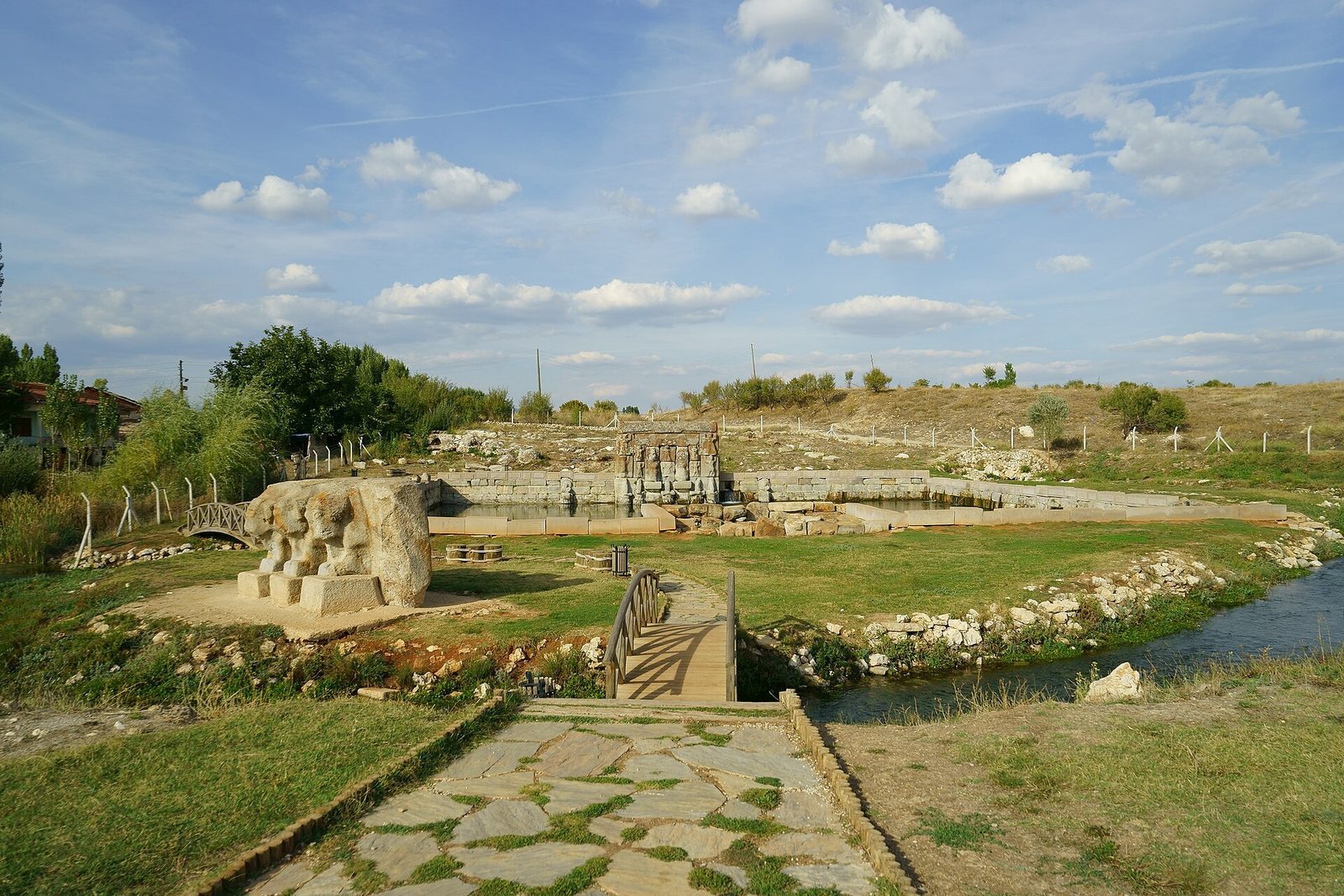
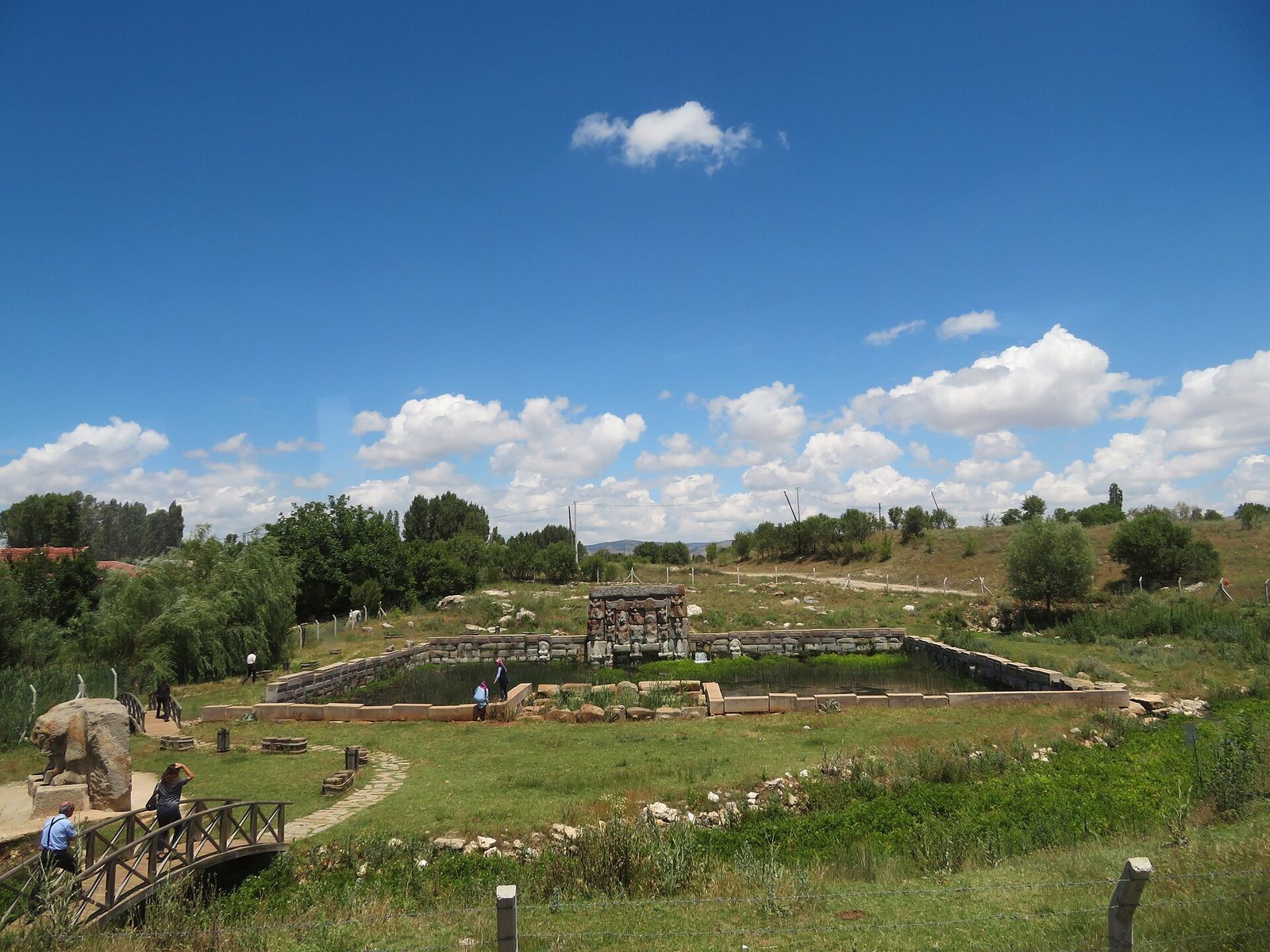
Eflatunpınar lies within Lake Beyşehir National Park in Konya Province, in central Anatolia’s ancient region of Pisidia, north of Lycia. East of Lake Beyşehir, the pool is near the shore, and water from its spring drains into the lake. The pool is nearly square, measuring about 30 by 34 metres. Its stone-built edge encloses the water, while a low wall surrounds it. The spring produces cold, clear water. Across the lake, the ruins of Kubadabad Palace, a medieval Seljuk palace complex, lie at almost the same elevation.
North wall and reliefs
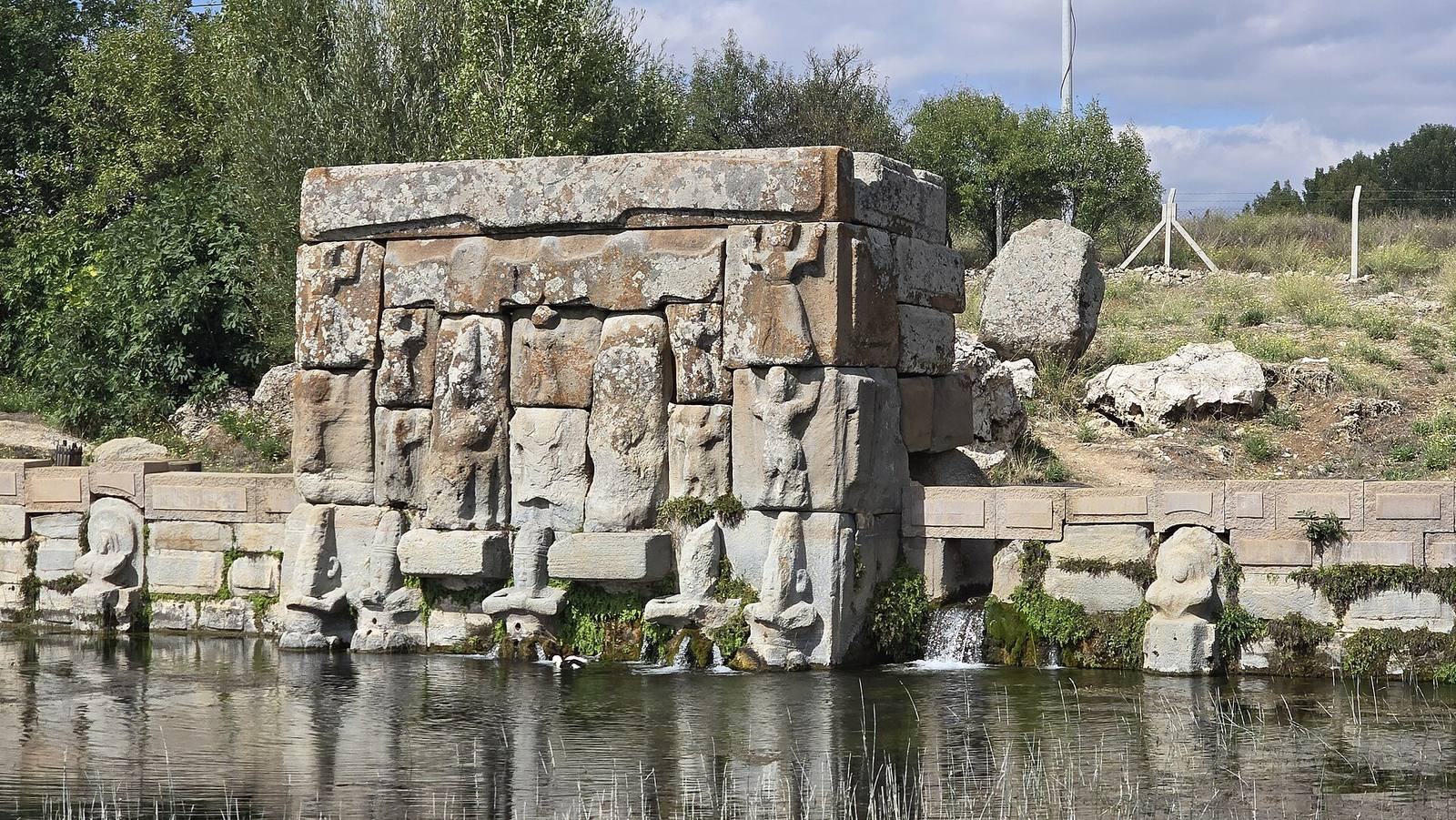
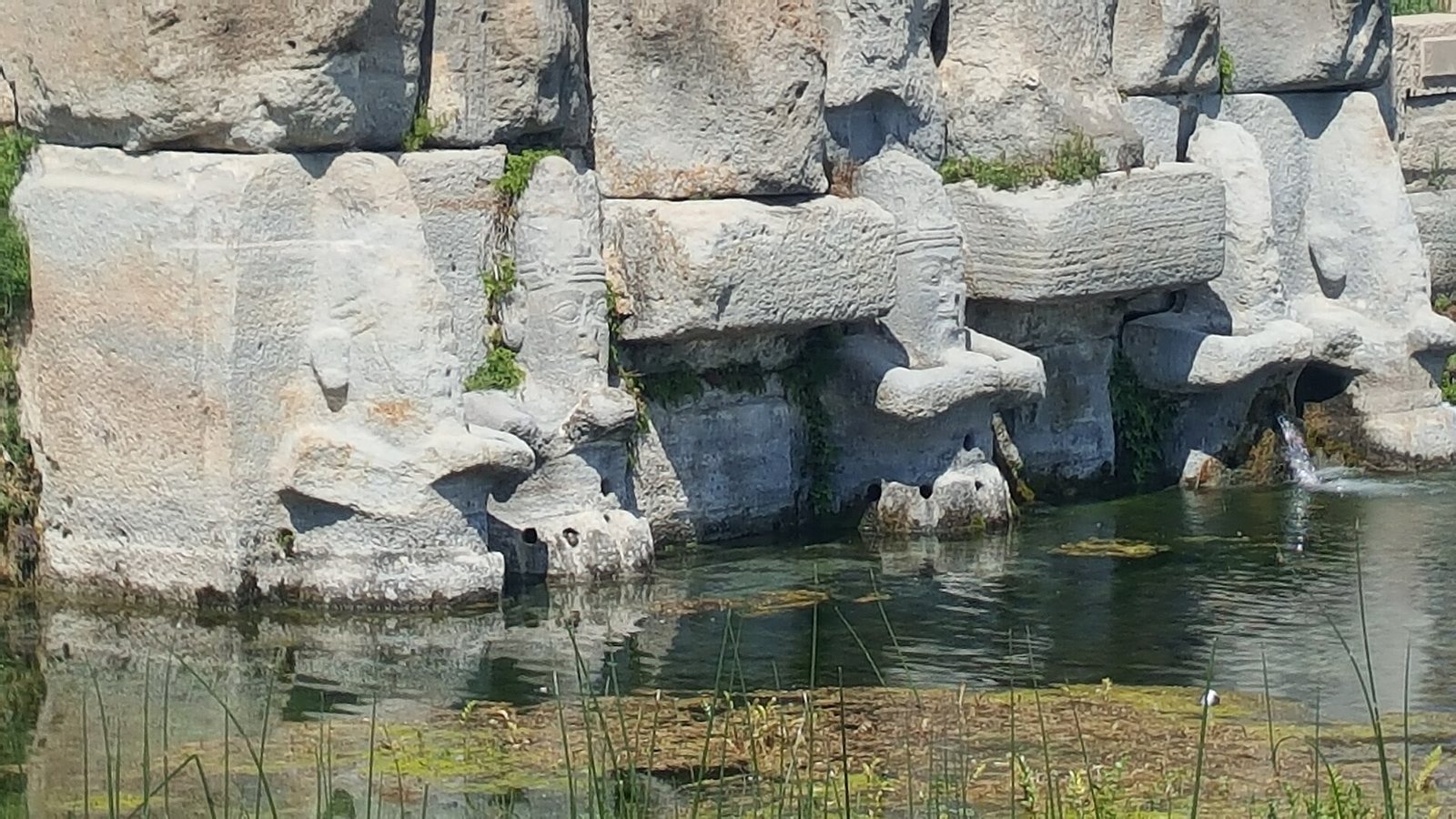
On the pool’s north side stands a monumental temple wall made from large carved stone blocks. Its facade is about 7 metres wide and 4.2 metres high; including its base, which is sometimes submerged, the wall rises to about 7 metres. The lowest row shows five mountain gods, visible only when the water level is low. Holes in the abdomens of the three central figures have led to their interpretation as spring gods. Above them, a male and a female divine figure are thought to represent a storm god and a sun goddess, although their identities remain uncertain. Other carved figures, including mixed creatures of uncertain purpose, flank the pair. Winged sun disks appear above the divine figures and those beside them, while a larger disk crowns the composition. Similar figures may also appear on the southern and eastern sides. A deity statue stands at each side of the monumental wall.
Structure across the pool
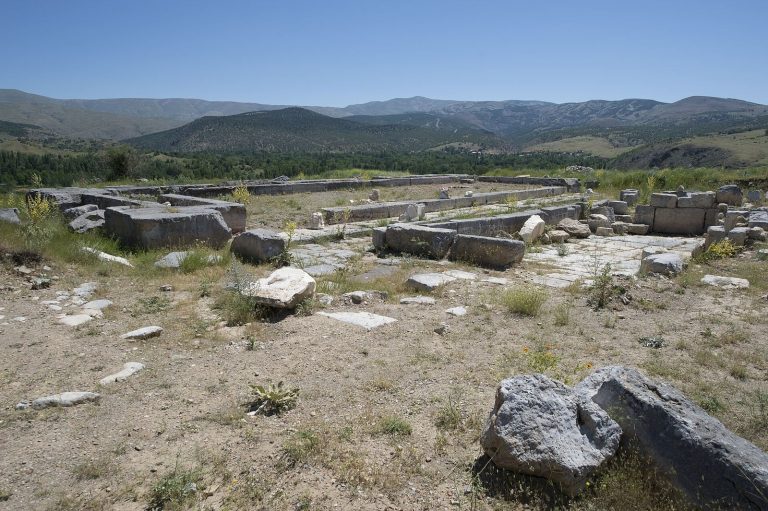
Foundations from another structure project into the water across the pool. A free-standing statue of a sun goddess with a halo stands in front of that structure’s end wall. The statue has been identified as one member of a divine pair.
Sculptures and finds
Bull block and other sculptures
Fragments of sculpture and other carved stones lie around the pool. The block carved with three bulls now stands a few metres from the pool’s southeast corner, although this is probably not its original position. The reclining animal sculptures found in the pool’s fill are thought to depict lions, deer, and bulls.
Objects from the basin
Miniature ceramic vessels, made as votive offerings, were recovered inside the basin. They resemble vessels found in pools at Boğazköy-Hattusa. A bronze pin was also found within the basin.