Notion: An Ancient Greek City and Port on the Aegean Coast
Site at a Glance
- Popularity
- Medium
- Country
- Turkey
- Primary era
- Classical
- Eras represented
- Classical
- Civilizations
- Ancient Greek
- Site type
- City
On this page12 sections
History
Early Notion and Athenian alliances
Notion was an ancient Greek city at Ahmetbeyli, on the Aegean coast of Türkiye, known to have existed by the sixth century BC. Prehistoric occupation is possible. The historian Herodotus provides its earliest known written reference and classifies it among the Aeolian cities, while the earlier geographer and historian Hecataeus of Miletus calls it Ionian. Herodotus describes it as the southernmost Aeolian city. Notion may also be the poorly located Aeolian city of the same name that he mentions, though that identification is uncertain.
Notion’s fortunes were closely connected to those of nearby Colophon, though the cities also competed, and Notion sometimes governed itself. In the seventh century BC, Notion came under Lydian rule, followed by Persian control in the sixth century. It was then a small Aeolian town overshadowed by Colophon. Colophon may have protected it from Lydia, and Notion may have controlled nearby Claros during the seventh century.
After the Greek victory at Plataea in 479 BC, Notion regained its freedom and joined the Delian League, an alliance led by Athens, separately from Colophon. It appears separately in the league’s tribute records from 454/453 to 416/415 BC. Its annual payment was one-third of a talent, an ancient unit for measuring large amounts of money or precious metal, while Colophon paid three talents. Notion did not issue its own coins and remained economically weaker than Colophon, at least until the time of Lysimachus.
Athenian settlement and the Battle of Notium
When Persia occupied Colophon in 430 BC, many of its residents moved to Notion, where the population divided between supporters and opponents of Persian rule. In 427 BC, anti-Persian residents summoned an Athenian force under Paches. He expelled the pro-Persian faction and installed Colophonians who opposed Persia. Athens later sent further settlers and gathered displaced Colophonians at Notion, establishing a democracy. This resettlement was called a “New Colophon,” but it is uncertain whether it took place at Notion or elsewhere on the nearby coast. Notion subsequently served as an Athenian military base.
In 406 BC, a Spartan naval victory near the city, known as the Battle of Notium, contributed to the removal of the Athenian commander Alcibiades from his fleet command and strengthened the position of the rebels. Notion also functioned as a harbor for Colophon and nearby Claros, an Apollo sanctuary with an oracle that pilgrims consulted. The Aeolian Greeks of Notion were associated with the legendary seer Mopsus, while the Ionian Greeks of Colophon were linked with Calchas. Their rivalry may lie behind a story at Claros in which Mopsus outwitted Calchas and caused his death.
Union with Colophon
Alexander the Great, the Macedonian king whose conquests created an empire, incorporated Notion into his kingdom in 334 BC. Around 300 BC, Lysimachus, one of Alexander’s successors, captured Notion, destroyed Colophon, and resettled Colophonians at Notion and Ephesus. As Colophon declined, Notion gained importance. The two cities came to be treated as one city-state, and an agreement in the third century BC established political union and shared citizenship. Inscriptions at Notion thereafter include Colophonian names.
Following their union, Notion was called “New Colophon” and “Colophon by the Sea,” distinguishing it from the inland settlement, known as “Old Colophon” or “Colophon in the North.”
Hellenistic kingdoms, Roman rule, and later use
After Lysimachus was defeated and killed at Corupedion in 281 BC, Notion came under Seleucid rule. The Seleucid Empire was a Hellenistic kingdom founded by Alexander’s successors in parts of Asia. By 218 BC, Notion was under Pergamon, another Hellenistic kingdom in western Asia Minor. The Seleucid king Antiochus III conquered it in 196 BC, and it returned to Pergamene rule under Eumenes II in 191 BC. During the conflict around Magnesia, Notion supported Rome and its allies. After Roman victories over the Seleucids and the Treaty of Apamea in 188 BC, it became a free, self-governing city.
In 132 BC, ships belonging to Aristonicus, a claimant to the Pergamene throne who had rebelled against Rome, entered Notion’s harbor. After the revolt was suppressed, the city became part of the Roman province of Asia. It gradually declined, and its name eventually disappeared from historical records. It may have been abandoned. During the Byzantine period, the history of the eastern Roman Empire, Notion was an episcopal center. By the fifth century AD it was identified as a bishopric, a church district overseen by a bishop, and it retained that status for a long period.
The first substantial excavations took place in 1921 under a French expedition. Archaeological work resumed in 2022, partly involving the University of Michigan. In 2023, excavators uncovered 68 Persian gold darics, coins, beneath the walls of a house. An excavation leader suggested that a soldier may have hidden the hoard for safekeeping.
Remains
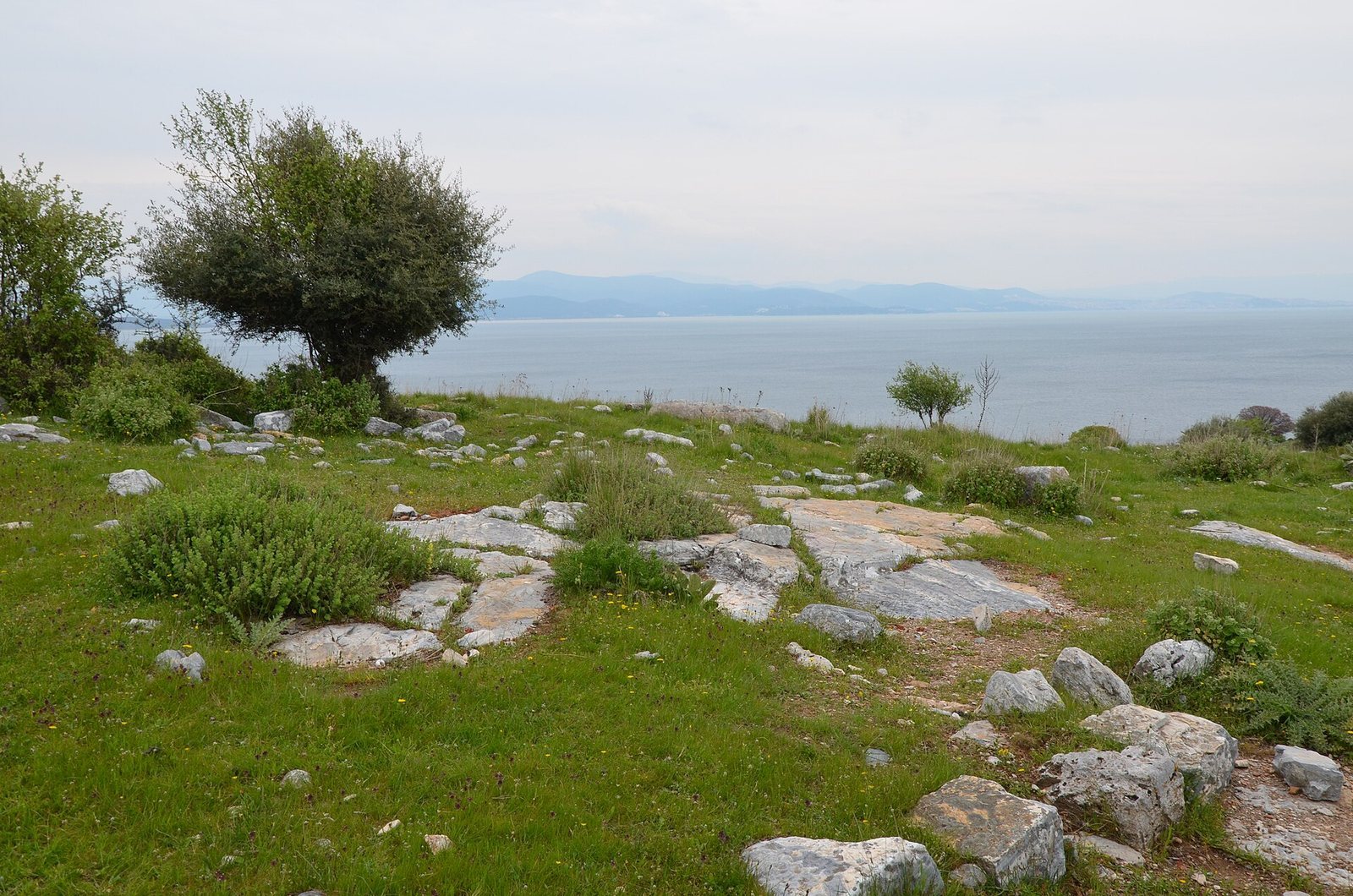
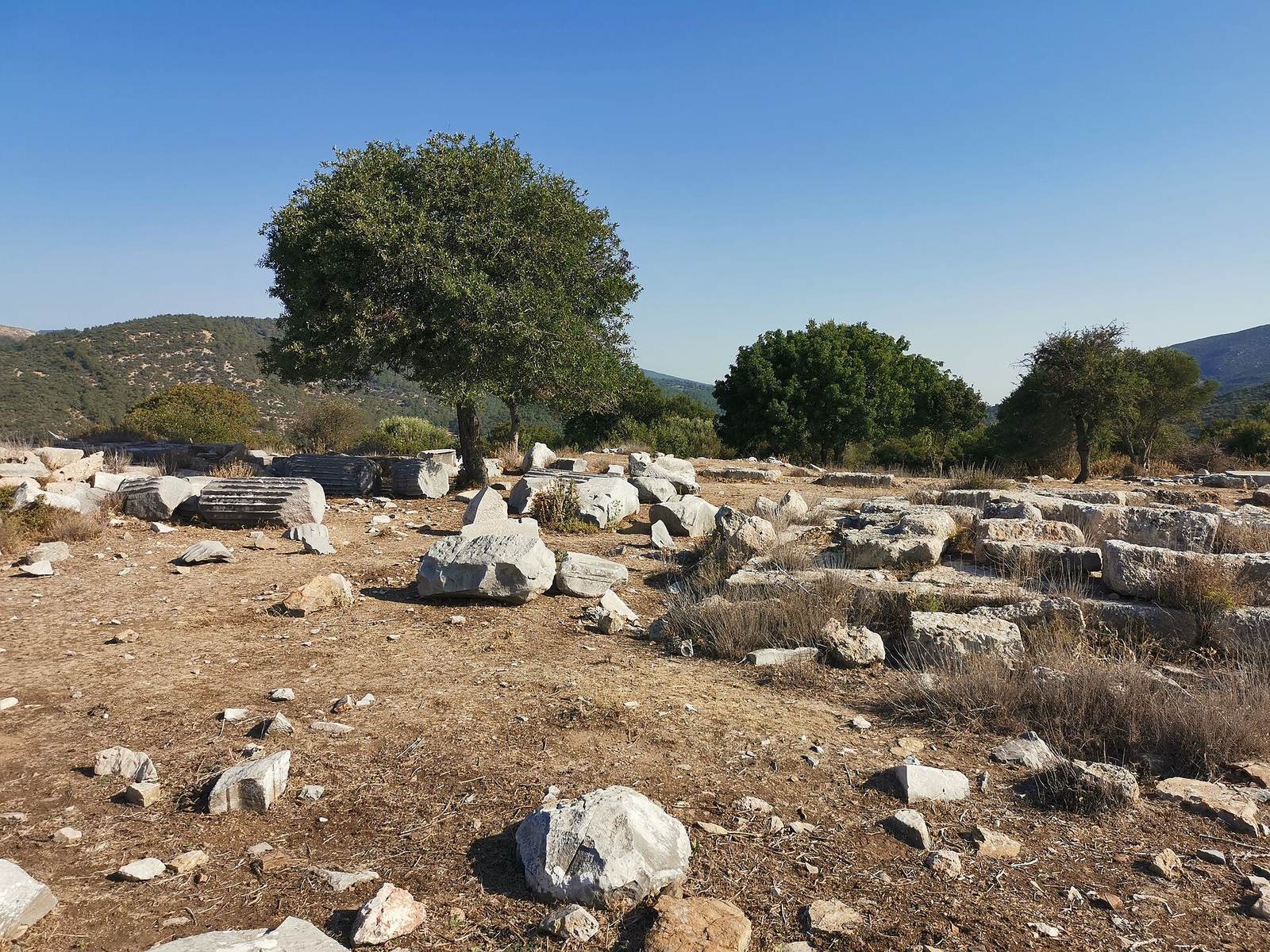
The ruins occupy coastal hills at the mouth of the small Halesos River, also called Hales or Ales. The ancient city lay about 15 kilometres south of Colophon and 50 kilometres south of İzmir, and its territory is estimated to have covered less than 25 square kilometres. The harbor is thought to have stood at the river mouth. Sediment carried by the river may have silted up the earliest settlement, after which occupation shifted to the area of the present ruins. The surviving layout includes a fortified center on two hills, civic and religious spaces, a theatre, burial grounds, and baths.
Acropolis and city defenses
The city’s acropolis, its elevated fortified center, occupies western and eastern hilltops linked by a ridge. Local residents call the area the fortress. A wall dated to the Hellenistic period, the era after Alexander’s conquests when his successors ruled Greek-influenced kingdoms, or somewhat earlier enclosed the hills. It extended for several kilometres and had at least four gates, with square towers reinforcing the defenses. Two towers survive, one to the north and another to the west. Roads passing through the towers led toward the harbor.
Temple and civic spaces
Temple of Athena
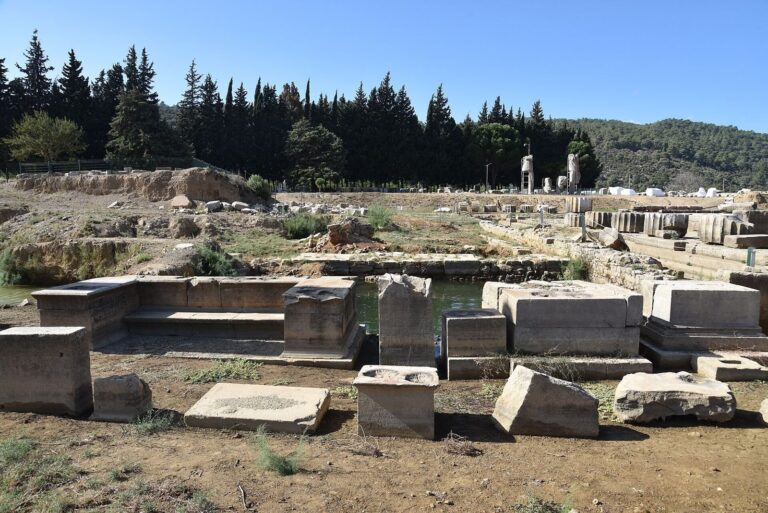
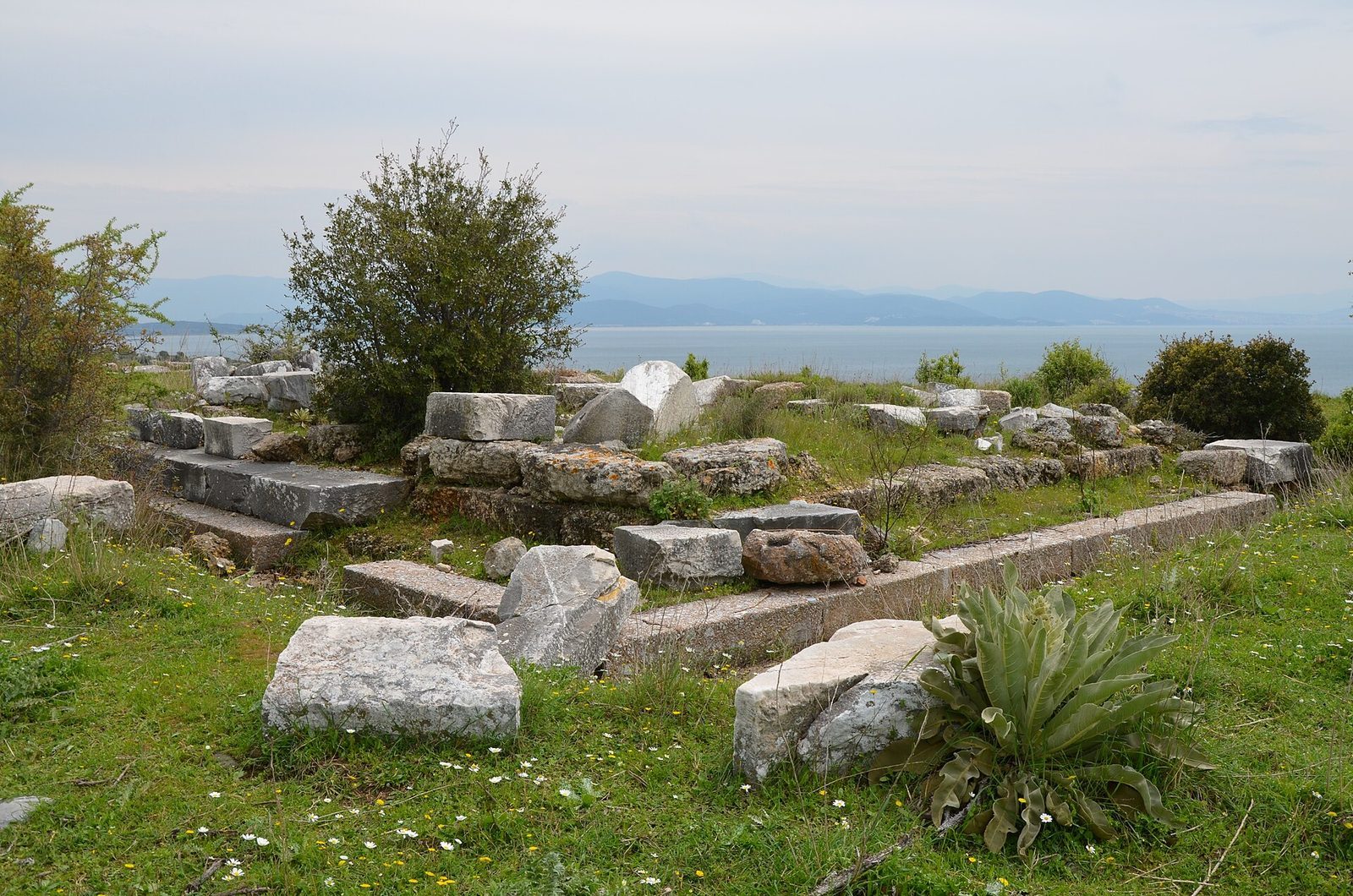
The temple of Athena stood on the seaward slope of the western hill. It was dedicated to Athena Polias, the goddess in her role as protector of the city, and is also described as a temple of Athena Pallas. Its altar was located to the east.
Agoras and council house
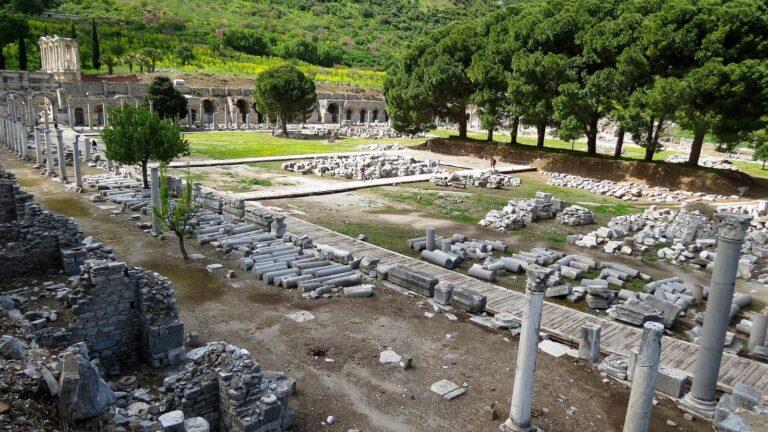
A civic gathering and marketplace, or agora, lay east of the temple. Farther east are the remains of a building thought to have served as a council house. A second agora occupied the eastern hill.
Theatre
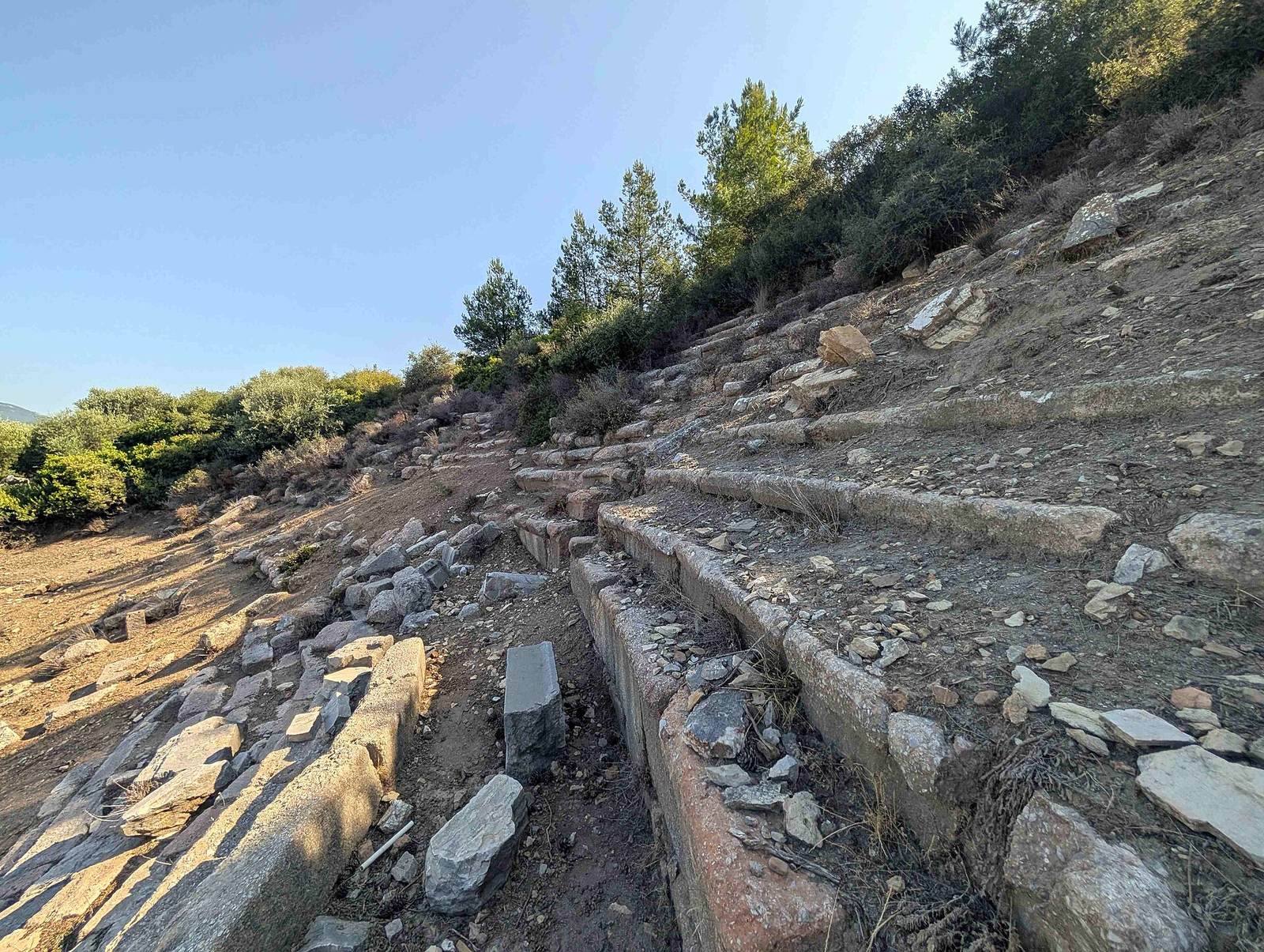
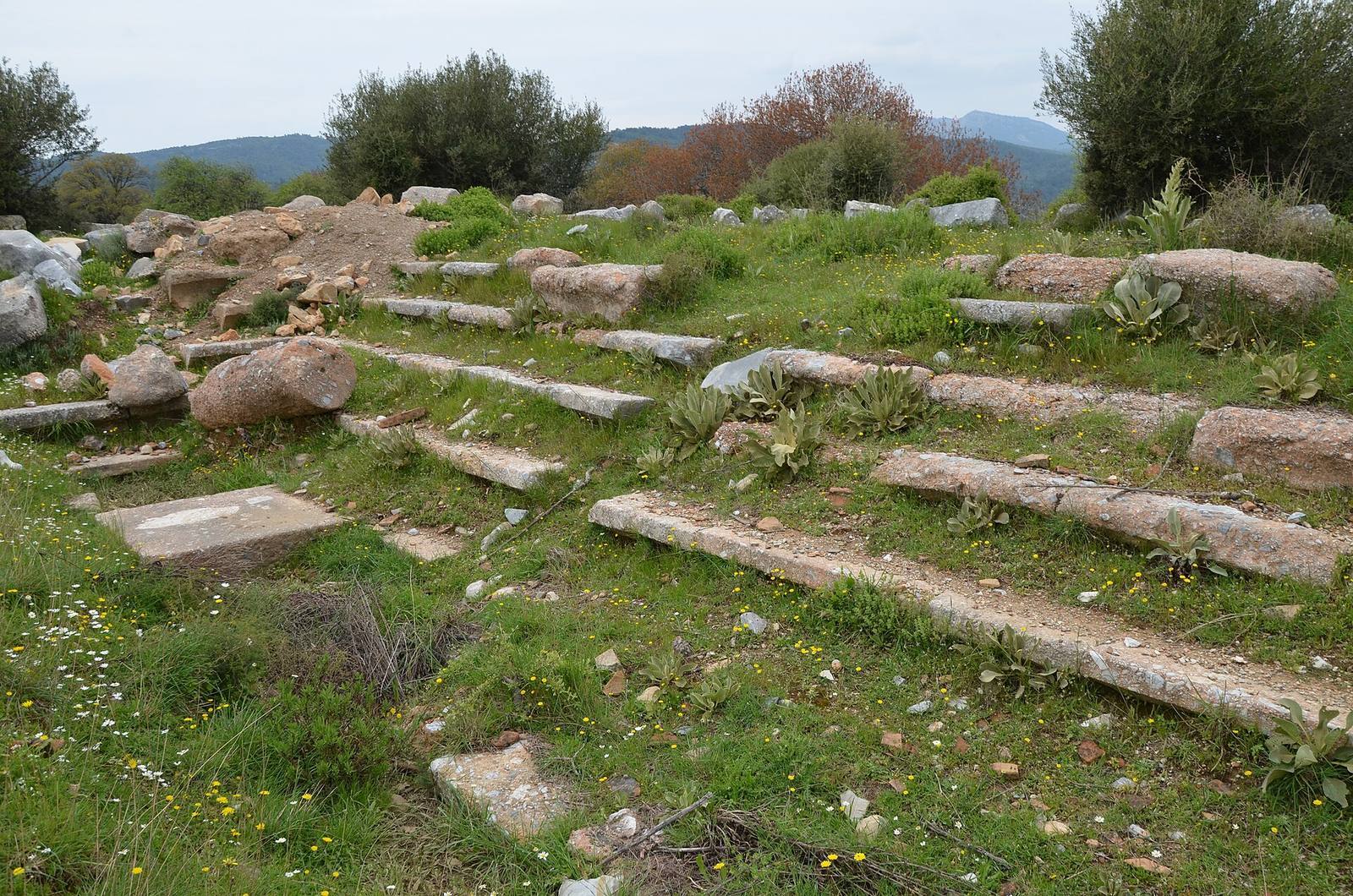
The Greek theatre stood on the western slope of the eastern hill, below the eastern agora. Built during the Hellenistic period and renewed in Roman times, it had 27 rows of seats.
Burial grounds and baths
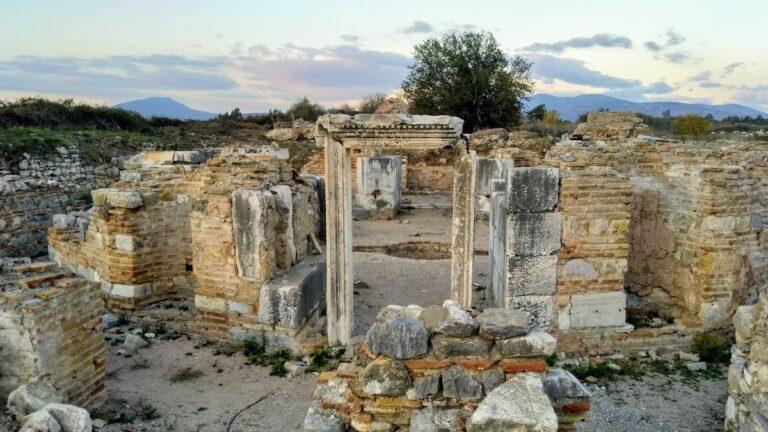
A burial ground lay on a hill north of the city, where some tombs were cut into the rock. The remains of the city’s baths are also visible.