Antiochia ad Cragum: An Ancient City in Türkiye
Site at a Glance
- Popularity
- Medium
- Country
- Turkey
- Primary era
- Classical
- Eras represented
- Classical, Medieval
- Civilizations
- Roman, Seleucid
- Site type
- City
On this page14 sections
History
Antiochia ad Cragum is an ancient city near Güneyköy, in the Gazipaşa district of Antalya Province, Türkiye. It was founded around 170 BC by Antiochus IV Epiphanes, a Seleucid king, as a Hellenistic city in Cilicia, an ancient region of Anatolia. Its history includes Hellenistic, Roman, Byzantine, Armenian, and medieval phases.
Hellenistic and Roman periods
The city’s association with ancient Cragus, also called Kragos, has been proposed. Another identification places the Lycian Cragus at Sidyma, more than 100 km away.
Antiochia ad Cragum issued coins from around the middle of the first century BC until the middle of the third century AD. Its latest known coins date to the reign of Roman emperor Valerian, who ruled from AD 253 to 260.
Byzantine church history
In Byzantine times, Antiochia Parva, meaning “Little Antiochia,” served as an episcopal see, the seat of a bishop and the center of a diocese. It was associated with Isauria, a Roman province in southern Anatolia, within the Diocese of the East, a late Roman administrative division. The bishopric belonged to the Patriarchate of Antioch and was subordinate to the Archbishopric of Seleucia.
Five bishops are associated with the city. Antonius attended the Council of Nicaea in 325, Theodosius the Council of Constantinople in 381, Acacius the Council of Chalcedon in 451, and Zacharias the Trullan Council in 692. Theophanes took part in the council held at Constantinople in 879–880, which restored Photius, the Patriarch of Constantinople, to his position. These councils were assemblies of Christian church leaders.
Medieval and modern history
In the twelfth century, the city became part of Lesser Armenia, a medieval Armenian kingdom. The Knights Hospitaller, a medieval Catholic military order, captured it in 1332. Later forms of its name included Antiochetta, Antiocheta, Antiochia Parva, and Antiocheta in Rufine.
Excavations led by the University of Nebraska-Lincoln and directed by Michael Hoff took place from 2005 to 2019. The Roman Catholic Diocese of Antiochia Parva is no longer a residential bishopric. It is listed as a suppressed titular see, a bishopric title without a functioning local diocese, and has been vacant since 11 April 1964.
Remains
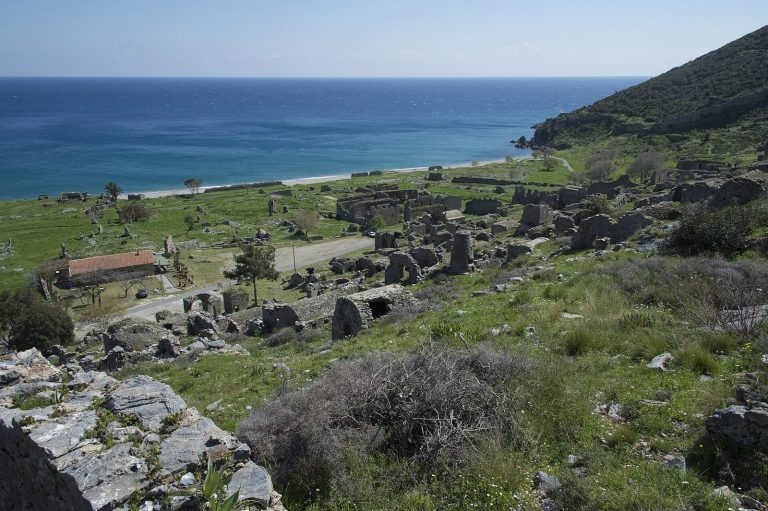
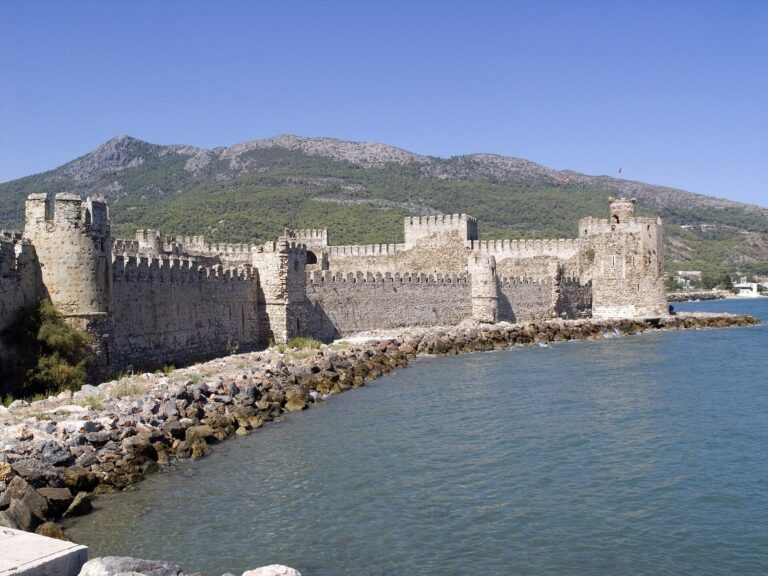
The ruins extend across three elevations on Mount Cragus, overlooking the Mediterranean coast. The first area contains civic and religious buildings, the second is a necropolis, and the third preserves medieval fortress remains on steep rocks extending toward the sea.
Urban and religious remains
Civic center
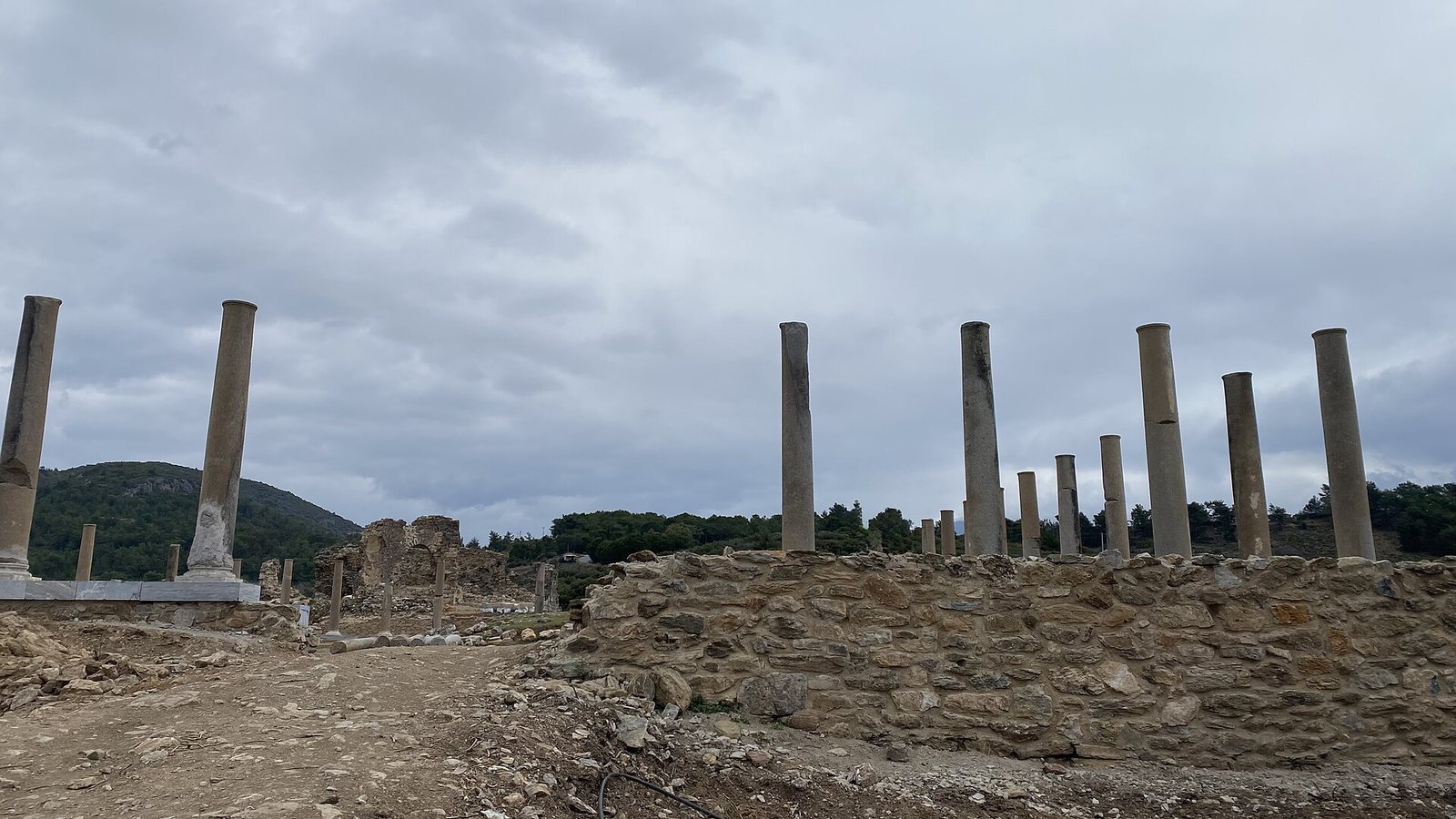
The first area includes a colonnaded street, an agora, or public square, baths, a triumphal arch, and the remains of a church. A wine press also survives among the remains at the site.
Temple and Triconchos
North of the city are temple remains with visible architectural elements. The Medusa sculpture found in 2015 lay near fragments of a broken temple pediment and may have formed part of it.
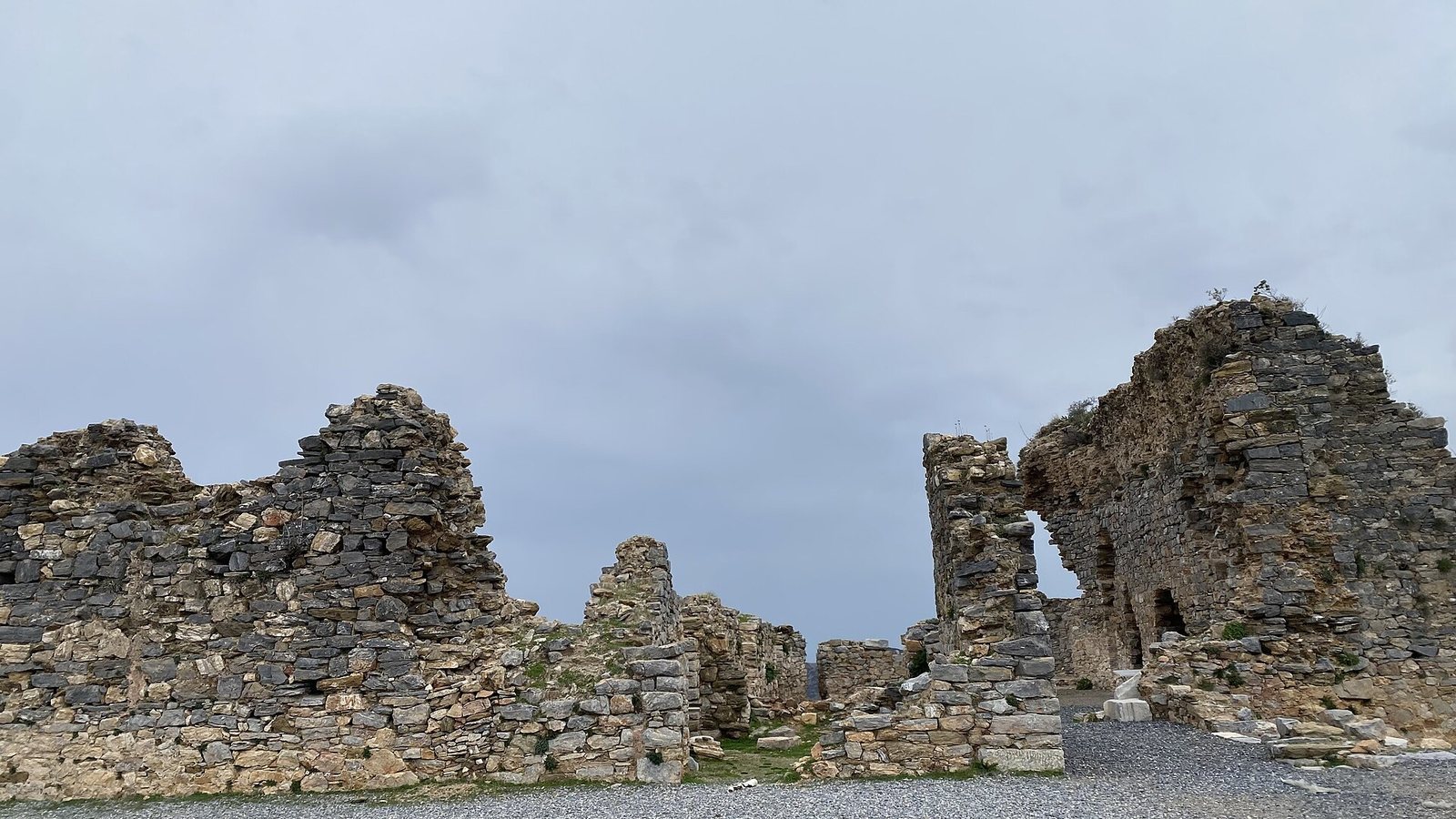
Near the city center, a building known as the Triconchos has three walls ending in curved recesses. It is thought to have served a religious purpose.
Burial and defensive remains
Necropolis
The second area is a necropolis with tomb structures characteristic of Cilicia. The wider site also includes a Roman necropolis.
Fortifications and fortress
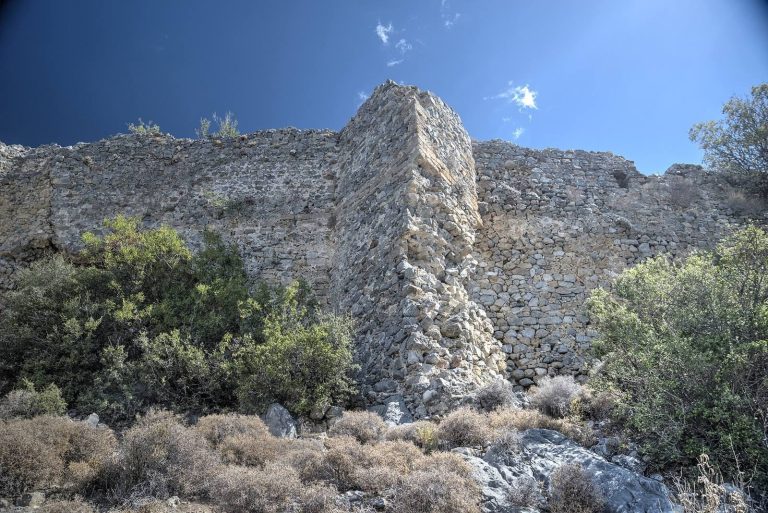
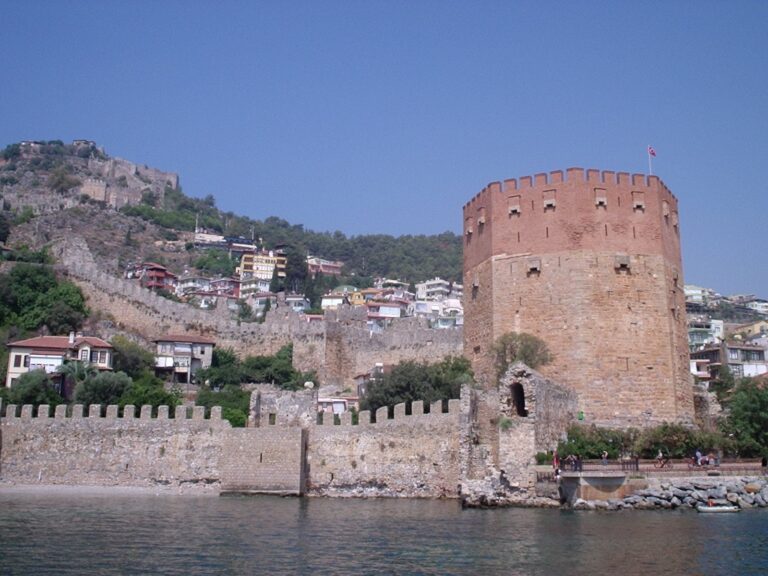
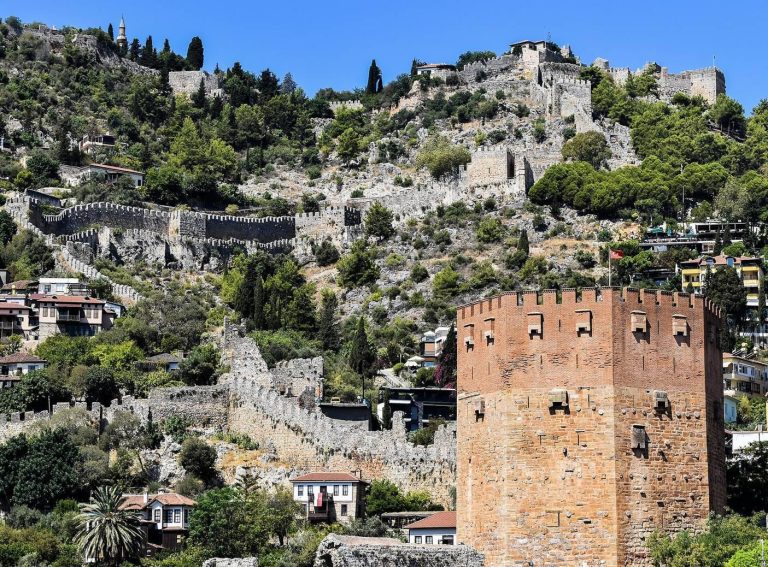
The third area preserves medieval fortress remains on steep rocks that extend toward the sea. Fortifications and chapels are also among the remains.
Sculpture and mosaics
Medusa sculpture
The sculpture, uncovered in 2015, is thought to date to the second century or early third century AD. It is slightly larger than life-size; its face is in good condition, and snakes remain visible in its hair.
Mosaics
Latrine mosaics discovered in 2018 show bawdy jokes about Narcissus, a youth associated with love of his own reflection, and Ganymede, a Trojan prince whom Zeus made cupbearer to the gods. A large pool mosaic was found near the city in 2019. One Roman mosaic associated with the site is the largest found in Türkiye.