Hotel Danieli: A Venetian Palace and Historic Hotel
Site at a Glance
- Popularity
- High
- Country
- Italy
- Primary era
- Medieval
- Eras represented
- Medieval, Modern
- Civilizations
- Austrian Empire, Habsburg, Italian, Venetian
- Site type
- Domestic
- Remains
- Elite Residence
On this page12 sections
History
Hotel Danieli is a historic hotel on the Riva degli Schiavoni in Venice, Italy, centered on Palazzo Dandolo, which the noble Dandolo family built in the late 14th century. The palace later became a hotel, and a 19th-century restoration gave its interiors a Neo-Gothic style, a revival of medieval Gothic design.
Palazzo Dandolo under Venetian families
The palace hosted major social events. In 1530, a celebration there marked the election of the King of Hungary and Bohemia as King of the Romans, a title for someone elected to succeed the Holy Roman Emperor, often before imperial coronation. In the 16th century, the Dandolo property was divided among female family members, and the Gritti family acquired part of the palace in 1536. Ownership later passed among the Bernardo, Mocenigo, and Nani families.
A reception in 1629 for the wedding of Giustiniana Mocenigo and Lorenzo Giustinian featured Proserpina Rapita, a musical drama by Giulio Strozzi set to music by Claudio Monteverdi. The Bernardo and Mocenigo families owned the palace in the 17th century and retained it until the Venetian Republic fell in 1797.
Conversion into a hotel
As Venice declined, Giuseppe Dal Niel, a man from Friuli known as Danieli, rented the palace’s first floor from 24 October 1822 for his own use and to accommodate guests. He bought the whole building in 1824, restored it, and opened a hotel under the name Danieli. Architect Tranquillo Orsi planned a major restoration that introduced the Neo-Gothic interiors.
During the 19th century, hotel guests could use a private beach, and interpreters spoke several European languages. A restaurant developed among the ground-floor shops, starting as Caffè Brigiacco. Two Greek brothers ran the establishment and were known for their Oriental-style clothing; it later became known as Caffè Orientale. After an ownership change in 1895, the hotel was modernized with electrical fittings, elevators, and central heating, and took the name Hotel Royal Danieli.
Expansion and changing ownership
By the end of the 19th century, a bridge linked the hotel to an adjoining palace later called Casa Nuova, which joined the hotel in 1906. That year, Danieli and four other luxury hotels in Venice came under the Compagnia Italiana Grandi Alberghi (CIGA), an Italian hotel company owned by Count Giuseppe Volpi. Architect Francesco Marsich also altered the facade.
From 1946 to 1948, buildings between Palazzo Dandolo and Palazzo delle Prigioni were demolished for a major expansion. Architect Virgilio Vallot designed the new annex, called the Danielino and also known as Palazzo Danieli Excelsior. Its construction was controversial because Doge Vitale II Michiel, the elected head of the Venetian Republic, had been killed on the site, where buildings higher than one storey had been prohibited since 1172.
CIGA expanded across Europe, but a recession led creditors to take it from its previous owner, the Aga Khan. In 1994, ITT Sheraton acquired a controlling interest in CIGA, and Danieli joined the company’s Luxury Collection. After Starwood bought Sheraton in 1998, the chain was renamed The Luxury Collection. Starwood sold the hotel to the Statuto Group for 177 million euros in 2005 and continued to manage it. Danieli left The Luxury Collection on 5 January 2023 and underwent an extensive renovation.
Remains
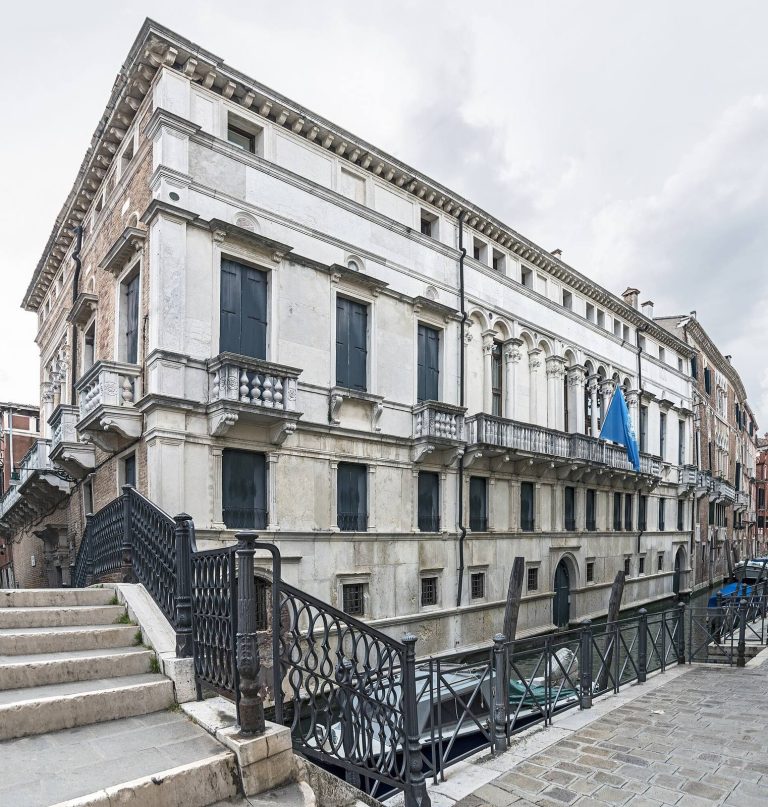
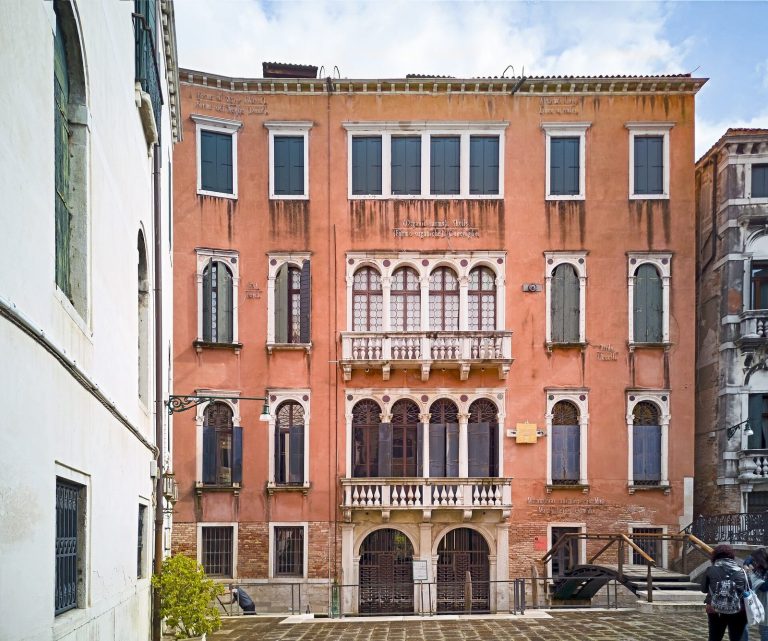
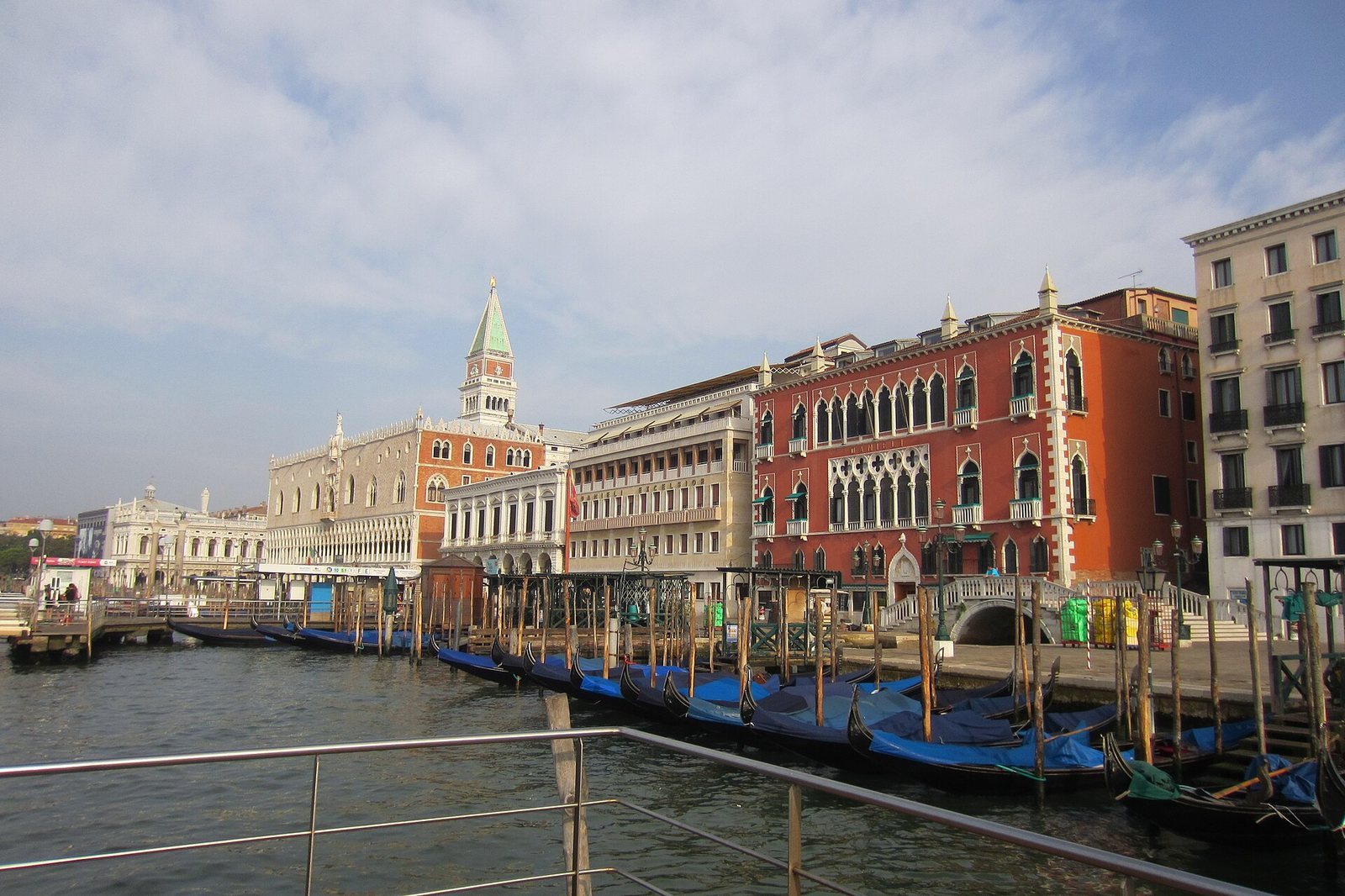
The hotel brings Palazzo Dandolo together with adjoining palace buildings and three wings of guest rooms, with the main palace organized around a four-storey courtyard. The palace stands near St. Mark’s Square, and its rear facade faces the Riva degli Schiavoni promenade and Saint Mark’s Basin. It adjoins buildings dating from the 14th and 15th centuries.
Palazzo Dandolo
Facade
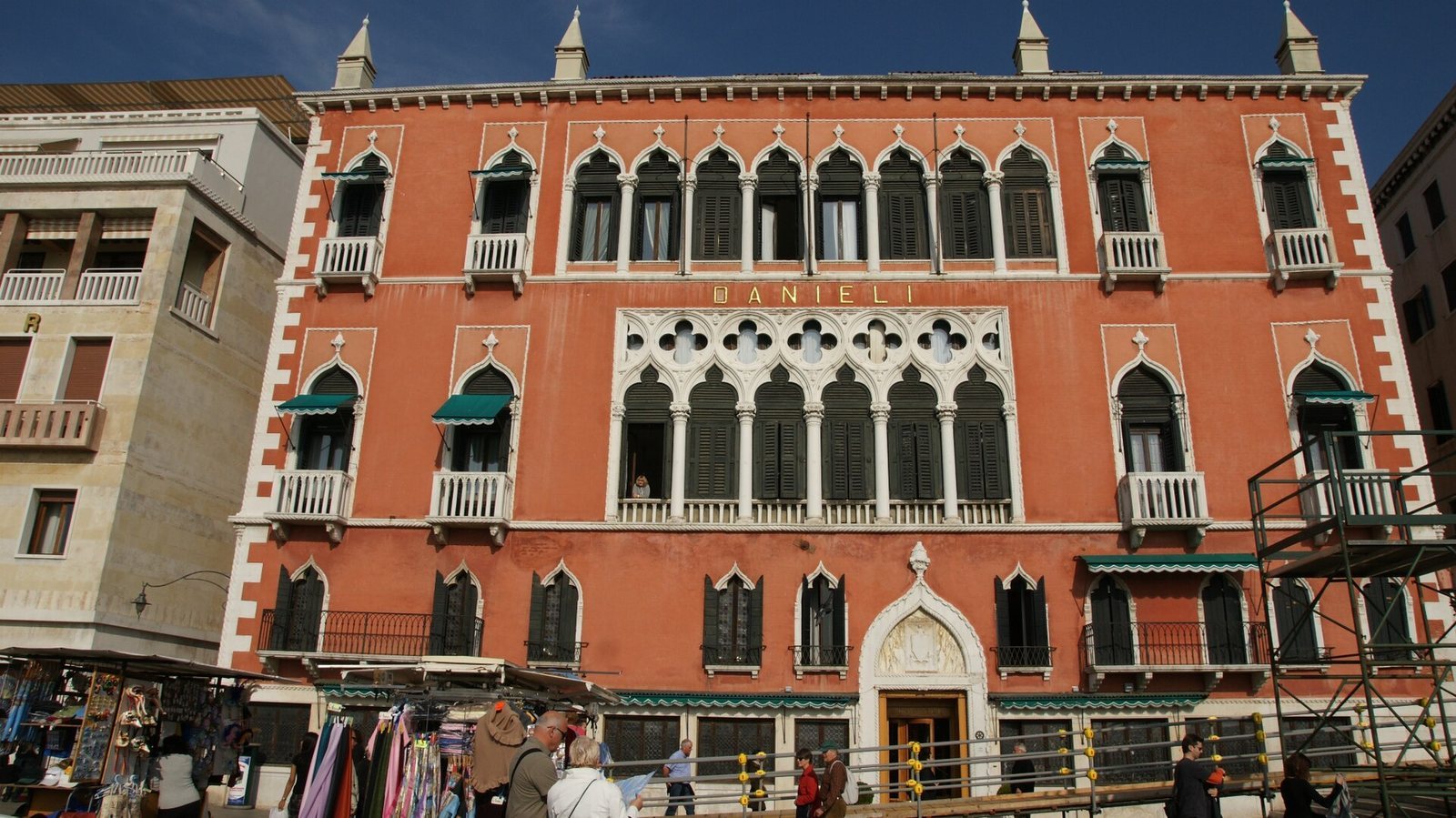
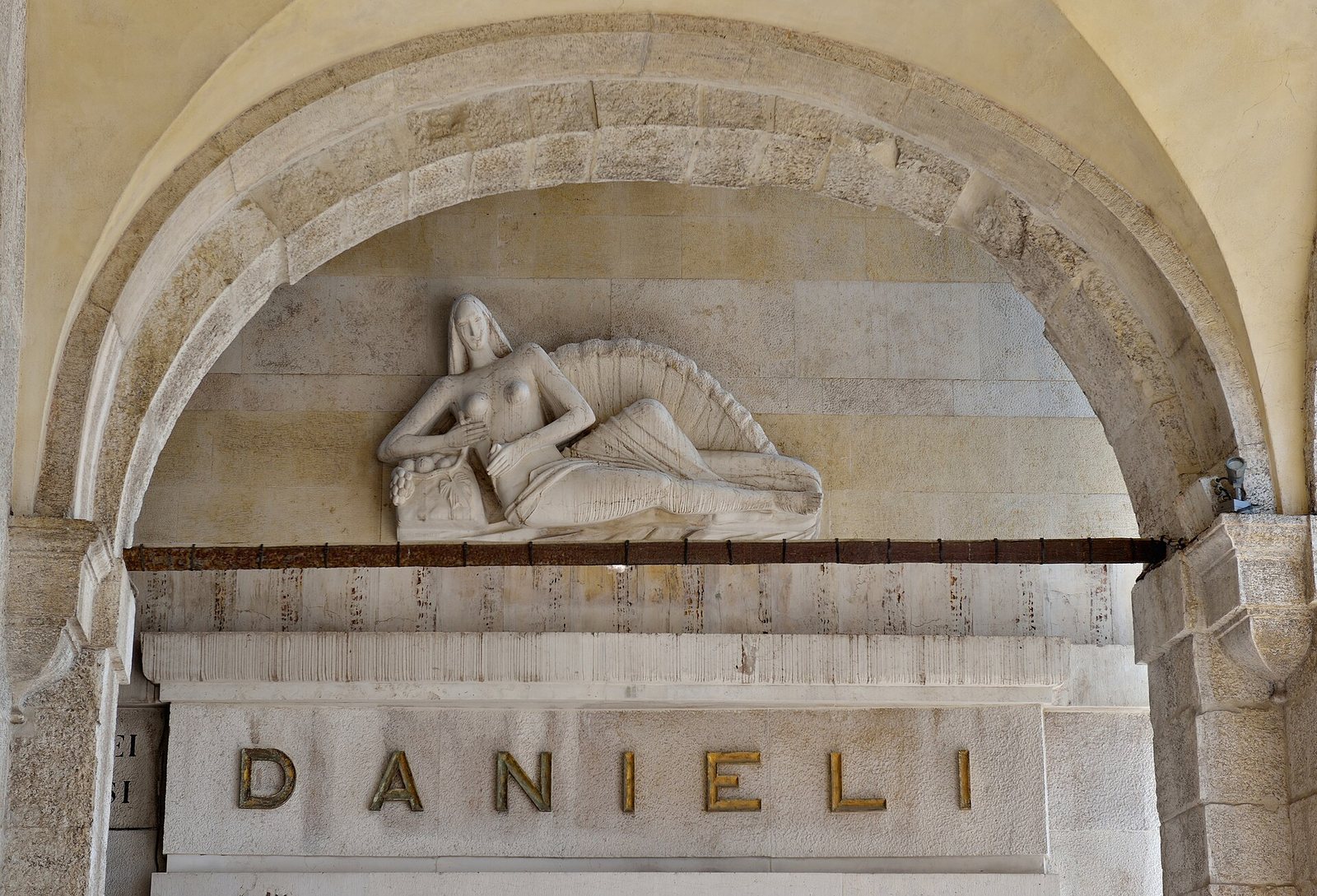
The facade combines reddish-pink stucco, marble sills, white turrets, pointed-arch balconies, and framing in Istrian stone, a limestone from the Istrian Peninsula used in Venetian buildings. On the main floor, a group of six openings with quatrefoils, four-lobed forms, sits between two pairs of single windows decorated with trefoils, three-lobed forms. Seven Gothic finials, decorative ornaments above the facade, include five quatrefoil shapes and two half-quatrefoils. The upper floor has eight closely spaced openings, and the ground-floor entrance is of plain Istrian stone.
Courtyard and interiors
Gothic arches around the central courtyard admit natural light. The foyer opens onto a gilded staircase and galleries with Moorish-style arches, a historical label for forms associated with Islamic architecture in North Africa and the Iberian Peninsula, as well as small columns in an Oriental style. Staircases with decorative railings connect the courtyard area to the rooms and suites, and the building also contains a large fireplace.
Guest wings and adjoining buildings
Rooms and suites
The hotel’s 204 rooms and suites occupy three wings reached from the central building. Rooms in the original wing face the lagoon, while a 19th-century palace incorporated into the hotel contains large rooms. The Doge Suite has 18th-century furniture and frescoes from the same period by Venetian painter Jacopo Guarana.
Dining and other spaces
A Venetian mask shop occupies a balcony. The restaurant has a high-arched entrance and chandeliers made of Venetian glass. A second restaurant occupies a rooftop terrace with views over Venice and the lagoon.
Adjoining palaces
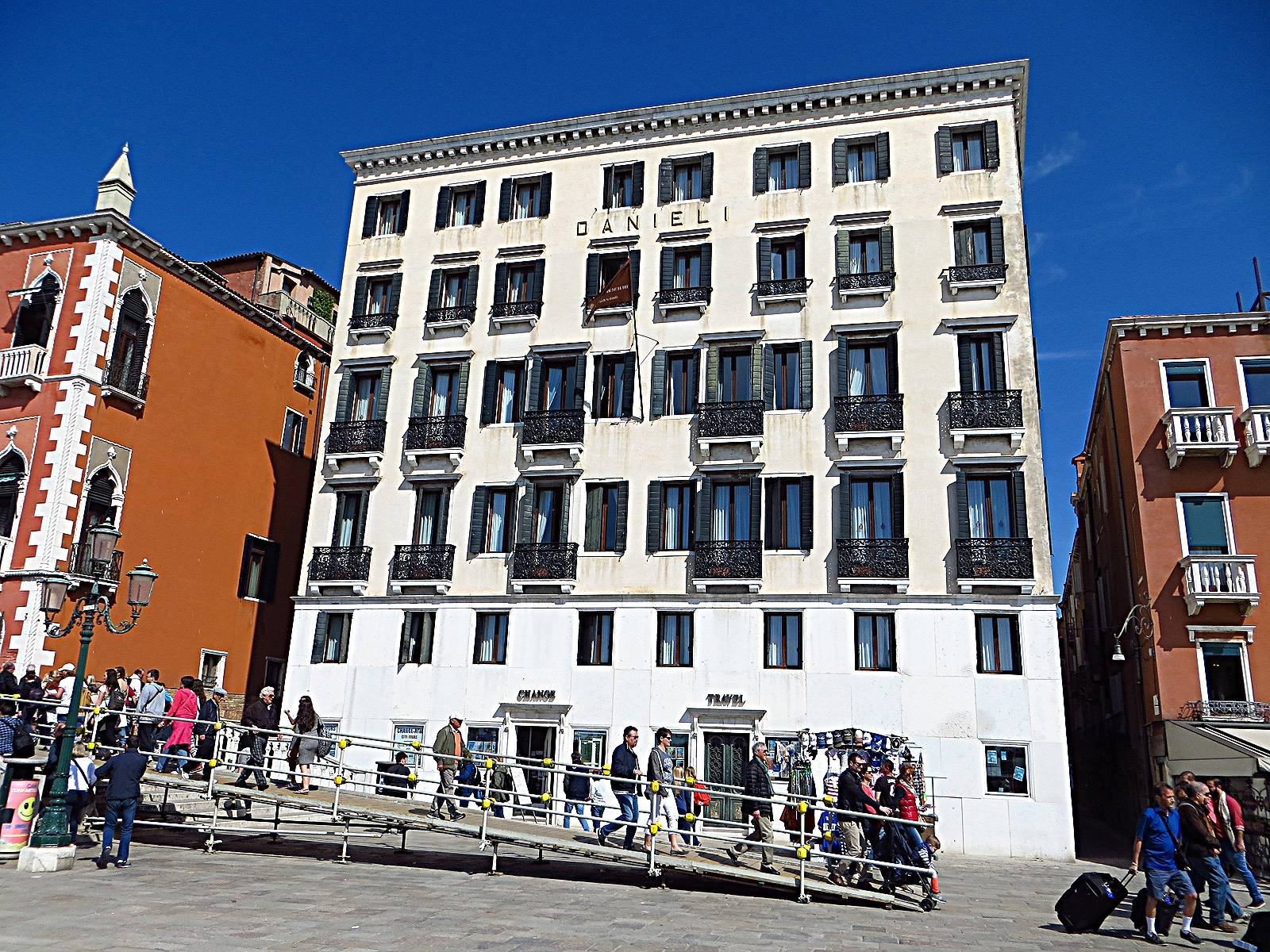
Casa Nuova and Palazzo Danieli Excelsior are adjoining buildings incorporated into the hotel. Palazzo Danieli Excelsior has a marble facade.