Pena Furada, Coirós: A Rock-Art Site and Possible Sanctuary
Site at a Glance
- Popularity
- Very Low
- Country
- Spain
- Primary era
- Classical
- Eras represented
- Classical, Modern
- Civilizations
- Roman
- Site type
- Civic
- Remains
- Rock Art
On this page6 sections
History
Pena Furada, Coirós, is an archaeological rock-art site in Figueiras, Spain. Archaeologist Antón Malde proposed that it may have been a Gallaeco-Roman sanctuary, combining indigenous Gallaecian and Roman elements in ancient northwestern Iberia, built between the first and fourth centuries AD. The sanctuary interpretation draws on the site’s carved and constructed features, understood as forming a large, complex symbolic space.
In September 2011, Malde and journalist Manuel Gago led a volunteer team in a public archaeology project to clear and excavate the site. The work exposed structures considered possibly part of a sanctuary centered on A Moura. In 2015, Pena Furada received Spain’s Asset of Cultural Interest designation, a statutory status for protected cultural heritage.
Remains
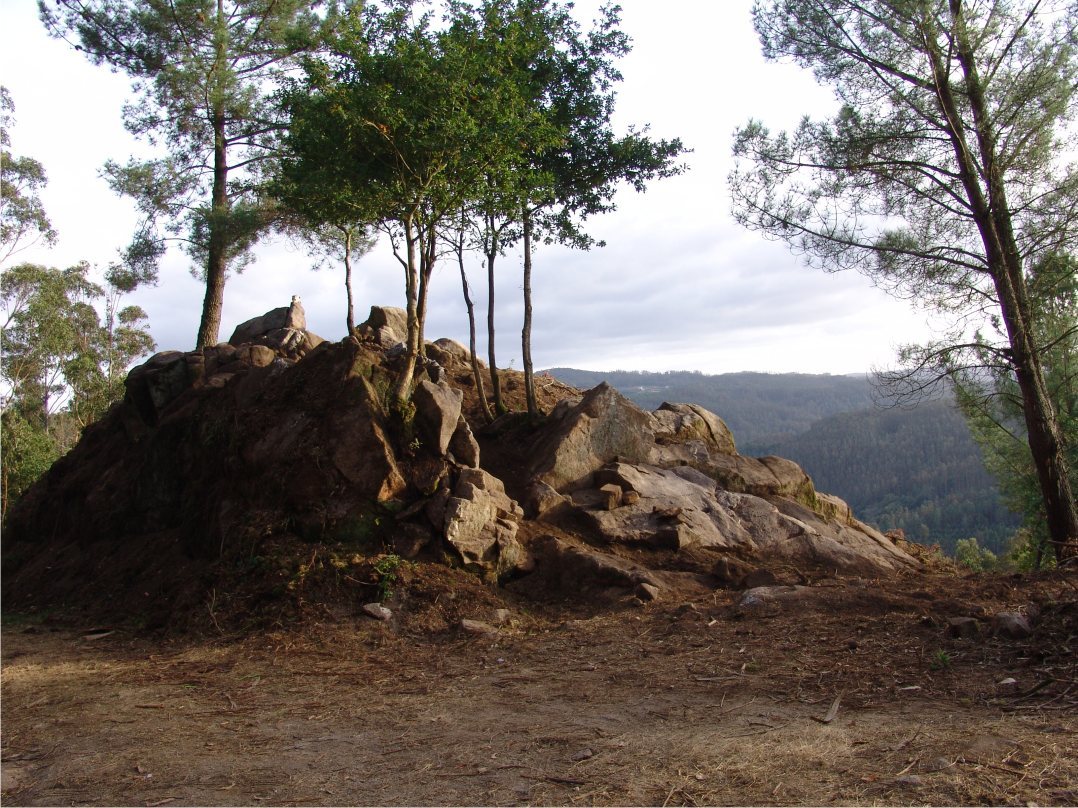
Pena Furada includes carvings on several rock outcrops alongside excavated structures with surviving wall remains. The carvings and other cut features were made directly in the rock. Neighboring valleys are visible from the site.
Rock-carved features
A Moura
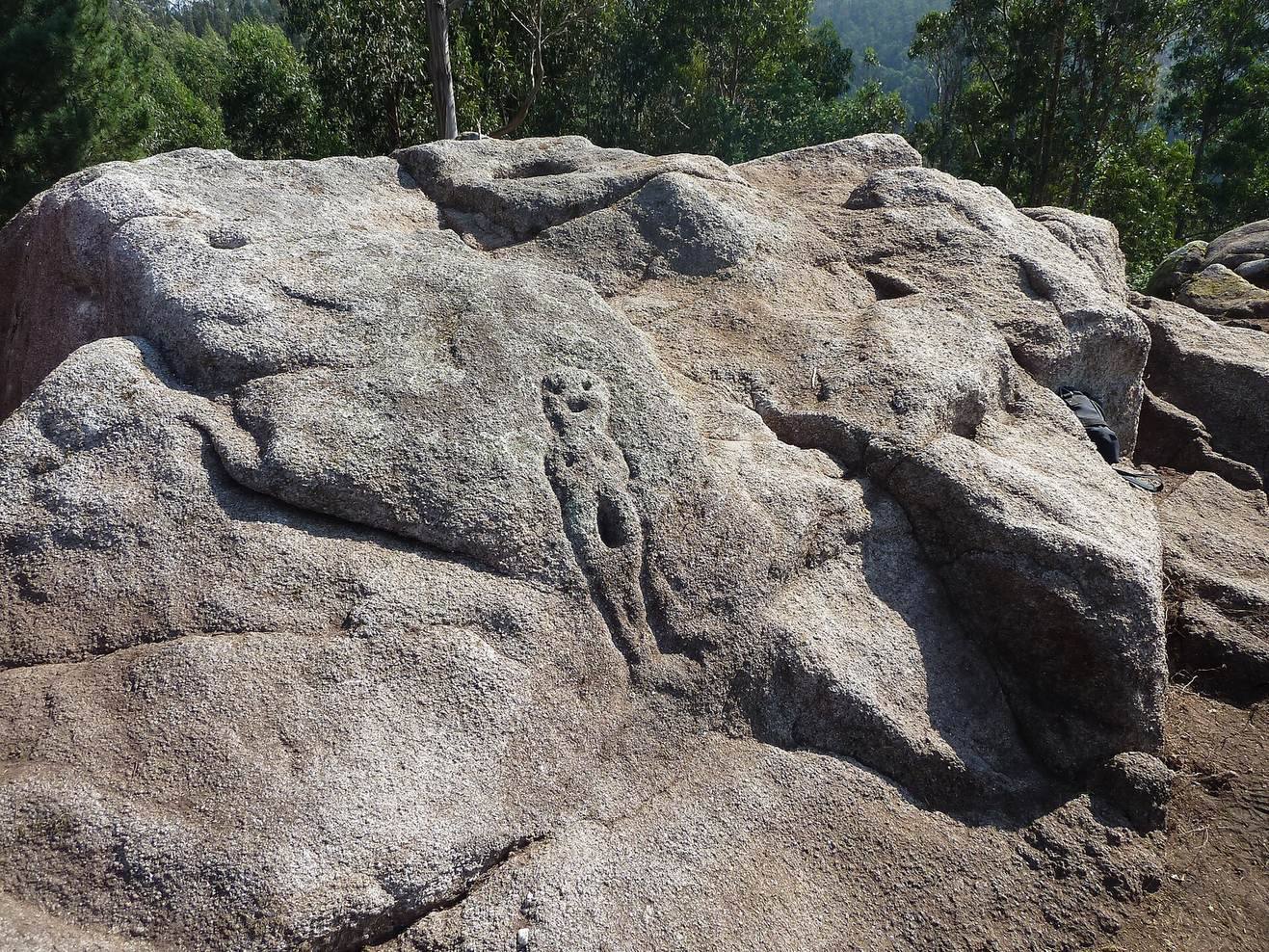
A Moura, named for a supernatural female figure in Galician folklore, is carved on a podium. The oval-headed figure has eyes and a mouth, two arms, and two legs ending in feet. Its sex is prominently marked, a feature that may point to a fertility cult. Its human form has been described as unlike typical Galician rock carvings and unique in Galicia.
Other carvings and cut features
Another rock carving consists of two circles joined at one end. The site also has a modern human-shaped carving, six small cup-shaped hollows, and two stairways cut into the rock. A square basin lies beside A Moura, while an engraved cross marks a stone near the presumed sanctuary entrance.
Excavated structures and finds
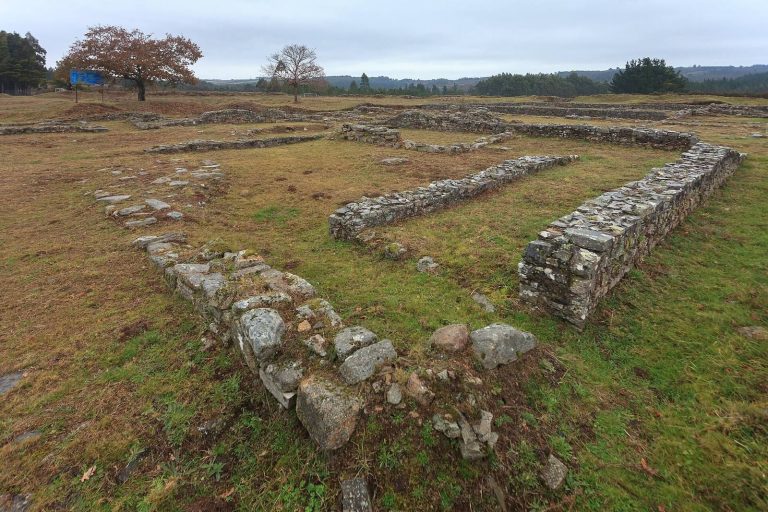
Excavation exposed several structures with wall remains, traces of perimeter walls, and a small wall on the slope. Finds included numerous Roman pottery fragments, pieces of roof tile, and a carved stone shaped like a sphere.