Alabanda: An Ancient Carian City in Türkiye
Site at a Glance
- Popularity
- Medium
- Country
- Turkey
- Primary era
- Classical
- Eras represented
- Classical
- Civilizations
- Achaemenid, Carian, Roman
- Site type
- City
On this page11 sections
History
Alabanda is an ancient Carian city near Doğanyurt in the Çine district of Aydın Province, Türkiye. It is dated to the fourth century BCE and lay in Caria, an ancient region of southwestern Anatolia. The city later belonged to a regional federation, became a Roman judicial center, and served as a Byzantine bishopric.
Carian origins and traditions
A foundation legend credits the Carian hero Alabandus with establishing the city. Tradition connected its name to Carian words for “horse” and “victory,” recalling a horse-racing victory. The Roman statesman Cicero noted that Alabandus was worshipped there as a human who had become a deity.
Xerxes I, king of the Achaemenid Persian Empire from 486 to 465 BCE, granted control of Alabanda to Amyntas. Amyntas was the son of the Persian nobleman Bubares and grandson of the Macedonian king Amyntas I. Herodotus appears to locate Alabanda in Phrygia rather than Caria, though the city in question is identified as this Alabanda. The sixth-century geographer Stephanus of Byzantium claimed that Caria contained two cities of that name, a claim no other ancient writer confirms.
Hellenistic and Roman periods
In the early Seleucid period, Alabanda joined the Chrysaorian League, a loose federation whose cities shared economic and defensive ties and may also have had an ethnic connection. The Seleucids were a Hellenistic dynasty that ruled much of Alexander the Great’s former empire. The league took its name from Zeus Chrysaoreus, worshipped at a shared Carian sanctuary near Stratonicea.
Alabanda was renamed Antiochia of the Chrysaorians in honor of the Seleucid king Antiochus III, who was credited with preserving its peace. Philip V of Macedon captured the city in 201 BCE during his conflict with Rhodes over influence in the Aegean. After the Seleucids lost the Battle of Magnesia in 190 BCE, the city returned to the name Alabanda. Rome occupied it soon afterward.
By 70 BCE, as Rome established its authority in Anatolia, Alabanda had entered Roman rule as the 21st city of the province of Asia. In 48 BCE, after Marcus Antonius, also known as Mark Antony, made Ephesus the provincial capital, Alabanda became a regional center. Miletus, Priene, Tralles, and Nysa were attached to it.
Quintus Labienus seized Alabanda with a Parthian army in 40 BCE. After the inhabitants killed his garrison, the Parthian force plundered the city’s treasures. Under the Roman Empire, Alabanda became a conventus, a center where Roman provincial legal proceedings were held. The Greek geographer Strabo described its reputation for luxurious living and moral decadence. The city continued to mint its own coins until the middle of the third century CE.
Byzantine rule and later history
During the Byzantine period, the medieval eastern Roman Empire centered on Constantinople, Alabanda became a bishopric. Theodoret attended the Council of Chalcedon in 451. Zeuxis was deposed in 518 for Monophysitism, the belief that Christ had one nature, and Julian, a Jacobite (a historical term for an adherent of the Syriac Orthodox tradition), served as bishop from about 558 to 568. A bishop named Constantine attended the Council in Trullo in 692, named for the domed hall in Constantinople where it met. Another bishop named Constantine attended the Second Council of Nicaea in 787, and John attended the Photian Council of Constantinople in 879, associated with Patriarch Photius. The Catholic Church still lists Alabanda as a titular see, a bishopric title retained without a resident bishop.
The city came under Turkish rule in the eleventh century and changed hands again during the Crusades. Halil Edhem Bey excavated Alabanda in 1905–1906. Further excavations began in 1999 under the Aydın Museum Directorate, with teams that included mostly researchers from Atatürk University.
Remains
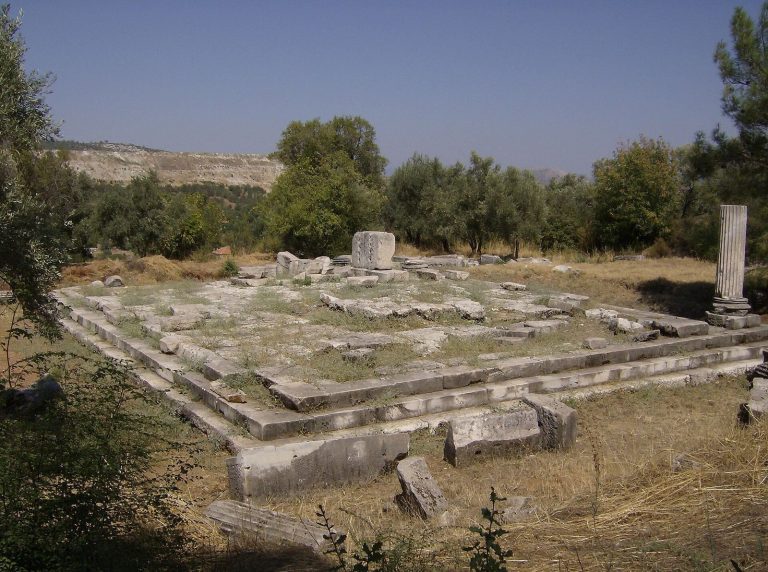
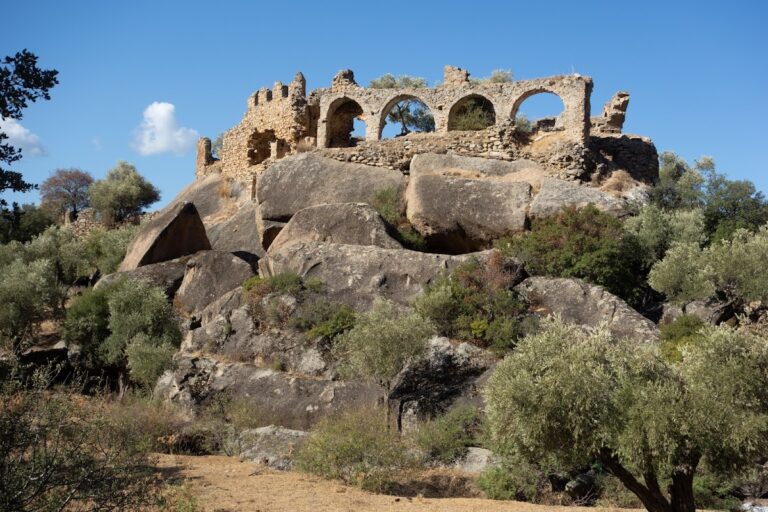
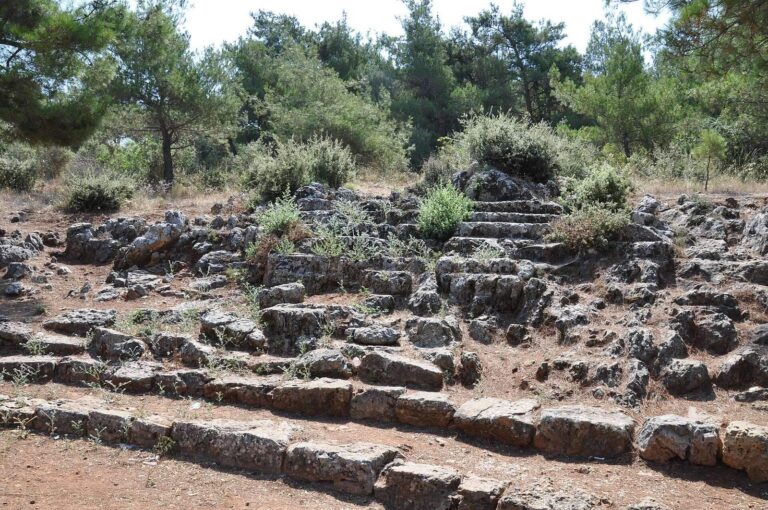
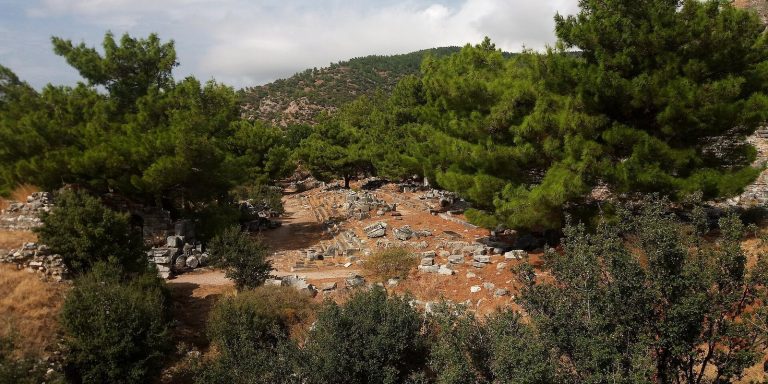
The site lies in a saddle between two closely spaced heights, which Strabo likened to a loaded pack donkey. It is about eight kilometres from Çine, and the surrounding area is noted for dark marble and stones resembling garnets. City walls and remains of civic, religious, theatrical, bathing, and burial structures survive at Alabanda.
Civic and public buildings
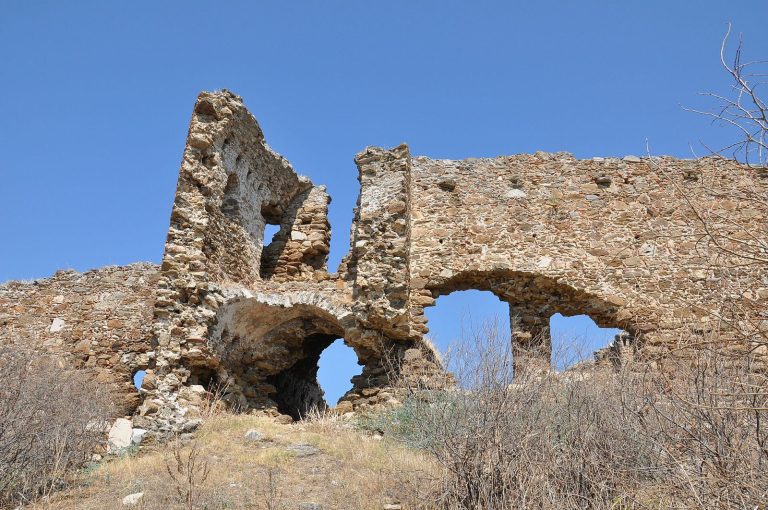
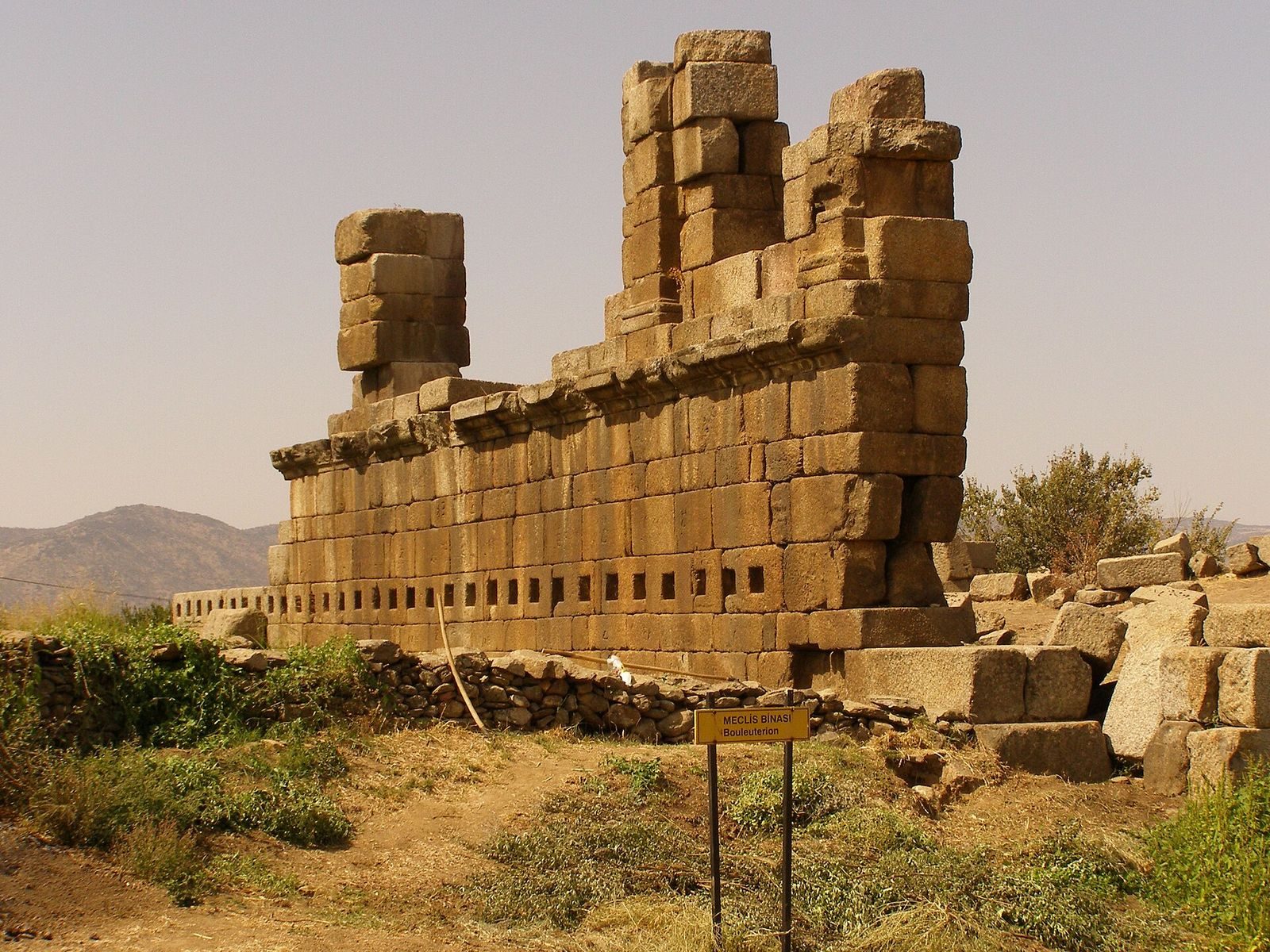
Council house
The late Hellenistic council house had a rectangular interior measuring 36 metres by 36 metres. A wall belonging to the building is among the surviving remains.
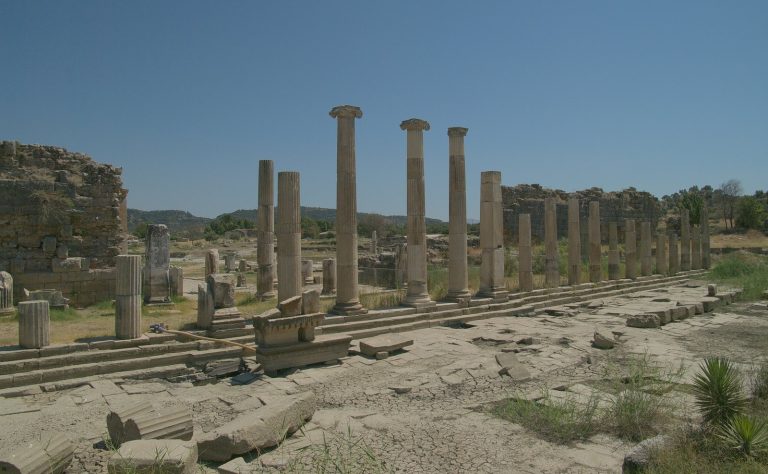
Agora, theatre, and baths
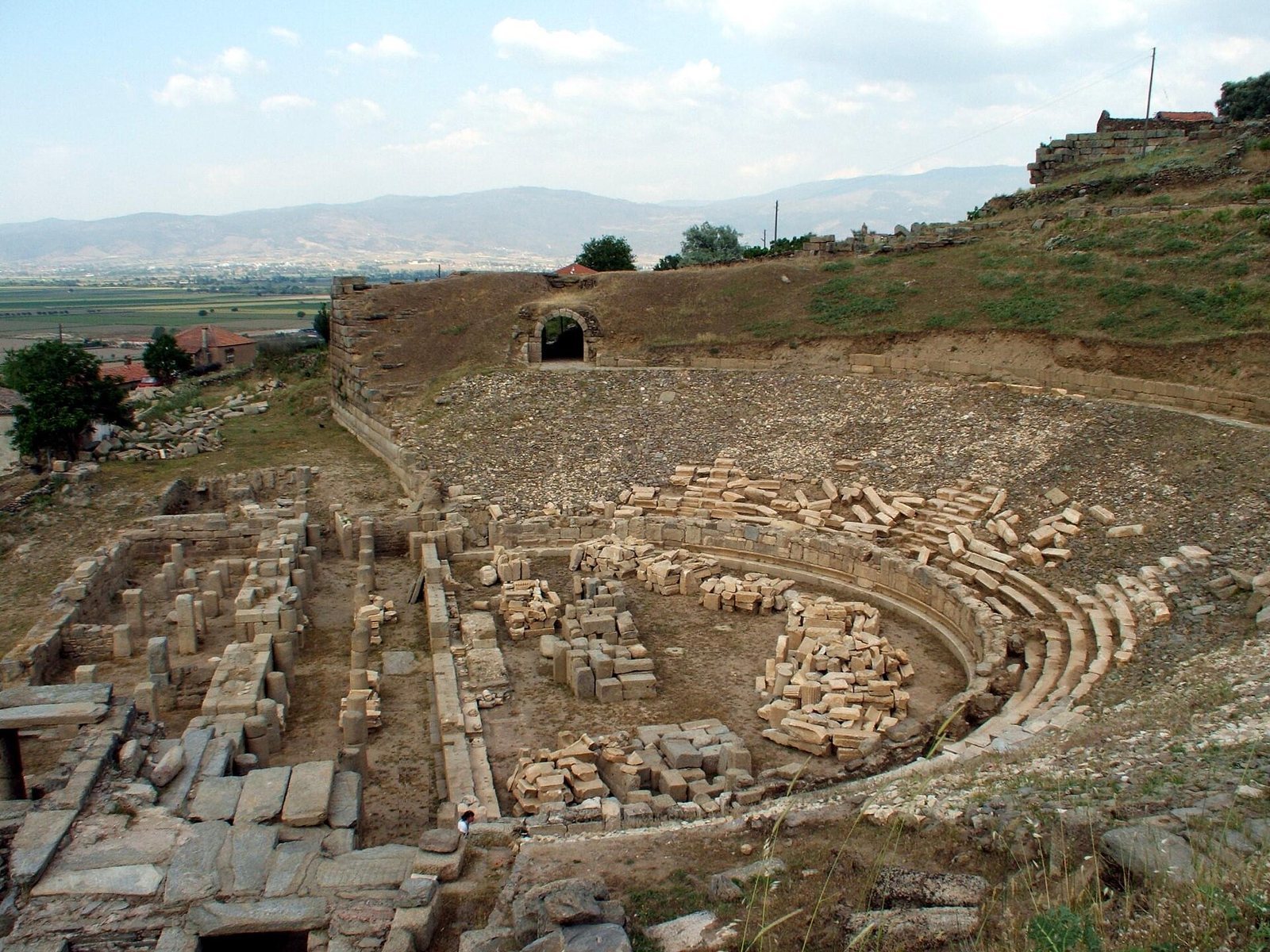
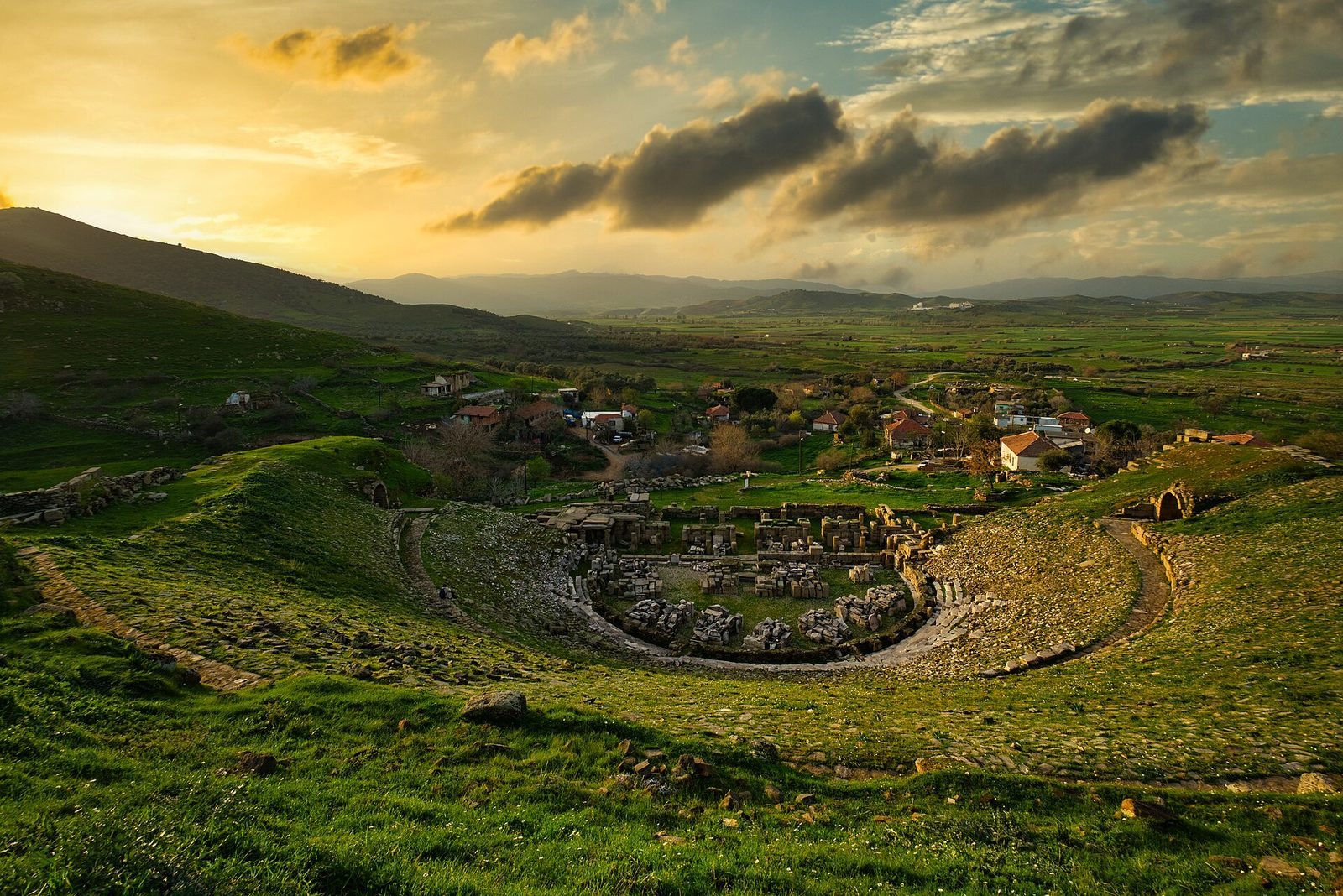
The remains also include an agora, the city’s public civic and commercial space, a theatre, and Roman baths.
Religious and funerary buildings
Temple of Zeus Chrysaoreus
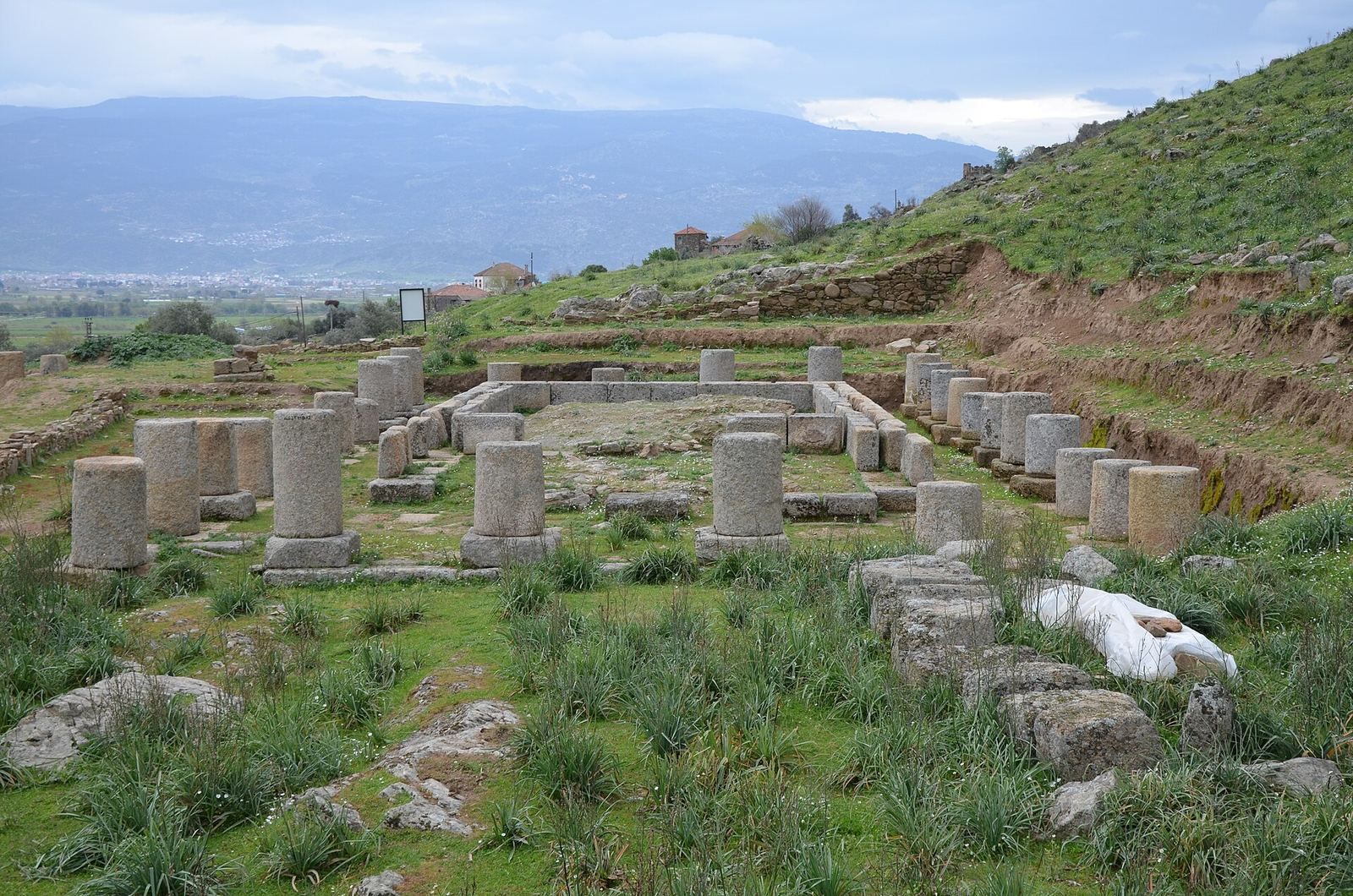
The Temple of Zeus Chrysaoreus was built in the third century BCE in the Doric order, one of the principal classical Greek architectural styles.
Monumental tombs
Monumental tombs are also among the remains at Alabanda.