Jotapata: A Jewish Town and Roman Siege Stronghold in Galilee
Site at a Glance
- Popularity
- High
- Country
- Israel
- Primary era
- Classical
- Eras represented
- Classical
- Civilizations
- Roman
- Site type
- Military
- Remains
- Fortified Town
On this page23 sections
History
Jotapata, also known as Yodfat, was a Jewish town and fortified stronghold in Galilee, Israel, whose earliest identified settlement dates to the fourth or third centuries BCE. It developed during the Second Temple period, when the Temple stood in Jerusalem, and became known for its role in the Jewish revolt against Roman rule before falling to Roman forces in AD 67.
Early settlement
Pottery and coins indicate settlement in the Hellenistic period, when Greek culture spread after Alexander the Great. The first settlement was small and appears to have had a non-Jewish population. A destruction layer has been attributed to the Hasmonean conquest of Galilee. The Hasmoneans were a Jewish ruling dynasty whose expansion brought the region under their control.
After that conquest, probably in the early first century BCE, Jotapata was fortified and appears to have gained a Jewish population. The town grew and saw substantial building before its destruction. The Mishnah, an early compilation of Jewish oral law, includes Jotapata among walled towns. Rabbinic tradition traced the fortifications of these towns back to Joshua, the biblical leader said to have succeeded Moses and led the Israelites into Canaan. The proposed identification of Jotapata with Yotva, named in the biblical Book of Kings as the birthplace of King Amon’s mother, remains uncertain.
The Roman siege of AD 67
Josephus, also known as Yosef ben Matityahu, fortified several Galilean settlements after becoming a commander during the revolt against Rome. When Sepphoris surrendered, his troops dispersed. He went first to Tiberias, then reached Jotapata in early June AD 67. Vespasian, a Roman commander who later became emperor, directed the campaign against the town after learning that many rebels had gathered there. His son Titus also took part in the siege.
The siege lasted 47 days, and Jotapata fell in July. The Roman army included the Fifteenth Legion, a large organized army unit commanded by Titus, and the Tenth Legion, led by Marcus Ulpius Traianus, father of the later emperor Trajan. After defenders thwarted attempts to scale the northern defenses by raising the wall, Roman forces attacked with a battering ram. Elazar ben Shami, a defender from the village of Shab, was credited with disabling one ram. Defenders also poured hot oil on Roman attackers.
A Jewish deserter told the Romans that exhausted guards slept during the final watch. Titus then led an elite group over the wall. They killed the sleeping guards and opened the entrance for the rest of the army. Roman forces destroyed the town and killed most of its inhabitants.
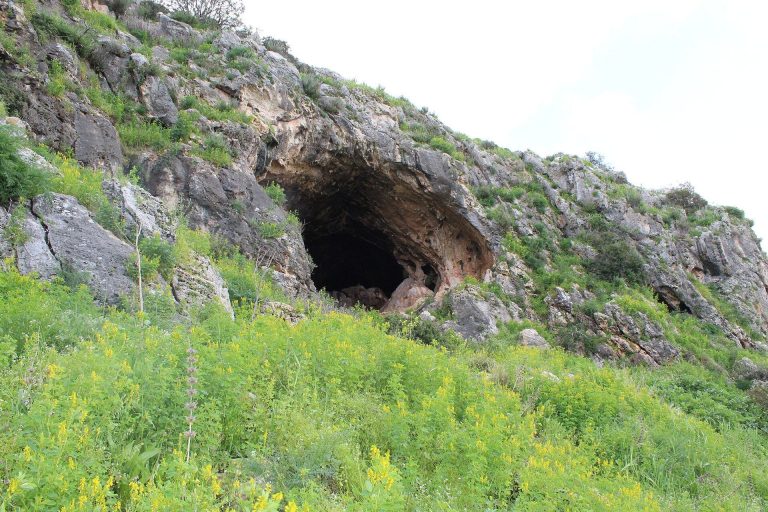
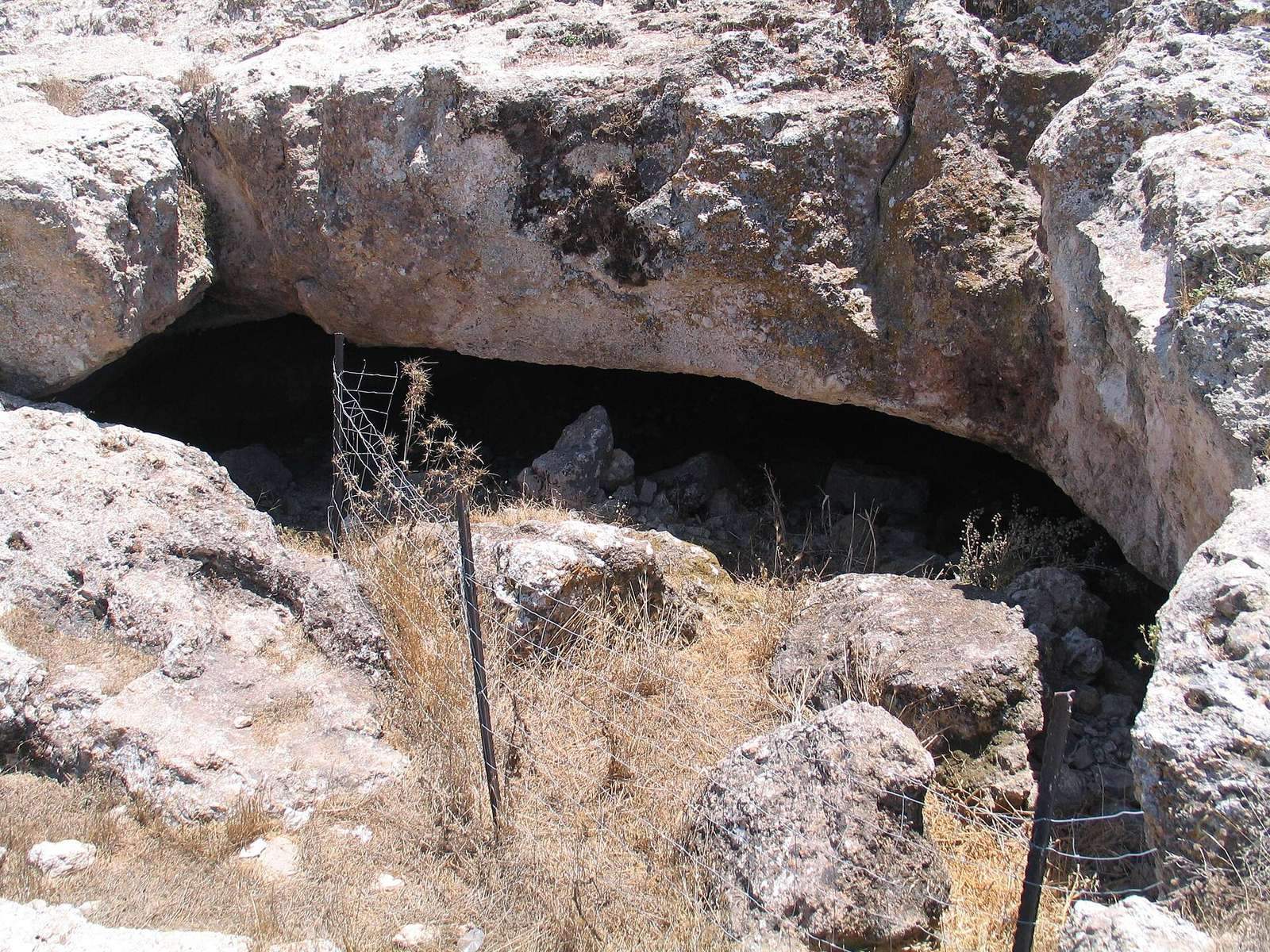
Josephus later recounted that, after the defenses were breached, he hid in a cistern and then entered a cave where he found 40 insurgents. The group agreed to kill one another by drawing lots. In Josephus’s account, he and one other man survived and surrendered. Vespasian received him favorably after Josephus predicted that he would become emperor. Josephus later wrote a history of the war.
Rebuilding and later settlement
Jotapata was rebuilt after the revolt, and Jewish settlement continued. The Talmud, a later body of rabbinic discussion and teaching, refers to Rabbi Menahem of Yodfaah, who lived about two centuries after the revolt. A priestly group called Mijamin may have lived in the town during the Bar Kokhba revolt, a second-century Jewish uprising against Roman rule. Byzantine liturgical poems also associate the group with Jotapata.
The site was occupied for a time in the Middle Ages. In more recent centuries, Bedouins lived at the abandoned locality, then known as Khirbet Jefet. The modern cooperative settlement of Jodfat was established about a kilometre away in 1960 and took its name from the ancient town.
Rediscovery and modern memory
Prussian consul Ernst Gustav Schultz identified the ancient site in 1847, drawing on Josephus’s account and the local place-name. Surveys followed during the twentieth century, including a limited excavation of an olive press in a cave in 1990. Excavations led by archaeologist Mordechai Aviam, with the Israel Antiquities Authority and the University of Rochester, continued from 1992 to 1999. Investigations covered about 2,500 square metres, roughly half in the fortifications and half in the residential area.
Zeev Jabotinsky interpreted Jotapata as a symbol of Jewish national resistance. The hymn of the Zionist youth movement Betar names it alongside Masada and Betar as a stronghold associated with resistance to Rome. The archaeological site, covering 263.32 dunams, a land measure of 1,000 square metres, became a national park on 11 November 2014.
Remains
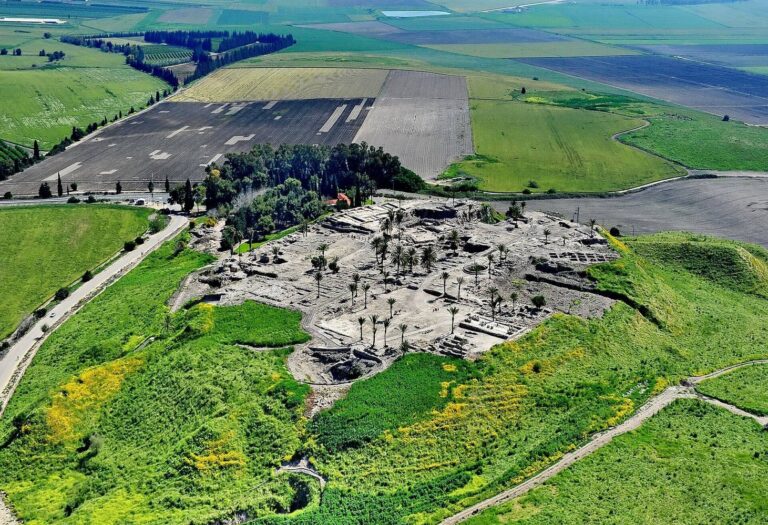
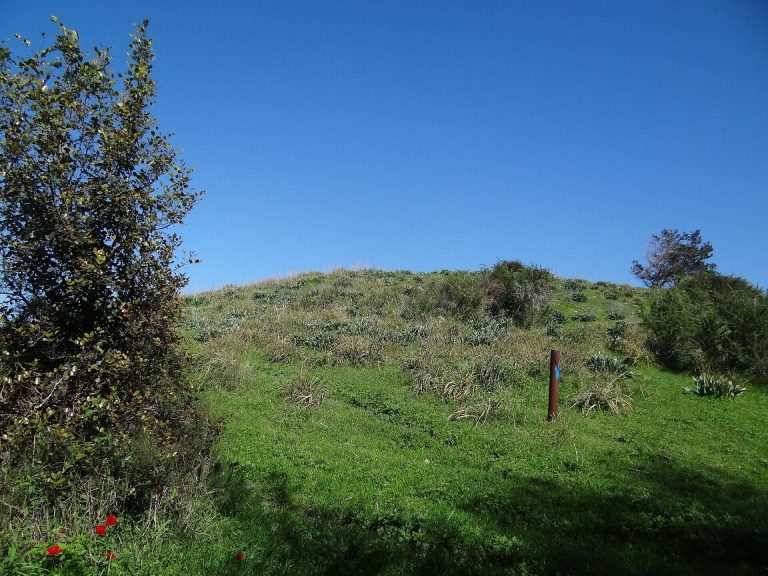
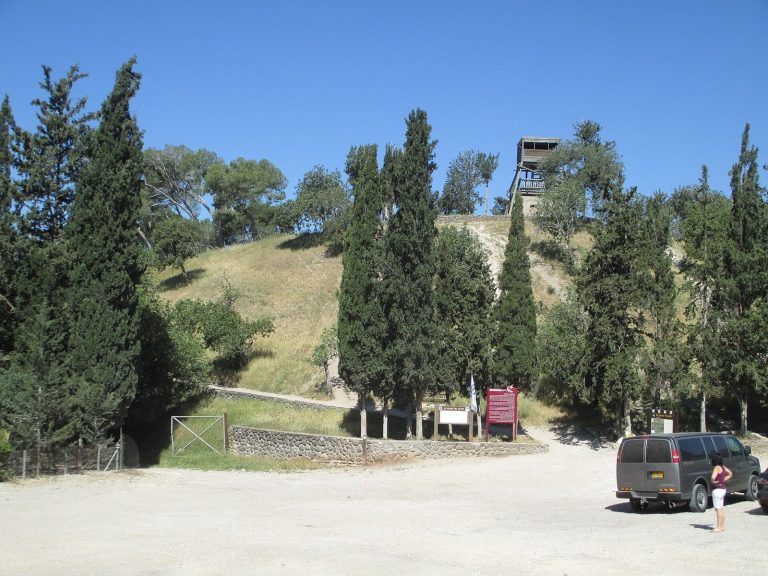
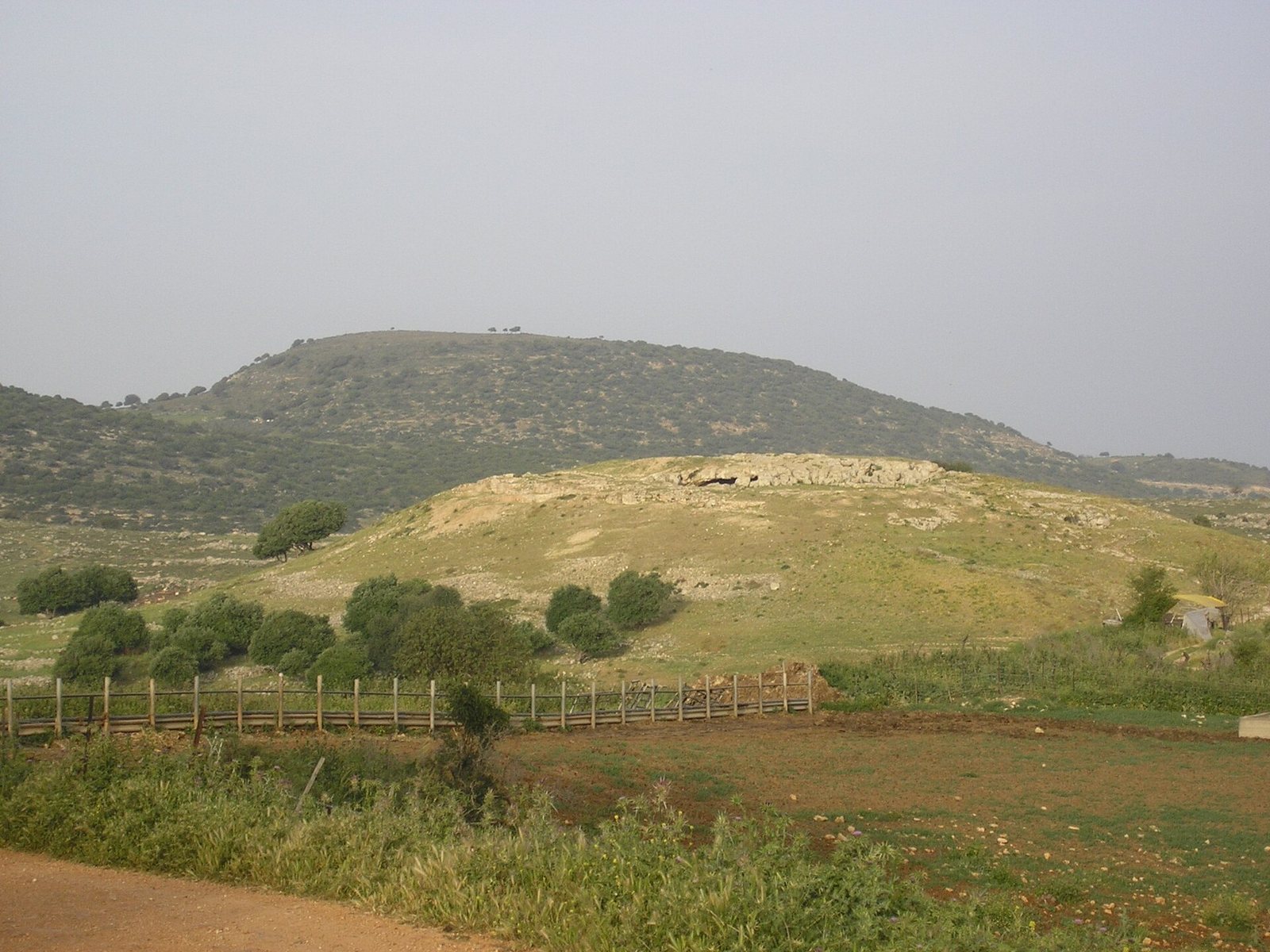
The remains occupy a rocky hill about 419 metres above sea level. Steep slopes and valleys border three sides, while a low pass to the north connects the hill to Mount Miamin and provides its most accessible approach. Higher ridges partly screen the site. The defenses developed from an enclosure around the summit into a circuit at a fairly even height around the hilltop.
Fortifications and siege evidence
Hilltop enclosure
The earliest fortification appears to have enclosed only the summit, consistent with a small fortified village or stronghold. The early Roman-period wall reused some Hasmonean building material and enclosed about 50 dunams. It extended for approximately two kilometres around the hilltop.
Walls and entrance
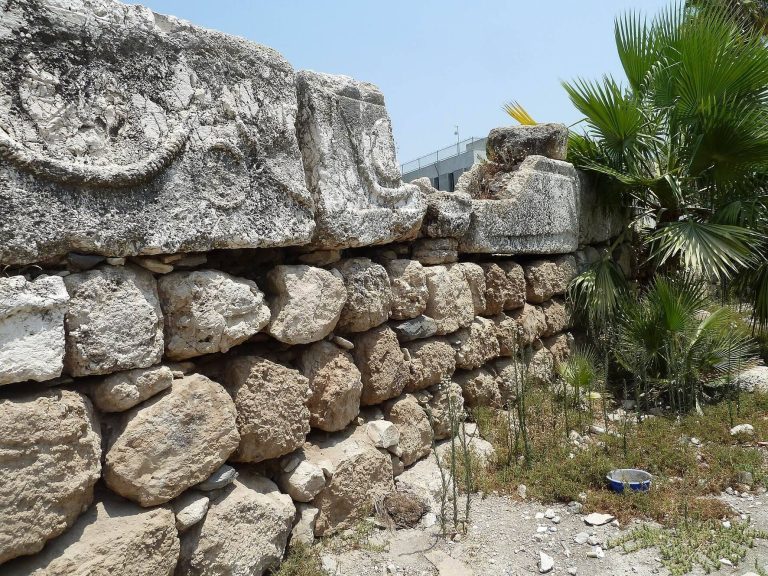
The northern defenses included a double wall about 5.5 metres wide. Along the northeast, a casemate, a fortified space built within or behind a defensive wall, formed part of the defenses. The southern wall was a single structure about 1.5 metres wide. At the southeast, the fortification was built over a pottery kiln, placing its construction shortly before the Roman siege. Parts of the wall were laid hastily on bedrock without foundations. A narrow gap may have served as an entrance until it was blocked as the Romans arrived.
Evidence of the siege
One northern casemate was intentionally packed with stones. A ballista stone, from an ancient weapon that fired stones or bolts, was found among the fill, along with iron arrowheads and catapult bolts. These finds have been interpreted as evidence of fighting at the northern wall and efforts to reinforce it against a battering ram. Below the wall, a ramp made of earth, plaster, and stone has been identified as a Roman siege ramp. Hobnails from Roman soldiers’ footwear were also found nearby.
Underground storage rooms
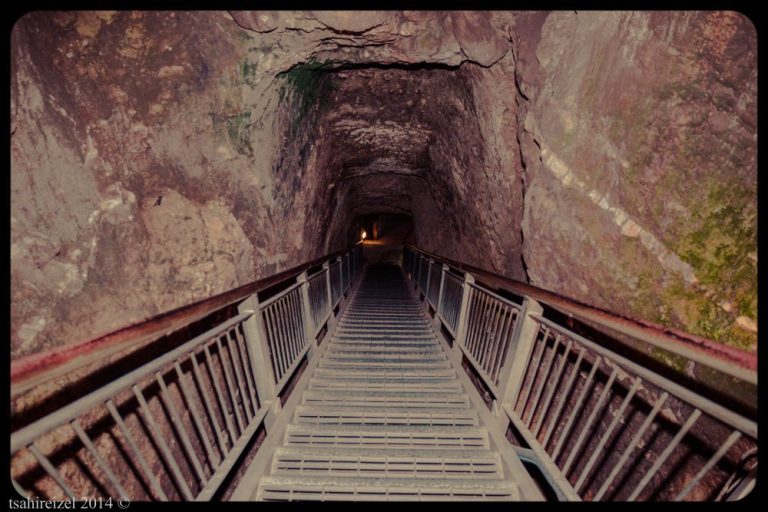
A small casemate in the western defenses measured 1.5 by 2.5 metres and rested directly on bedrock. A stepped shaft about a metre deep led to a horizontal tunnel roughly two metres long, which connected to two human-made storage rooms. The rooms measured 1.34 by 1.3 metres and 3.1 by 1.5 metres, and each stood just over a metre high. Finds included storage vessels, animal and human bones, and coins, among them silver coins from the reign of Nero, the Roman emperor during the siege.
Houses and water storage
Terraces within the defenses prepared slopes for houses of two or three storeys, built in patterns common in Galilee. Their walls combined rough stone and mud, and cut-stone thresholds marked the entrances. Upper floors rested on wooden beams and branches and had a finished surface layer. Interior floors were compacted earth or smoothed bedrock; courtyards were partly paved. Each courtyard had a cistern, which supplied water and could also hold grain or vegetables.
Ritual and production areas
Olive oil and ritual baths
The site includes an olive press and Jewish ritual baths, used for immersion in accordance with Jewish purity practices. The baths consist of stepped basins coated with waterproof mortar. Their proximity to the press has been interpreted as reflecting the importance of ritual purity in olive-oil production.
Crafts, weaving, and animal husbandry
Several pottery kilns and 250 fired-clay loom weights point to local production and weaving. This is the largest group of loom weights of this kind recovered at an archaeological site in Israel. Animal bones indicate that sheep, and less often goats, were slaughtered at five years of age or older, a pattern consistent with flocks raised for wool. Other finds include an iron door key and a pair of bronze weighing pans, each five centimetres across, possibly used to weigh spices or other costly goods.
Hellenistic objects and household practices
Hellenistic pottery and lamps
About 30 percent of the recovered pottery belongs to the Hellenistic period, and coins from that period were also found. Among the objects are an imported Rhodian amphora, a two-handled container for storing and transporting goods, from the second century BCE, and an oil lamp decorated with figures of Eros.
Stone vessels and lamps
Excavated residential areas yielded 110 fragments of carved stone vessels. In the first century CE these vessels were valued because they were considered unable to contract ritual impurity, a status affecting whether objects were fit for certain religious uses, and they cost more than pottery. Suggested uses include ritual handwashing, filling large oil lamps, and serving Sabbath wine. Most recovered oil lamps were made in Jerusalem, although local production is possible. Their preference for Jerusalem-made lamps has been interpreted as reflecting religious attachment to the city, its Temple, and the menorah, the Temple’s seven-branched lampstand.
The Fresco House
Painted room
A large, partly excavated residence in the northeastern part of the site is known as the Fresco House. One room had paintings on three walls in the Second Pompeian style, a Roman wall-painting style. Large red and ochre areas were divided by vertical bands of green, black, red, or white. A black lower band included painted panels or imitations of marble, while the floor’s painted finish imitated paving slabs. The wall paintings have been compared with those in Herodian palaces and villas in Jerusalem’s Upper City.
Human remains and carved stone
Burials and skeletal remains
Human skeletal remains were found in streets and houses as well as in two cisterns converted into mass graves. The cisterns held collected bones rather than complete skeletons, and some shinbones had cut marks interpreted as sword wounds. Aviam has proposed that the dead initially remained among the ruins and were exposed to scavenging while a Roman garrison prevented nearby residents from burying them. After the garrison withdrew about a year later, survivors may have collected skulls and large bones for burial in keeping with Jewish practice.
Incised drawing
A drawing cut into a 15-by-15-centimetre fieldstone depicts a structure resembling a mausoleum, a figure resembling the zodiac sign Cancer, a tree of life, and several lines. Aviam interpreted the image as carrying the message, “I will” or “we will die in the month of July.”