Antandrus: An Ancient Greek City in the Troad
Site at a Glance
- Popularity
- Medium
- Country
- Turkey
- Primary era
- Classical
- Eras represented
- Iron Age, Classical
- Civilizations
- Achaemenid, Ancient Greek
- Site type
- City
On this page9 sections
History
Origins and early control
Antandrus was an ancient Greek city in the Troad, the north-western Anatolian region associated with Troy, in what is now Turkey. Its origins remain contested in ancient traditions. The poet Alcaeus connected the city with the Leleges, whom some Greek writers regarded as native to Anatolia. Herodotus described a Pelasgian foundation, while Thucydides attributed it to the Aeolians, a Greek-speaking people. Stephanus of Byzantium named an Aeolian founder called Antandrus. Aristotle associated the city’s epithets Edonis and Kimmeris with, respectively, an Edonian foundation and a period of Cimmerian control. Demetrius of Scepsis instead held that Cilicians from the nearby plain of Thebe had first settled there.
Under Augustus, Rome’s first emperor, the mythographer Conon offered two stories based on interpreting Antandrus as meaning “in exchange for” something. In one, Ascanius, son of the Trojan hero Aeneas, ruled the city until the Pelasgians captured him and demanded Antandrus as his ransom. In the other, exiles from the Cycladic island of Andros established a new home “in place of Andros.” Virgil’s Aeneid also places Antandrus in the story of the Trojans’ departure for the west, where Aeneas prepared a fleet before sailing to Italy.
During the Archaic period, an early phase of Greek history, Mytilene, the principal city of Lesbos, held extensive territory in the Troad. Alcaeus’s reference may point to Mytilenean interest in or control of Antandrus around the turn of the seventh century BC. Alternatively, traditions of Anatolian origins may reflect a local community that remained independent of Mytilene until later in the sixth century BC. The territory known as Antandria included Aspaneus on the coast and Astyra to the east.
Persian and Greek conflicts
In 512 BC, Otanes, a Persian provincial governor, captured Antandrus while subduing north-western Asia Minor. The city’s access to timber from Mount Ida and to pitch, a resin used to seal ships, made it valuable for building fleets. Antandrus joined the Delian League, an alliance led by Athens, in 427 BC. It first appears in Athenian tribute lists in 425/4 BC, assessed at eight talents, an ancient unit of value and weight that indicates its relative prosperity.
In 424 BC, during the Peloponnesian War, a conflict fought chiefly between Athens and Sparta and their allies, exiles from Mytilene seized Antandrus. They intended to use it as a base to recover former Mytilenean possessions held by Athens, build ships, raid nearby Lesbos, and bring mainland Aeolian cities under their control. Mount Ida’s timber and other local supplies helped make the city suitable for these plans.
In 411/10 BC, Antandrus expelled its Persian garrison with help from Peloponnesian troops stationed at Abydos, but it soon returned to Persian control. In 409 BC, the Persian leader Pharnabazus built a fleet there for the Peloponnesians using timber from Mount Ida. That year, Syracusan assistance helped the Antandrians rebuild their fortifications. The rebuilding suggests the city had been besieged in the preceding year, although how Persian control was restored is uncertain.
In the summer of 399 BC, Xenophon and the Ten Thousand, a Greek mercenary army retreating from Persia under his leadership, passed through Antandrus on their return. Xenophon also described the city’s strategic value during the Corinthian War of 395–387 BC, a conflict in which Sparta faced a coalition of opponents.
Hellenistic, Roman, and Byzantine periods
Antandrus minted its own coins from about 440 to 284 BC. Around 200 BC, it lay on a route used by designated hosts for sacred envoys from Delphi, a major sanctuary of Apollo in central Greece. An inscription of the second century BC records that Antandrus sent judges to Peltai in Phrygia to settle a dispute.
The city’s coinage resumed under the Roman emperor Titus, who ruled from AD 79 to 81, and continued until the reign of Elagabalus, from AD 218 to 222. In the Byzantine period, the Eastern Roman era, Antandrus served as a bishop’s seat within the church province of Ephesus.
Later use and rediscovery
In the late fourteenth century, an Ottoman admiral used Antandrus’s timber to build a fleet of several hundred ships. The city’s modern rediscovery took shape through the work of the German geographer Heinrich Kiepert, whose discoveries in 1842 and 1888 helped identify Devren Hill as the site of the acropolis. Archaeologist John Cook surveyed the site in 1959 and 1968, recording further evidence of Greek settlement. Turkish excavations followed.
Remains
City site and defenses
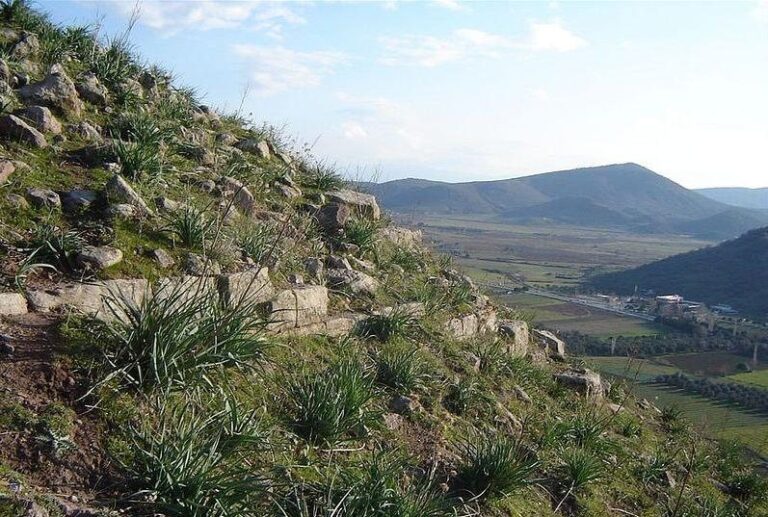
The archaeological site occupies Devren Hill between the modern village of Avcılar and the town of Altınoluk. Ancient Antandrus stood on the northern side of the Gulf of Adramyttium, on Mount Ida’s southern flank. The geographer Strabo placed it east of Assos and Gargara and west of Aspaneus, Astyra, and Adramyttium. The acropolis, the elevated fortified center of an ancient city, was on Devren Hill; fortifications are also associated with the city.
Burial ground
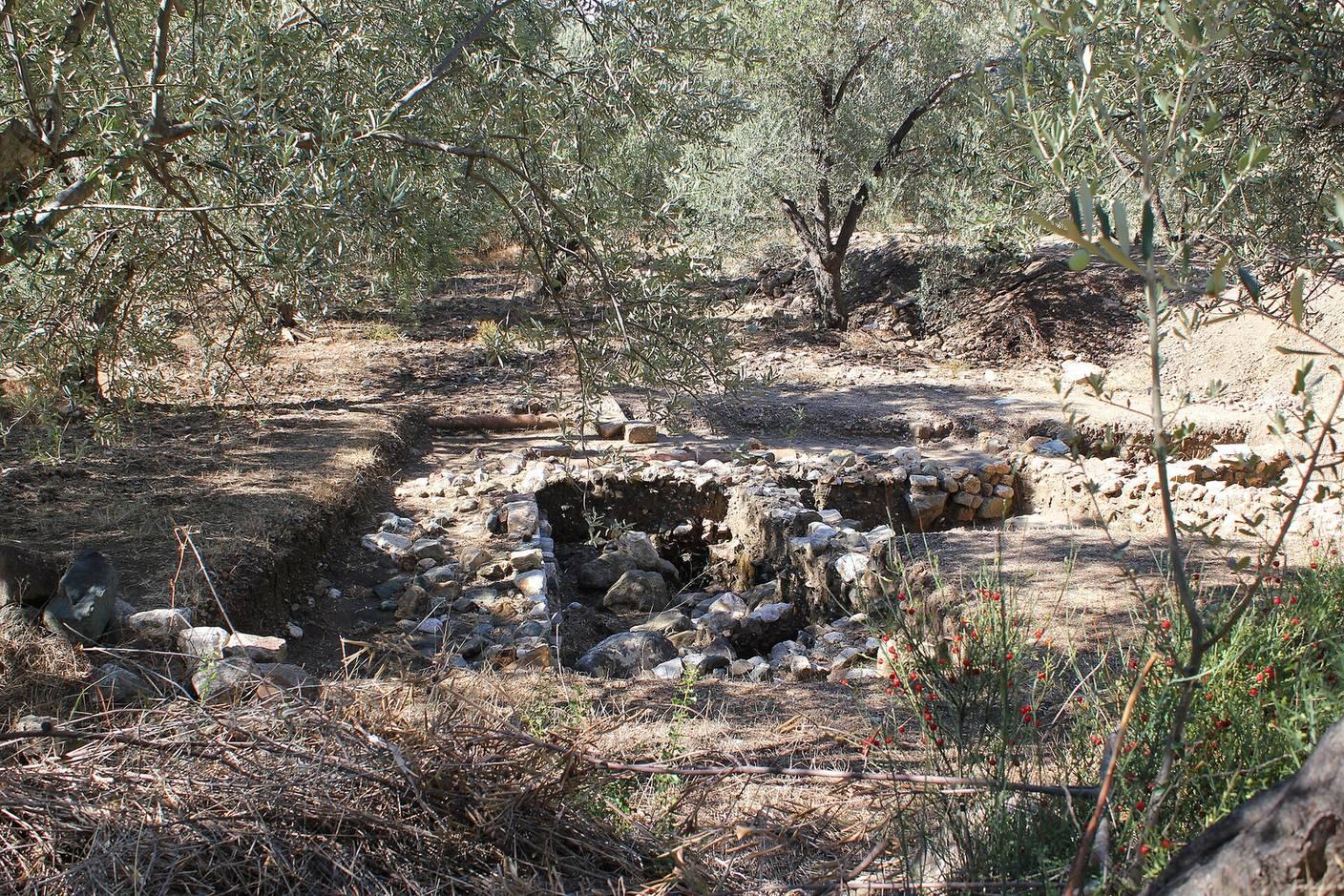
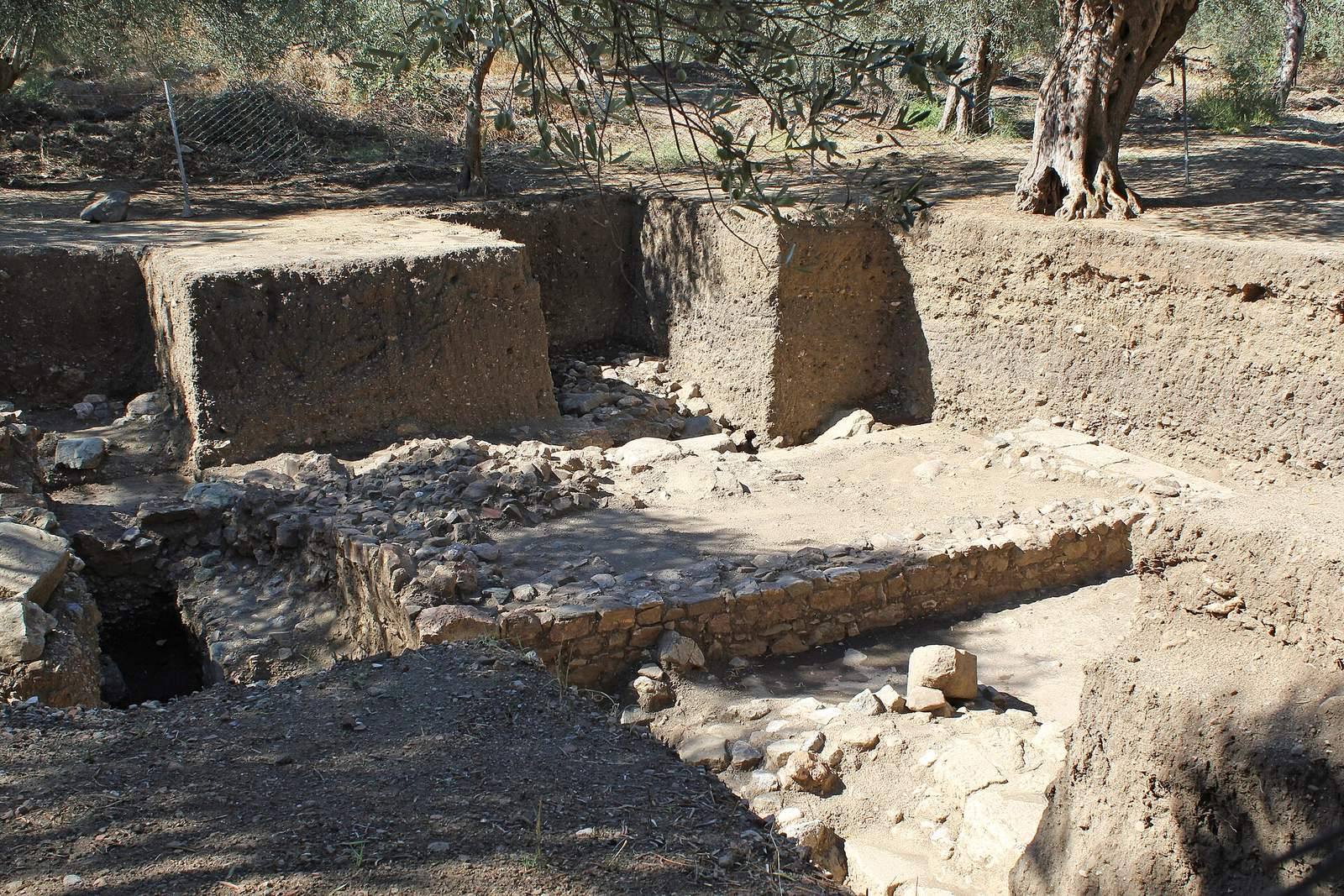
Antandrus’s cemetery was used from the eighth century BC to the first century AD. Greek pottery found there dates to the late eighth and early seventh centuries BC, earlier than the Greek material known from previous surface finds. Its predominantly Greek character suggests an early Greek settlement rather than an Anatolian community engaged in extensive trade with Greek neighbors, but it does not settle the question of the city’s origins. Large storage jars used for burials were unearthed in 2018 and again in 2021. Tombs dating to the fifth, fourth, and third centuries BC were found in 2022.
Inscriptions and coin finds
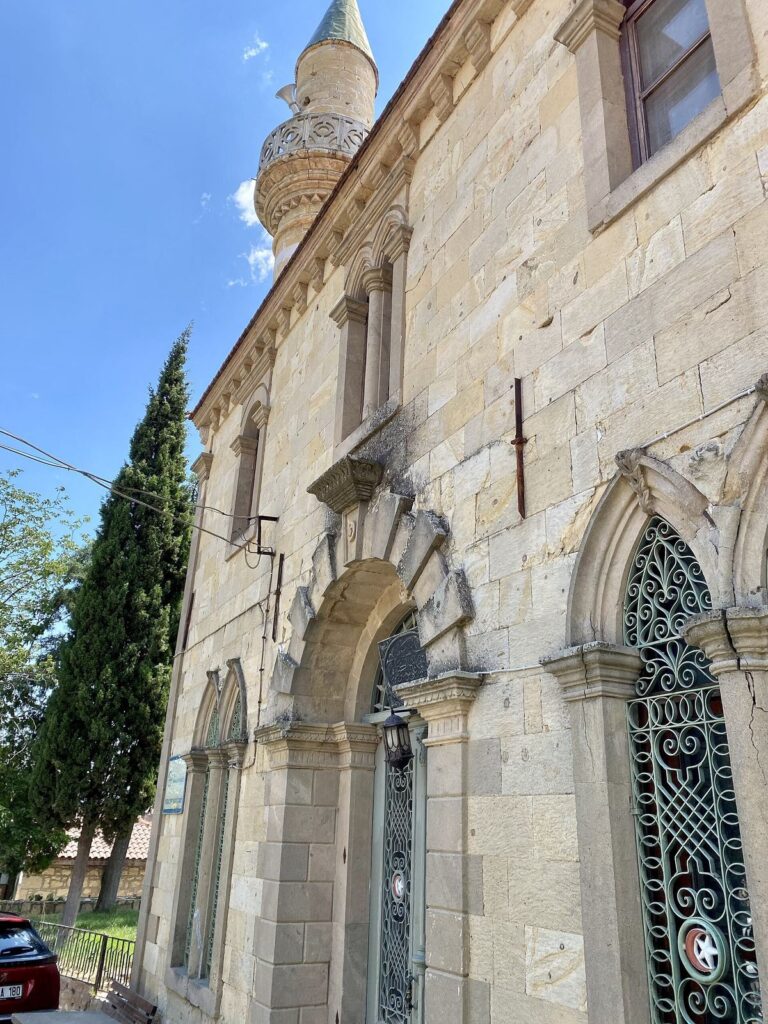
Two inscriptions associated with Antandrus were found at Avcılar: one in the wall of a mosque and another in the village. A stone stele, an upright slab bearing an inscription, discovered in 2018 dates to the second century BC. Its text commends a commander sent to Antandrus by Eumenes, king of Pergamon, and his brother Attalus. Local finds of Greek, Roman, and Byzantine coins near Devren Hill also helped identify the ancient site.