Valesio: A Messapian City and Roman Roadside Station in Italy
Site at a Glance
- Popularity
- Medium
- Country
- Italy
- Primary era
- Classical
- Eras represented
- Iron Age, Classical, Medieval
- Civilizations
- Roman
- Site type
- City
On this page12 sections
History
Valesio is an archaeological site at Torchiarolo in southern Italy. Occupied from the Iron Age into the Early Middle Ages, it was a Messapian city that later served as a station on a Roman road.
Messapian city
Valesio flourished especially between the sixth and first centuries BC as a federated city among the Messapian communities of the Salento peninsula. The Messapians were an ancient people of southeastern Italy whose customs and language were strongly influenced by Greek culture. Valesio issued its own coins, reflecting its commercial activity in a region connected to Mediterranean trade. The settlement supported dwellings, temples, and a burial ground.
Roman road station
In the Roman period, Valesio served travellers on the Via Traiana Calabra, a road running from Brindisi through Lecce toward Otranto. The site lay on the final stretch between Brundisium, now Brindisi, and Lupiae, now Lecce, and included facilities for changing horses. A medieval copy of a map of Roman roads and settlements, the Tabula Peutingeriana, identifies a station here as Mutatio Valentia. Emperor Constantine had the road refurbished in the early fourth century.
Medieval history and archaeological work
Classical texts also refer to Valesio as Baletum or Valesium. The Renaissance humanist Antonio De Ferrariis, known as Galateo, wrote that the Norman king William I of Sicily, called William the Bad, destroyed the city in 1157. This is Galateo’s attribution of the destruction.
Gabriele Marzano, director of the Francesco Ribezzo Provincial Archaeological Museum in Brindisi, discovered the Roman baths in the 1960s. From 1984 to 1991, a team from the University of Amsterdam led by Professor Boersma excavated the baths and investigated the surrounding area.
Remains
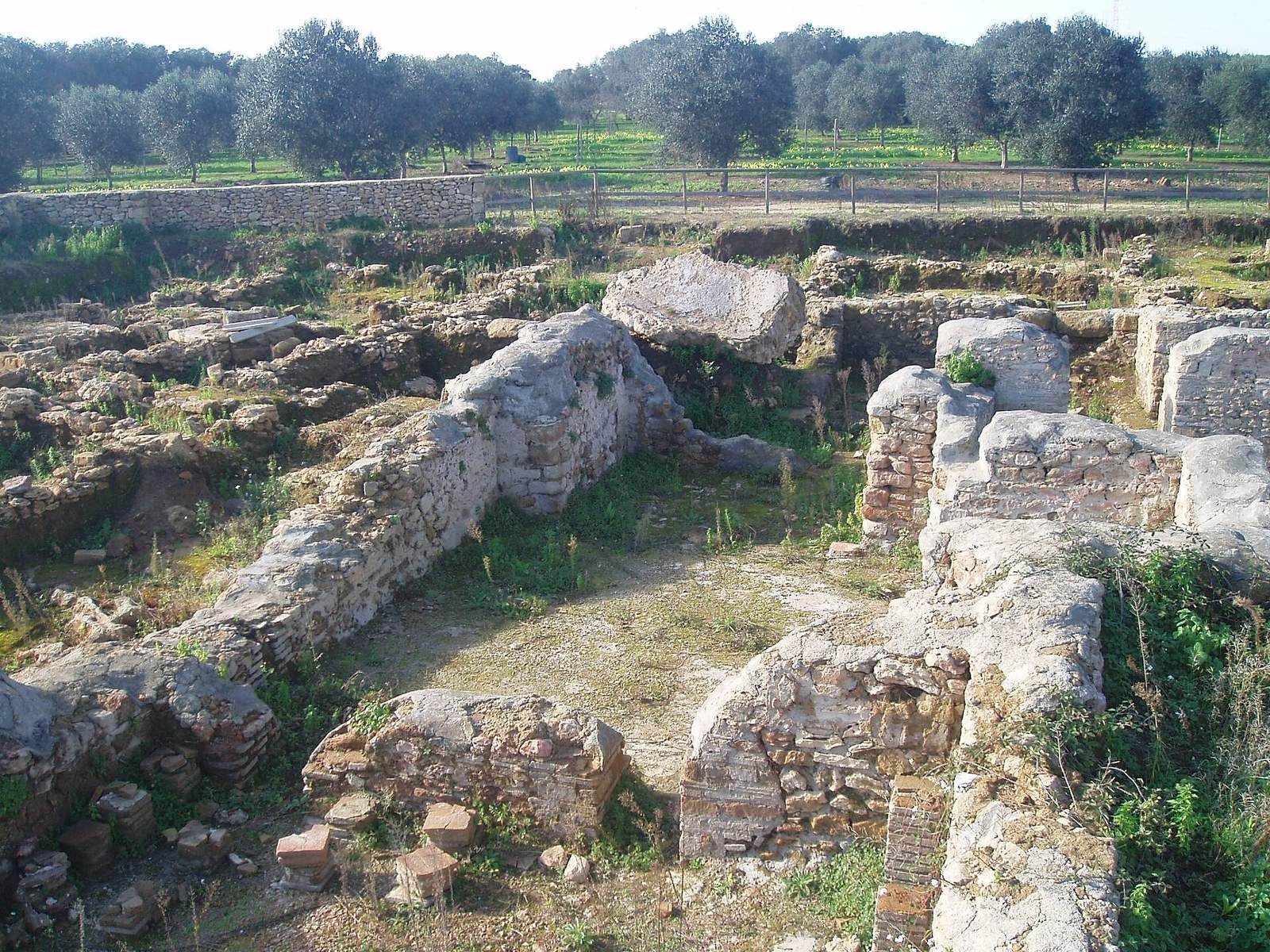
The site includes a large walled area, a Roman bath complex on slightly elevated ground near the centre, burials, and medieval remains. The stream Infocaciucci flows within the enclosure.
Urban layout and buildings
City walls
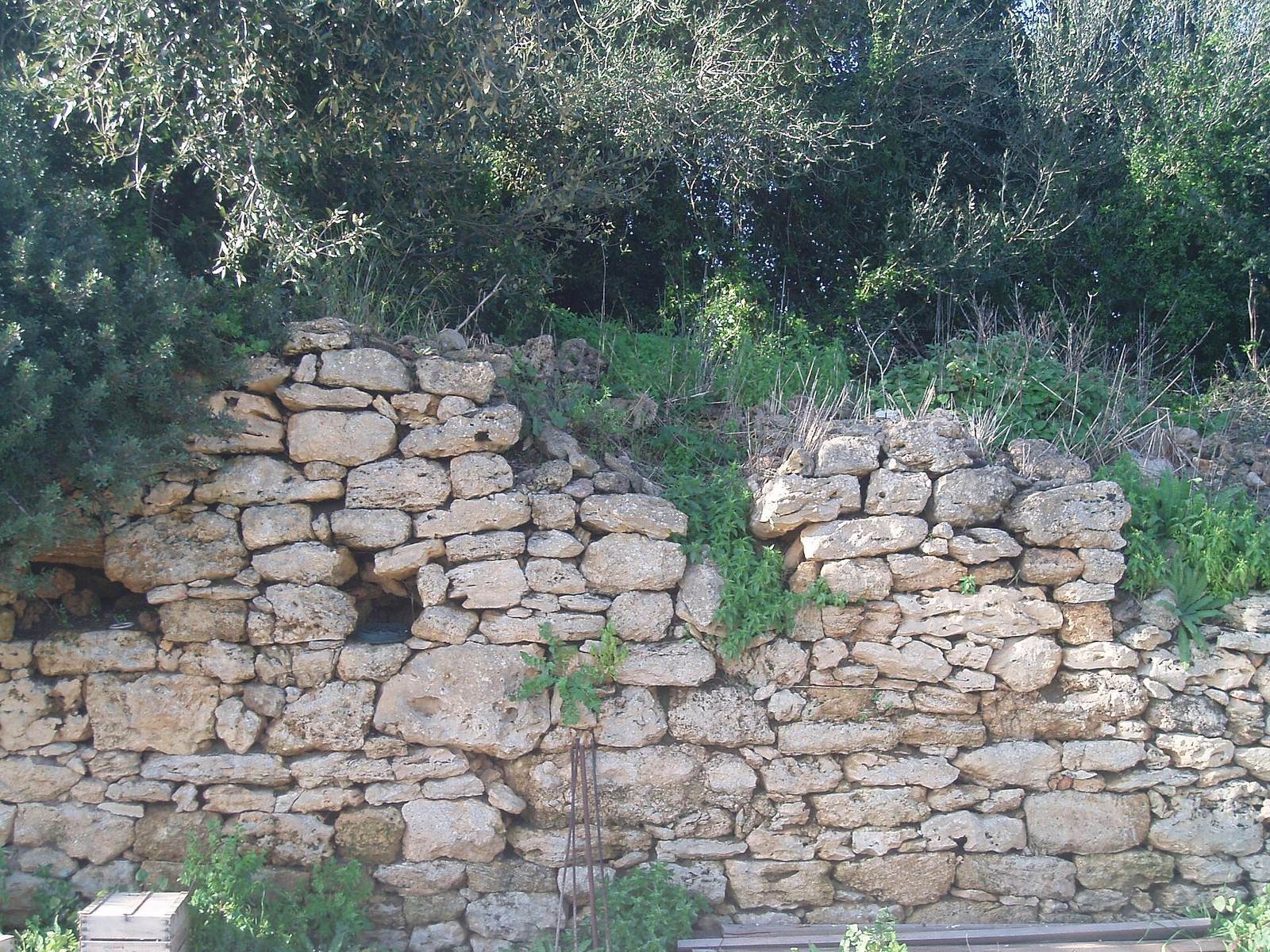
The walls enclose a quadrangular area of about 84 hectares and extend for approximately 3,430 metres.
Roman baths
The bath complex stands on elevated ground near the site’s centre, a position that may correspond to the acropolis, the elevated central or fortified area of an ancient Greek city. Its rooms were arranged for hot, warm, and cold bathing, and associated stables provided for changing horses. The date of construction is uncertain. Excavations around the baths uncovered a large mosaic in a space thought likely to have been an entrance hall.
Medieval church and graves
Remains of a small church dedicated to Saint Stephen lay over the walls of the Roman baths. Small graves were found in the same locations during excavations by the Dutch team. Both the church remains and the graves date to the medieval period.
Burials and archaeological finds
Messapian tomb inscriptions
Messapian-period tombs at Valesio include inscriptions rendered as tabara damatra or Tobaroas Damatrioas. Their meaning has been interpreted either as a dedication to Demeter, the Greek goddess associated with agriculture and fertility, or as identifying the tomb of her priestess.
Museum collections
The Valesio room at the Francesco Ribezzo Provincial Archaeological Museum in Brindisi contains finds from the site. Its funerary assemblages include Apulian and Gnathian vases, while funerary inscriptions and inscribed slabs include examples in the Messapian language. Other finds include loom weights, coins, bronze and ceramic vessels, black-glazed pottery, architectural pieces in terracotta and stone, and clay spheres probably used as catapult ammunition.