Porta Latina: A Gate in Rome’s Aurelian Walls
Site at a Glance
- Popularity
- Medium
- Country
- Italy
- Primary era
- Classical
- Eras represented
- Classical, Medieval
- Civilizations
- Byzantine, Papal States, Roman
- Site type
- Military
- Remains
- Gate
On this page10 sections
History
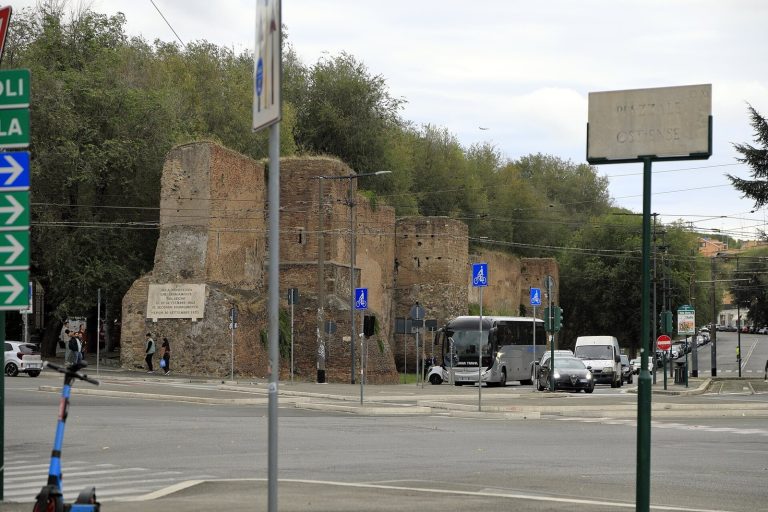
Porta Latina is a Roman gate in the Aurelian Walls in Rome, Italy, built between AD 270 and 280 under Emperor Aurelian. The walls formed Rome’s late-imperial defensive circuit. The gate stood at the city end of the Via Latina, an ancient road leading toward Campania in southern Italy. The road began at the older Porta Capena, where its route separated from the Via Appia, before the two roads met again beyond Capua. As the Via Latina lost ground to the Via Appia, it became a less important route, and the gate’s traffic and role declined. Its light use also meant that no further openings were needed in this stretch of wall.
Roman construction and later antique changes
The gate took its name from the Via Latina. A different explanation appeared in a fourteenth-century legend, which connected the name to the Latin word latens, meaning hidden. It claimed that Saturn hid at the site after Jupiter overthrew him. This story cannot explain the gate’s name, since the gate was built many centuries later. From at least the thirteenth century it was also called Porta Libera, a name that had fallen out of use by the eighteenth century.
Between 401 and 403, work on Rome’s walls under Emperor Honorius substantially altered the gate. Its passage was narrowed, probably to strengthen its defenses, and much of the surviving structure belongs to this rebuilding. The wedge-shaped stones forming the arch have sometimes been linked instead to the sixth-century work of the Byzantine general Belisarius, who strengthened the gate during the Ostrogothic siege of Rome. They date to the period of Honorius. The precise date of that restoration remains uncertain: no inscriptions from Honorius’s work survive, while Christian symbols on the arch’s keystones leave open the possibility of a later date. The flanking towers are also thought to have been extensively rebuilt, probably in the sixth century.
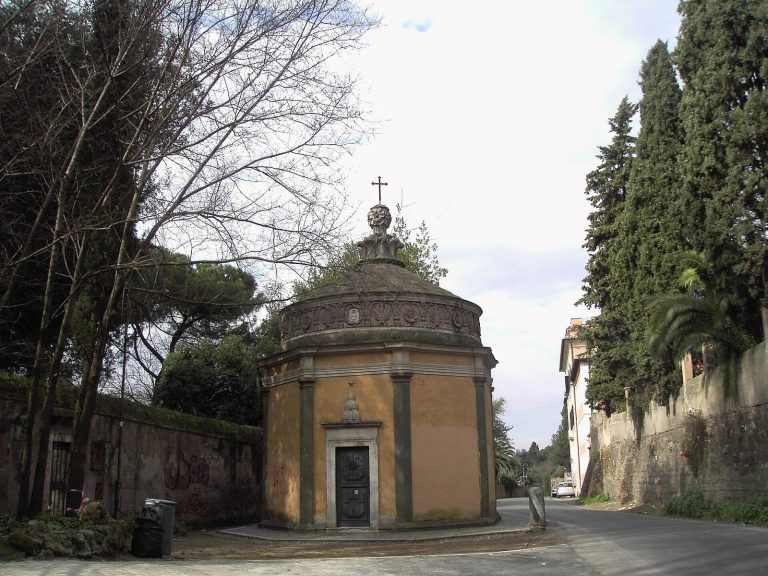
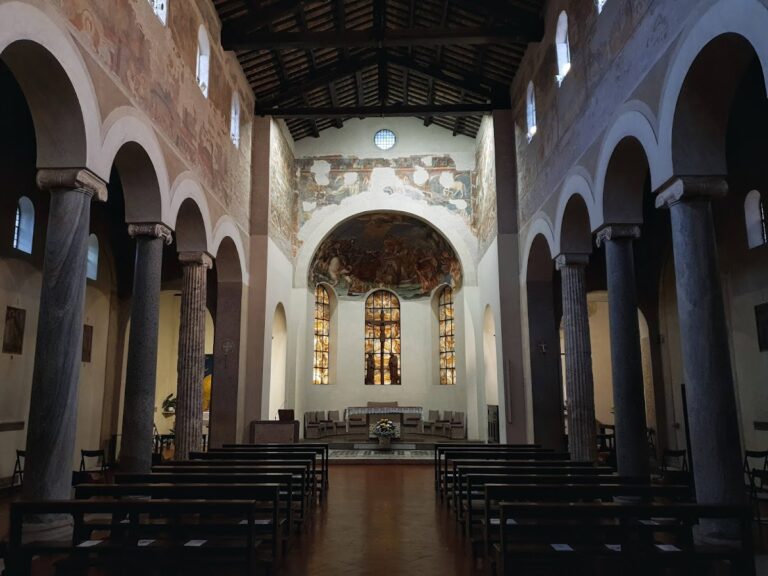
A Christian legend places the martyrdom of the apostle John near the gate. In a tradition related by the early Christian writer Tertullian, John was brought from Ephesus to Rome in AD 95 under Emperor Domitian, accused of undermining Roman state religion, and thrown into boiling oil before the emperor and Senate. He emerged unharmed and was exiled to Patmos. The story presented him as the only apostle to escape a martyr’s death. The setting is anachronistic because Porta Latina was built centuries later. The nearby church of San Giovanni a Porta Latina was founded in the fifth century in commemoration of the legend.
Medieval use and tolls
In 1408, during the occupation of Rome by Ladislaus of Naples, Porta Latina and Porta Asinaria were blocked by filling in their passages. Porta Latina reopened four months later. From the fifth century until at least the fifteenth, Rome’s gates were commonly leased or sold to private operators who collected tolls from people and goods passing through. A bull issued by Pope Honorius III in 1217 assigned Porta Latina’s toll income to the church of San Tommaso in Formis. A notice from 1467 set out rules for auctioning gates in one-year terms.
In 1474, the combined six-month lease of Porta Latina and Porta Appia cost 39 florins, 31 soldi, and 4 denarii, historical monetary units. Charges varied according to the merchandise being transported, and abuses prompted repeated orders and threats. In 1532, Pope Clement VII leased Porta Latina alone to Innocenzo Mancini for 120 florins, ten loads of firewood, and ten loads of hay. Coats of arms near the gate bearing the names of Popes Pius II, Urban VIII, and Alexander VII mark restoration work, but it did not reverse the gate’s decline.
Closures and modern history
The gate was closed during epidemics in 1576 and 1656. The latter closure lasted thirteen years, until Cardinal Giulio Gabrielli arranged a formal reopening on 5 May 1669. Porta Latina closed again in 1808 and remained shut for almost the entire nineteenth century, apart from several months in 1827. In September 1870, Italian troops tried to break through the walls at the gate but opened a breach at Porta Pia instead. Porta Latina reopened in 1911.
Remains
Porta Latina and adjacent structures
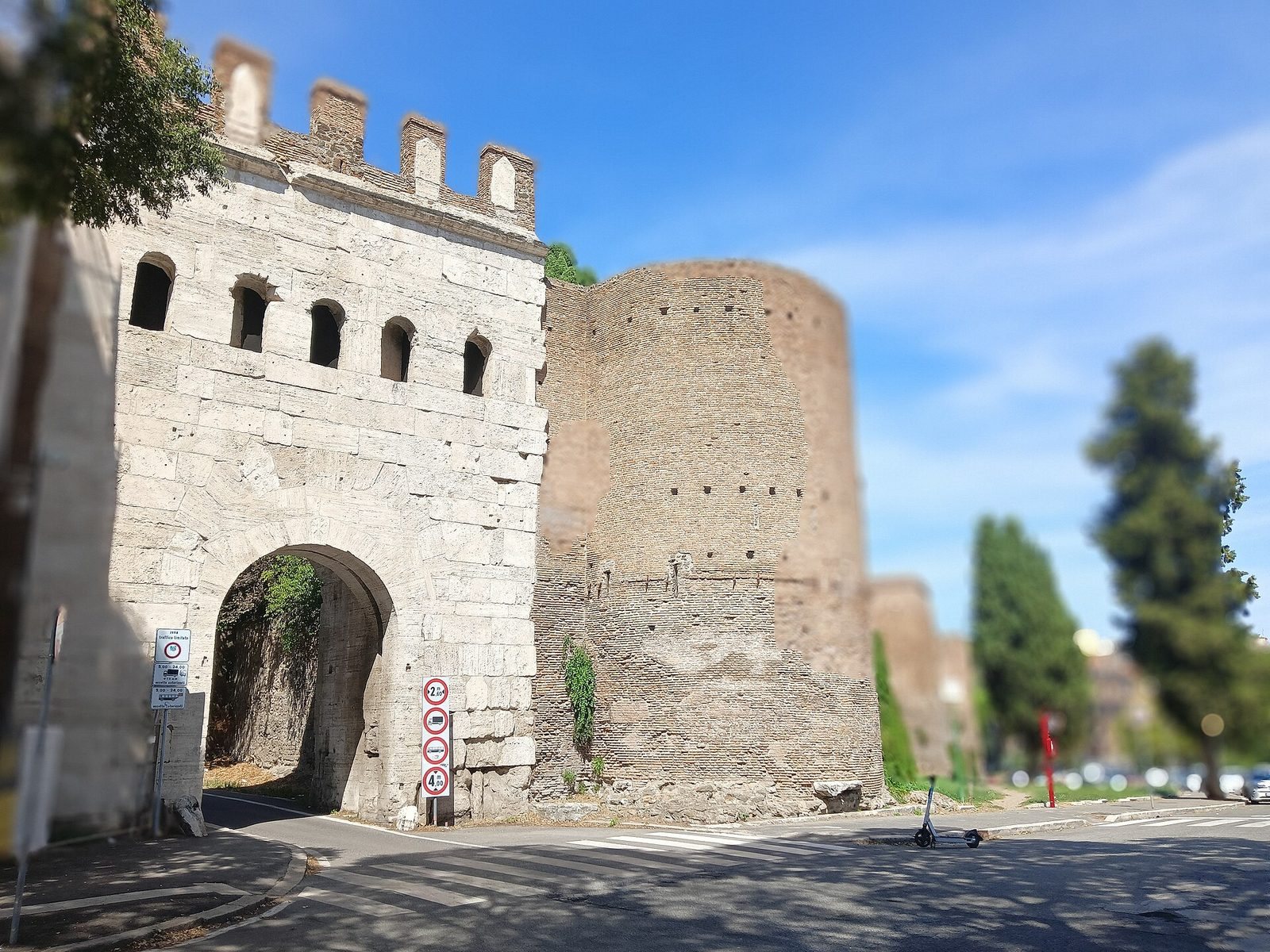
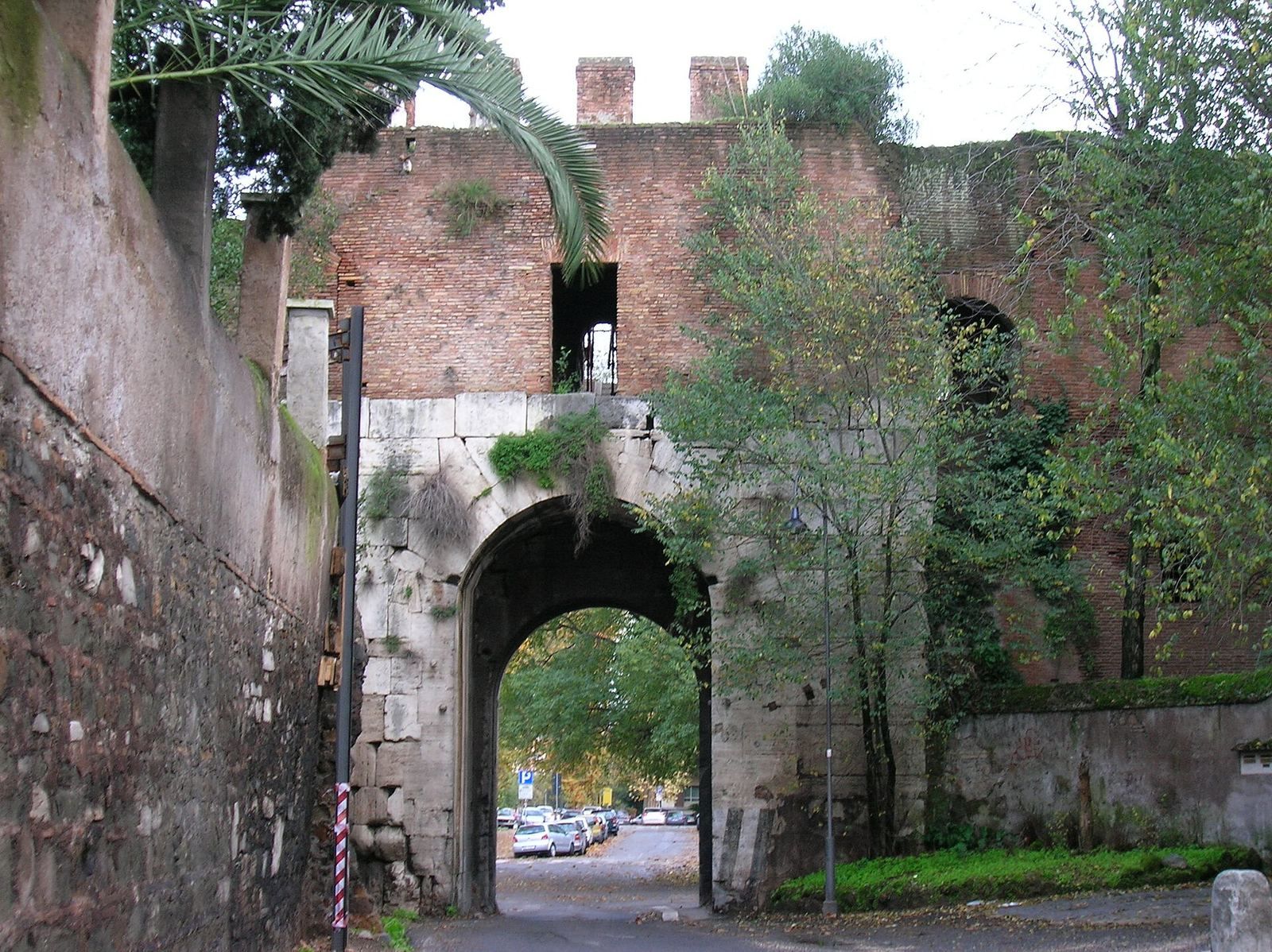
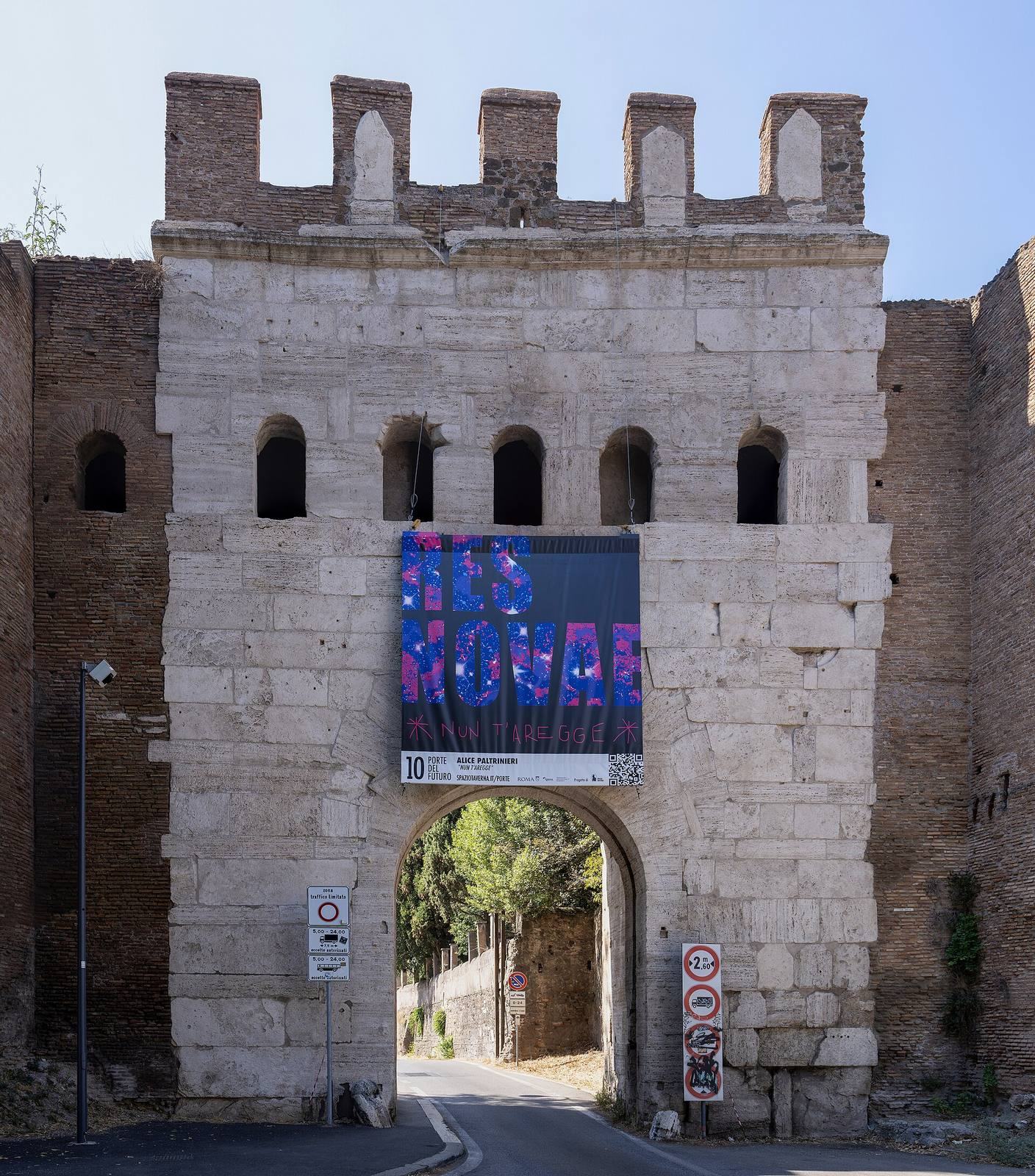
The standing gate is a well-preserved part of the Aurelian Walls. A single arched passage lies between two semicircular towers of brick-faced concrete; the towers do not rise above the central section. Its surviving fabric brings together the original gate and later alterations.
Arch and windows
The arch is built from irregular travertine blocks, with a travertine facing added during the work under Honorius. Before the passage was narrowed in the early fifth century, it measured about 4.20 metres wide and 6.55 metres high. Its present dimensions are about 3.73 metres wide and 5.65 metres high, and traces of the earlier opening remain visible. Five arched windows above the passage once opened into the control chamber, the room housing the gate’s operating mechanisms; they had been closed by the sixth century. A sixth window at the southern end is made of brick and topped with stone battlements.
The outer keystone bears Constantine’s Chi-Rho, a Christian monogram formed from the first two letters of Christ’s name, between Alpha and Omega, the first and last letters of the Greek alphabet and Christian symbols. A cross within a circle appears on the inner keystone.
Towers
The western tower was wholly rebuilt under Honorius and later restored in the medieval period. Stonework and style indicate a twelfth-century rebuilding of the left-hand tower. One tower has openings for archers in place of the openings for ancient bolt-throwing weapons used on Aurelian’s original towers. Its base has a different plan from its upper part. The northern tower rests on masonry foundations that may have belonged to a tomb.
Closures and inner access
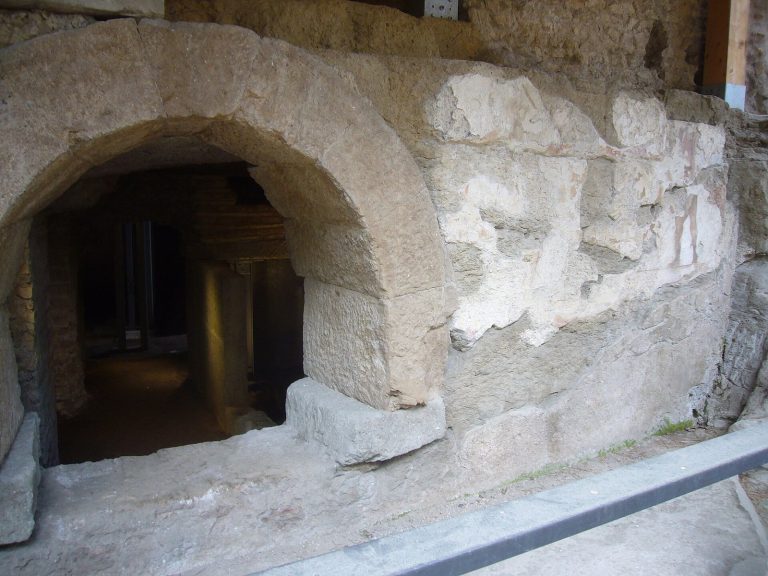
The outer entrance was closed by a portcullis, a heavy barrier that could be raised or lowered, while the inner closure had two leaves. A small doorway inside the right-hand tower still gives access to the control chamber.
Nearby structures
Near the gate are the church of San Giovanni a Porta Latina, the oratory of San Giovanni in Oleo, and the pagan Columbarium of Pomponius Hylas. The oratory, a small chapel, was built behind the gate in 1509 at the legendary site of John’s martyrdom. The columbarium is a burial structure containing niches for urns.