Huldah Gates: The Southern Entrances to Jerusalem’s Temple Mount
Site at a Glance
- Rating
- 5
- Popularity
- Very Low
- Country
- Israel
- Primary era
- Classical
- Eras represented
- Classical, Medieval
- Civilizations
- Fatimid, Roman, Umayyad
- Site type
- Religious
- Remains
- Temple
On this page9 sections
History
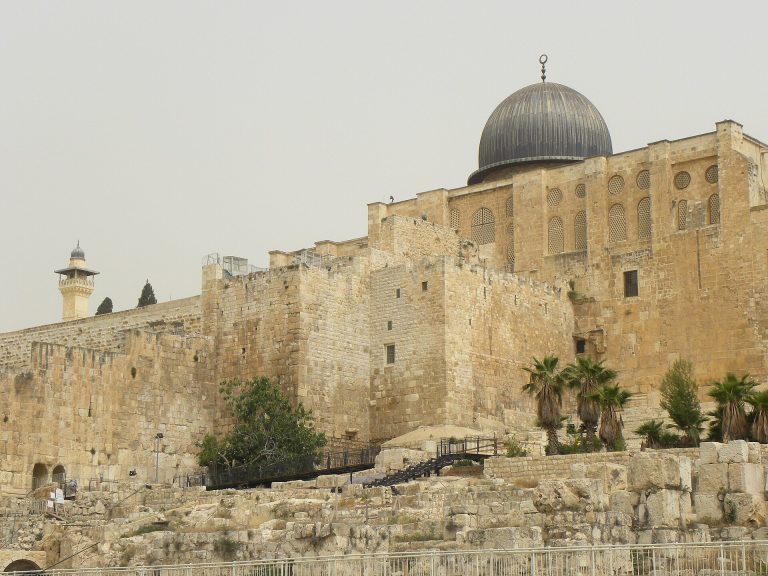
The Huldah Gates are two gate complexes in the southern wall of the Temple Mount in Jerusalem, Israel. Associated with the Second Temple period, the era when the Temple stood before Rome destroyed it in 70 CE, they provided a principal approach from the Ophel for ordinary Jews. The surviving Double and Triple Gates formed part of Herod the Great’s expansion of the Temple Mount. Herod was a Roman client king who ruled Judea and undertook major building projects.
The Herodian enlargement
The two surviving entrances are associated with Herod’s expansion, although the gates described in the Mishnah may have belonged to an earlier phase. The Mishnah is an early collection of Jewish rabbinic teachings, and its description of the Temple precinct is generally understood to refer to the sanctified Mount in Hasmonean times. The Hasmoneans were a Jewish ruling dynasty that preceded Herod. On this interpretation, calling the later southern gates the Huldah Gates applies an earlier name to structures from a later expansion.
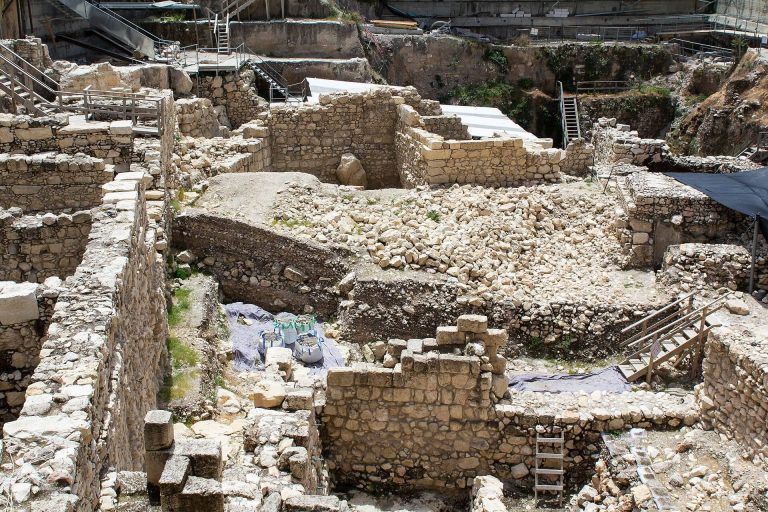
Archaeologists Yuval Baruch and Ronnie Reich have proposed that the Triple Gate was the first entrance built for Herod’s enlargement. They also suggest that a broad, sloping street once rose east of it and may have been used to bring sacrificial animals up to the Temple Mount. In their interpretation, dozens of decorated stones found below the gates came from the Royal Stoa, a large hall lined with columns.
Later alterations and use
When the Al-Aqsa Mosque was built, the old steps leading from the Double Gate were blocked. Charles Warren later proposed that its eastern passage had been extended so replacement steps emerged north of the mosque, shifting the exit eastward. Both gate complexes were blocked during the Middle Ages. The Triple Gate was closed in the eleventh century, while a medieval tower, probably from the Fatimid period, obstructed the Double Gate.
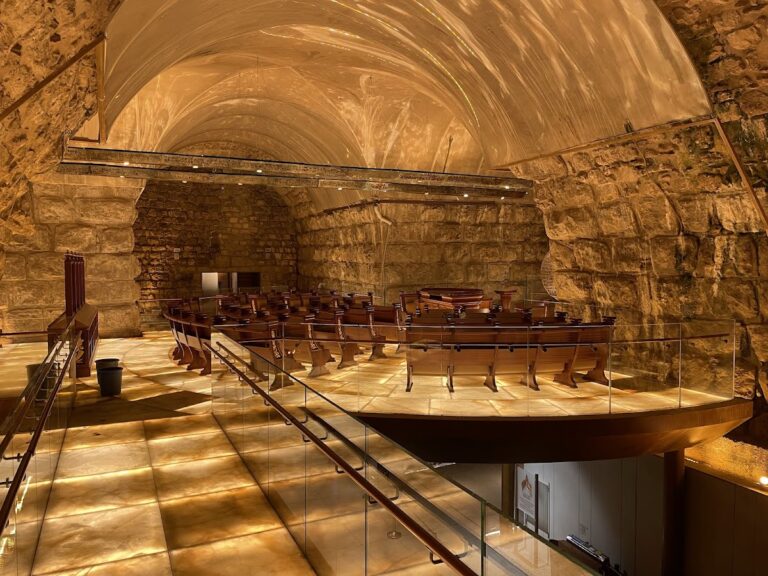
Warren, a British army officer and archaeologist, excavated the area in the nineteenth century and found tunnels below the Triple Gate. Their date and purpose remain unknown, and political instability at the site has prevented later archaeologists from investigating them. The passages from both gate complexes are now used as mosques by the Waqf, the Islamic religious endowment and its administering institution. The vaulted area connected to the Triple Gate has served as the Al-Marwani Mosque since 1996.
Names, traditions, and proposed measurements
Several explanations have been offered for the name Huldah. One connects it with a Hebrew word for a mole or mouse, comparing the rising underground passages to animal burrows. A folk explanation links the gates to Huldah, a prophetess associated with the First Temple period, and says that she held court there; some traditions also placed her tomb nearby. Other interpretations connect the name with a Talmudic phrase about Huldah dwelling among houses, or with a Psalm describing all the inhabitants of the world, on the reasoning that these were the Temple Mount’s principal gates. A rabbinic tradition in Shir HaShirim Rabbah says that the Priest’s Gate and the Huldah Gate would not be destroyed and that God would renew them.
The medieval Jewish scholar Ishtori Haparchi recognized the southern entrances as features of the Temple Mount’s boundary. A later discussion in Ezrat Kohanim proposes that the gates and surrounding spaces followed a measured arrangement. Its preferred scheme allows for two gates, each 10 cubits wide, with three intervening spaces of 160 cubits, giving a total of 500 cubits. A cubit is an ancient unit of length based approximately on the distance from elbow to fingertip. An alternative places the gates opposite the length of the Court of Israel, an inner area reserved for Israelite men, and gives a total of about 187 cubits. Ezrat Kohanim rejects another proposed alignment with the Gate of Kindling and Gate of Water, arguing that it would line up the outer entrances with inner-court gates and compromise the priests’ privacy.
Remains
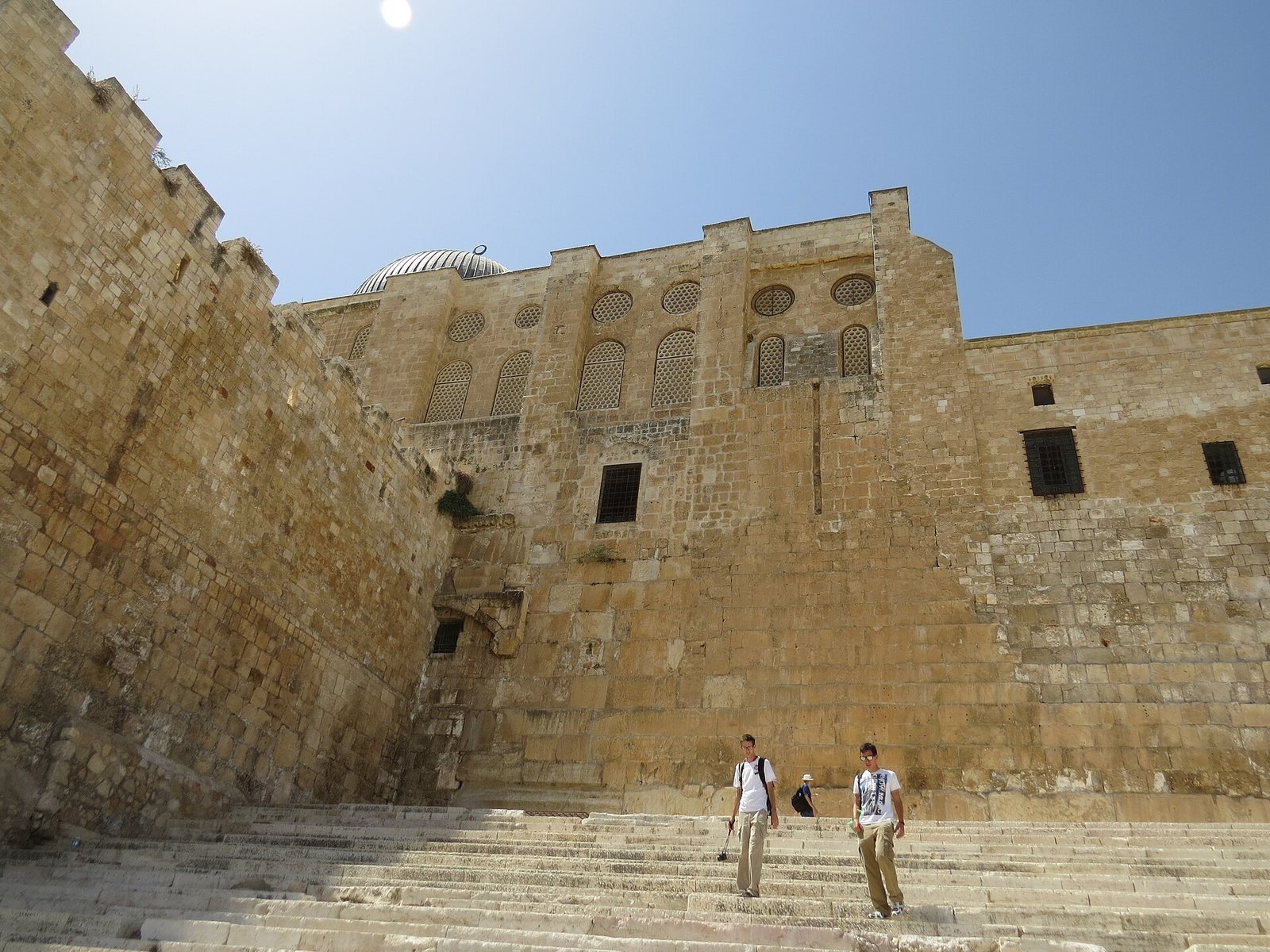
The Double Gate on the west and the Triple Gate on the east are set into the southern wall, below the level of most of the Temple Mount. Their entrances once led beneath the open platform to passages and stairs rising to its surface. The routes include entrance chambers and vaulted ramps, with the passageways covered by vaults.
The gate complexes and their passages
Double Gate
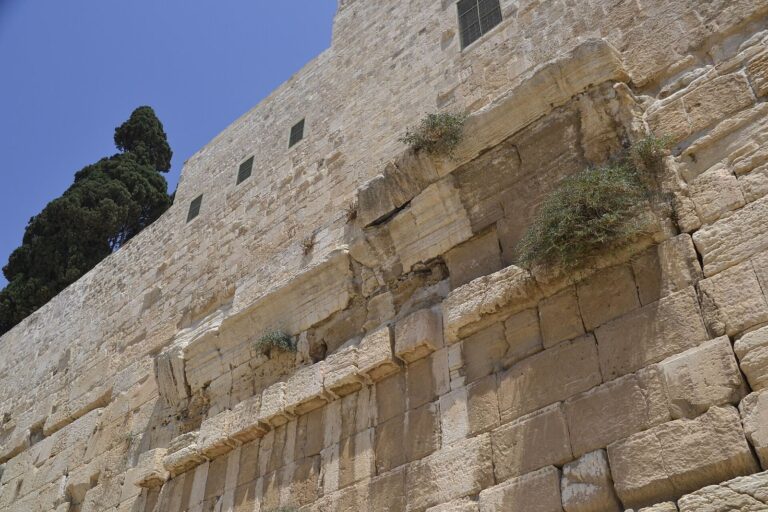
Only the eastern opening of the Double Gate is partly visible. Half of a lintel, the horizontal stone above an opening, survives from one of the western openings. The visible lintel and the arch above it, which transfers some weight away from the stone below, are Herodian. The carved projecting band above them belongs to the Umayyad period, under a Muslim ruling dynasty. A medieval fortification tower stands in front of the gate. Its remains contain the small Al-Khataniyya Library, which is entered through the western portal.
Inside, an entrance chamber has at least three large columns supporting two pairs of domes. The central columns and two more beside the steps are Herodian and have been strengthened with concrete frames. The domes appear to date from a reconstruction in the early seventh century. Each of the gate’s two openings originally led to an underground passage and then to steps ascending to the surface; the surviving routes include vaulted sections and ramps. Steps identified as serving pilgrims lead up to the gate.
Triple Gate
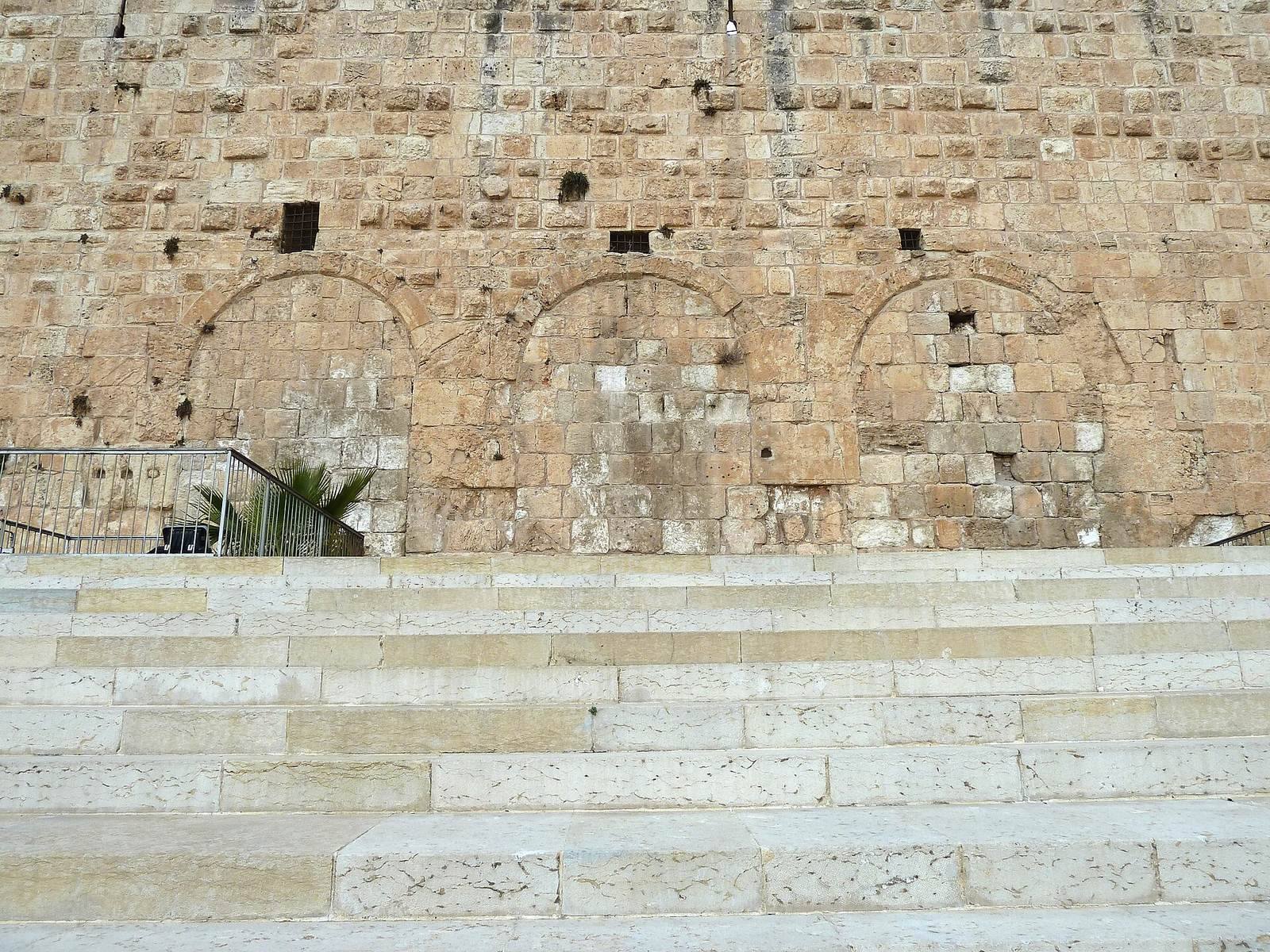
The eastern gate complex is marked by the outlines of three blocked openings in the wall, although only two stones in this area are original. The western side-post of the Triple Gate is Herodian; most of the other visible fabric is Umayyad. Its interior resembles the Double Gate’s. The western passage is the longer aisle and reaches the surface, while the eastern aisle ends a short distance inside and forms the western edge of the vaulted area known as the Al-Marwani Mosque, also traditionally called Solomon’s Stables.
A passage resembling the one inside the Double Gate is thought to have existed here in Herodian times. Its surviving remains connect with the Al-Marwani area, which began as a pillared supporting structure beneath Herod’s enlarged Temple Mount. Herodian elements are still visible within the structure, which has been repaired and rebuilt repeatedly over the centuries.
Tunnels beneath the Triple Gate
Warren found an irregular network of tunnels below the Triple Gate’s passages. Some run beneath the wall and extend beyond the Temple Mount’s southern edge, reaching lower than the wall foundations. Their purpose and date have not been established.