The Archaeological Park of Venosa: Remains of Ancient Venusia
Site at a Glance
- Popularity
- Very Low
- Country
- Italy
- Primary era
- Classical
- Eras represented
- Classical, Medieval
- Civilizations
- Roman
- Site type
- City
On this page11 sections
History
The Archaeological Park of Venosa preserves the remains of ancient Venusia near the modern town of Venosa in Italy. Rome founded Venusia in 291 BC as a military colony, a settlement of Roman citizens often established for strategic purposes, after its final defeat of the Samnites, an ancient people who fought Rome for control of the Italian peninsula. A tradition says 20,000 settlers were sent there, but that number is probably exaggerated. The city’s name is usually connected with Venus, the Roman goddess, although other explanations point to its wine or windy climate.
Venusia in the Republic
Venusia lay near the boundary between Apulia and Lucania, and its territory extended into both regions. Its original regional affiliation remains uncertain, though it was probably Apulian before Lucanian land was added. Horace questioned whether it belonged to Lucania or Apulia, while later writers placed it in Apulia.
During the Second Punic War, Rome’s conflict with Carthage from 218 to 201 BC, Venusia repeatedly supported Rome. After the Roman defeat at Cannae in 216 BC, a major battle in the war, forces under the commander Terentius Varro retreated to the city with 700 horses. They gradually gathered about 4,000 cavalry and infantry, while local people helped maintain and arm the troops. When many colonies could not meet the Senate’s later demands, Venusia offered to equip and supply soldiers. The city served repeatedly as Rome’s main base in Apulia, suffered heavily during the conflict, and received additional settlers in 200 BC.
Venusia joined the Social War, the uprising of Rome’s Italian allies in the early first century BC, at an early stage and became a major rebel base in southern Italy. In 89 BC, Roman forces led by the praetor Cosconius, a senior magistrate with military responsibilities, devastated the city’s territory. Later descriptions continued to present Venusia as a flourishing regional centre.
The poet Horace was born at Venusia in 65 BC. His poems refer to the surrounding countryside, including the Bandusium Spring and the forests of Mount Vultur. After losing his family estate during the civil wars, he appears not to have lived in the city in later years.
Imperial and later city
During Rome’s triumviral period, when three leading figures shared political power, a new colony of veterans, or former soldiers, was settled at Venusia. The city retained its status as a Roman colony under the Empire, as shown by Pliny the Elder and inscriptions. Cicero described Venusia as a regular stopping place on journeys between Rome and Brundisium, an important destination on the Adriatic coast.
Later itineraries, geographical works, and inscriptions indicate that Venusia remained a prominent city in southern Italy. One inscription praises the city’s flourishing condition. The construction of the Via Traiana, a Roman road linking Rome with southern Italy, redirected the main route between Rome and Brundisium away from Venusia and probably reduced its prosperity. The city continued through the Middle Ages and developed into modern Venosa.
Remains
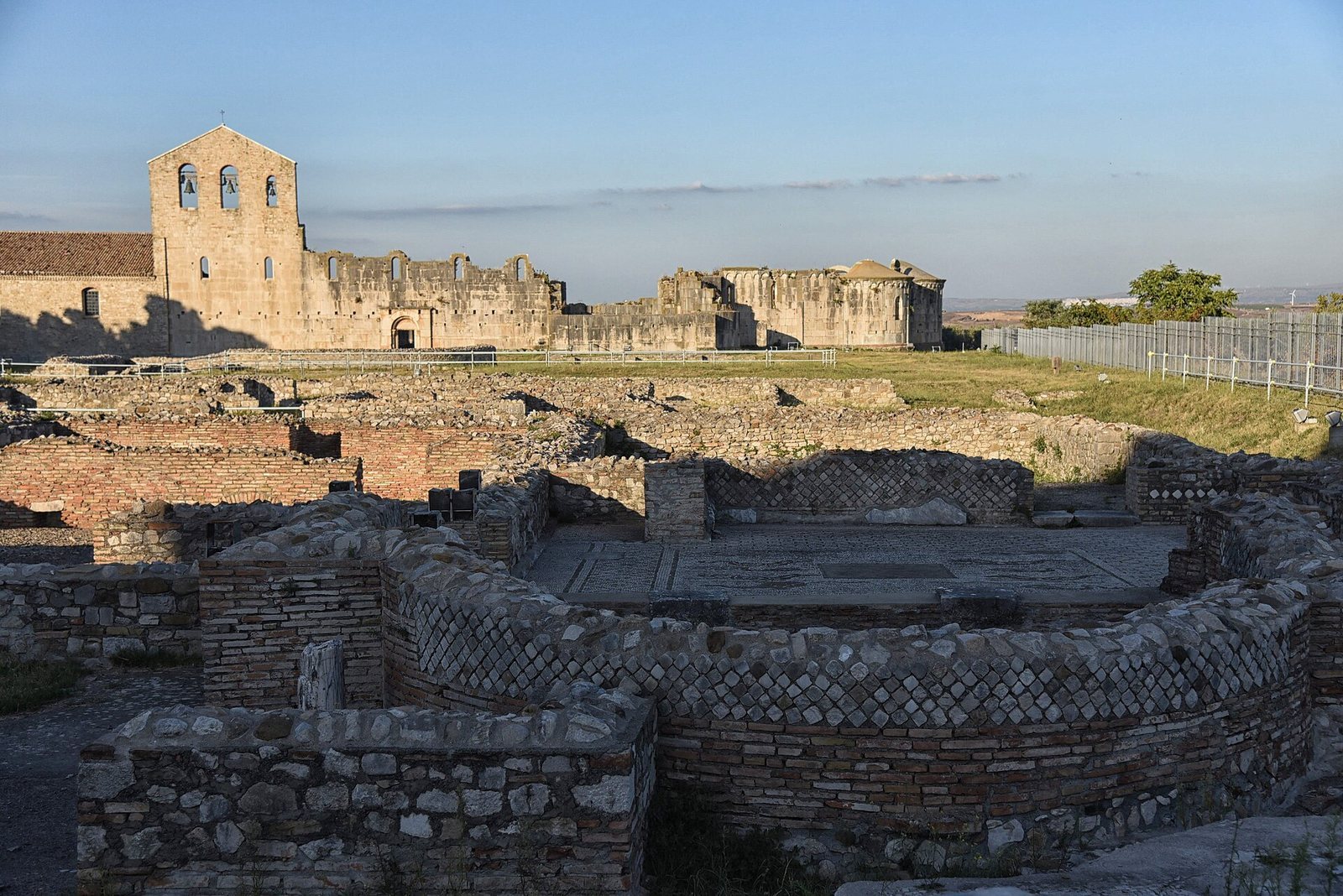
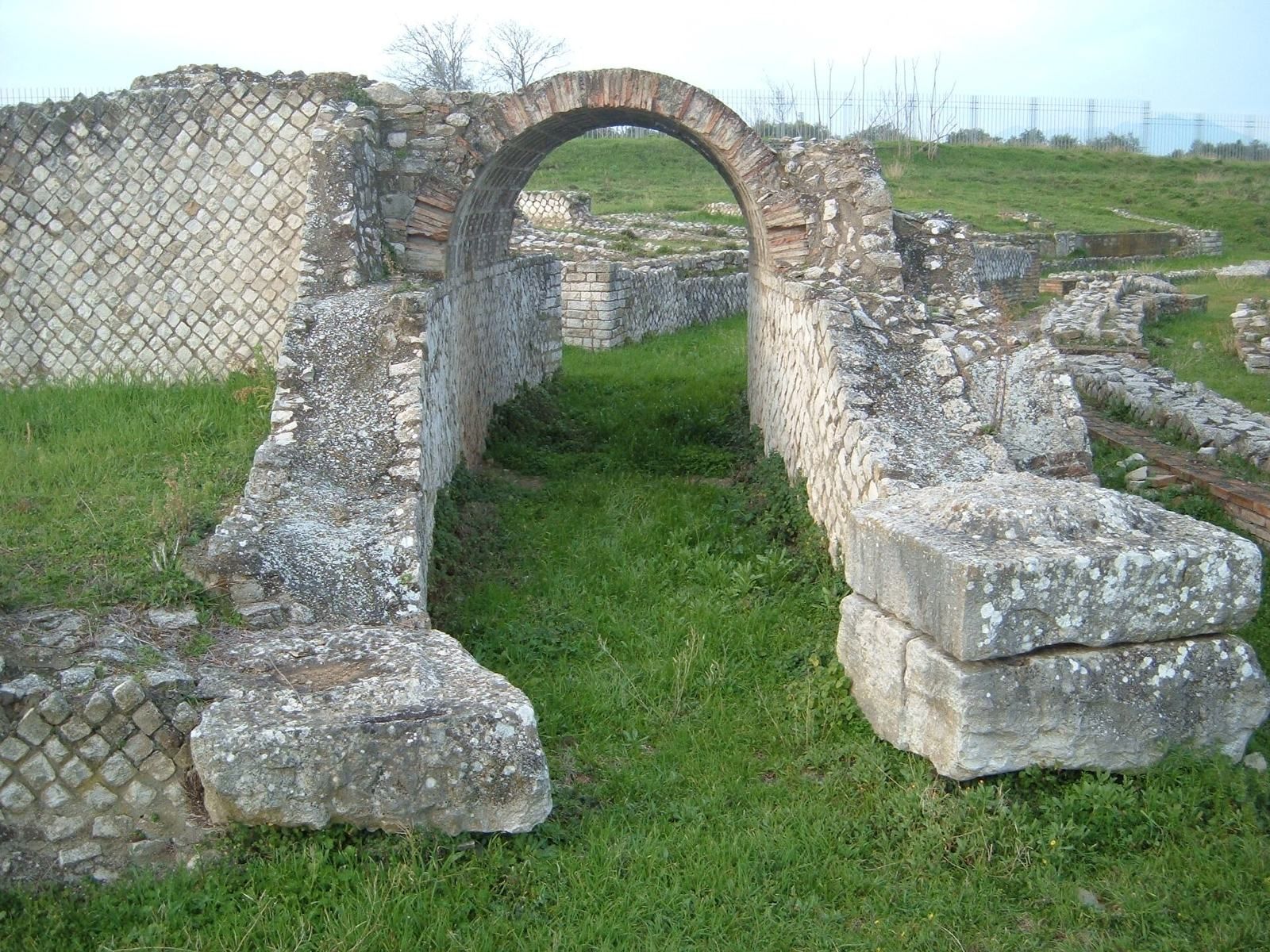
The archaeological area lies about one kilometre northeast of modern Venosa. Ancient Venusia occupied a hill between two valleys, along the Via Appia, the Roman road linking Rome with southern Italy, and about ten Roman miles, an ancient unit of distance, south of the Aufidus River, now called the Ofanto. The park contains remains from antiquity and the Middle Ages. Objects recovered from the city are housed in the museum in the Castle of Pirro del Balzo.
Roman buildings
Amphitheatre
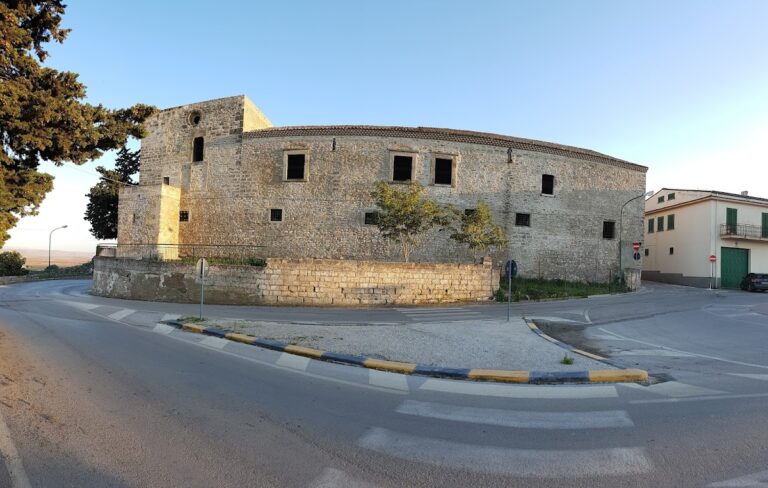
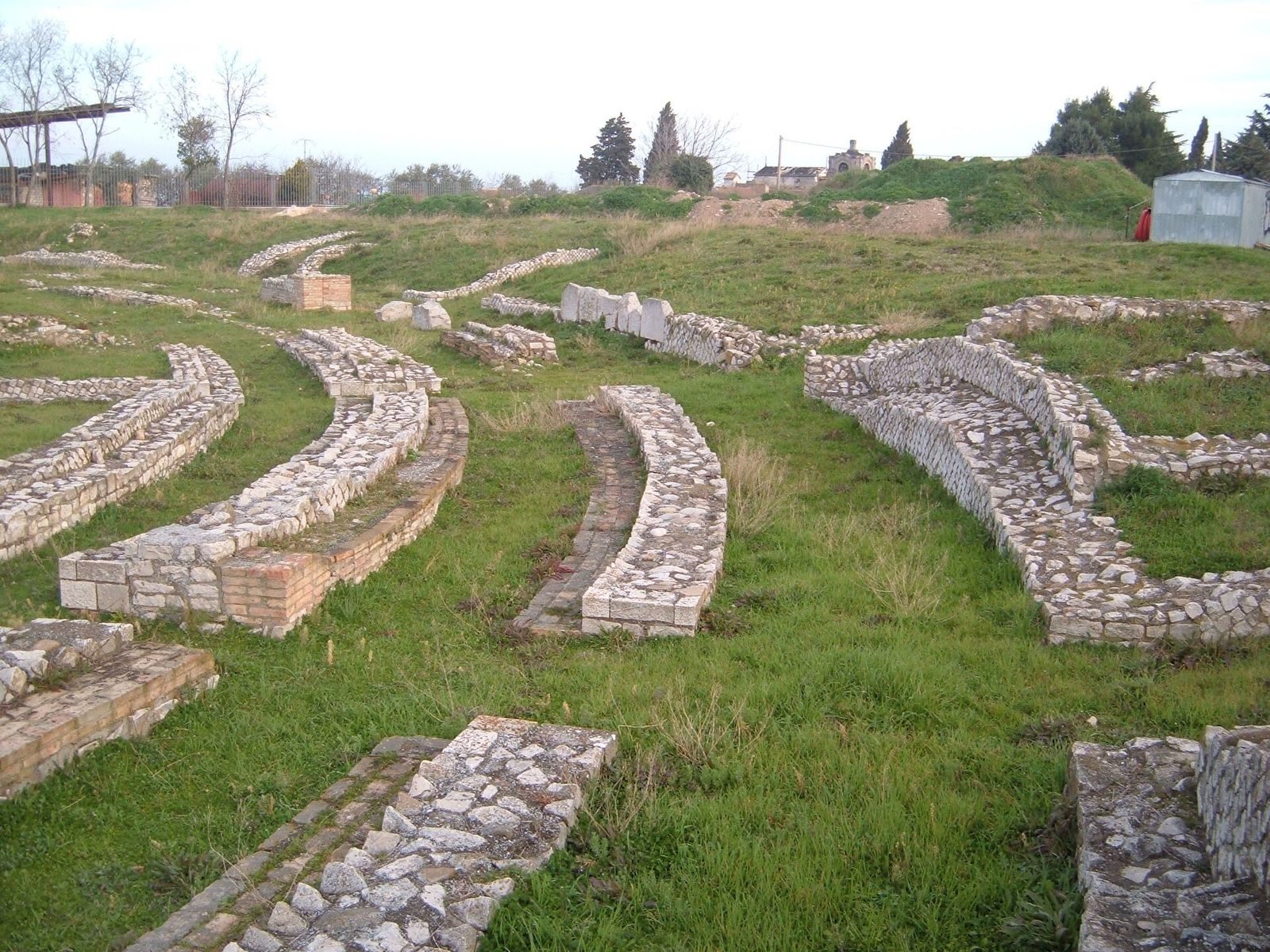
The elliptical amphitheatre had three storeys and could hold about 10,000 spectators.
Bath complex
Built in the first century AD, the Roman baths were renovated in the second century and again in the third, before being abandoned in the fourth century. A two-room building dating to the second century BC, traditionally called “Horace’s House,” has been identified as part of the bath complex.
Private houses
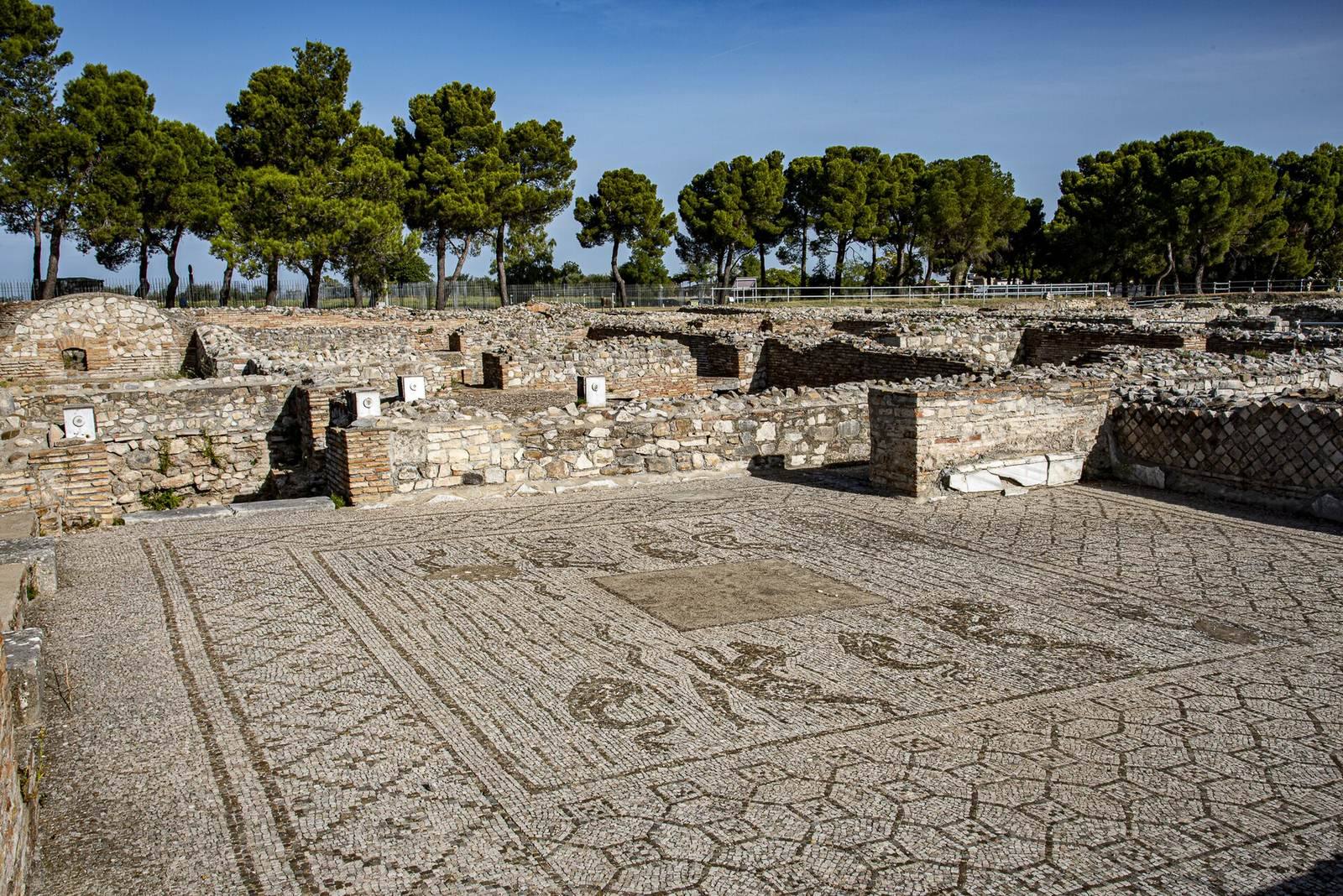
Remains of private houses, or Roman homes, include mosaic floors.
Christian and medieval remains
Episcopal complex
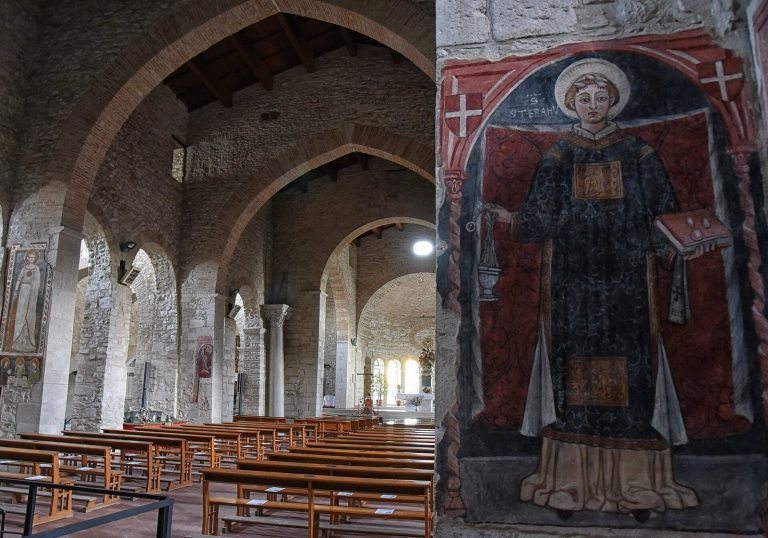
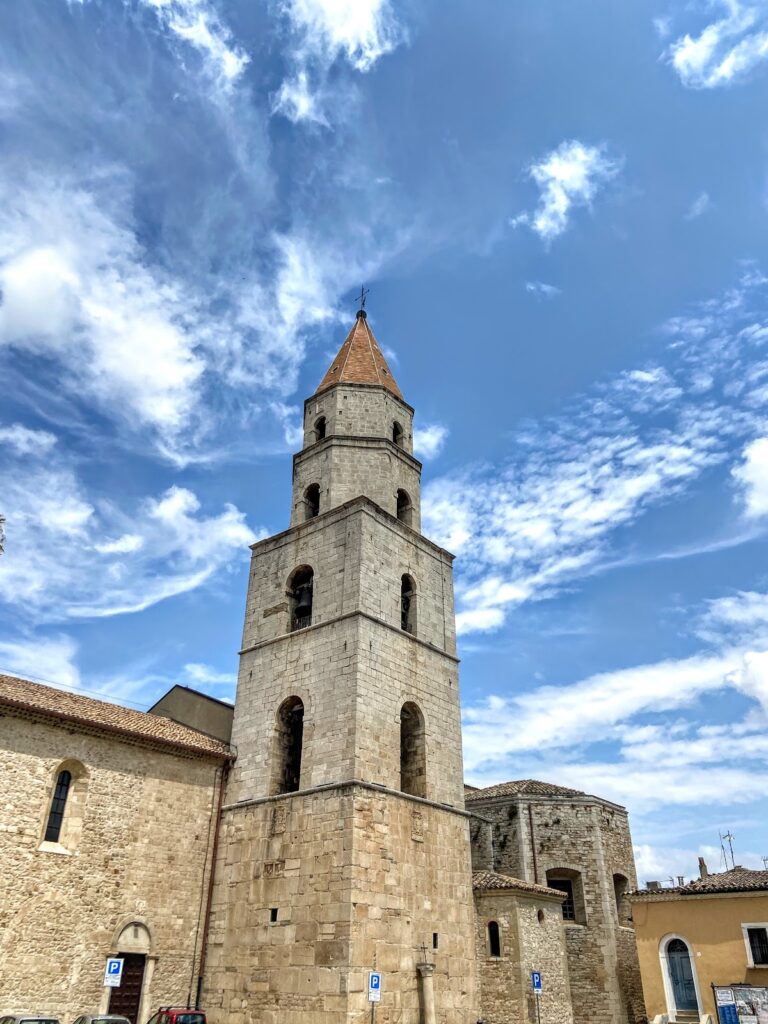
The complex developed from a private house into an early Christian bishop’s church and residence. Its remains include part of the earlier residence and two churches. Work to enlarge one church began in the eleventh or twelfth century but was never completed. Known as the Unfinished Church, it forms part of the Abbey of the Holy Trinity.
Catacombs
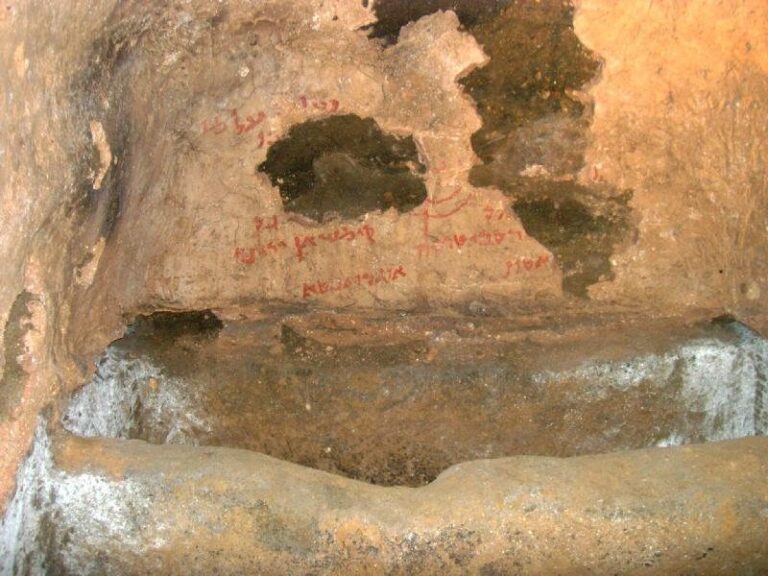
Jewish and Christian catacombs form part of the archaeological area. These underground burial complexes contain passageways and burial chambers.