Archaeological Museum of Dion: A Museum of Finds from Ancient Pieria
Site at a Glance
- Popularity
- Medium
- Country
- Greece
- Primary era
- Classical
- Eras represented
- Stone Age, Bronze Age, Iron Age, Classical
- Civilizations
- Kingdom of Macedon, Mycenaean, Roman
- Site type
- Museum
On this page26 sections
History
The Archaeological Museum of Dion, in Dion, Greece, was established in 1983 to present finds from the ancient city and the archaeology and history of Pieria. Its collections also include material from Mount Olympus, ancient Leivithra, and the surrounding region. Fortified ancient Dion was occupied from the sixth century BC to the fifth century AD.
Ancient Dion and its religious phases
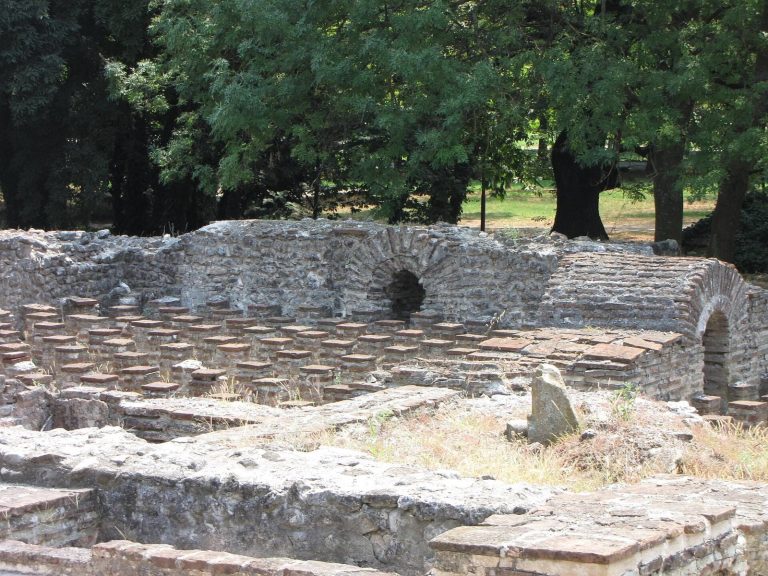
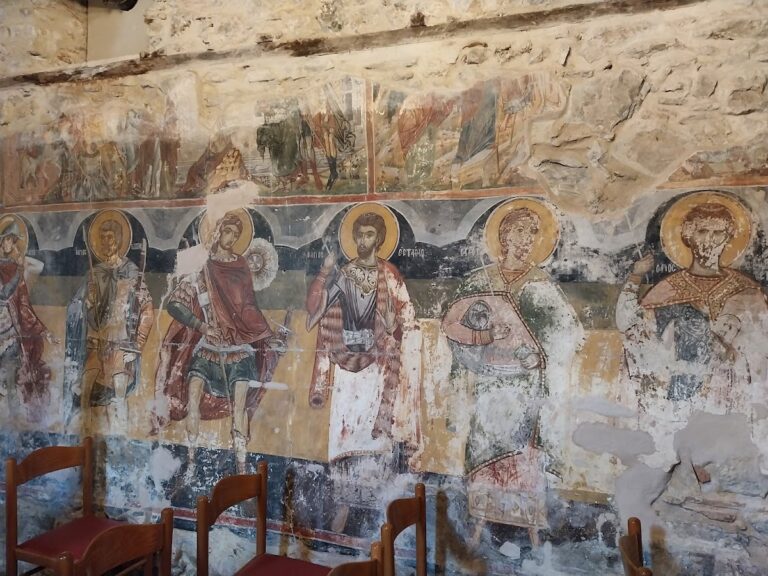
The archaeological remains of Dion reflect successive political and religious changes. From the second century BC, worship of Isis, an Egyptian goddess whose cult spread through the Greek and Roman worlds, began to displace the earlier cult of Artemis. Religious practice changed again as Christianity spread. Roman occupation also shaped the appearance of the city.
Excavations and the museum
Georgios Sotiriadis, an archaeologist and rector of the University of Thessaloniki, began excavating Dion in 1928 and continued until 1931. Georgios Bakalakis, another archaeologist, resumed the work about three decades later. From 1973, archaeologist and professor Dimitrios Pandermalis directed excavations across larger areas of the city. The University of Thessaloniki continued the archaeological work.
In 1992, excavators uncovered a second-century AD water organ in a building opposite the Villa of Dionysos. The Dionysos mosaic was removed from its original location and transferred to the Archaiothiki, a building constructed for its display and completed in 2007.
Remains
Museum and exhibition buildings
Main museum
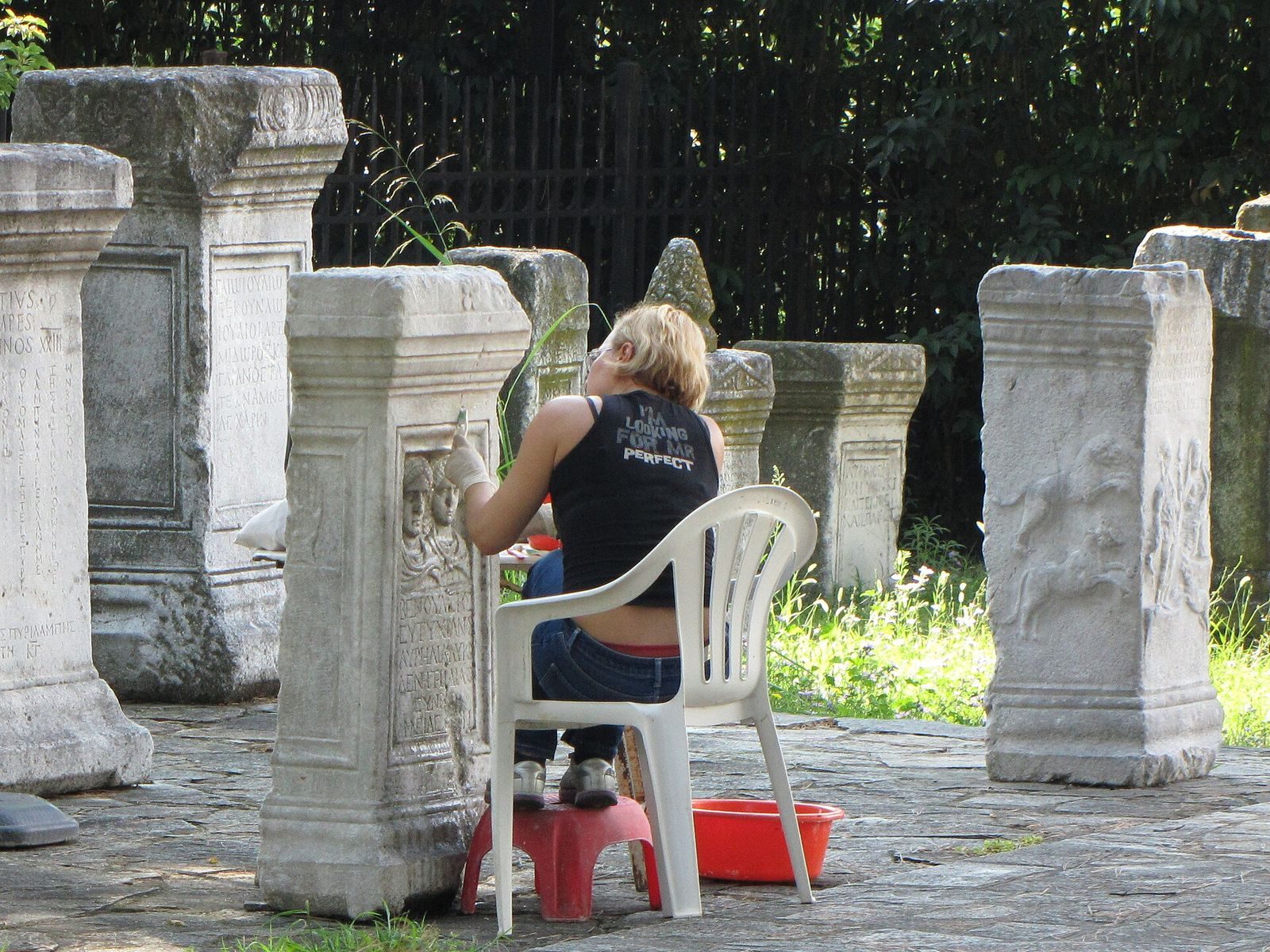
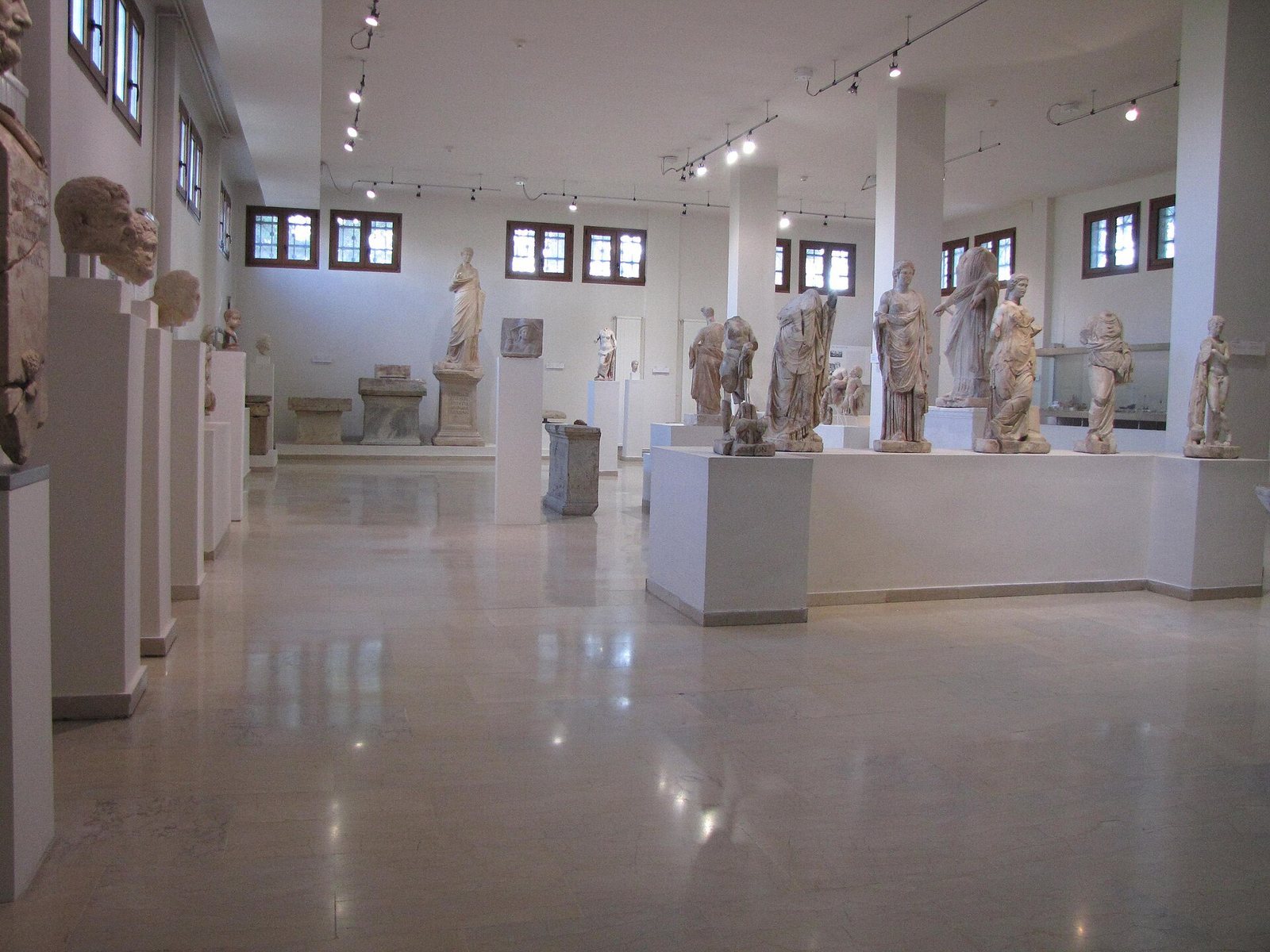
The museum stands at the southern edge of Dion, about 500 metres from the Archaeological Park. Its three levels organize the collections by material and subject. Coins, tools, and models are displayed in the basement; the ground floor focuses mainly on sculpture, written records, and Christian material; and the upper floor presents finds from houses and the surrounding area. Columns and larger stone objects are displayed outside, on the south side of the museum.
Archaiothiki and work buildings
West of the museum, the Archaiothiki was purpose-built for the Dionysos mosaic. Its gallery permits viewing the mosaic from different sides, while cases contain recent finds from Dion and nearby ancient sites. A scientific laboratory operated by Aristotle University of Thessaloniki stands south of the building. Southeast of the museum, a long storage and workshop building holds finds from Dion, Leivithra, and the wider region. Staff catalogue, clean, analyse, and restore objects there, make copies of selected finds, and mend pottery on a round worktable.
Sculptures and sanctuary finds
Great Thermal Baths
Sculptures from the Great Thermal Baths include figures of Asklepios, the Greek god of healing, and members of his family. They include his wife Epione, associated with healing, and his children, among them Hygieia, associated with health. A statue of Hygieia dates to the first century AD. The collection also includes a statue of Dionysos from the baths’ cold room and a human bust from the Great Baths dated to the early third century AD.
Sanctuary of Isis
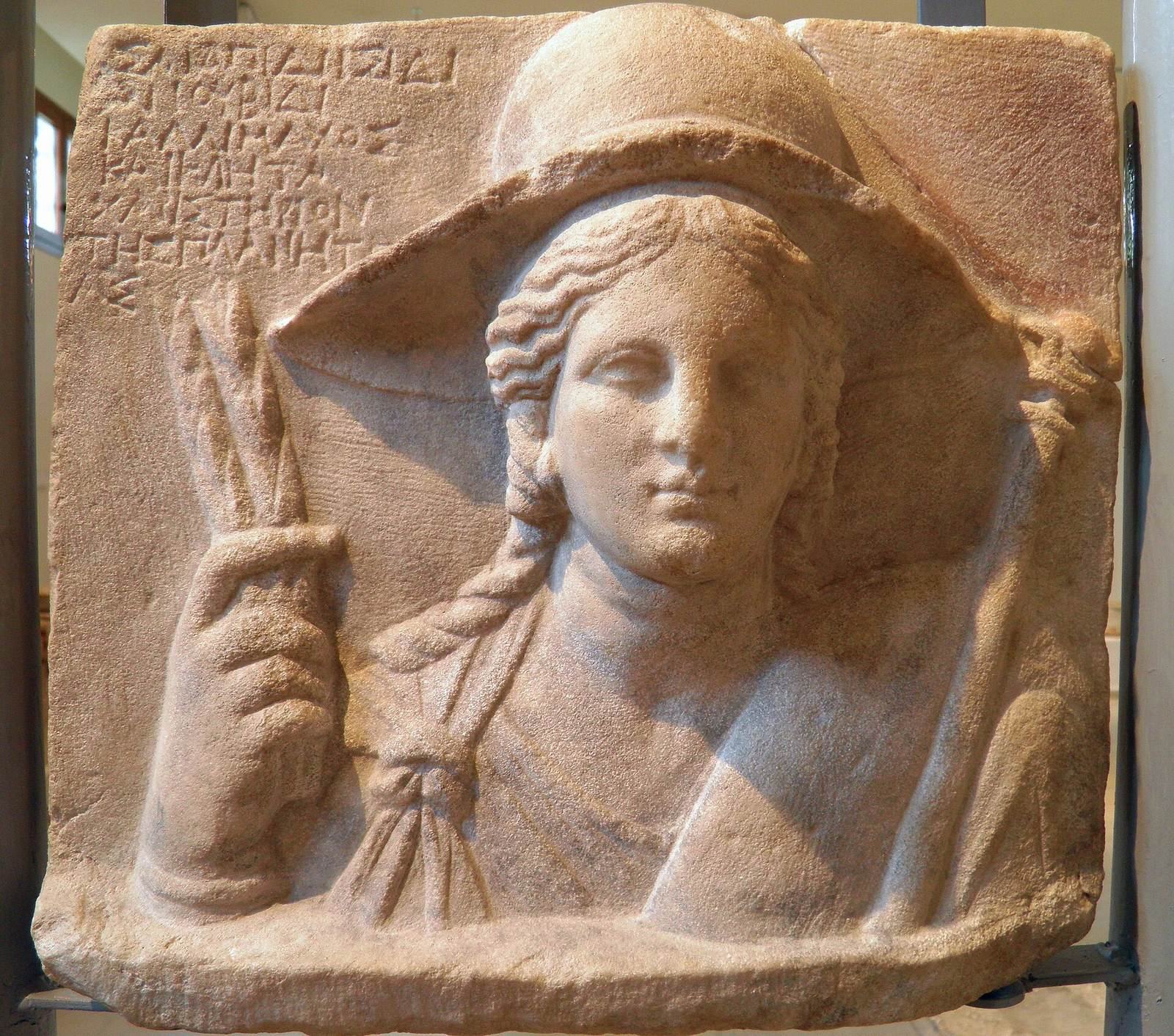
Finds associated with the Sanctuary of Isis include statues of Isis Tyche, a form associated with fortune, and Isis Lochia, associated with childbirth. Other sculptures represent Aphrodite Hypolympidia, a local cult form of Aphrodite, and Julia Phrougiane Alexandra; small figures of Harpokrates, the Greek form of the Egyptian child god Horus, are also displayed. Stone tablets bear footprints of different sizes, possibly made by men and women. Other finds include part of a well frame, a millstone, a fruit press, and a small altar. The museum also displays a statue of Aphrodite from the sanctuary and a marble cult statue of Aphrodite Hypolympidia with a votive offering, an object dedicated to a deity.
Sanctuary of Demeter
The Sanctuary of Demeter, whose name refers to the Greek goddess of agriculture, is the oldest sanctuary excavated at Dion and dates to the sixth century BC. Finds from it include clay figures, lamps, vases, and coins. The museum holds sculpture fragments from different periods, including a fourth-century BC head of Demeter and a first-century AD head of Aphrodite. A stone altar block served as a support for meat offered during sacrifices to Aphrodite. Nearby, at the source of the Baphyras River, a Roman copy of an Artemis statue was found. Its original dates to the fourth century BC, and the displayed copy is called Artemis Baphyria.
Sanctuaries of Zeus
Material from the Sanctuary of Zeus Olympios includes a statue of Perseus, the last king of Macedon, and inscribed stone tablets. The museum also displays cult statues of Zeus and Hera from the Sanctuary of Zeus Hypsistos, whose title means “Zeus Most High,” along with two small stone figures of seated eagles. A cult statue of Zeus Hypsistos and a marble eagle are also associated with this sanctuary.
Mosaics and Christian material
Mosaics
A mosaic from the Villa of Dionysos shows the head of Medusa, a Gorgon whose gaze was said to turn people to stone, within a circular frame. A mosaic from the House of Zosas depicts a partridge and includes an inscription wishing Zosas good fortune. The Dionysos mosaic comes from the complex known as the House of Dionysos and is exhibited in the Archaiothiki.
Early Christian finds and the House of Leda
The early Christian collection includes stone reliefs, gravestones, crosses, and objects used in worship. A fully preserved marble table from the House of Leda rests on a lion statue.
Inscriptions and coinage
Political and civic documents
Inscriptions and written records preserve agreements and disputes involving Macedonian rulers and Greek communities. Around 200 BC, Philip V, king of Macedon, and the citizens of Lysimacheia in Thrace agreed on an alliance. Surviving fragments preserve the ambassadors’ oath and a clause preventing either side from joining the other’s enemies. In 172 BC, Perseus, the last king of Macedon, promised the Boeotians, inhabitants of a region in central Greece, support against Rome. A stone slab found at Dion is identified as the third copy of the agreement; the other copies were set up at Thebes and Delphi.
Other records include a third-century BC letter from Antigonus Gonatas, a Hellenistic king of Macedon, to Agasikles about a dispute between Noumenios and his children over the use and possession of a large plot. In a letter of about 180 BC, Philip V urged Dion’s magistrate Eurylochos to recognize Cyzicus, an ancient Greek city in Asia Minor, as a religious place outside secular rule. A letter dated to 206–205 BC from Philip V to the citizens of Pherrai and Demetrias sets out the boundary between the two Thessalian cities according to local conditions.
Macedonian and Roman coins
The coin collection includes a gold stater of Philip II, a Macedonian king, showing Apollo’s head and a racing chariot drawn by two horses. The stater was worth two gold drachmas and circulated as an important currency in the Balkans and Europe. A silver tetradrachm of Alexander the Great, worth four drachmas, depicts Heracles and Zeus Olympios; Alexander’s tetradrachms circulated widely in the eastern part of his empire. The lower-floor timeline relates coins to the Macedonian kings.
The exhibits also explain changes in Macedonian currency. Alexander I introduced coinage in the kingdom in the first half of the fifth century BC, chiefly to pay taxes to the Persians. As the kingdom expanded east, it gained control of additional mines. Coins were made from silver, either pure or mixed with other metals. Heavier silver pieces served foreign trade, while smaller ones were used for payments within Macedonia. Bronze gradually replaced smaller silver coins by the end of the fifth century BC. Philip II gained control of further mines and introduced gold coinage using the Attic weight standard, based on the Athenian system.
Under Roman rule, production of Macedonian silver coins ended, although bronze coins may have continued to serve local trade. Dion had a local mint, and excavations recovered many coins attributed to it. The museum’s Macedonian coin finds date mainly to the fourth and third centuries BC. Other displays include Roman coins, as well as coins bearing images of Zeus, Athena, and Artemis.
Objects of daily life
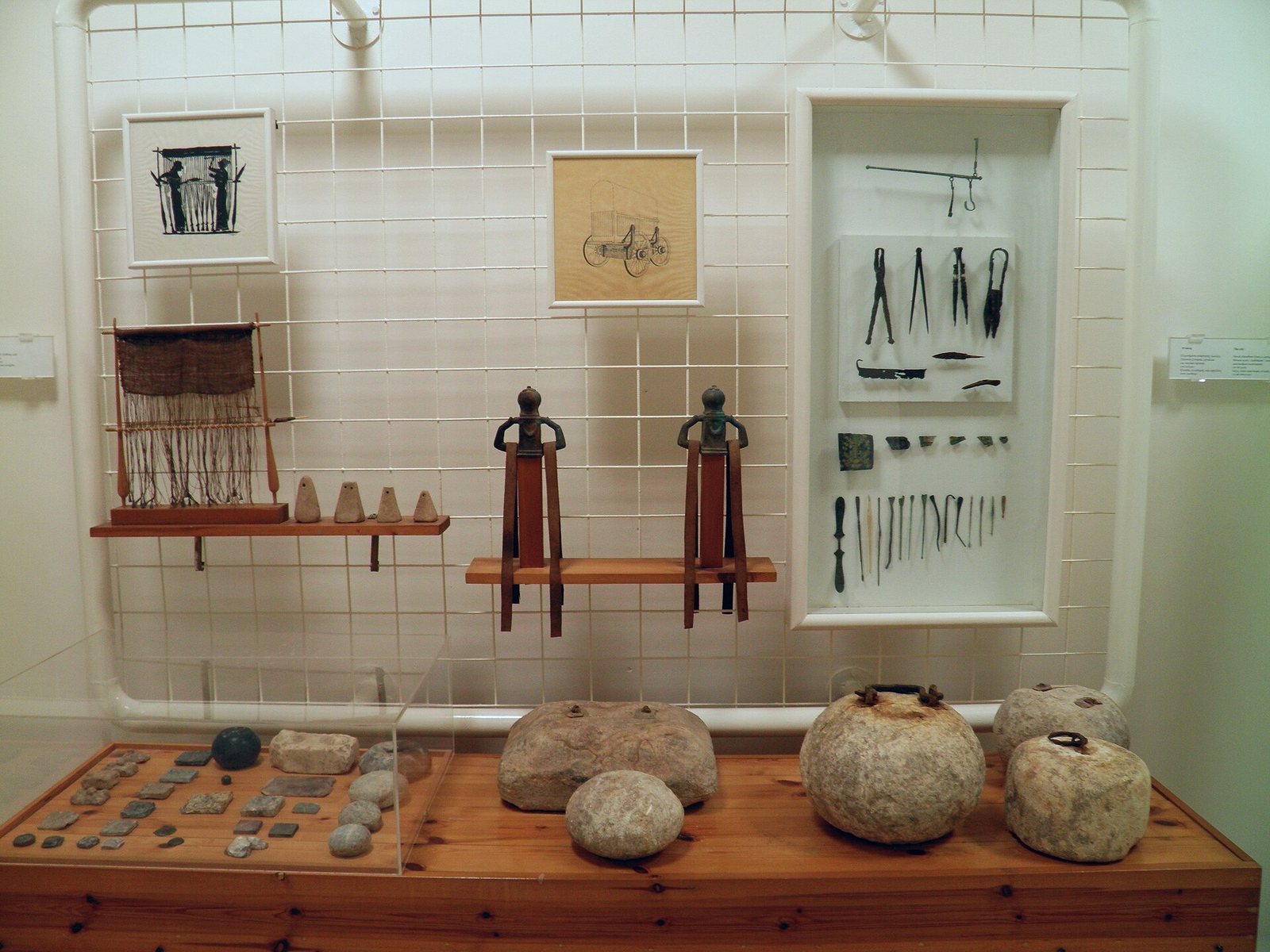
Objects from Dion illustrate building, craft, and household activities. They include floor and roof tiles, bricks, clay and lead pipes, and pottery vessels for oil or wine, made on potters’ wheels and fired in kilns. Marble with tool marks, chisels, a small loom, and stone mortars and pestles are also displayed. A plough from the third century AD was found south of the Hellenistic theatre. A finely adjustable hand scale and a speculum, an instrument used for gynaecological examinations, date to the first century BC. A model demonstrates how a hypocaust, an underfloor heating system, warmed the city’s baths.
Regional archaeology
Pydna
Excavations near Makrygialos from 1994 to 1996 uncovered the burial of a young girl in tomb 108 at Pydna, an ancient Macedonian city in Pieria. Archaeologists called her the “sleeping girl.” Her burial goods included three Mycenaean clay vessels, a bronze diadem and bracelet, three finger rings, a necklace, and metal belt fittings. Her skull is also among the finds. A diadem of this kind was an unusual burial gift for a girl or young woman and was taken to indicate high social status.
Pigi Athinas
Finds from Pigi Athinas, at the eastern foot of lower Olympus, trace human presence to the first half of the seventh millennium BC. Settlements from the Middle and Late Neolithic, the later Stone Age associated with settled farming, date to 5600–4500 BC. Burial mounds dated to 2100–1050 BC contained a central tomb considerably larger and deeper than the surrounding tombs. The site’s regional material also includes a Roman cemetery of the fourth century AD, with 16 graves: 12 for adults and four for children, with grave goods preserved.
Tribina and Pigi Artemidos
At Tribina, also called Derbina after the river, excavators uncovered settlement remains dating to about 2500 BC. Its 24 Mycenaean tombs held either single burials or as many as three people. The tombs differed in shape and contained grave goods such as vessels, weapons, and jewellery. At Pigi Artemidos, at the foot of Mount Olympus, traces of human presence date to around the middle of the second millennium BC. A Late Bronze Age burial mound enclosed by a stone ring 10 metres across contained nine graves. Stones collected and arranged in a particular form marked the mound.
Tombs north of Katerini
Two tombs discovered north of Katerini in 1977 had been robbed long before their discovery. Tomb A has two rectangular chambers, a flat roof, and a marble door between its burial chamber and entrance chamber. Its simpler front has been described as a precursor to larger Macedonian tombs. Tomb B is smaller and contains one burial chamber. The surviving grave remains are exhibited at the Archaeological Museum of Thessaloniki.
Other regional objects
Other individually identified finds include a fifth-century BC white lekythos, a narrow-necked vessel commonly used for oil, from a cemetery at Kitros; a pillar-shaped herm monument topped by the head or bust of the philosopher Erenianos; a bronze head from a statue of Roman emperor Alexander Severus, dated to AD 222–235; and a statue of Panakeia.
The water organ
The second-century AD water organ, or hydraulis, was an ancient pipe organ in which water pressure regulated the air supply. Its pipes are arranged in two rows, with 24 pipes and 16 narrower pipes. Silver rings decorated the pipes, while silver strips and rectangular ornaments of multicoloured glass decorated the body. The instrument corresponds to descriptions by Hero of Alexandria and Vitruvius. It is described as the only find of its kind in Greece and the oldest discovered example in the world.