Saint Louis Castle: A Crusader Fortress in Sidon
Site at a Glance
- Popularity
- Medium
- Country
- Lebanon
- Primary era
- Early Modern
- Eras represented
- Classical, Medieval, Early Modern
- Civilizations
- Byzantine, Crusader, Fatimid, Kingdom of Jerusalem, Ottoman, Roman
- Site type
- Military
- Remains
- Castle
On this page12 sections
History
Fatimid and Crusader Fortifications
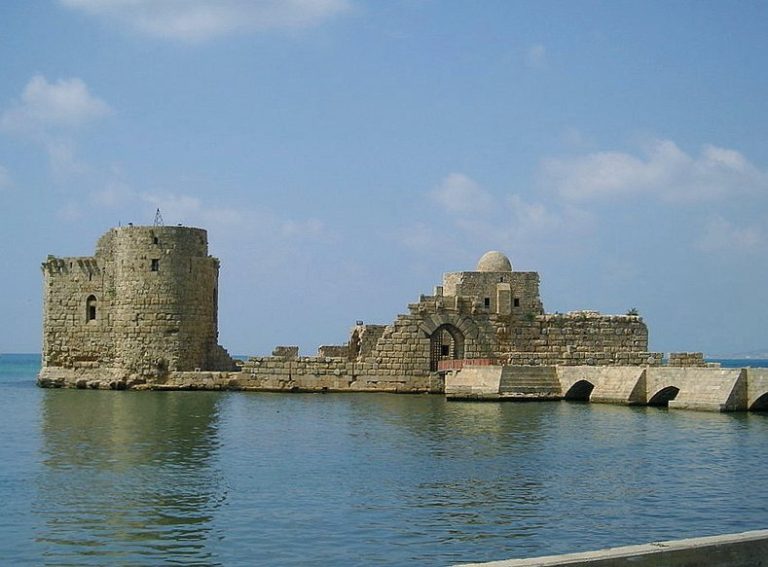
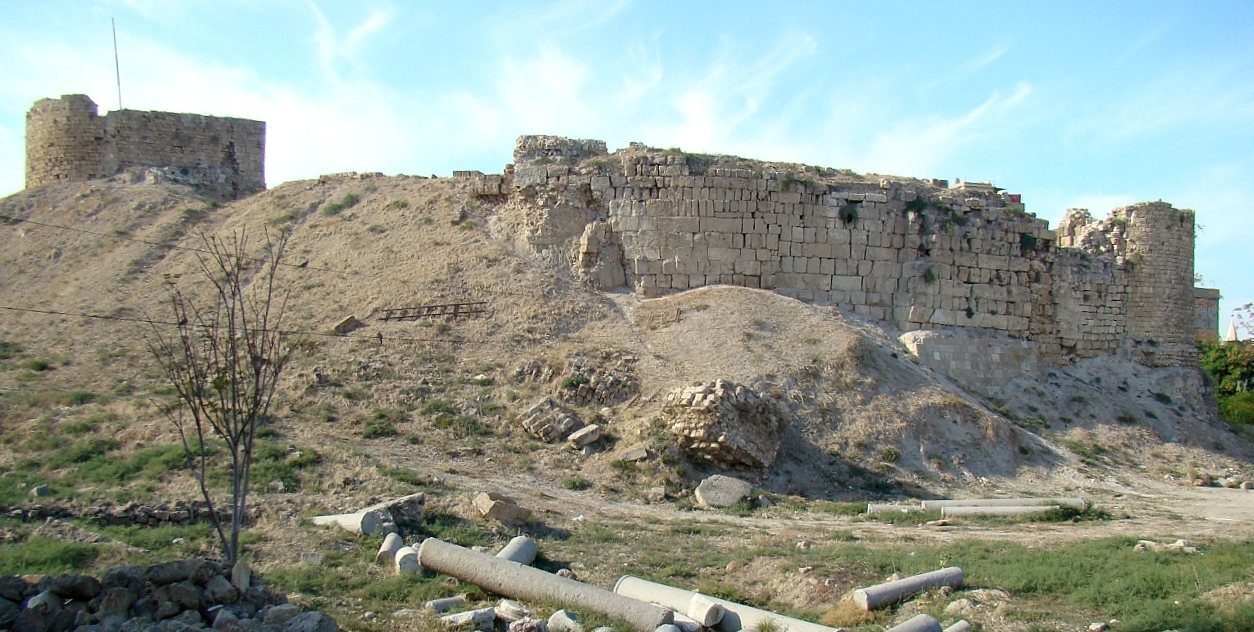
Saint Louis Castle is a fortress rebuilt by Crusader forces, Latin Christian armies active in the eastern Mediterranean, in Sidon, Lebanon, in 1253–54. It stands on the site of an earlier Fatimid fortress, atop the ancient city’s acropolis, its high fortified part. The Fatimids were an Ismaili Shi’a Muslim dynasty that ruled parts of North Africa and the Middle East. An earlier citadel on the site was probably demolished and rebuilt under Arab rule. In the 10th century, Fatimid caliph al-Mu’izz li-Din Allah strengthened the fortifications and named them Qalaat al-Muizz.
In June 1253, while Louis IX of France was in Jaffa, a Muslim raid destroyed Sidon and killed many of its inhabitants. The attack appears to have contributed to Louis’s decision to prolong his stay in the region and reinforce Crusader strongholds. At his initiative, workers brought from elsewhere built Sidon’s defenses, including large walls and towers and a deep moat plastered on both sides. Louis remained in Sidon during the work. As the fortifications neared completion, processions took place in the camp. He then travelled to Tyre and Acre, following the advice of the patriarch and barons, and arranged ships for his return to France. The castle’s later association with Saint Louis may reflect his extended stay in the city.
Mamluk Conquest and Later Rebuilding
In 1260, a Mongol force led by commander Kitbuqa raided Sidon and caused destruction. After the Mongols withdrew, the lordship of Sidon, including the city, passed into the custody of the Templars, a Catholic military order. In May 1291, the Mamluks, a military elite that ruled Egypt and parts of the eastern Mediterranean, captured Acre under ruler Khalil ibn Qalawun. The last Templars left Sidon for Cyprus on 13 July. Fearing a return by European forces, the Mamluks systematically demolished Crusader fortifications along the coast.
The castle remained abandoned for generations before Lebanese emir Fakhr al-Din II extensively rebuilt it in the 17th century, obscuring most of its Crusader fabric. Sidon declined in the 18th century as Acre gained importance, and the site fell into neglect. Its towers collapsed toward the end of Ottoman rule, and the structure was repeatedly looted.
Conflict and Reuse in Modern Times
Bombardments affected the castle during the September 1841 campaign and the First World War. In 1941, Allied forces bombarded Vichy troops in the area; Vichy forces served the French government that collaborated with Germany during the Second World War. From the late 1940s into the 1990s, the castle sheltered Palestinian refugees, including people displaced in 1948. It was also damaged during the Lebanese Civil War and by Israeli shelling.
Remains
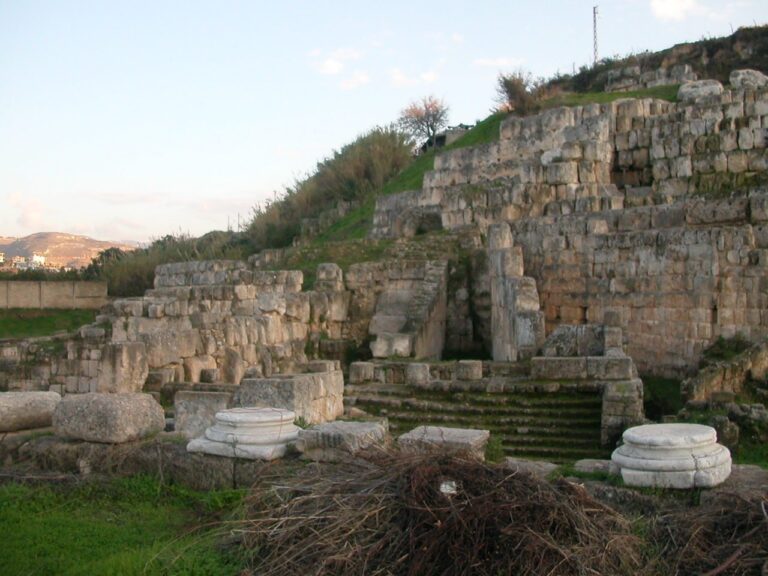
The ruined fortress occupies a high point in Sidon, and its plan incorporates remains of a Roman-Byzantine theater. Its setting and surviving structures reflect the use of the ancient theater’s foundations in shaping the fortification.
Castle and Theater
Setting and Fortifications
The castle stands about 200 m from the coast and roughly 30 m above sea level, on the highest point of Sidon’s city walls. Its position on the acropolis hill overlooks the sea and faces the approach from land. The 10th-century fortifications occupied the southeastern corner of the city walls.
Theater Foundations and Entrance
The fortress incorporated the remains of a Roman-Byzantine theater. Its eastern walls were built on the bases of two parallel walls at the rear of the theater’s stage building, while the curved outer walls of the seating area helped shape the fortress plan. The entrance structure rests on the base of one of the two towers that flanked the stage.
Southern Tower and Passageways
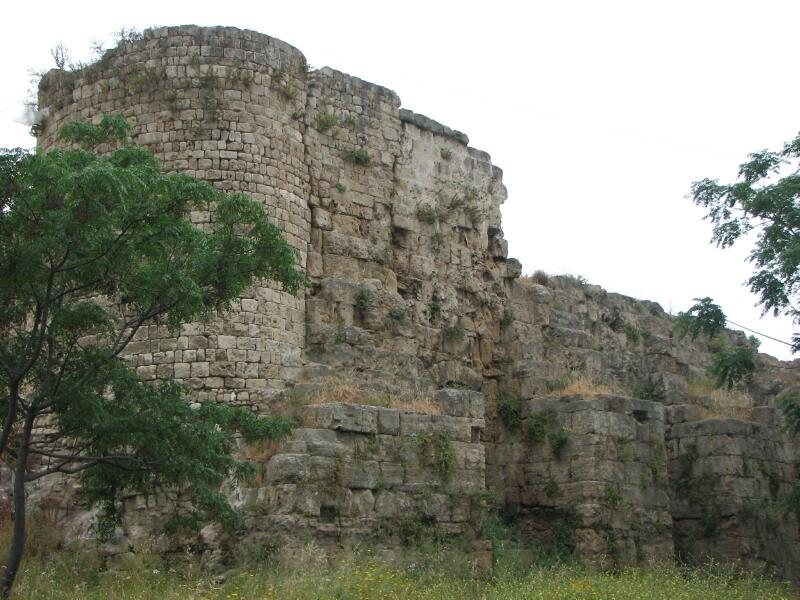
A tower projects over a slope from the middle of the castle’s curved southern wall. Most of the tower is attributed to 17th-century construction. Beneath the theater seating, surviving vaulted passageways are used as a museum displaying Roman finds excavated in Sidon.
Nearby Archaeological Features
Burial Sites
Two nearby mass-burial sites, discovered in 2014, contained male skeletons with evidence of violent deaths. The condition of the remains and examination of changes to the bodies after death indicate that burial did not take place immediately. Radiocarbon tests, which estimate age from once-living material, date the remains to the second half of the 13th century. Crusader coins and belt-buckle styles support their identification as Crusader fighters. Their dating and associated finds have linked the burials to the June 1253 raid on Sidon.
Murex Hill
Southwest of the castle, Murex Hill is an artificial mound about 100 m long and 50 m high, formed largely from discarded shells of Bolinus brandaris and Hexaplex trunculus. These shells were used in ancient purple-dye production, and the mound is probably associated with Phoenician dye-making. Mosaic tiles at its summit point to Roman-period buildings and suggest that shell-based dye production had probably ended by then. Residential buildings were later constructed on the mound, and part of it is covered by a cemetery of Sidon’s Shia Muslim community, one of Islam’s major branches.