Geyve Han: A 15th-Century Ottoman Commercial Inn in Bursa
Site at a Glance
- Popularity
- Low
- Country
- Turkey
- Primary era
- Medieval
- Eras represented
- Medieval
- Civilizations
- Ottoman
- Site type
- Economic
- Remains
- Caravanserai
On this page7 sections
History
Foundation and purpose
Geyve Han is a 15th-century Ottoman commercial inn in Bursa, Turkey, built by Hacı İvaz Paşa, an architect and statesman. Such inns provided merchants with accommodation and space for trade. Hacı İvaz Paşa, whose title was used for senior officials and military commanders, was the son of Ahi Bayezıt, a member of Tokat’s ahi community. Ahis belonged to associations that combined craft-guild organization with religious and ethical fellowship. The han was intended to provide income for Yeşil Mosque and was presented to Çelebi Mehmet, also known as Mehmed I, an Ottoman sultan.
Repairs and later use
Repairs took place in 1647, 1699, 1742, and 1775. A fire in 1958 posed the most serious danger the building had faced. In 2014, Geyve Han was included among the buildings of Yeşil Külliye, an Ottoman complex of religious and charitable buildings associated with a mosque, within the UNESCO World Heritage property Bursa and Cumalıkızık: The Birth of the Ottoman Empire. Today, the han is used mainly by merchants selling textiles wholesale.
Remains
Courtyard and rooms
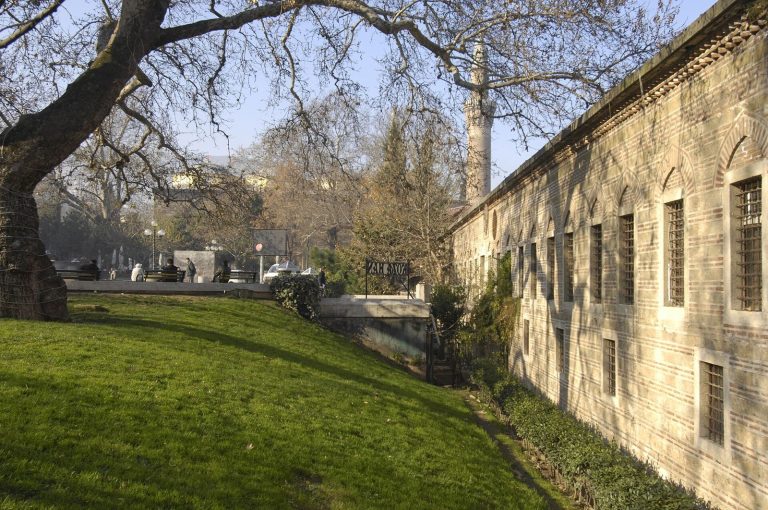
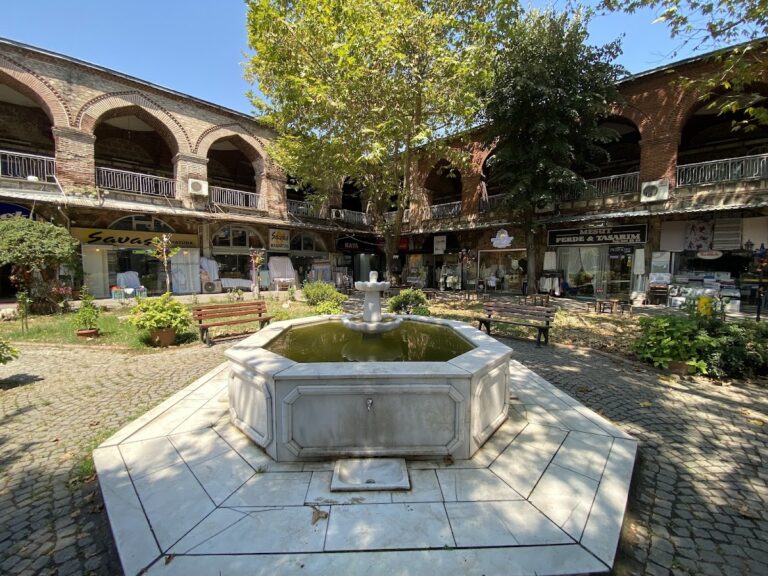
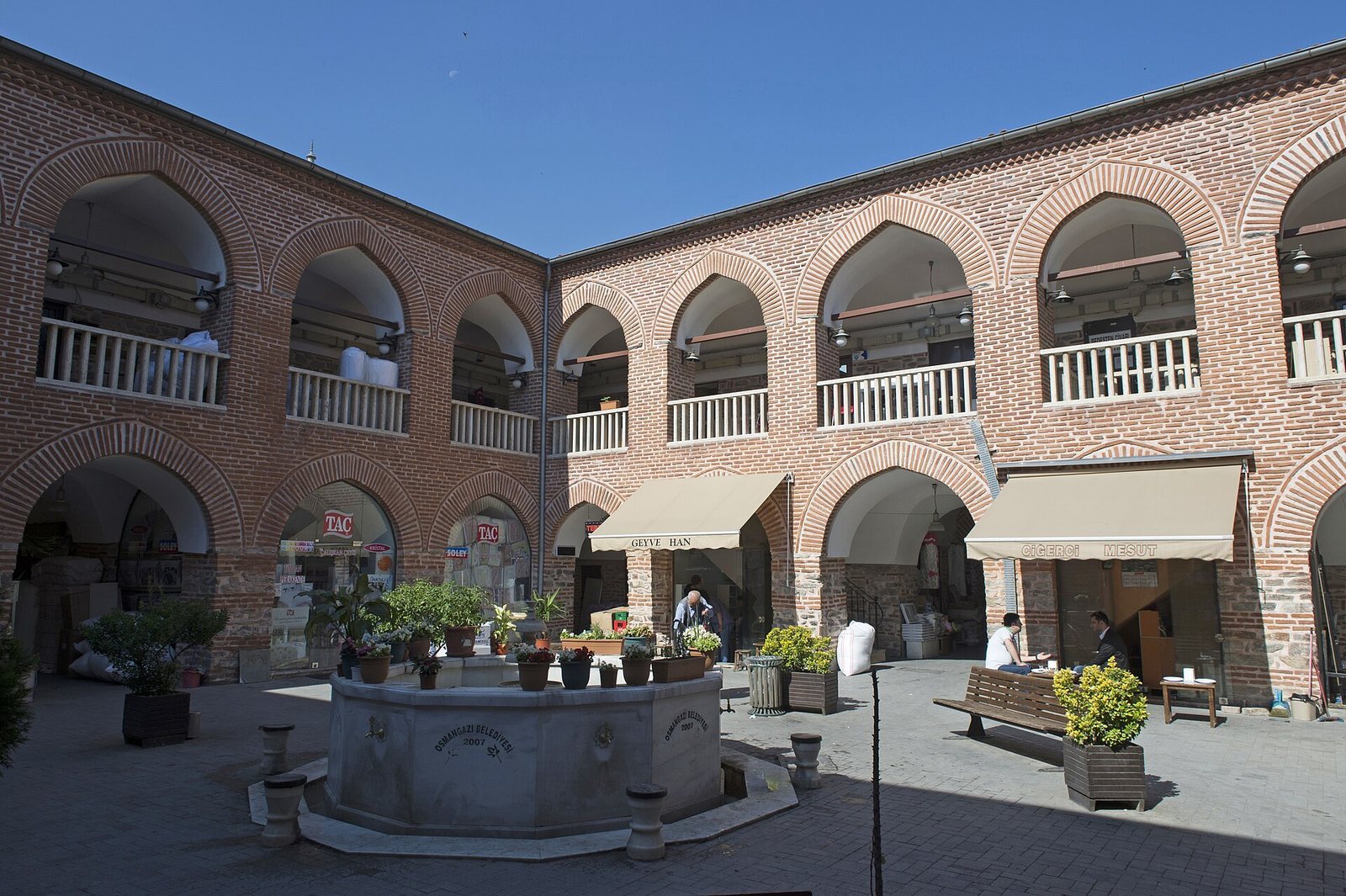
The two-storey han is built with brick and rubble-stone walls around a square courtyard, which is enclosed by arcades with rooms opening onto them. The arcades have vaulted roofs, while the rooms have barrel-vaulted ceilings, a continuous arched ceiling extended along a space. Concrete now covers the vaults and domes. The lower floor has 26 rooms, each with two windows; the upper floor has 30 rooms, each with one window.
Fountain and entrances
An octagonal marble fountain for ablutions stands in the courtyard’s center. The eaves have a triangular frieze made of brick. Entrances open on the south, north, and west sides of the han.
Prayer room
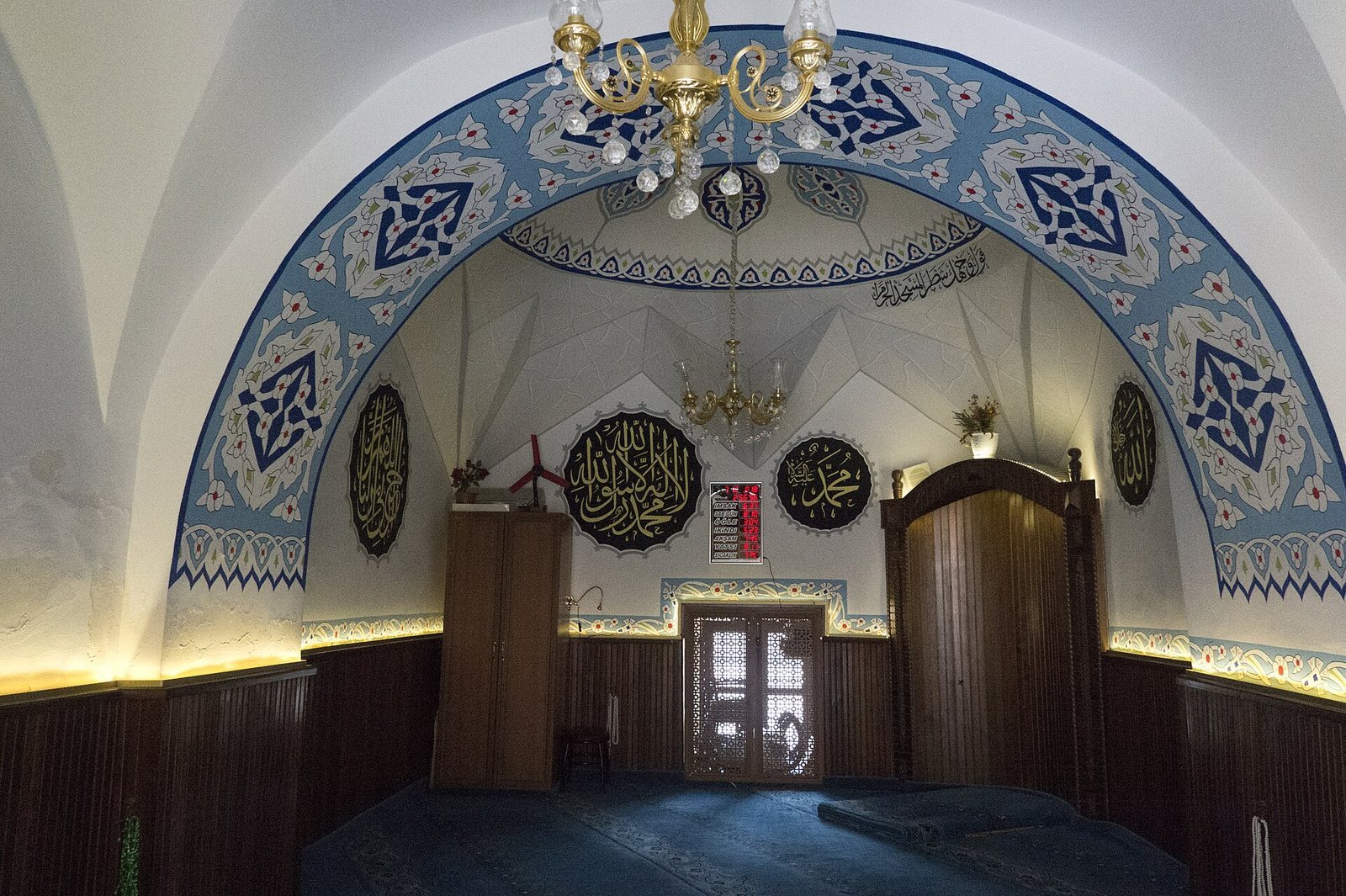
The han had a prayer room, but its location is uncertain. It may have stood above the fountain, as in other Bursa hans. Historian and writer Ekrem Hakkı Ayverdi identified the room opposite the western entrance as the prayer room.