Aquincum Civil Amphitheatre: A Roman Arena in Budapest, Hungary
Site at a Glance
- Popularity
- Medium
- Country
- Hungary
- Primary era
- Classical
- Eras represented
- Classical
- Civilizations
- Roman
- Site type
- Entertainment
- Remains
- Amphitheatre
On this page10 sections
History
Roman construction and public use
The Aquincum civil amphitheatre in Budapest, Hungary, was built by the Romans in the 2nd century CE. Its exact construction date is uncertain, but it was already standing by 162, the date of the earliest inscription from the nearby shrine of Nemesis. Postholes following the line of its oval perimeter suggest that it may have replaced an earlier wooden structure.
Aquincum included a legionary camp, a civilian community around the camp known as the canabae, and a separate civilian settlement farther north. The amphitheatre stood beyond the northern wall and gate of that northern settlement. Its name distinguishes it from the larger military amphitheatre south of the canabae. The civil amphitheatre was the largest building in Aquincum’s northern area and had the city’s largest stated seating capacity. It hosted gladiatorial contests, animal hunts, sporting events, theatre, public celebrations, and political gatherings. Speeches were delivered there during an emperor’s visits, and major trials that attracted public interest may also have been held there.
Renovation and rediscovery
The amphitheatre underwent several renovations during the 3rd century. By the 19th century, soil and vegetation covered the ruin, although medieval and early-modern maps depicted it. Archaeologist Károly Torma began excavations in 1880, and a later restoration followed architectural plans prepared for the monument.
Remains
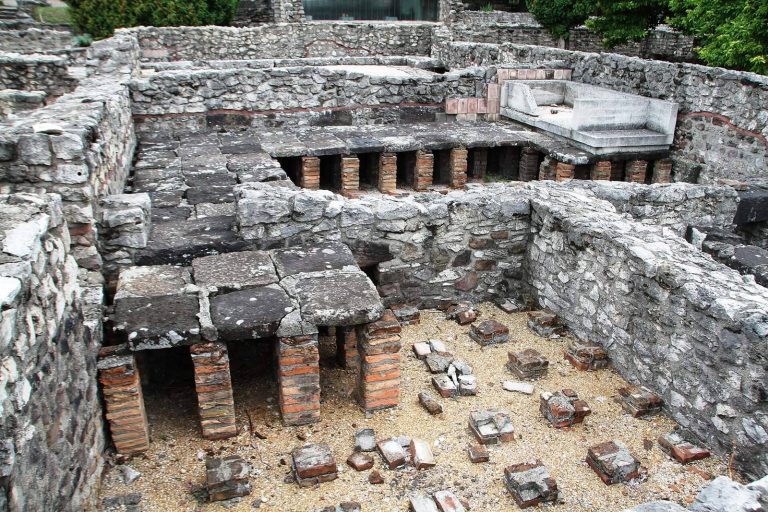
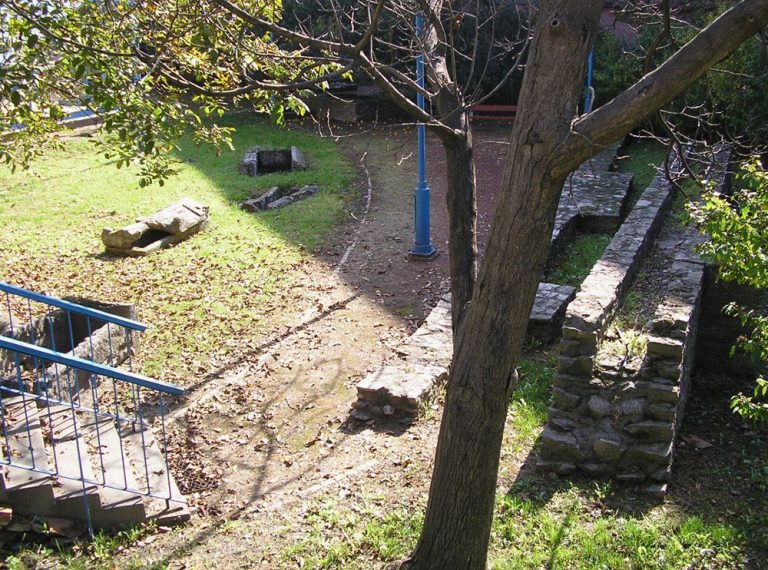
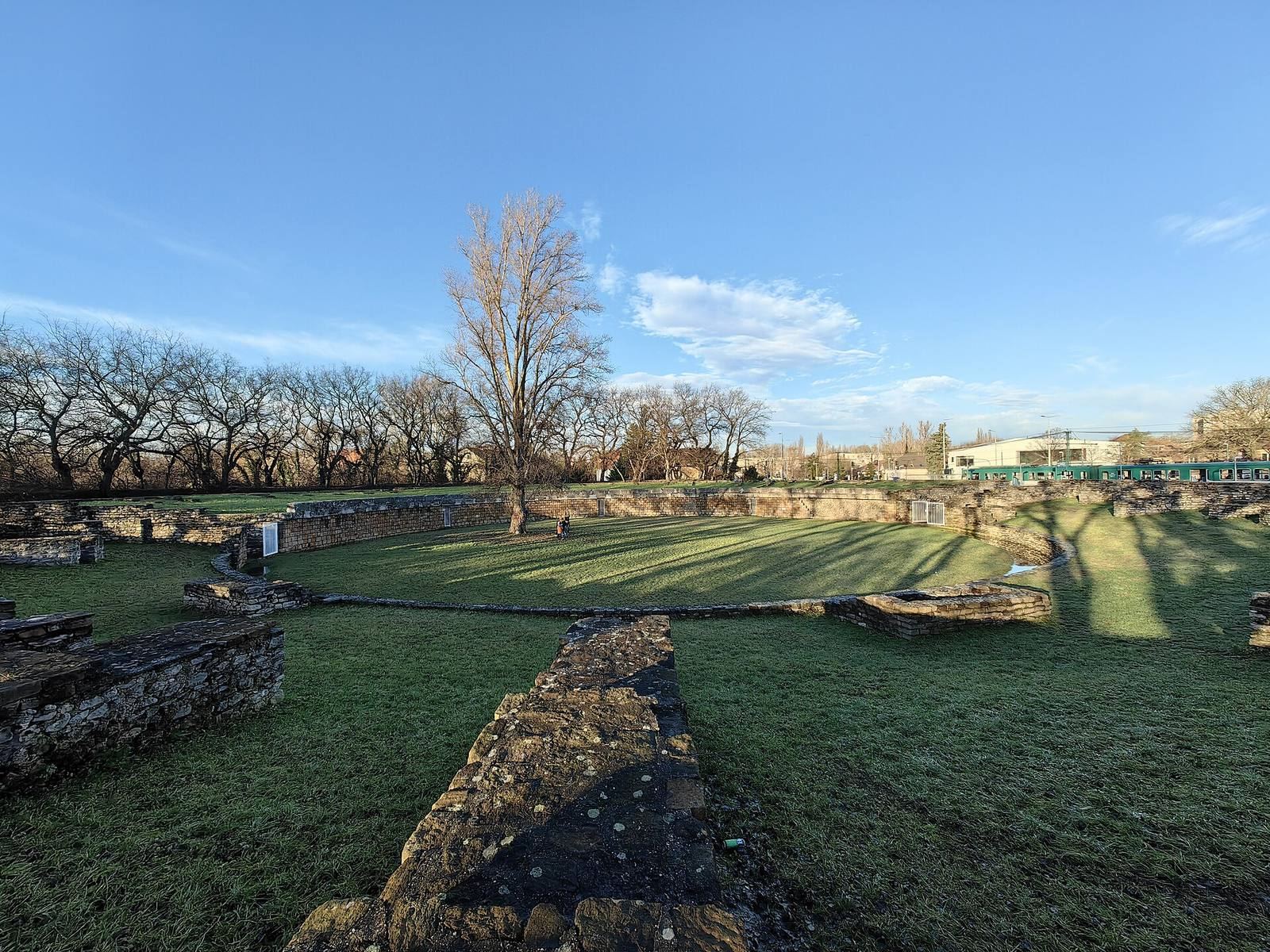
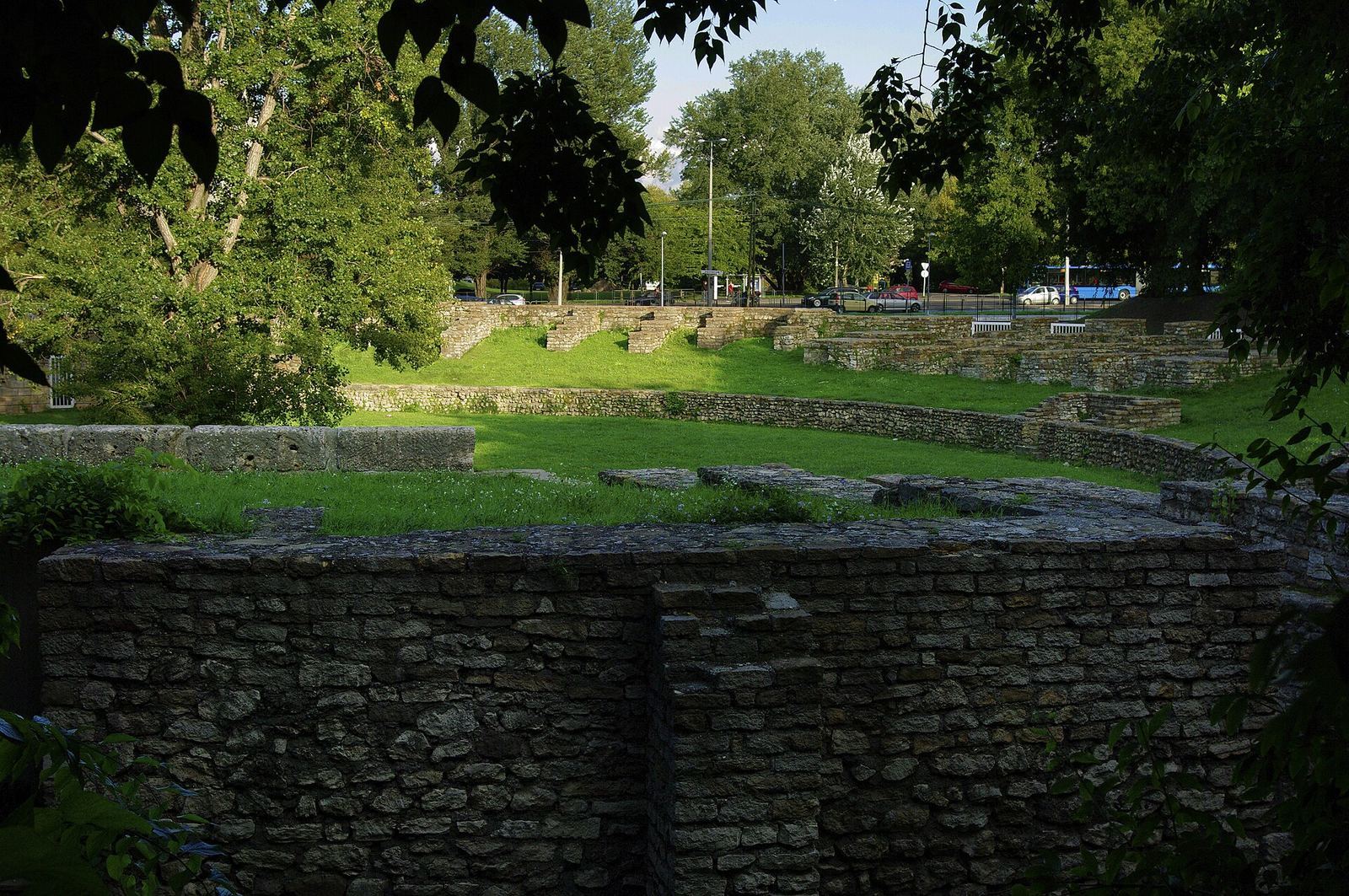
The amphitheatre had an oval plan measuring 86.5 by 75.5 metres. Its seating structure was supported by packed earth held between two stone walls, while entrances lay on the east–west axis. The arena and the adjoining structures formed a wider group of Roman remains in the northern part of Aquincum.
Arena and supporting walls
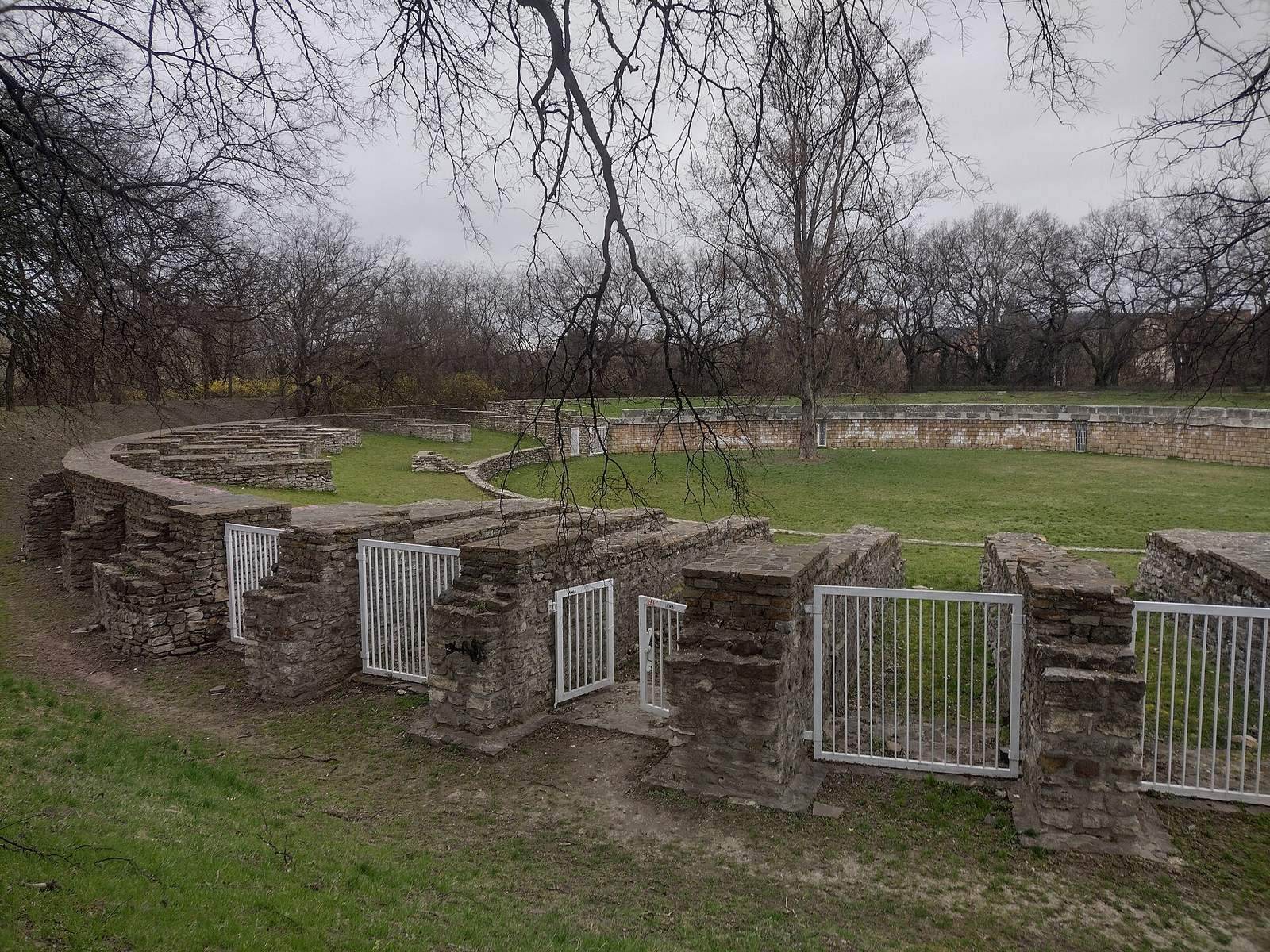
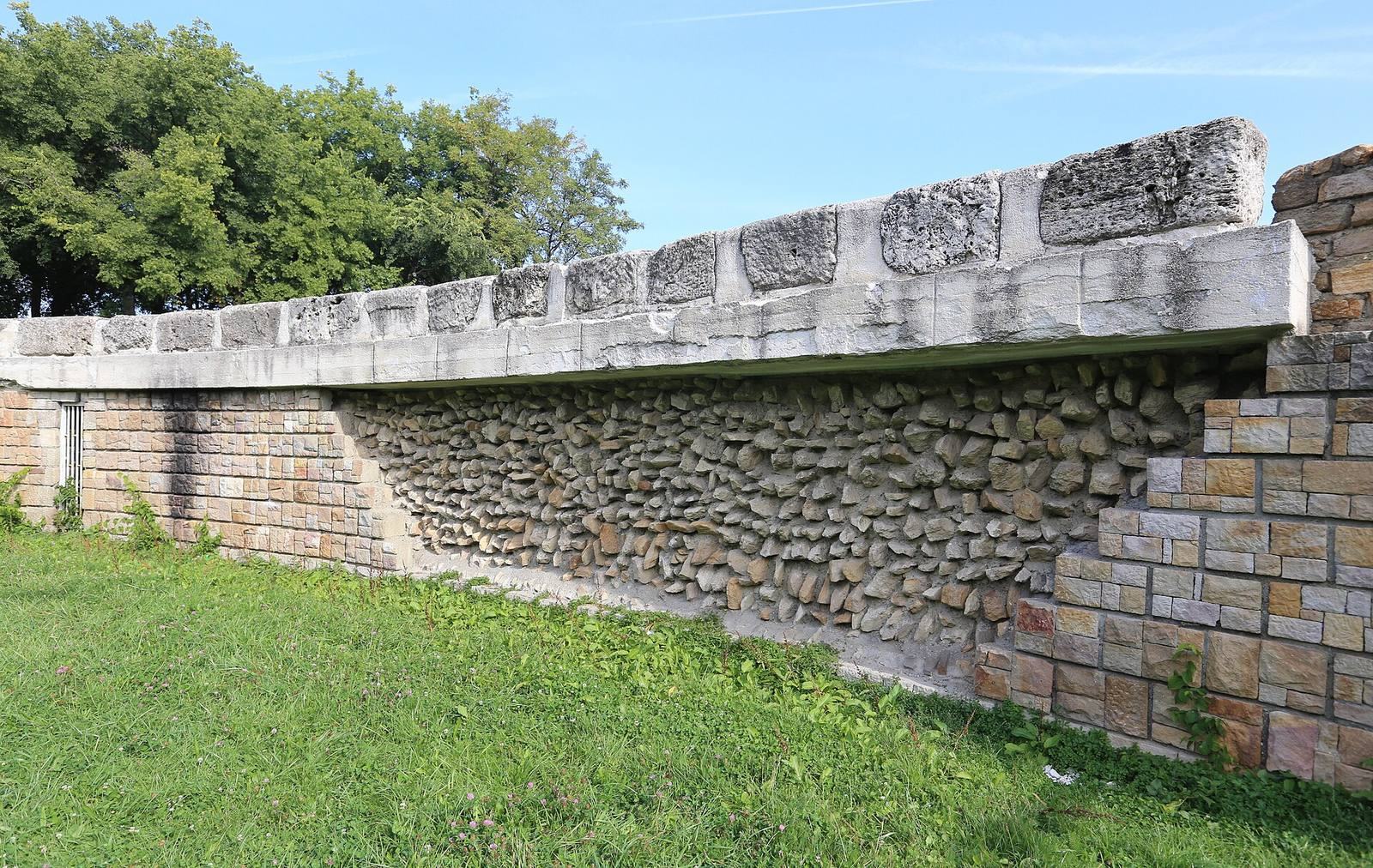
The outer retaining wall was strengthened by shallow projecting supports on its exterior and by supporting walls directed inward toward the arena. When excavated, the inner stone wall stood as high as three metres; part of its upper protective wall remains visible. Rooms built into the inner wall included animal cages. A separate wall, about three metres high, enclosed the arena.
Entrances and spectator seating
Spectators entered through two gates on the east–west axis, each with a passage covered by a curved ceiling, and could reach the seating tiers by an external ramp. The seating area covered about 3,315 square metres and held approximately 6,000 to 7,000 people. Stone benches, some of which had fallen into the arena, were recovered there. Inscriptions on benches preserve names of people apparently assigned seats, likely prominent Aquincum residents. On the south side, elite seats bore abbreviated names. Roof-tile fragments indicate that at least part of the seating was covered, an unusual feature for an amphitheatre that may have shielded spectators from the harsher weather of the northern frontier. Disc-shaped objects made from limestone, clay, bone, or bronze measured between 2.2 and 8.6 centimetres across and may have served as admission tokens. A stone drainage channel survives beside the eastern entrance.
Structures near the amphitheatre
Gladiator barracks
West of the amphitheatre stood a gladiator barracks, including a walled rectangular court about 110 by 42.5 metres. A stone tower occupied its centre. The court probably served as a training ground, while the tower may have allowed staff to supervise activity. A paved road connected the barracks’ gate with the amphitheatre’s western gate; the road now lies buried.
Nemesis shrine
A small shrine to Nemesis stood outside the amphitheatre, south of its western gate. Nemesis was a Greek goddess associated with retribution who was also worshipped in the Roman world, and her worship was common at amphitheatres. Excavation at the shrine recovered part of a limestone statue of the goddess and several inscribed offering altars.
Burial enclosure
A few metres north of the amphitheatre was a walled burial enclosure from the Roman period. It has been interpreted as a possible cemetery for gladiators because of its proximity to the arena.