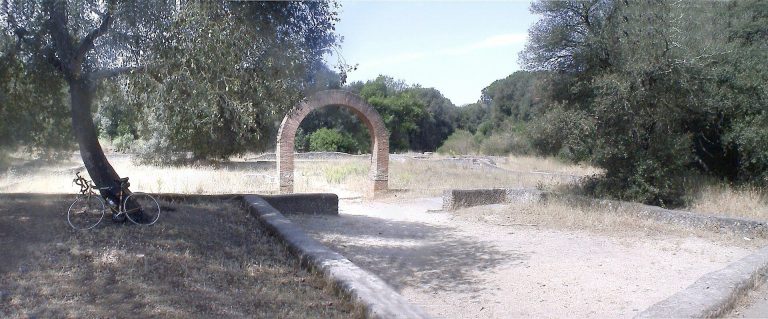
Mithraeum of the Footprint: A Roman Sanctuary in Ostia
Site at a Glance
- Popularity
- Very Low
- Country
- Italy
- Primary era
- Classical
- Eras represented
- Classical
- Civilizations
- Roman
- Site type
- Religious
- Remains
- Mithraeum
On this page5 sections
History
The Mithraeum of the Footprint was a Roman sanctuary of Mithraism, a mystery cult centered on Mithras, a deity commonly shown slaying a bull. It stood in Regio III, one of the numbered districts of Roman Ostia, Italy, and was built in the early third century AD inside a house dating to Emperor Hadrian’s reign (AD 117–138).
The sanctuary’s modern name comes from a mosaic near its entrance, made in the second half of the third century AD. Its depiction of a footprint connected the site’s name with Mithras.
Remains
Plan and construction
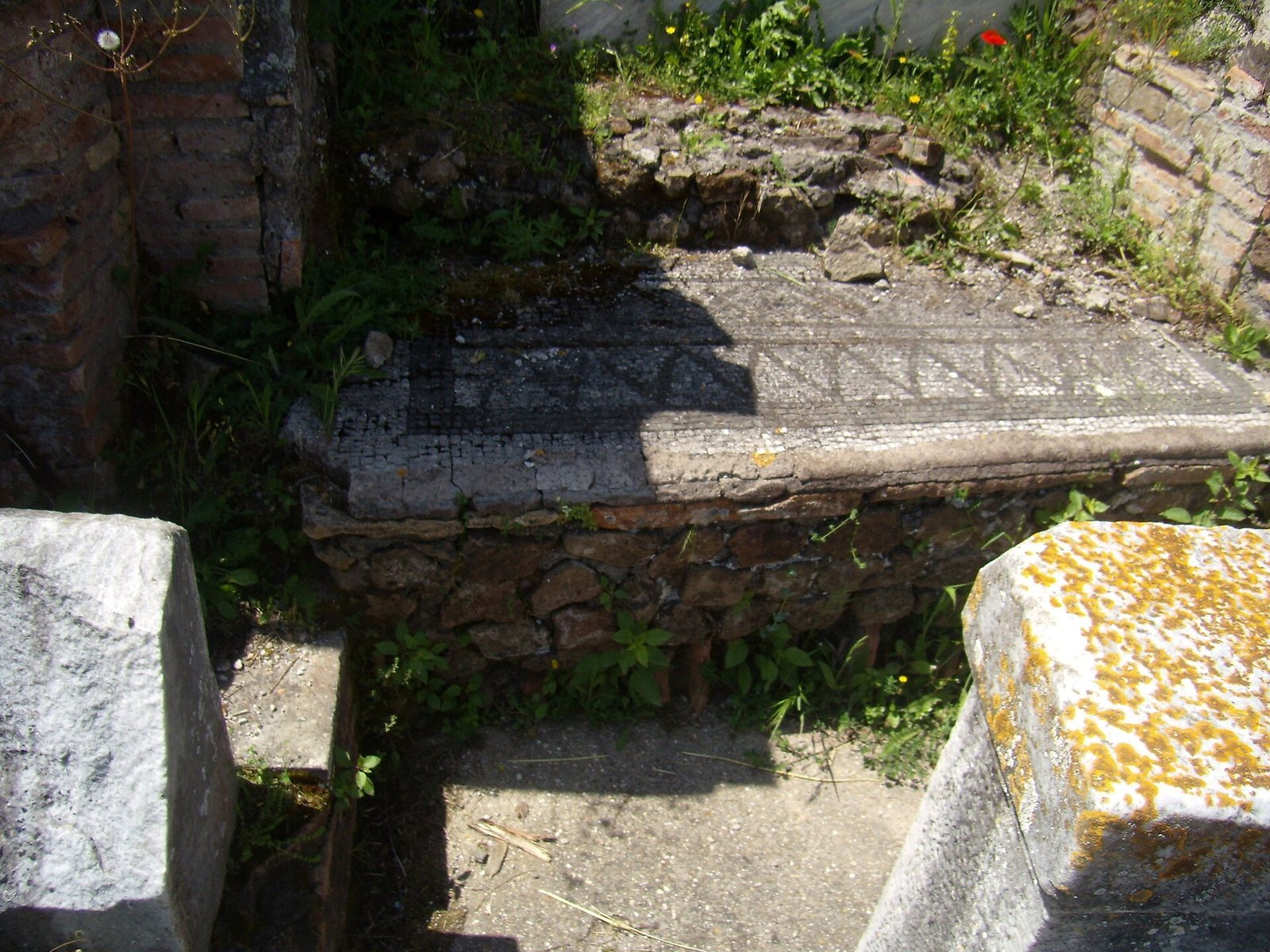
The sanctuary was built with brick-faced masonry and courses of small blocks, sometimes combined with brick courses. Its hall had three aisles divided by pillars. The main, widest entrance opened into the western aisle, while a well and basins occupied the eastern aisle. Small benches between the pillars measured 0.40 metres high and 0.25 metres deep. Some survive along the left side of an aisle.
Floor mosaics
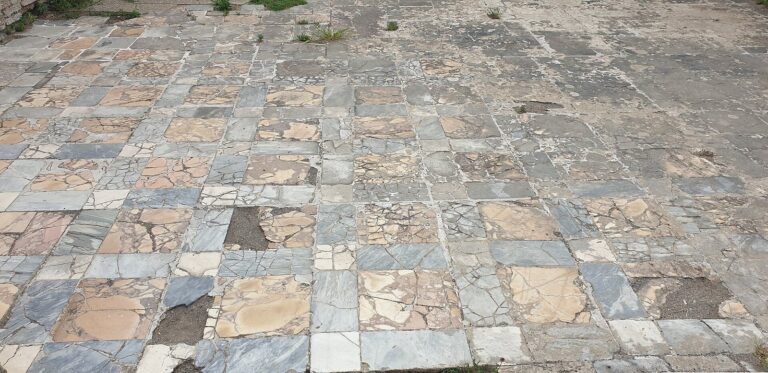
A black-and-white mosaic covered the central aisle. Two large panels, each framed by black bands, formed part of its design. The panel beside the entrance shows a serpent and a footprint identified with Mithras; initiates placed their feet on the footprint. The panel near the altar is blank. A footprint also appears on remains of the floor beneath the mosaic.
Cult furnishings and finds
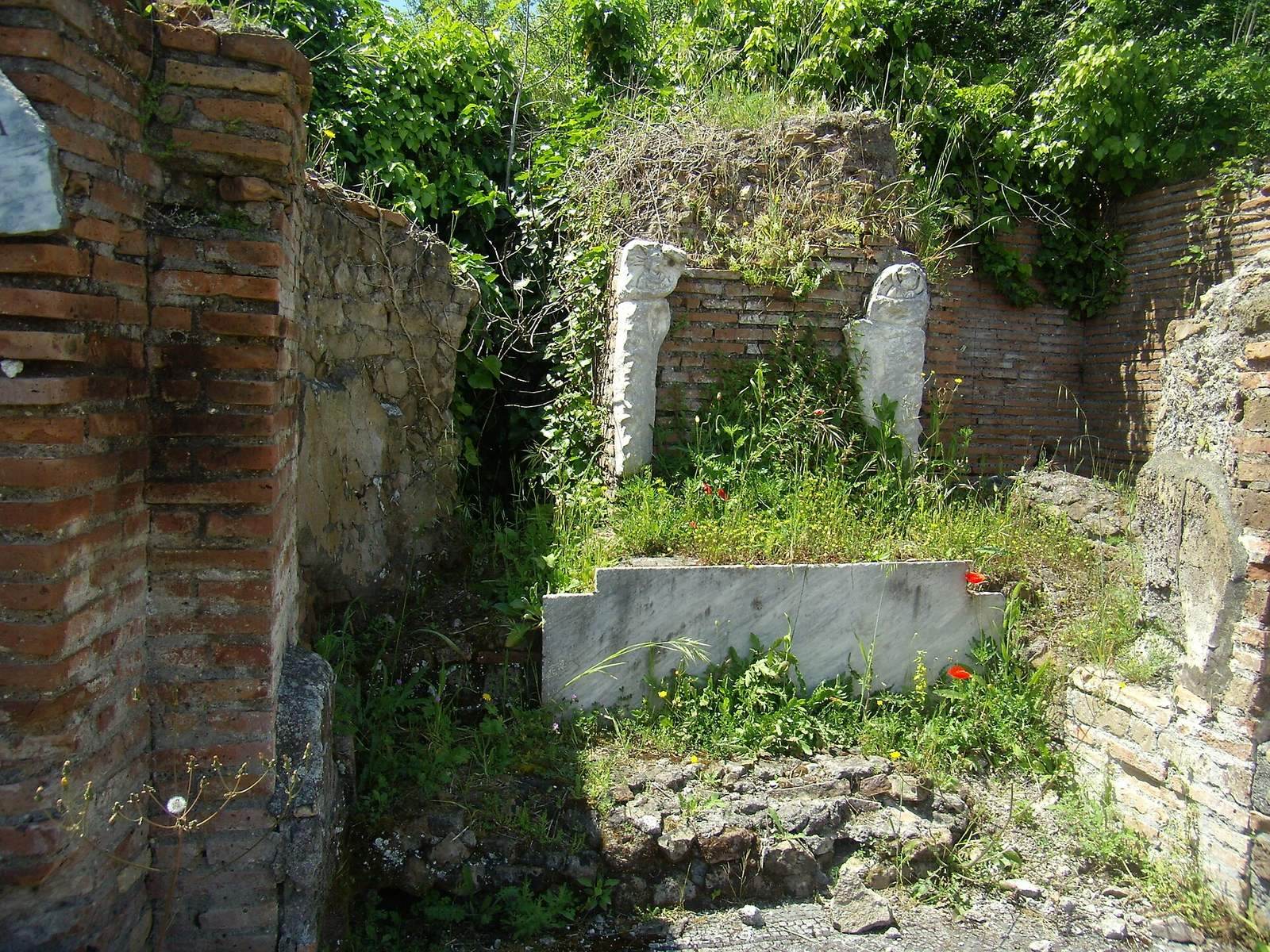
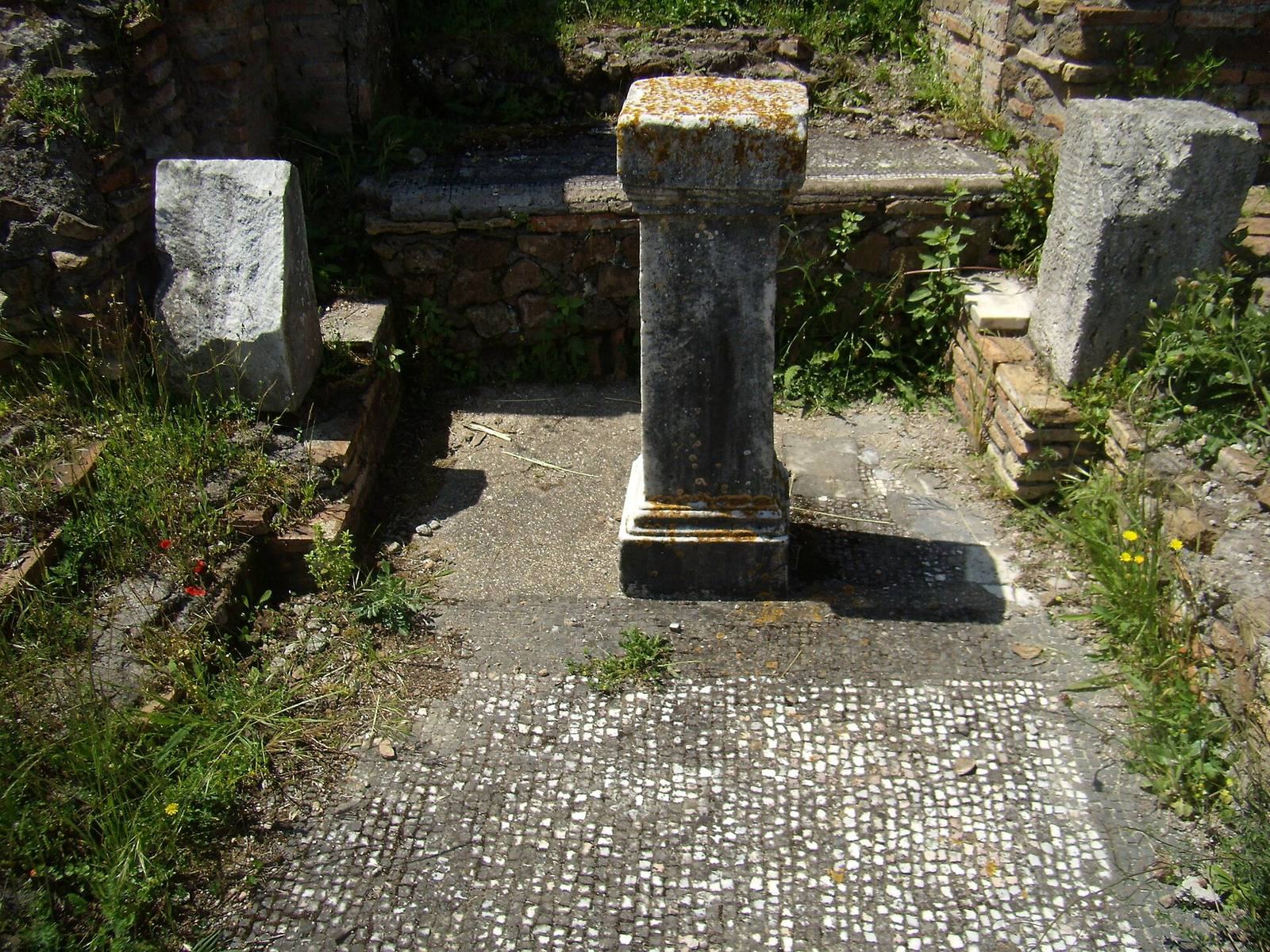
A niche at the rear of the hall held the cult image. Fragments of its relief decoration depict Sol and Luna, Roman deities of the sun and moon. An altar stood before the niche beside a plain mosaic with geometric designs. Reused material formed steps beside the altar, whose marble facing carried a dedication to Silvanus, a Roman deity associated with woods and the countryside. It names Hermes, probably a Greek freedman of Marcus Iulius Eunicus. The altar inscription records that the priest Florius Hermadion, whose first name may have been Lucius, paid for a dedication to Sol Invictus Mithras, the Unconquered Sun, for the welfare of the two Augusti, the plural form of the imperial title Augustus. Another inscription records a gift to Mithras from Marcus Umbilius Criton and Pylades, identified as a steward. A coin of Emperor Valerian, who reigned from AD 253 to 259, was found in the sanctuary; it shows Valerian on one side and Sol on the other.