Al-Uwaysiyat: A Mosque with Mamluk and Ottoman Features in Tripoli
Site at a Glance
- Popularity
- Low
- Country
- Lebanon
- Primary era
- Medieval
- Eras represented
- Medieval, Early Modern
- Civilizations
- Mamluk, Ottoman
- Site type
- Religious
- Remains
- Mosque
On this page9 sections
History
Mamluk origins
Al-Uwaysiyat is a mosque in Tripoli, Lebanon, that began as a small Sufi lodge, a place for spiritual practice and religious instruction, during the Mamluk period. The Mamluk sultanate ruled the region before Ottoman control. The mosque is dated to around 1461, while the dome bears a date of 1460. That earlier date has led to the suggestion that the building was constructed then.
The mosque’s name is traditionally linked to Uways al-Rumi, a Sufi religious teacher. Another tradition traces it to a female Sufi.
Ottoman period
Tripoli came under Ottoman rule in the sixteenth century. In 1534, Emir Haydara, the city’s governor, rebuilt the mosque’s minaret, as its inscription records. The following year, he converted the lodge into a mosque.
In 1809, at the request of Orthodox notables from Tripoli, Muslims and Christians agreed to turn the neighboring Church of St Nicholas into a Muslim prayer space. The Christians received a site in the al-Tarbi’a neighborhood for a new church. The prayer space was later incorporated into Al-Uwaysiyat.
Remains
Layout and architecture
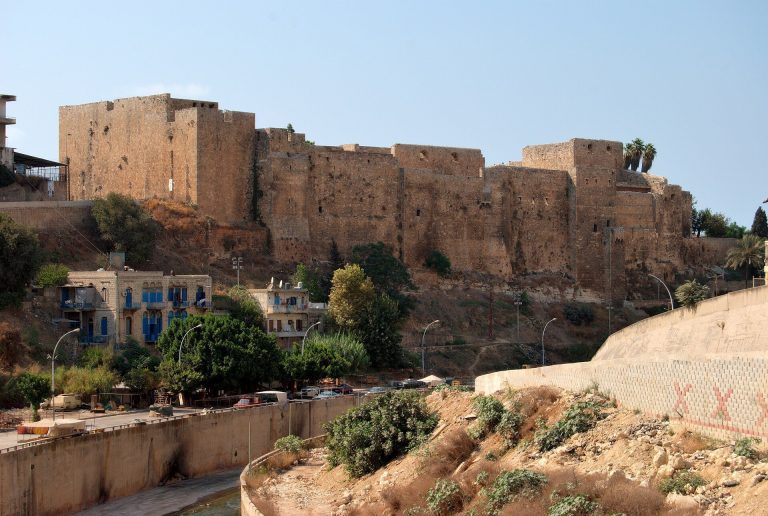
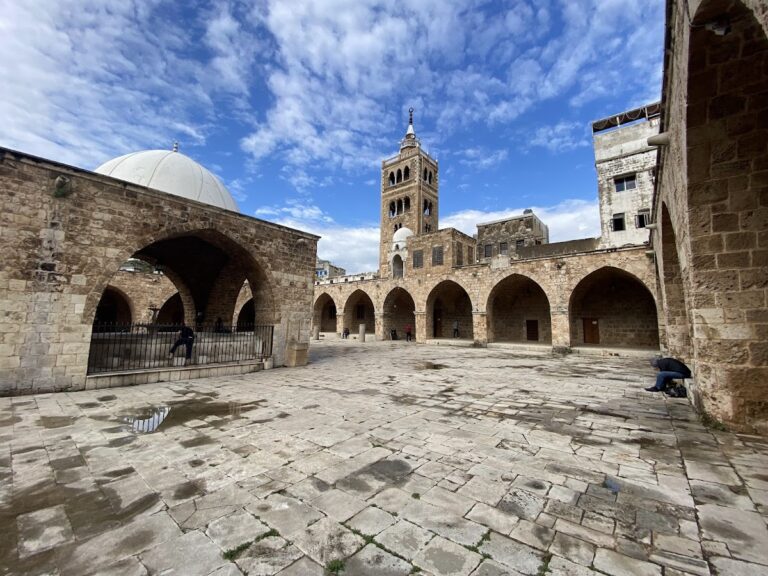
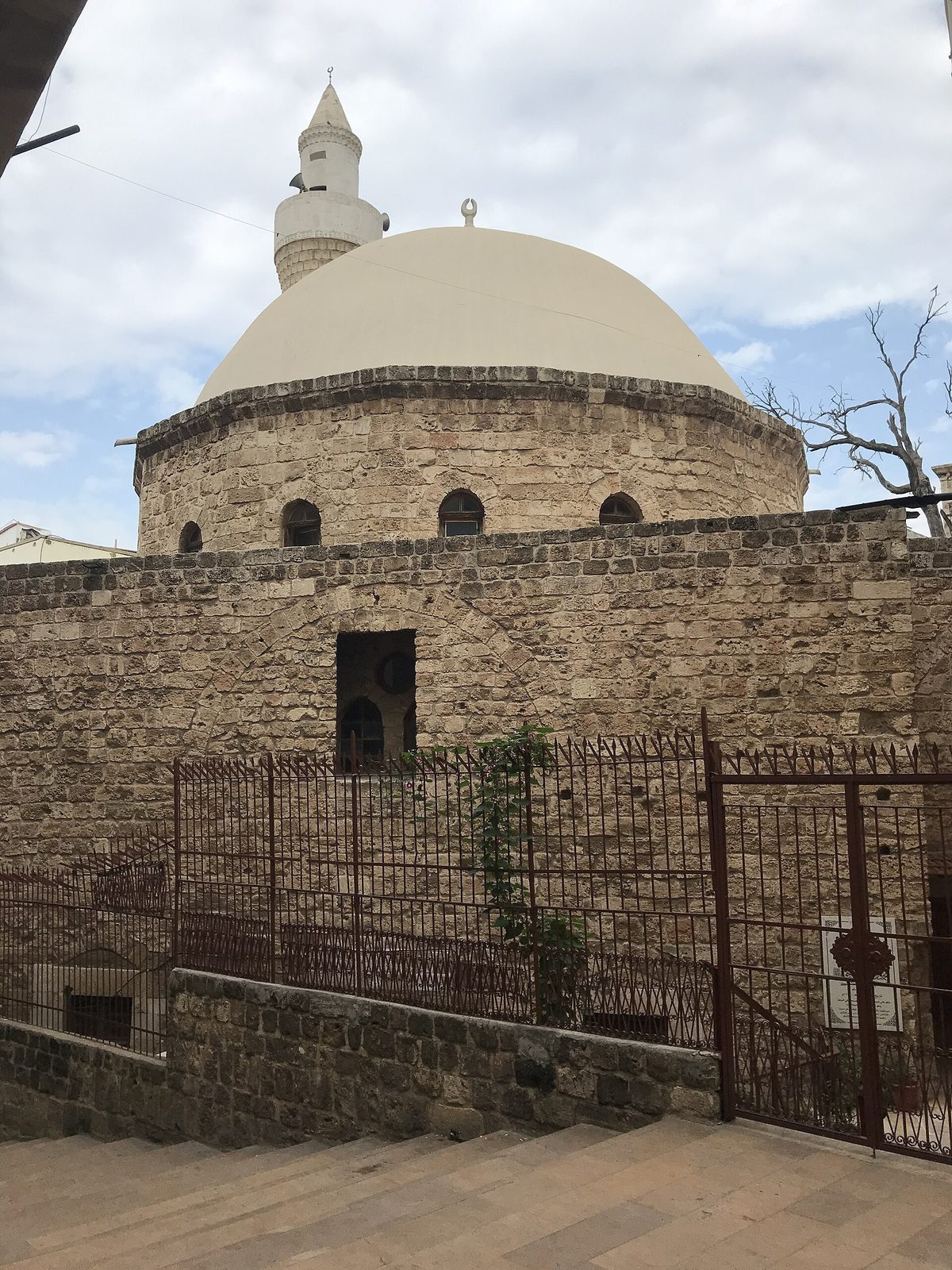
The mosque stands on the left bank of the Abu Ali River, on a slope between the citadel and the old markets. It is in the Bab al-Hadid neighborhood, near Tala’at al-Samak. Its architecture combines Mamluk forms with Ottoman elements, including a large central dome and a cylindrical minaret.
Central dome
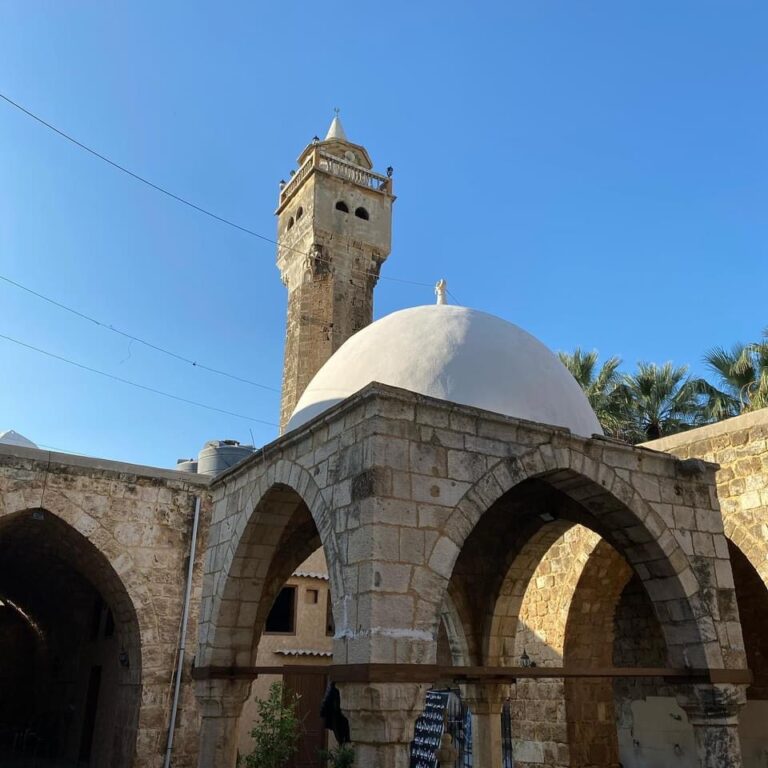
The mosque has one large central dome, dated to 1460. It is described as among the largest domes in Tripoli’s old city. Its date has also prompted the suggestion that the mosque was built at that time.
Minaret
The minaret is cylindrical and Ottoman in style. Its inscription is carved near the top. Above the balcony, a narrower cylindrical section ends in a conical cap.
Marble and workmanship
Ibn Mahasin, a chronicler of Tripoli, described much of the mosque as marble and noted its finely executed workmanship.
Rear garden tombs
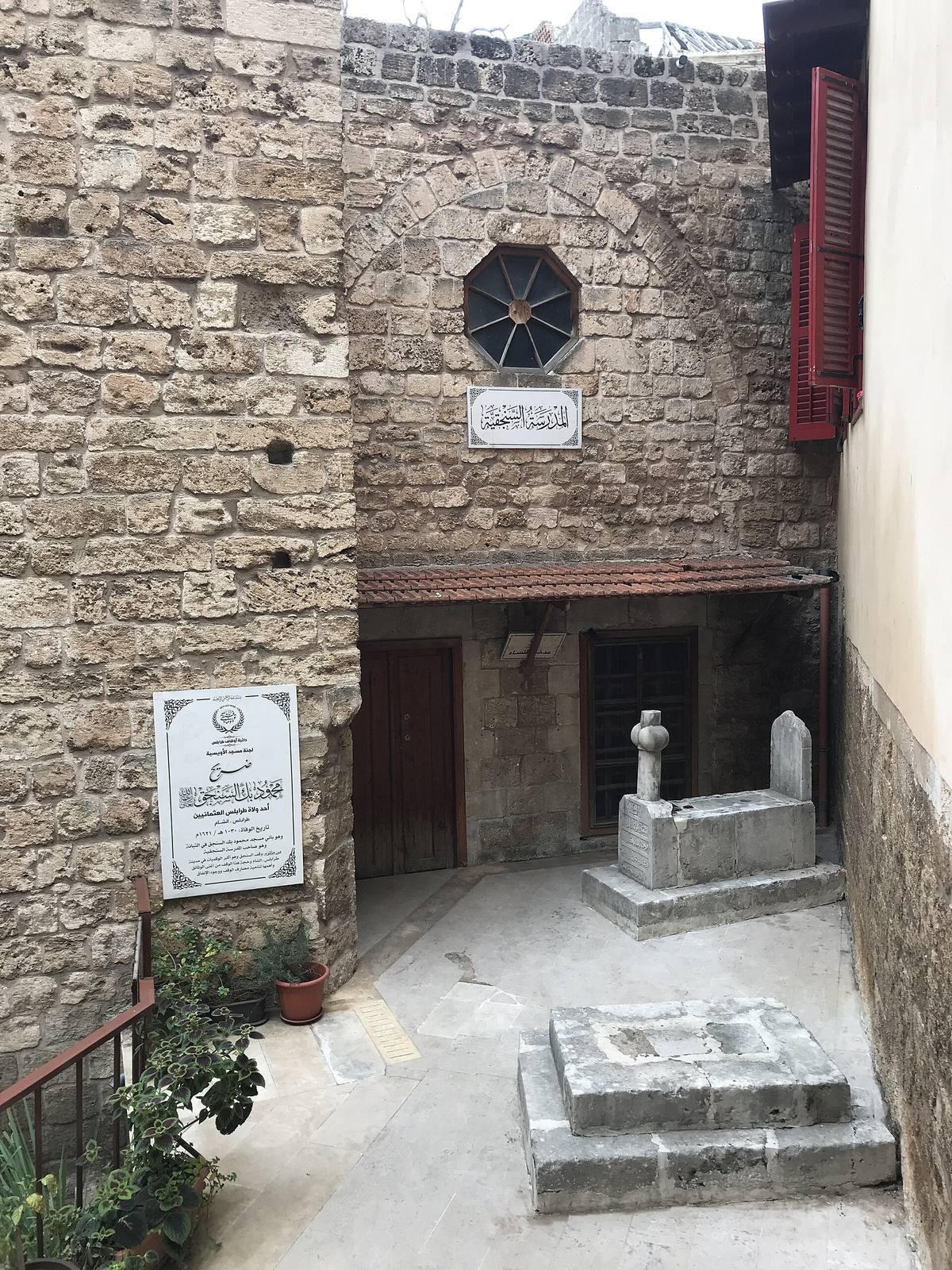
Two tombs stand in the rear garden. They are associated with a bey, an Ottoman-era official or local ruler, who governed Tripoli in 1621, and a pasha, a high-ranking Ottoman official, who governed the city in 1665.