Malenovice Castle: A Gothic, Renaissance, and Baroque Residence in Czechia
Site at a Glance
- Rating
- 4.5
- Popularity
- Low
- Country
- Czechia
- Primary era
- Medieval
- External website
- Open
- Eras represented
- Medieval, Early Modern
- Civilizations
- Holy Roman Empire, Margraviate of Moravia
- Site type
- Military
- Remains
- Castle
On this page8 sections
History
Malenovice Castle is a historic castle in Zlín, Czechia, founded in 1356 by John Henry, the 14th-century margrave of Moravia. Its original form was Gothic, and it developed on the western spur of Tlustá hora in what is now the Malenovice district. The site had earlier belonged to the Malenowicz family, whose members were Vladiken, part of the lower nobility of medieval Central Europe. In 1350, Nikolaus of Malenowicz sold the family estate to the territorial lord, shortly before the castle’s foundation.
Gothic foundation and Renaissance rebuilding
The medieval castle formed the basis of the complex that survives today. Its fortified character was later reshaped when the knight Václav Tetour of Tetov rebuilt it during the first half of the 16th century. This work transformed the castle into a Renaissance residence, changing its layout and appearance while enlarging the living quarters. Renaissance planning therefore remained visible within a building whose core and defensive origins were medieval.
Baroque transformation and noble ownership
Count František Karel of Liechtenstein-Kastelkorn acquired Malenovice Castle in 1693 and remodeled it in the Baroque style. The work focused particularly on the interiors and the chapel. Later ownership followed a series of inheritances and marriages. Karl Vincenz of Salm and Neuburg inherited the lordship in 1766, and after his death in 1784 it passed to his daughter Ernestine. From 1795, she held it jointly with her husband, Johann of Lamberg.
A division of the inheritance in 1797 assigned the Malenovice lordship, together with Pohorzelicze, to Karl Vincenz’s youngest daughter Antonia, who was married into the Czernin of Chudenitz family. Antonia sold the lordship to Leopold of Sternberg in 1804. The Sternberg family retained ownership of the castle until 1945.
Museum use and protection
The castle became the property of the regional museum in 1953 and opened to the public in 1957. Its archaeological and ethnographic exhibitions belong to the Museum of Southeast Moravia, which also presents archaeological finds and an exhibition devoted to castles in southern Moravia. Malenovice Castle has been protected as a cultural monument since 1964.
Remains
Plan and medieval core
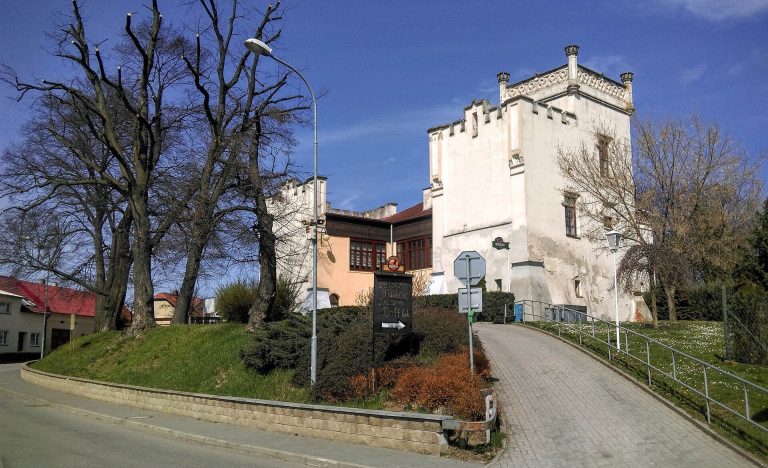
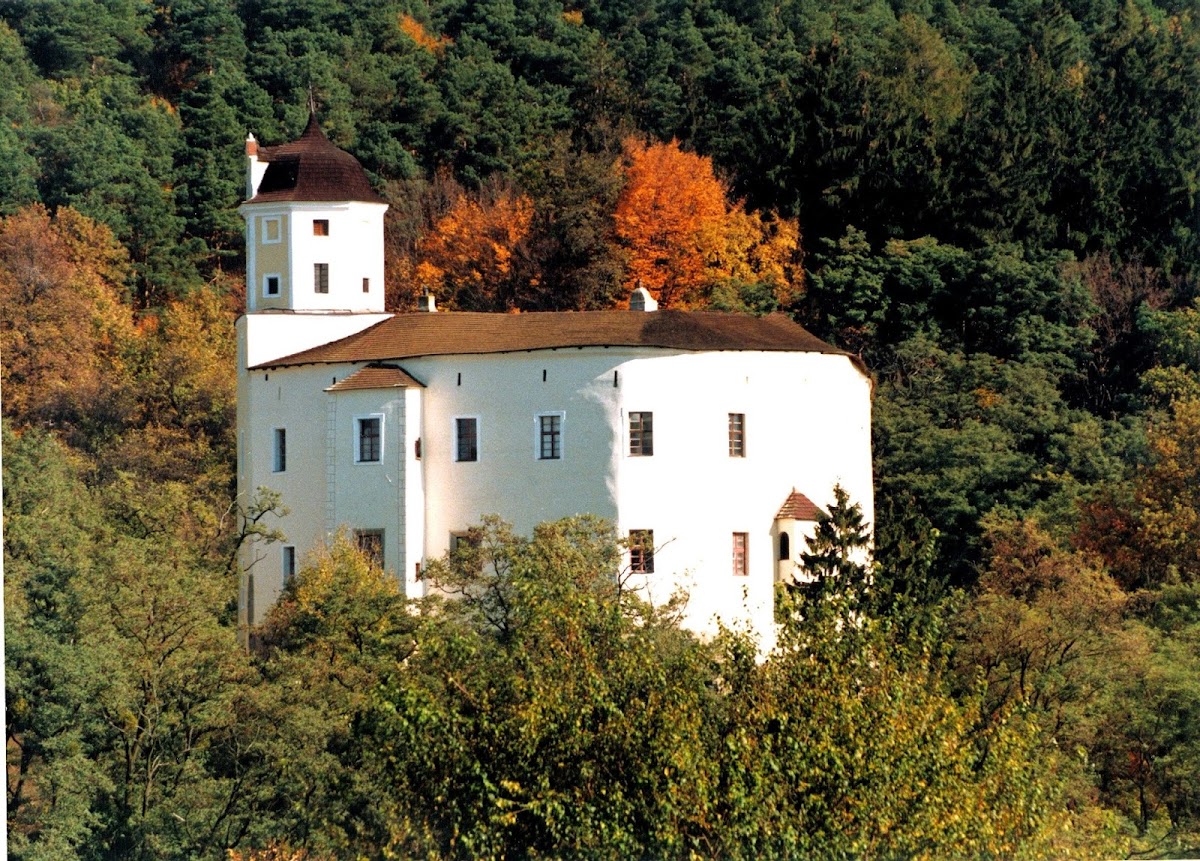
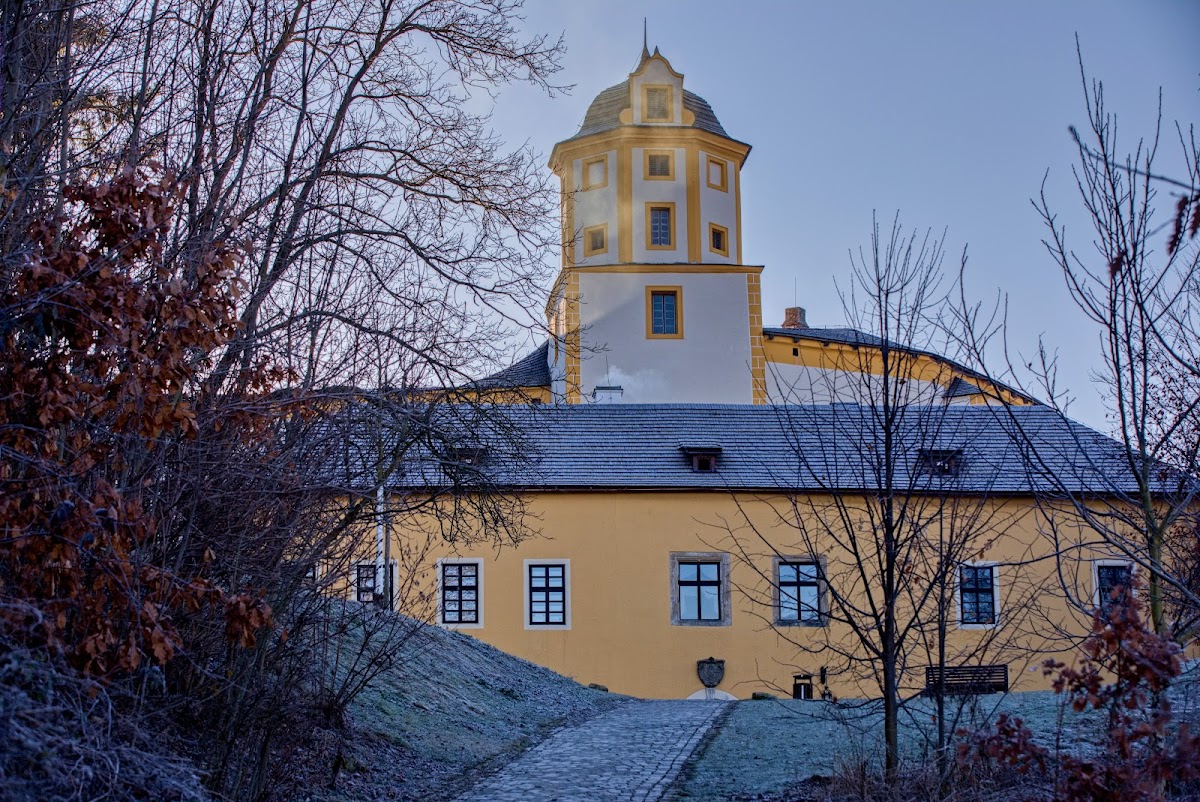
Malenovice Castle has an irregular, enclosed four-wing plan arranged around an inner atrium, or open central courtyard. A massive medieval octagonal tower forms the core of the complex. A low stone wall surrounding the original building indicates the extent of the first castle. The surviving Gothic fabric includes rooms with barrel vaults and cross vaults, together with a strongly cut but simply designed stone surround at the entrance gate leading into the inner courtyard. Arcades remain on the courtyard sides.
Renaissance and Baroque fabric
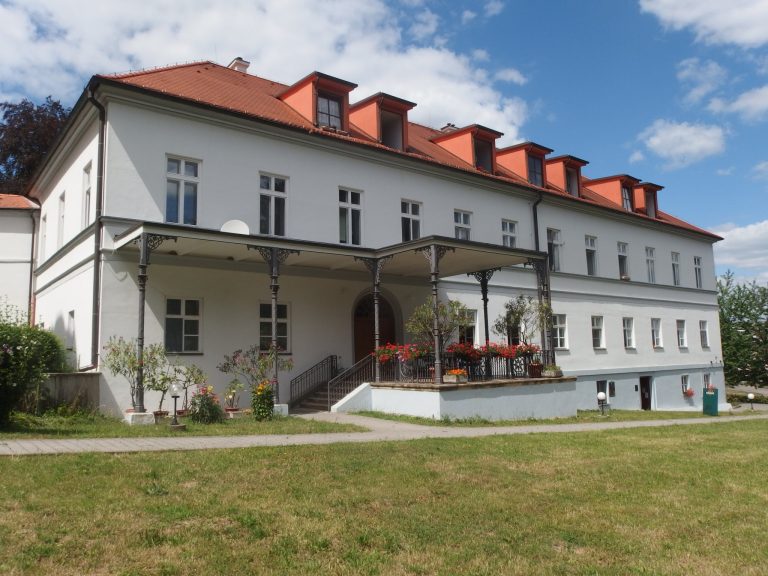
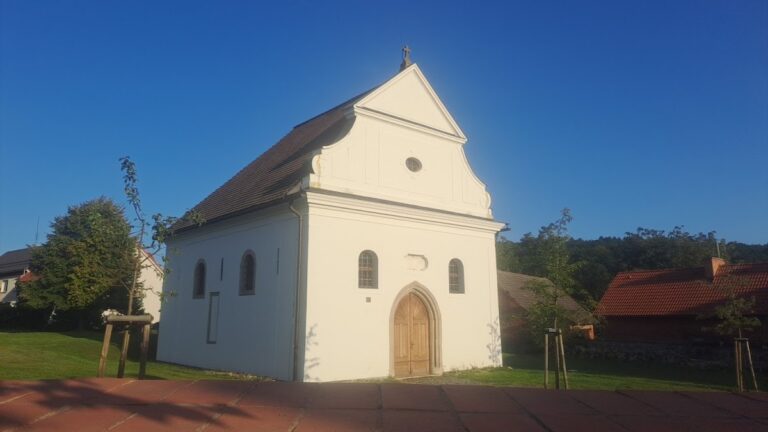
The Renaissance rebuilding enlarged the residential areas and altered the castle’s external appearance. Much of the facade is framed by two rows of simply decorated windows with Baroque surrounds. Its light plaster and largely undecorated surfaces place emphasis on the building’s mass and proportions rather than on elaborate ornament. The Baroque remodeling of 1693 is concentrated mainly inside, especially in the chapel, where fresco decoration survives.
Museum collections
The castle’s present displays include archaeological and ethnographic material associated with the Museum of Southeast Moravia, as well as an exhibition on castles in southern Moravia. A zoological exhibition contains the only publicly accessible elephant skeleton in Czechia.