Falkenstein Castle: Ruins of a Medieval Hill Fortress in Germany
Site at a Glance
- Rating
- 4.5
- Popularity
- Low
- Country
- Germany
- Primary era
- Medieval
- External website
- Open
- Eras represented
- Medieval, Early Modern
- Civilizations
- Holy Roman Empire
- Site type
- Military
- Remains
- Castle
On this page5 sections
History
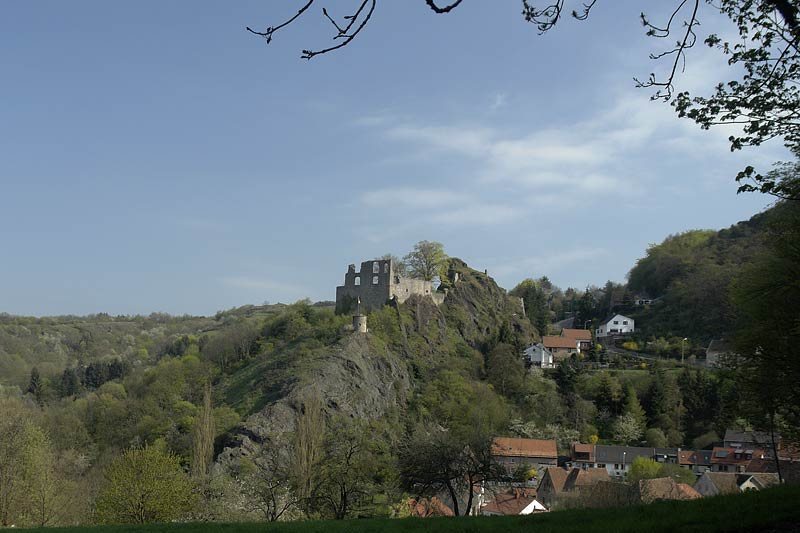
Falkenstein Castle is a medieval imperial hill castle above the village of Falkenstein in Germany. An imperial castle was associated with the authority of the Holy Roman Empire.
The Bolanden-Falkenstein line
The name Falkenstein first appears in a record of 1135, which refers to Sigbold von Falkenstein rather than to the castle. The Falkenstein lords had ties to the Bolanden family. Their earlier family may have belonged to the imperial ministerials, a service class that carried out military or administrative duties, and was probably related to the Bolandens.
After a division of family property in 1233, Philip of Bolanden took the name “of Falkenstein,” establishing the Bolanden-Falkenstein line. Philip I of Falkenstein, who had married Isengard of Münzenberg, later became imperial chamberlain, a senior court official, and governor of Trifels Castle. The Imperial Regalia, ceremonial objects and insignia of imperial office, were kept at Trifels. In 1255, Philip inherited the bailiwick of Wetterau, a territory administered by a bailiff; Lich later became the center of his lands.
In the mid-14th century, the family built Neufalkenstein in the Taunus. Family chronicles sometimes leave unclear which castle they mean, but a reference from 1368 concerns the Palatinate castle.
Changes of lordship and rebuilding
When the Bolanden-Falkenstein counts died out in 1418, their property passed to Ruprecht IV of Virneburg. In 1456, Wirich IV of Daun-Oberstein bought the county from Wilhelm, Ruprecht’s grandson. Two years later, Holy Roman Emperor Frederick III granted the feudal lordship to John II, Duke of Lorraine. The Daun-Oberstein counts thereafter held the castle and county as a fief, land held from a superior lord under a feudal relationship.
Around 1500, Uhland I regained the castle site and rebuilt and enlarged the fortress. His descendants later acquired Bertholdstein near Fehring in Styria and settled there.
War, transfer, and destruction
French troops seized Falkenstein in 1644, but Lorraine and Spanish forces drove them out that April. French forces probably blew up parts of the castle in 1647. The Peace of Westphalia in 1648 concluded the Thirty Years’ War, a major European conflict lasting from 1618 to 1648, but did not include the Duke of Lorraine. His garrison remained at Falkenstein until Count Wilhelm Wirich of Daun-Falkenstein expelled it in 1654. In 1667, Wilhelm Wirich sold the castle and county to Charles IV, Duke of Lorraine.
In 1736, the castle and county passed to the Habsburgs, who assigned the county to Further Austria, a Habsburg territory in southwestern Germany. French forces destroyed the castle in 1794, leaving it in ruins. Partial restoration began in 1979.
Remains
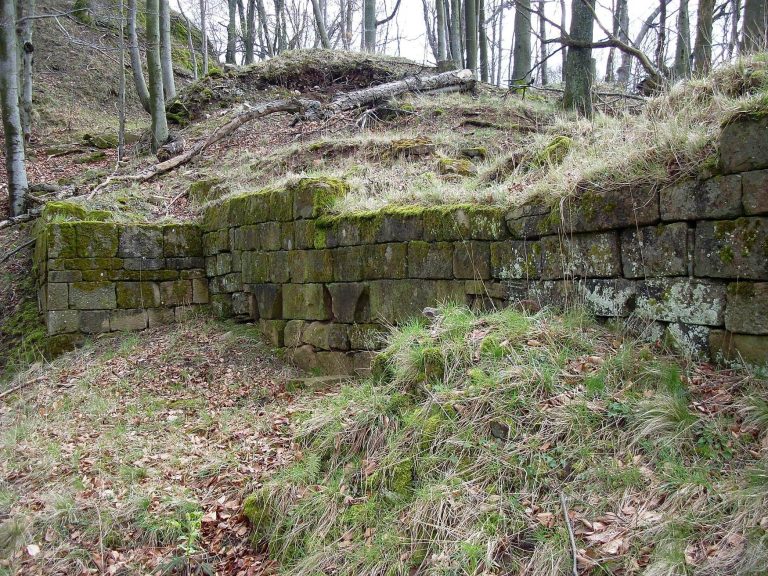
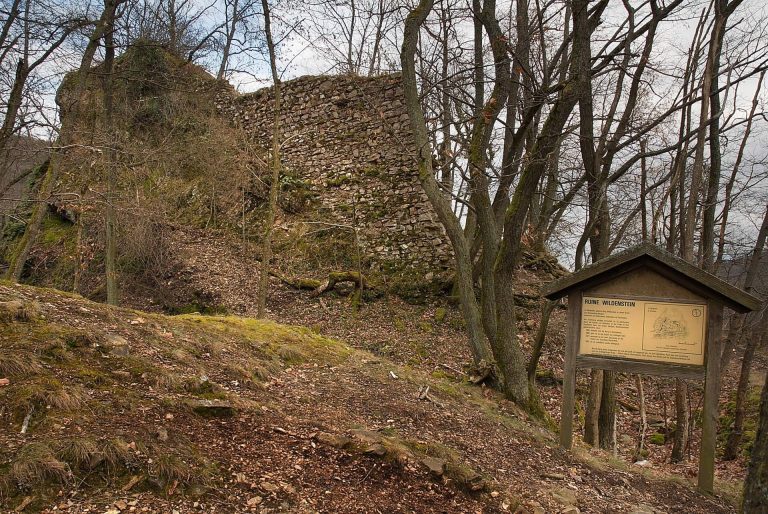
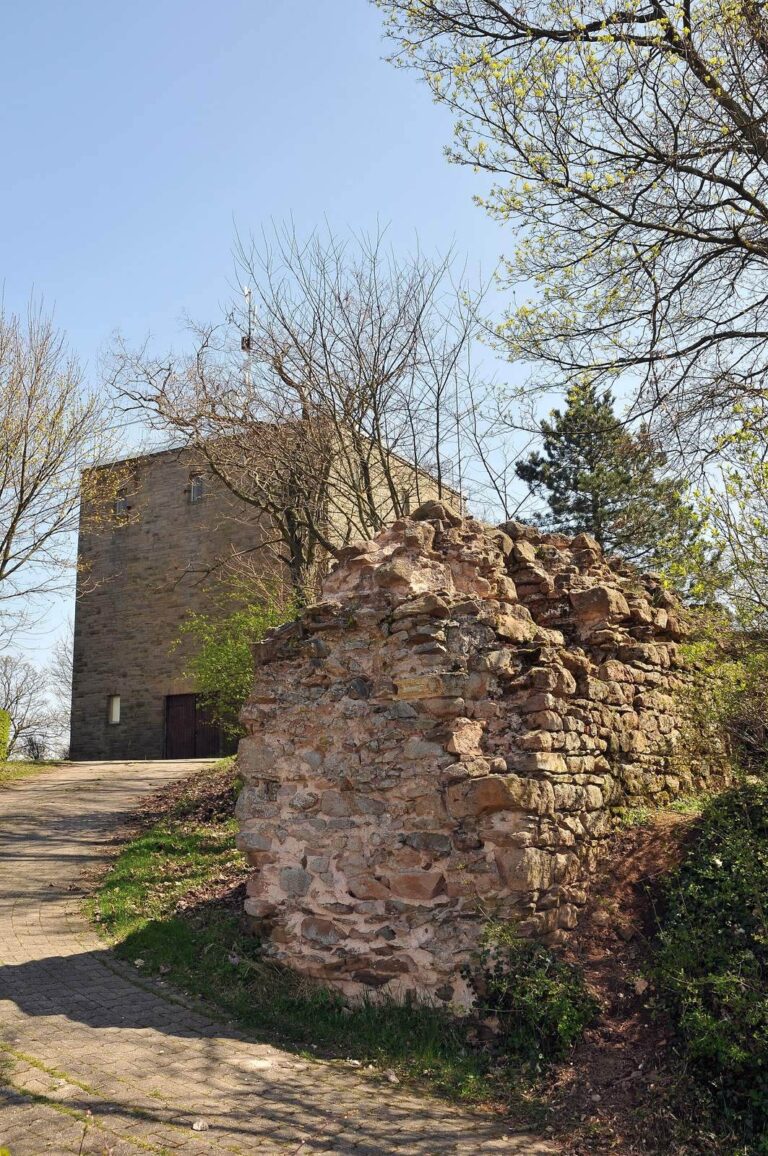
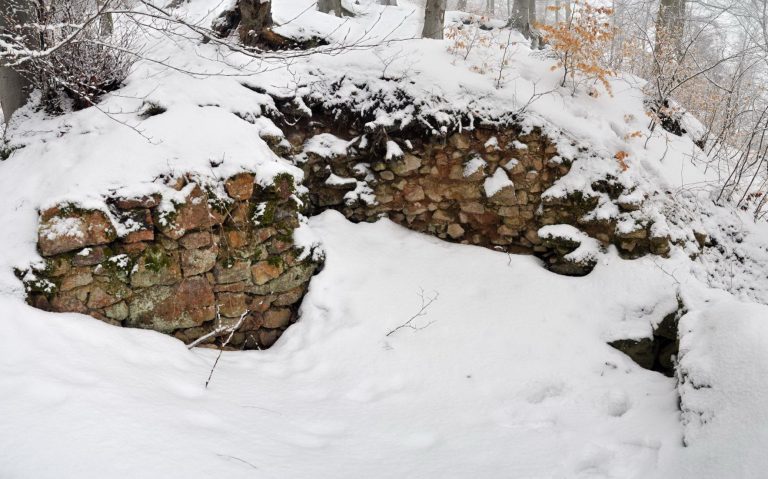
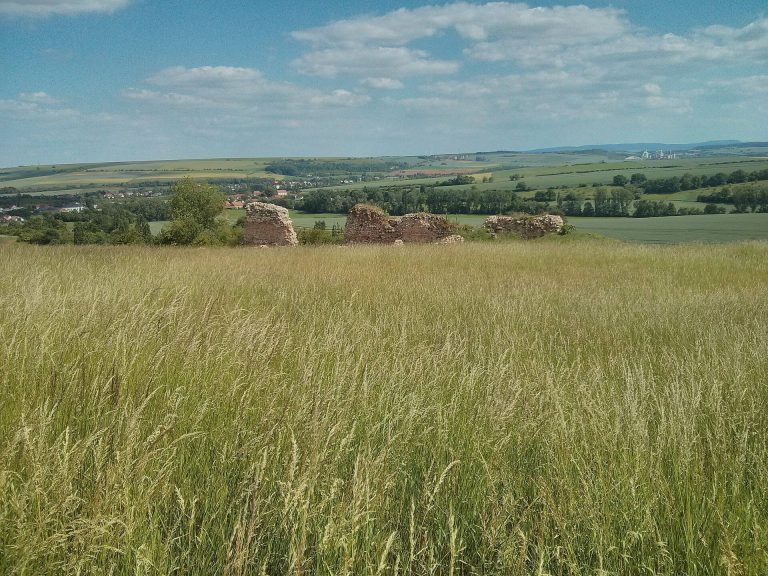
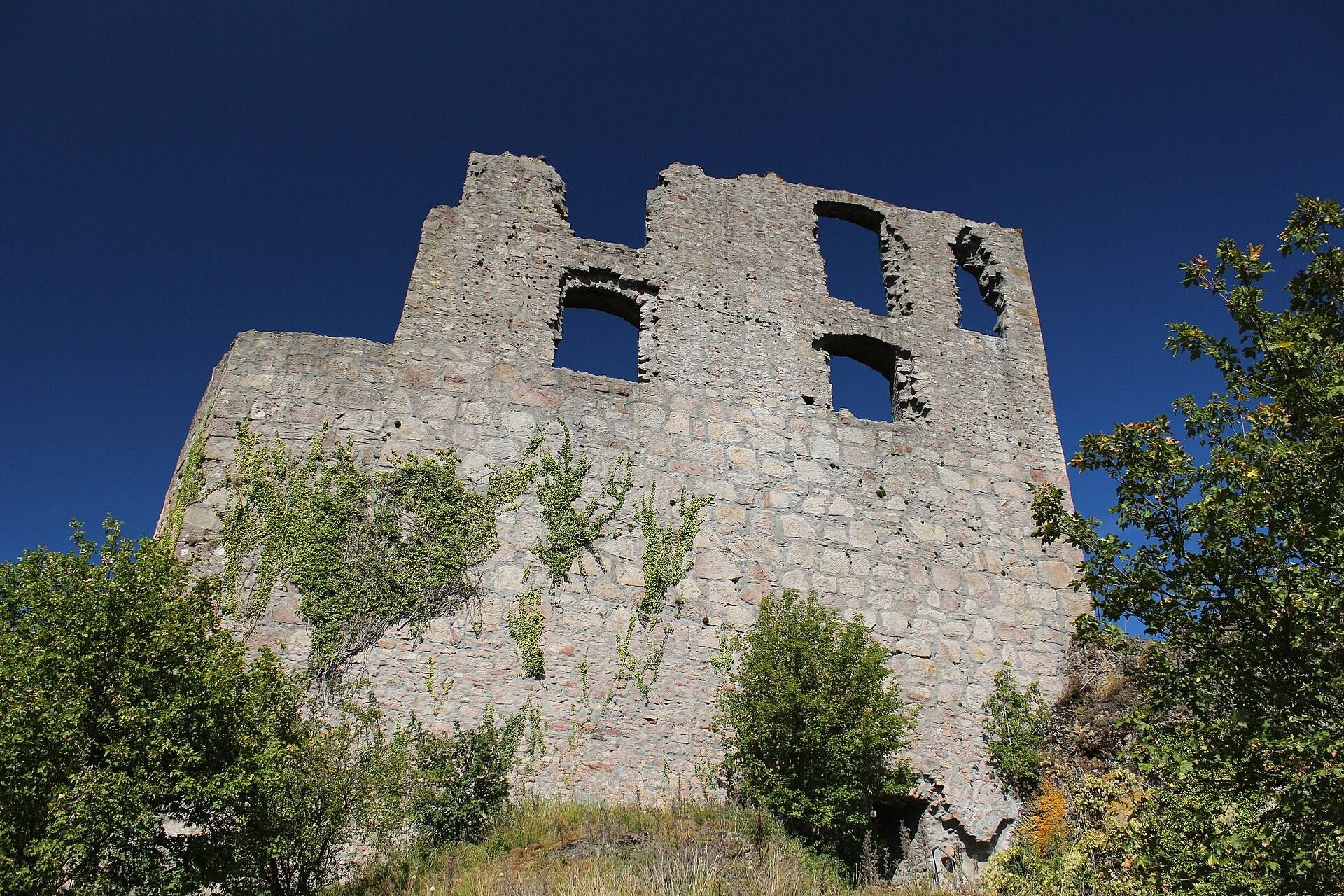
The castle occupied a hilltop on the Donnersberg, the highest elevation in the Palatinate, at 425 m above sea level. Surviving remains include outer walls of the residential building, a shield wall that protected a vulnerable side of the castle, a circuit wall enclosing its grounds, and a cistern for storing water.
The keep, the castle’s main defensive tower, is almost entirely lost, with only a small fragment remaining. It may once have reached 37 m in height when its rock base is included.