Burg Dringenberg: A Medieval Territorial Castle in Germany
Site at a Glance
- Rating
- 4.6
- Popularity
- Low
- Country
- Germany
- Primary era
- Medieval
- External website
- Open
- Eras represented
- Medieval, Early Modern, Modern
- Civilizations
- Holy Roman Empire
- Site type
- Military
- Remains
- Castle
On this page10 sections
History
Burg Dringenberg is a medieval hilltop castle in Dringenberg, now part of Bad Driburg, Germany. Built for the Prince-Bishopric of Paderborn, an ecclesiastical territory governed by a bishop with both religious and secular authority, it became one of that territory’s most important castles.
Foundation and medieval development
In 1316, Bishop Bernhard V of Lippe acquired the Dringen area from the Count of Everstein. Two years later, he ordered the clearing of a 298-metre-high spur and began the construction of a fortified castle. The work was completed by 1323. Settlers soon established themselves below the fortress, and the village of Dringenberg developed at approximately the same time.
Between 1463 and 1498, Prince-Bishop Simon III of Lippe commissioned extensive construction and restoration. During this period, the castle served as a residence of the prince-bishops of Paderborn. In May 1471, it hosted a peace agreement intended to last 33 years, following the conflict between Hesse and Paderborn. The agreement was concluded with Landgrave Ludwig II of Hesse, a territorial ruler broadly comparable to a prince.
Residence, destruction, and rebuilding
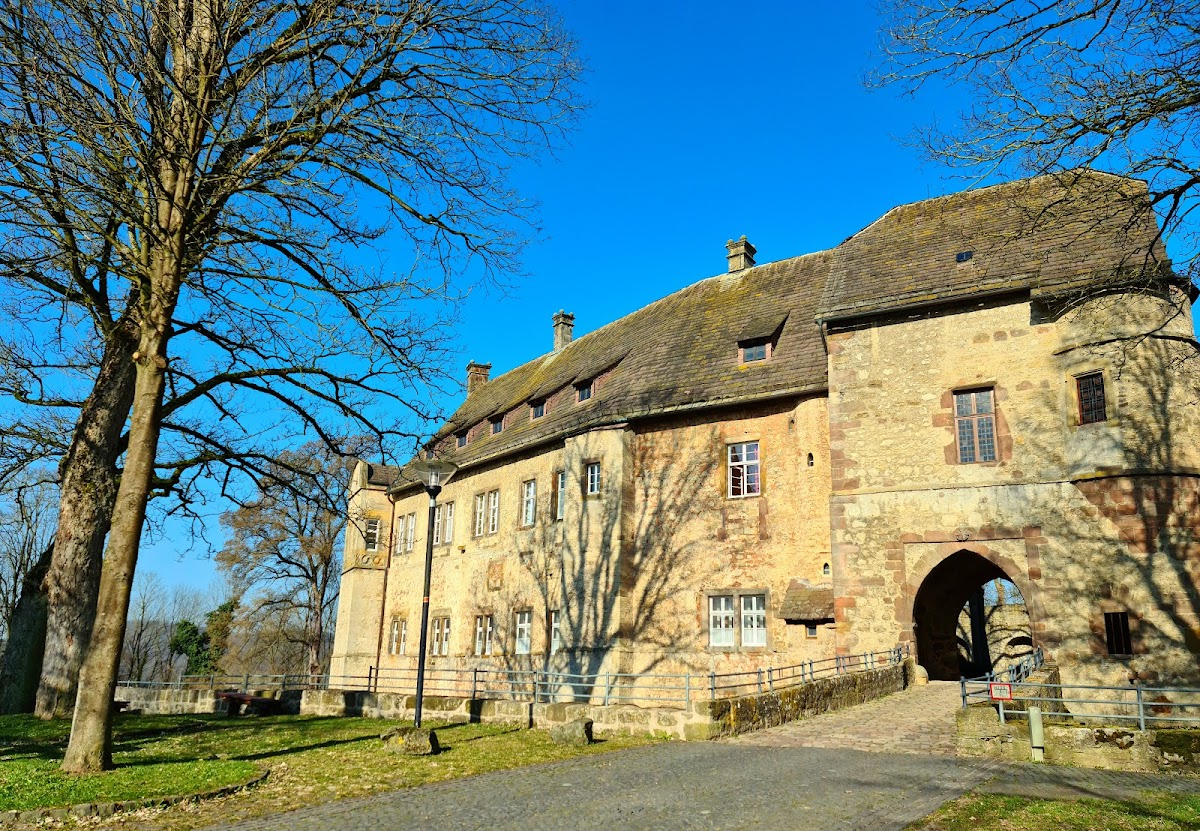
The gatehouse, castle chapel, and southeast wing with its defensive tower were built between 1488 and 1498 under the supervision of Otto Arndt von der Borch of Detmold, the territorial official responsible for Dringenberg.
During the Thirty Years’ War, the major European conflict fought from 1618 to 1648 through religious, dynastic, and territorial struggles, Swedish troops under Major General Duclas burned the castle. Reconstruction began in 1651 under Prince-Bishop Adolph von der Reck. Further alterations and renovation followed in 1710–1712, commissioned by Baron Franz Arnold Wolff-Metternich zur Gracht. The castle remained a summer residence of the bishops of the Paderborn diocese until the nineteenth century.
Later interpretation and use
A local legend connects the castle well with the knight Teudebert, who was supposedly imprisoned at Dringenberg and promised freedom if he excavated the shaft until he reached groundwater. The story says that he suffered a stroke on the day he finally began walking toward freedom.
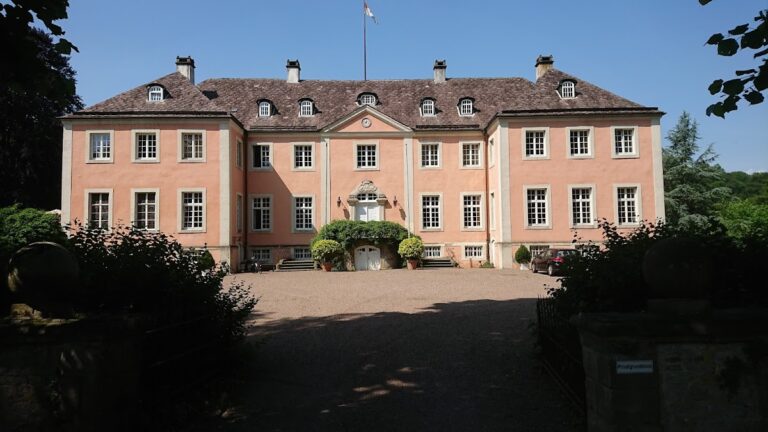
Burg Dringenberg is protected as an architectural heritage monument of North Rhine-Westphalia. It now houses a local-history museum. Rooms in the southeast wing are used by Dringenberg associations for meetings and rehearsals, the southwest wing remains residential, and the historic chapel is used for weddings.
Remains
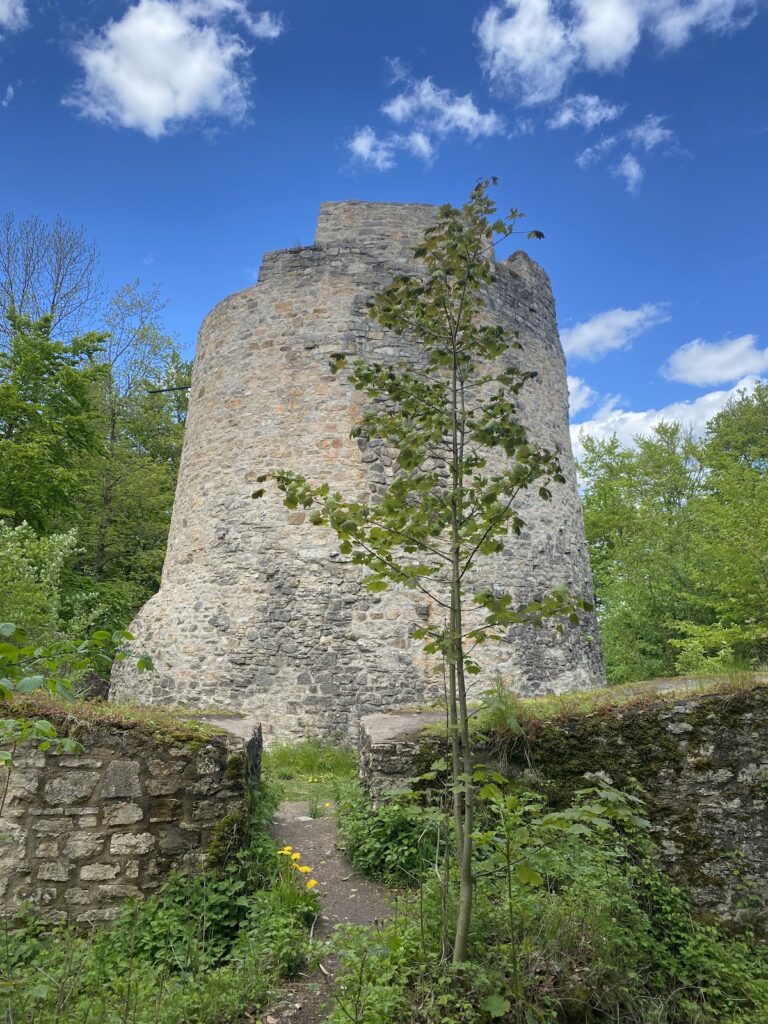
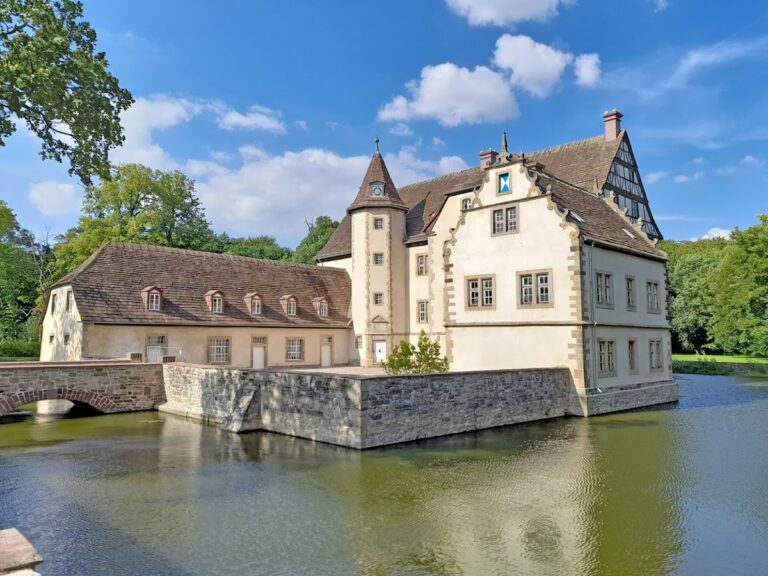
Burg Dringenberg occupies a hilltop position defended by a strong wall, a moat, and a defensive tower known as the Hungerturm, or “starvation tower.” The ground falls steeply on the north side, where the slope is covered with trees and shrubs and provides an unobstructed view over the valley. The entrance is on the south side and is reached by a substantial bridge spanning the moat.
Courtyard features
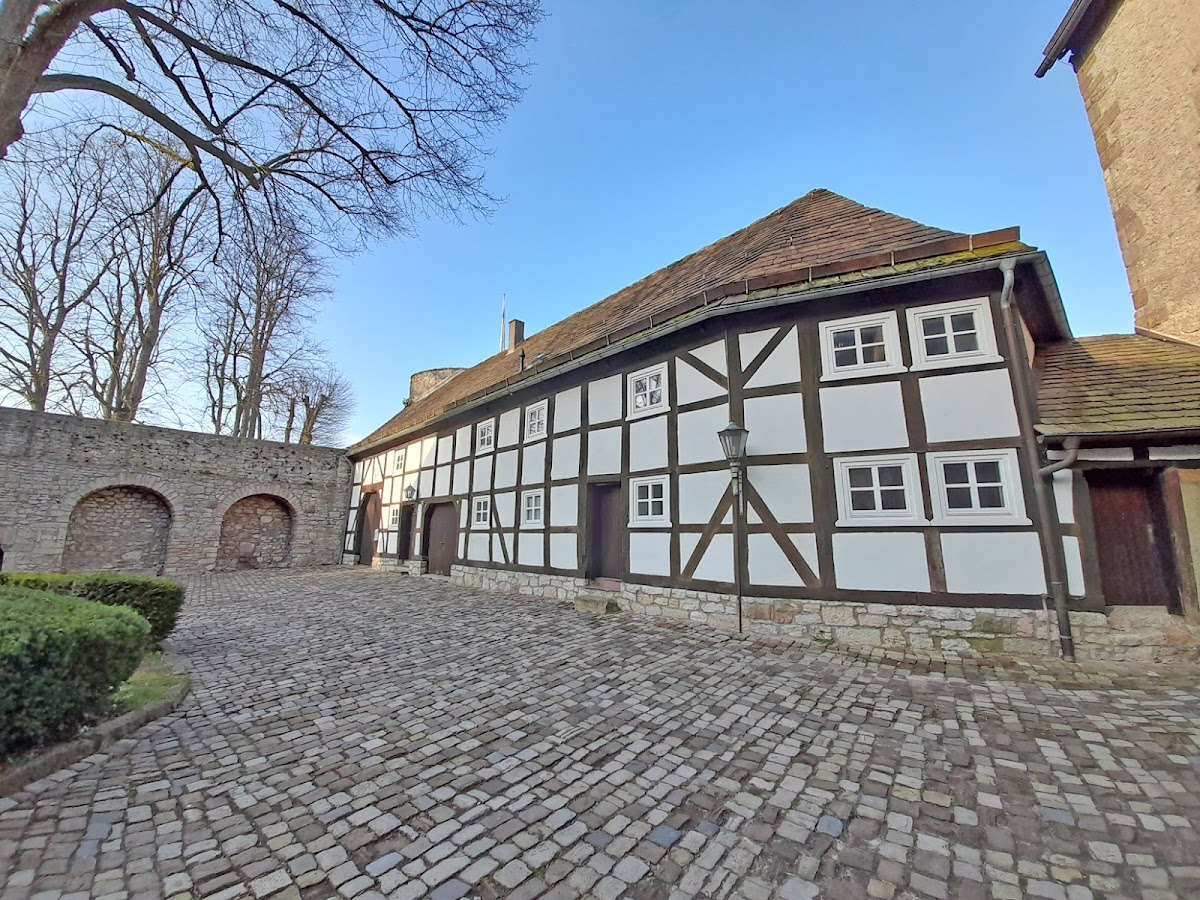
A large castle well occupies the courtyard. It is 38.60 metres deep and supplied water for both the fortress and the village. Its surviving wheel mechanism bears the impressed date 1835. Nearby, a plastered courtyard surface dated 1551 shows a bronze serpent together with the Lippe rose, the heraldic emblem associated with the House of Lippe.
A plaster inscription from the early construction phase was found beside the cellar stairs. Its wording warns people before they descend into the cellar, adding a surviving written detail to the castle’s early fabric.
Gatehouse and wings
Gatehouse and chapel
The gatehouse incorporates the historic castle chapel, joining the principal entrance structure with one of the castle’s religious spaces. The chapel remains in use for weddings.
Southeast wing and defensive tower
The southeast wing is connected with a defensive tower and contains rooms used by local Dringenberg associations for meetings and rehearsals.
Southwest wing
The southwest wing remains inhabited, preserving a residential function within the surviving castle complex.
Nearby sites