Rocca dei Tempesta: Medieval Fortress in Noale, Italy
Site at a Glance
- Rating
- 4.5
- Popularity
- Medium
- Country
- Italy
- Primary era
- Medieval
- External website
- Open
- Eras represented
- Medieval
- Civilizations
- Holy Roman Empire
- Site type
- Military
- Remains
- Castle
On this page11 sections
History
Rocca dei Tempesta is a medieval castle in Noale, Italy, whose origins are presumed to reach back to the twelfth century. Construction of the fortress is attributed to Ezzelino III da Romano, a thirteenth-century feudal lord and military ruler in northeastern Italy, in 1245. The Tempesta, the feudal family that held lordship over Noale, completed the work in 1272.
Venetian administration and the sieges of 1378–1381
After Padua submitted to the Republic of Venice in 1339, the maritime state that governed Venice and its mainland territories made the fortress a seat for its administrators and troops. Between 1378 and 1381, it faced major sieges. Venetian garrisons defended Rocca dei Tempesta, but Paduan forces led by the Carraresi, Padua’s ruling family, eventually captured it. Venice later reconquered the fortress and repaired it.
Military decline and civic reuse
From the fifteenth century, the spread of gunpowder made the medieval fortification outdated for warfare based extensively on firearms. Its strategic military role ended during this period. In 1763, Venetian authorities definitively abandoned the fortress and transferred their activities to the Palazzo della Loggia, a civic building, and other structures in Noale’s historic center.
During the following century, increasingly ruinous sections were deliberately dismantled so that their building materials could be reused for the benefit of the community. After the Napoleonic period, the site became Noale’s cemetery in 1819. It remained in that use until 1983, and the last burials were exhumed in 1996.
Restoration and heritage protection
A restoration project began in 2006 under the direction of the Venetian architect Patrizia Valle. Two later phases continued the recovery through 2022, with the third phase addressing the unstable southern edge, which had been fenced off for many years because of its danger. Rocca dei Tempesta has Italian national-heritage status.
Remains
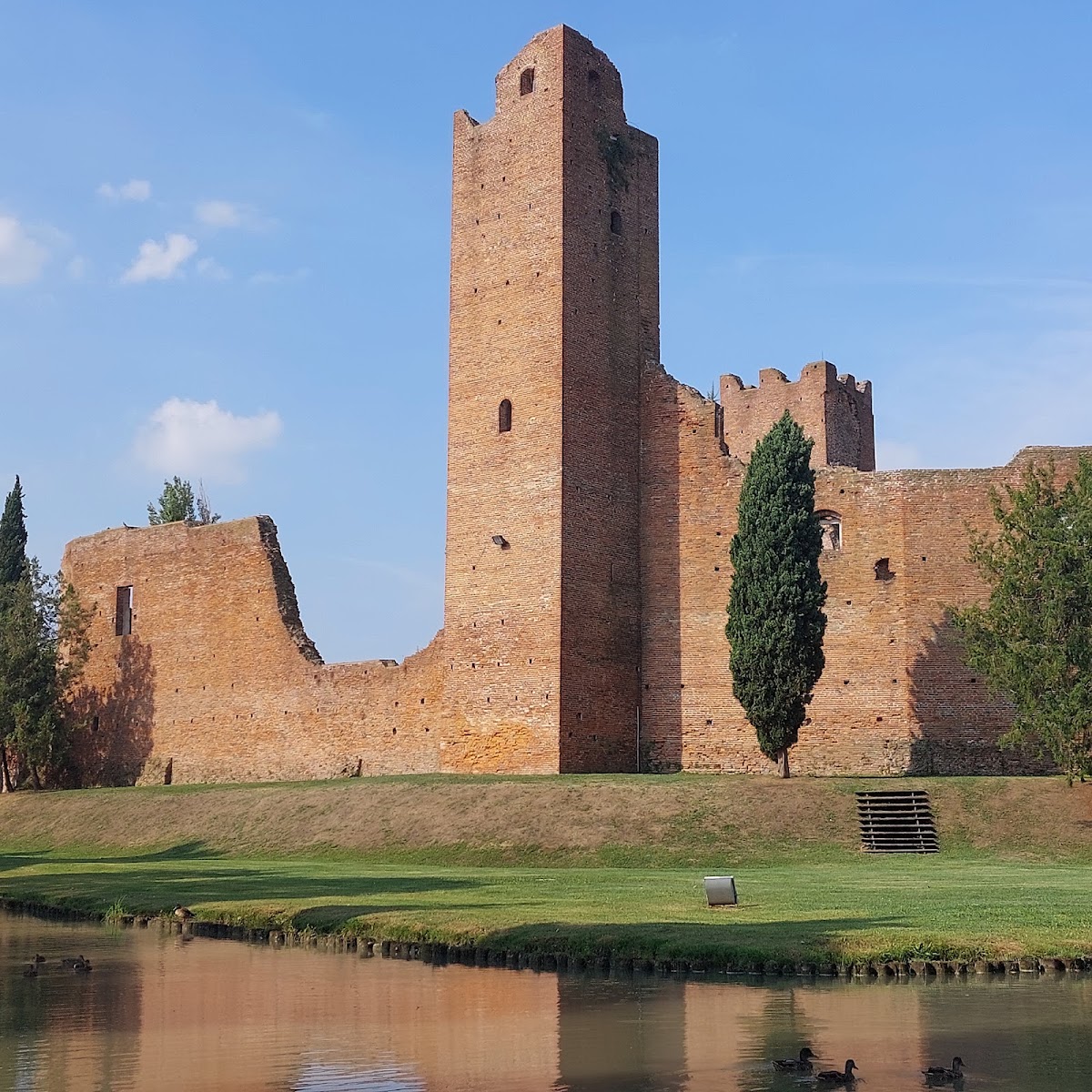
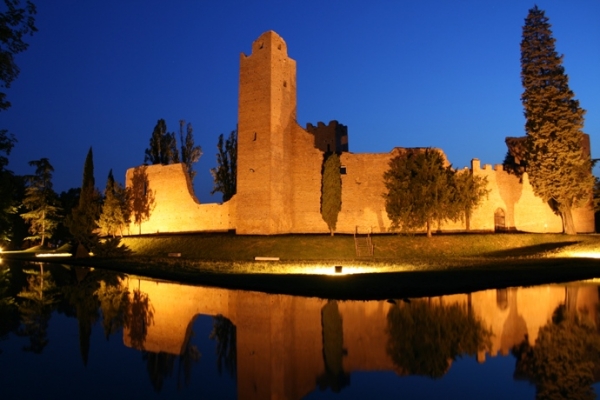
The fortification occupied an artificial island within an urban park, enclosed by the waters of the Marzenego River and a moat. Its area covered approximately 2,400 square metres. Substantial ruins survive within this water-bound setting, preserving the outline of a fortified complex whose defenses and internal buildings were organized around the castle enclosure.
Walls and defensive towers
Perimeter towers
Several towers defended the perimeter, of which three remain. Their lack of machicolations, projecting openings or galleries used to attack enemies below, suggests that they were built before 1250. The surviving towers form part of the substantial ruined fortification enclosed by the moat and the river waters.
Northern keep
A keep, the principal fortified tower used for defense and residence, stood on the northern side of the castle. It survives alongside the remaining towers and wall facings. Restoration work reached the northern entrance, and in 2013 the towers, keep, and wall facings were restored.
Buildings within the fortress
Residential and military spaces
The interior contained the lords’ residence and quarters for defensive soldiers, as well as an armoury and guest rooms. These spaces formed the residential and military core of the castle.
Service and institutional spaces
Other parts of the fortress included a small church, kitchens, stables, prisons, and storehouses. Together, these buildings supported the household, garrison, religious life, storage, and confinement functions of the medieval stronghold.