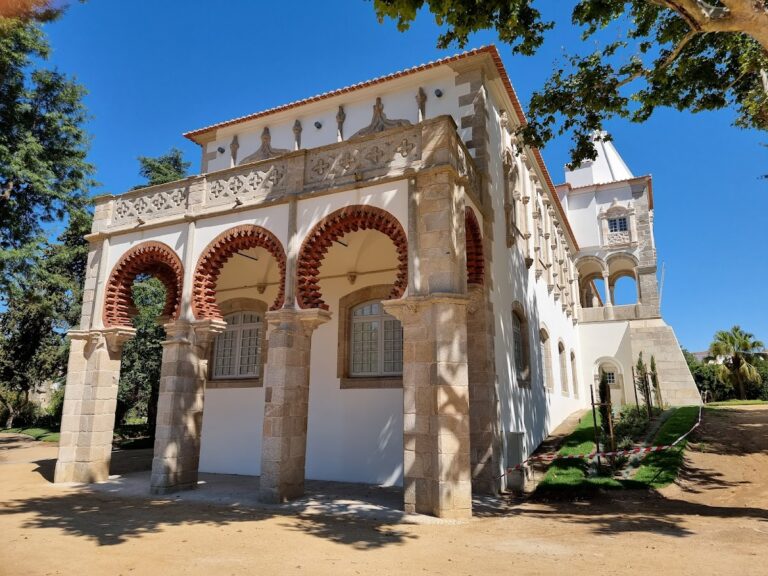
Montemor-o-Novo Castle: A Portuguese Medieval Fortress
Site at a Glance
- Rating
- 4.3
- Popularity
- Medium
- Country
- Portugal
- Primary era
- Medieval
- External website
- Open
- Eras represented
- Medieval
- Civilizations
- Portuguese
- Site type
- Military
- Remains
- Castle
On this page13 sections
History
Montemor-o-Novo Castle is a Portuguese medieval fortress in Montemor-o-Novo, Portugal, whose development is believed to have begun after King Sancho I granted the settlement a charter in 1203. The site occupies a strategically important hill associated with earlier Romanized settlement, medieval Christian conquest, royal government, regional trade, and military resistance.
Roman and Muslim-era origins
The hill was probably first occupied by a prehistoric hillfort that had become Romanized, a conclusion supported by archaeological evidence from the surrounding region. Its position lay along Roman roads connecting Santarém and the mouth of the Tagus with Évora and Mérida, and the settlement was probably fortified because of this network.
Some historical interpretations place a Muslim fortification on the hill during the Muslim conquest of the Iberian Peninsula. The regional place-name Almansor preserves an association with Almanzor, a powerful military and political leader of the Umayyad Caliphate of Córdoba.
Christian conquest and royal fortification
During the Christian Reconquista, Portuguese forces led by King Sancho I conquered the settlement. Sancho I reigned from 1185 to 1211 and promoted territorial consolidation and new settlement after Christian conquests. In 1203 he issued a foral, a charter defining the town’s legal privileges, obligations, and administrative status, to encourage repopulation and defense. Construction of the medieval castle is believed to have started during this phase.
Under King Denis I, who ruled from 1279 to 1325, the defenses were substantially improved. The town walls formed part of this strengthening program and were completed in 1365. After the House of Aviz came to power in the late fourteenth century, Montemor-o-Novo became one third of the lordship held by the constable Nuno Álvares Pereira, a leading Portuguese military commander and nobleman.
Prosperity and the maritime age
The castle was renovated during the fifteenth century under Afonso Mendes de Oliveira, a master stonemason associated with the work. During the fifteenth and sixteenth centuries, the town reached its greatest prosperity through regional trade and the prolonged residence of the royal court in Évora.
Montemor-o-Novo hosted the Cortes of 1495, representative assemblies of Portugal’s political communities and estates. At that meeting, King Manuel I decided to pursue a maritime route to India. Manuel I, who reigned from 1495 to 1521, granted the town a new charter in 1503. In 1563, during the reign of King Sebastian I, the settlement received the title of Notable Town because it was regarded as old and populous. Historical tradition also associates the castle with Vasco da Gama’s completion of the plans for his voyage to India by sea around the Cape of Good Hope.
War, decline, and modern conservation
During the Portuguese Restoration War, which began in 1640 and restored Portugal’s independence from the Iberian Union, King John IV’s War Council ordered the castle’s defenses to be rebuilt. By the time of the 1755 earthquake, the area inside the walls and the fortifications were already severely deteriorated. The earthquake is believed to have accelerated their decline, although repairs were undertaken during the eighteenth century.
During the Peninsular War, the early nineteenth-century Iberian campaign against Napoleonic France, the fortress garrison resisted French troops commanded by General Jean-Andoche Junot. Fighting took place near the Ponte de Lisboa in 1808. In the Portuguese Civil War of 1828 to 1834, the headquarters of the Liberal forces was concentrated at the castle under the Duke of Saldanha, a Portuguese military and political leader.
One tower was repaired in 1929, but parts of the walls and town ramparts collapsed in subsequent years. Work from 1937 to 1945 rebuilt two collapsed wall sections and consolidated the section beside the Porta da Vila. Public intervention resumed in the 1960s and continued intermittently through the 1970s and 1980s. Archaeological research began during this later period and resumed in 1992 and 1993, while the Torre da Má Hora was restored more recently. The castle, its walls, and the properties within them have been classified as a Portuguese National Monument since 5 January 1951.
Remains
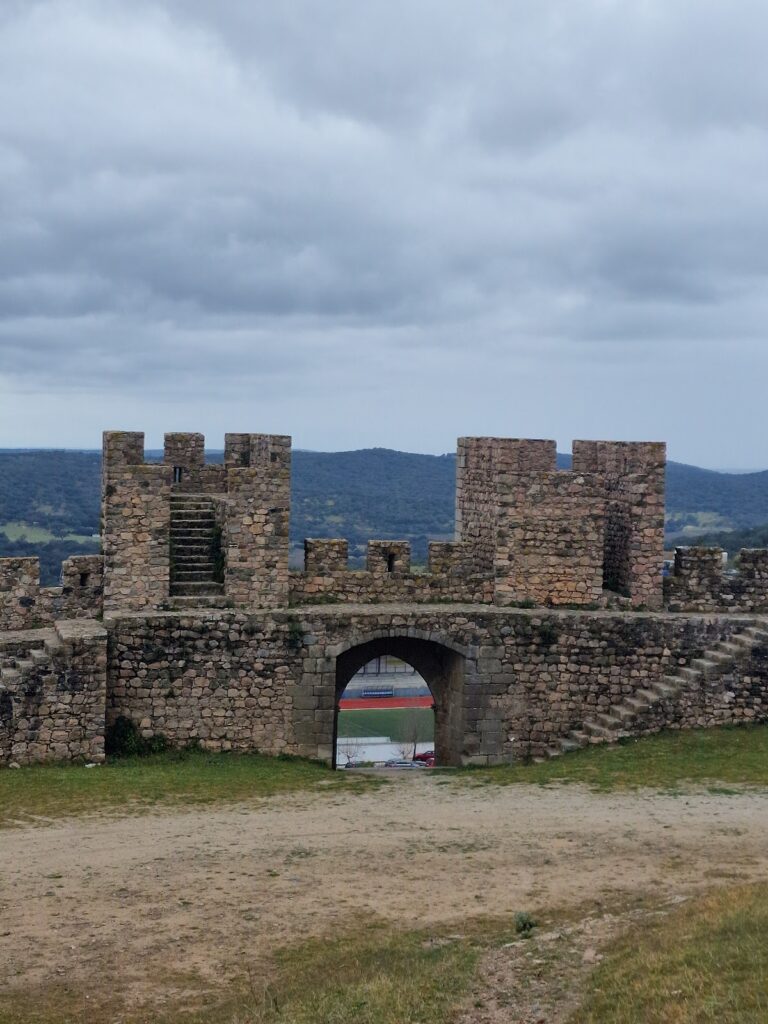
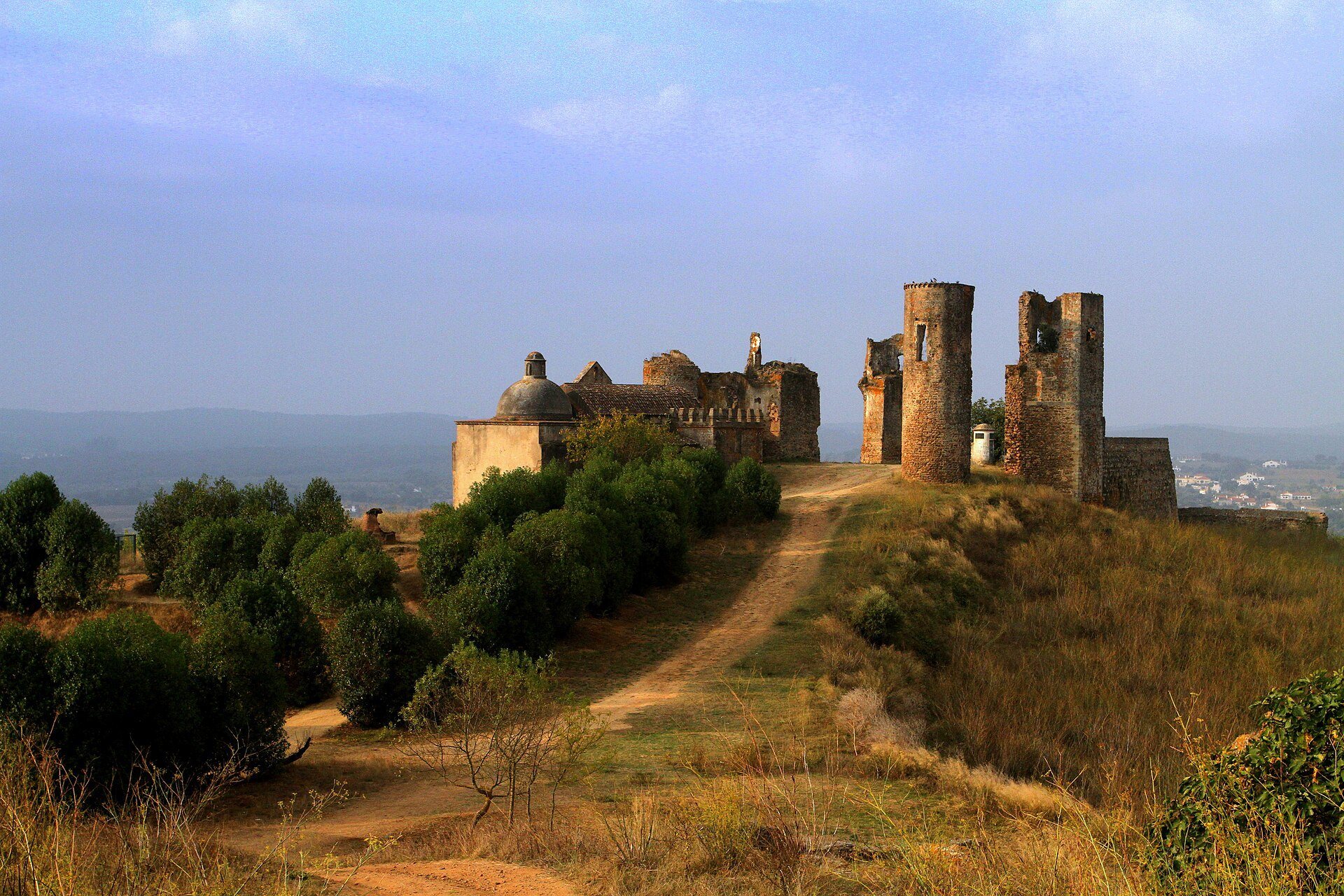
The castle occupies the highest hill in the region and has an irregular, triangular plan. Its surviving layout combines the central fortress with the walled town around it. Gates and square towers define the principal approaches, while the parade ground contains the old cistern and the ruined facade of the former palace of the castle governor.
Walls, gates, and towers
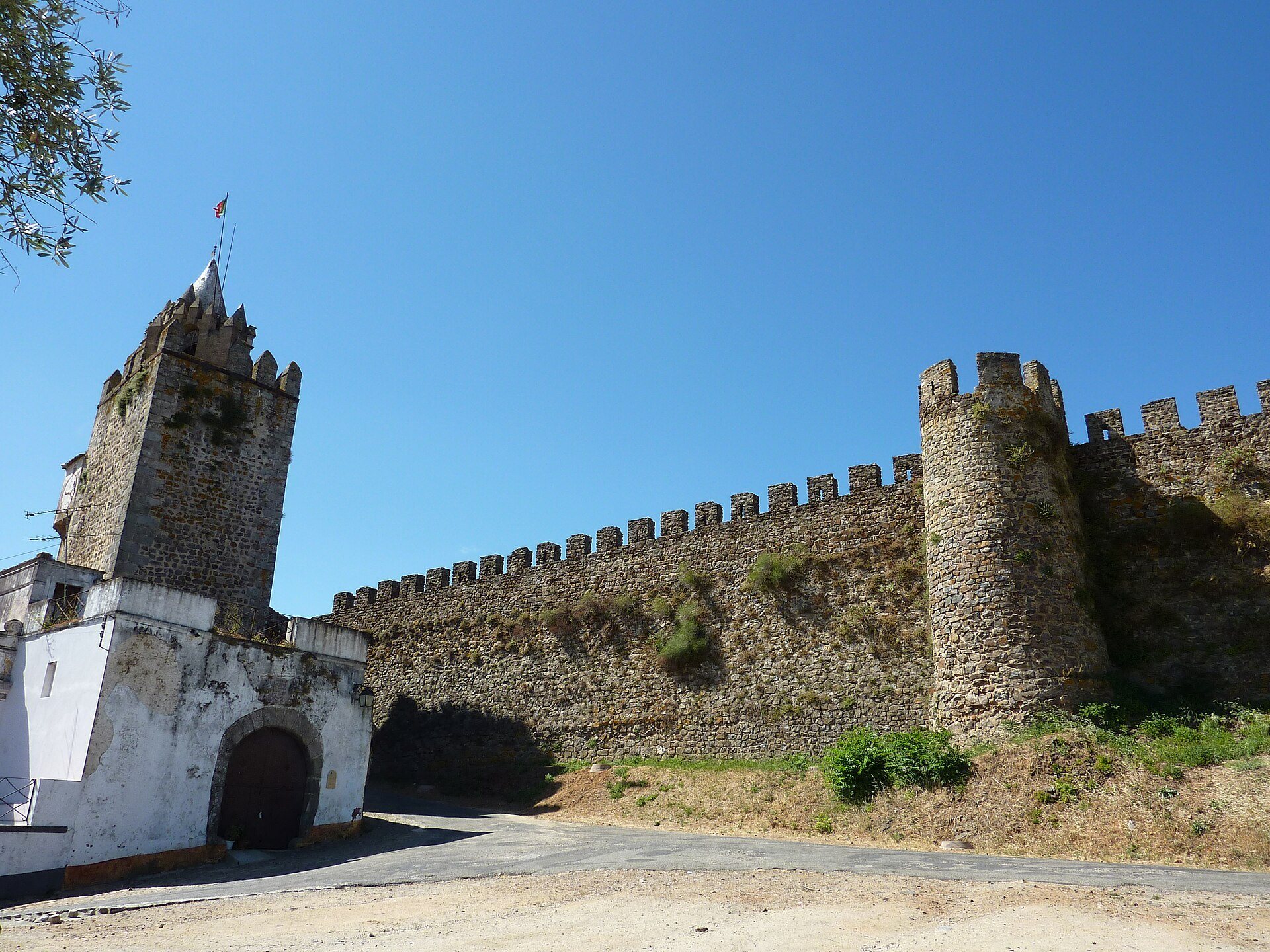
Porta da Vila and Torre do Relógio
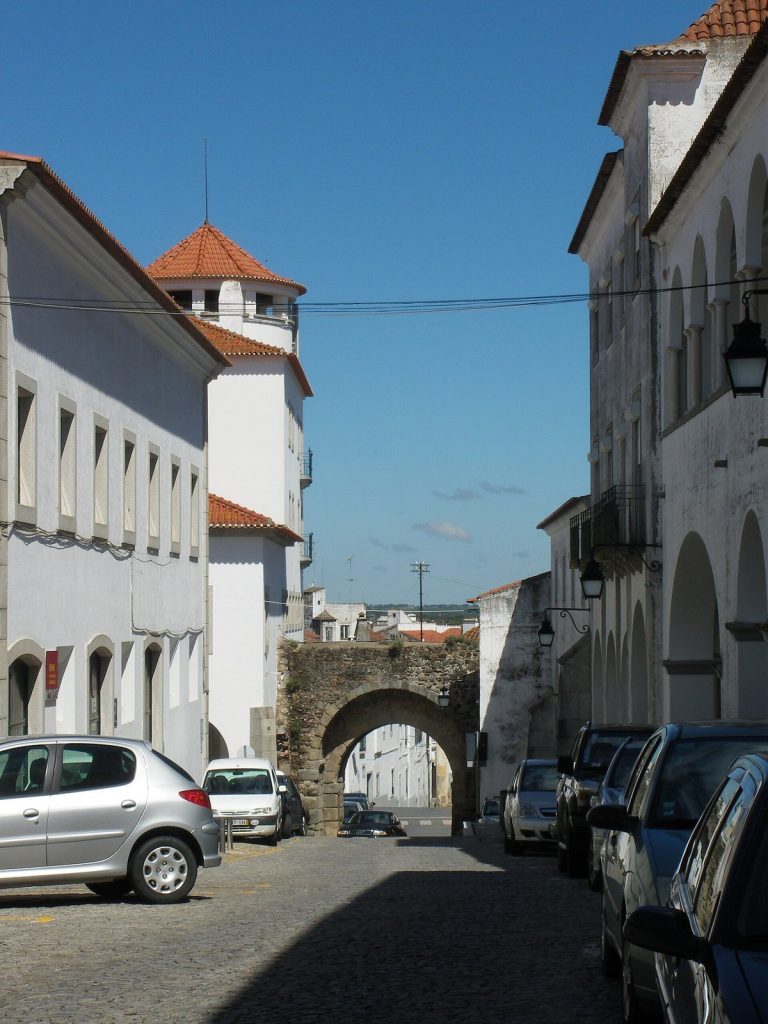
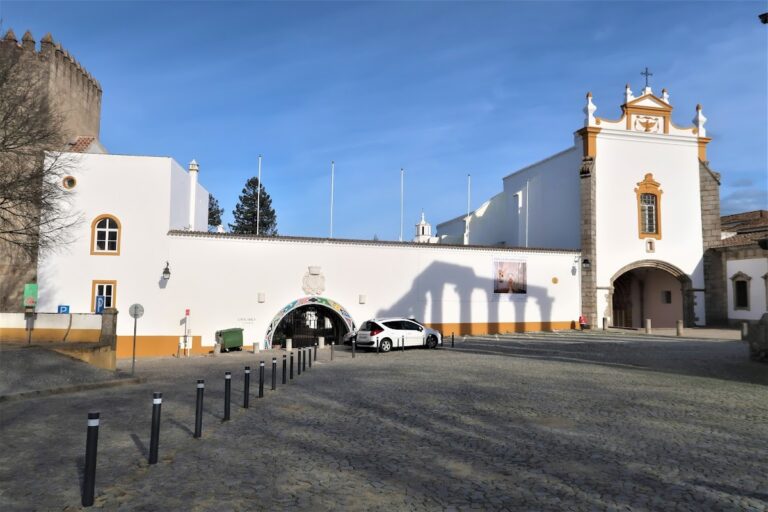
The northern wall originally contained the Porta de Évora. Present northern access is through the Porta da Vila, also known as the Porta de Santarém or Porta Nova. The gate is flanked by the square-plan Torre do Relógio, which retains a pointed-arch doorway. The Casa da Guarda adjoins the castle externally. It has a vaulted ceiling and an arched gateway crowned by the coat of arms of King Manuel I.
Porta do Bispo
On the western wall, the Porta do Bispo, also called the Porta do Anjo, is defended by two square-plan towers. Its position forms part of the defensive circuit enclosing the castle and the associated town.
Porta de Santiago and Torre da Má Hora
The eastern side contains the Porta de Santiago, also known as the Porta do Sol. The entrance is flanked by the square-plan Torre da Má Hora, whose top is finished with pyramidal crenellations. This tower has been restored as part of the later conservation of the fortress.
Interior and town buildings
Parade ground and former governor’s palace
Inside the castle, the parade ground contains an old cistern and the facade of the former Paço do Alcaide, the palace associated with the alcaide, or castle commander and governor. The palace survives in a ruined state, while the cistern remains part of the interior arrangement.
Religious buildings within the walls
The town enclosed by the castle walls includes the Church of Saint John the Baptist, the Church of Santiago, and the Convent of Nossa Senhora da Saudação. The ruins of the Church of Santa Maria do Bispo also remain within the walled area. The overall condition of the castle is regarded as satisfactory, alongside the specifically ruined palace and church and the wall sections that were reconstructed after earlier collapses.