Torre de Ucanha: A Fortified Bridge and Monastic Gateway in Portugal
Site at a Glance
- Rating
- 4.6
- Popularity
- Low
- Country
- Portugal
- Primary era
- Medieval
- External website
- Open
- Eras represented
- Medieval
- Civilizations
- Portuguese
- Site type
- Military
- Remains
- Fortified Bridge
On this page6 sections
History
Early bridge and monastic domain
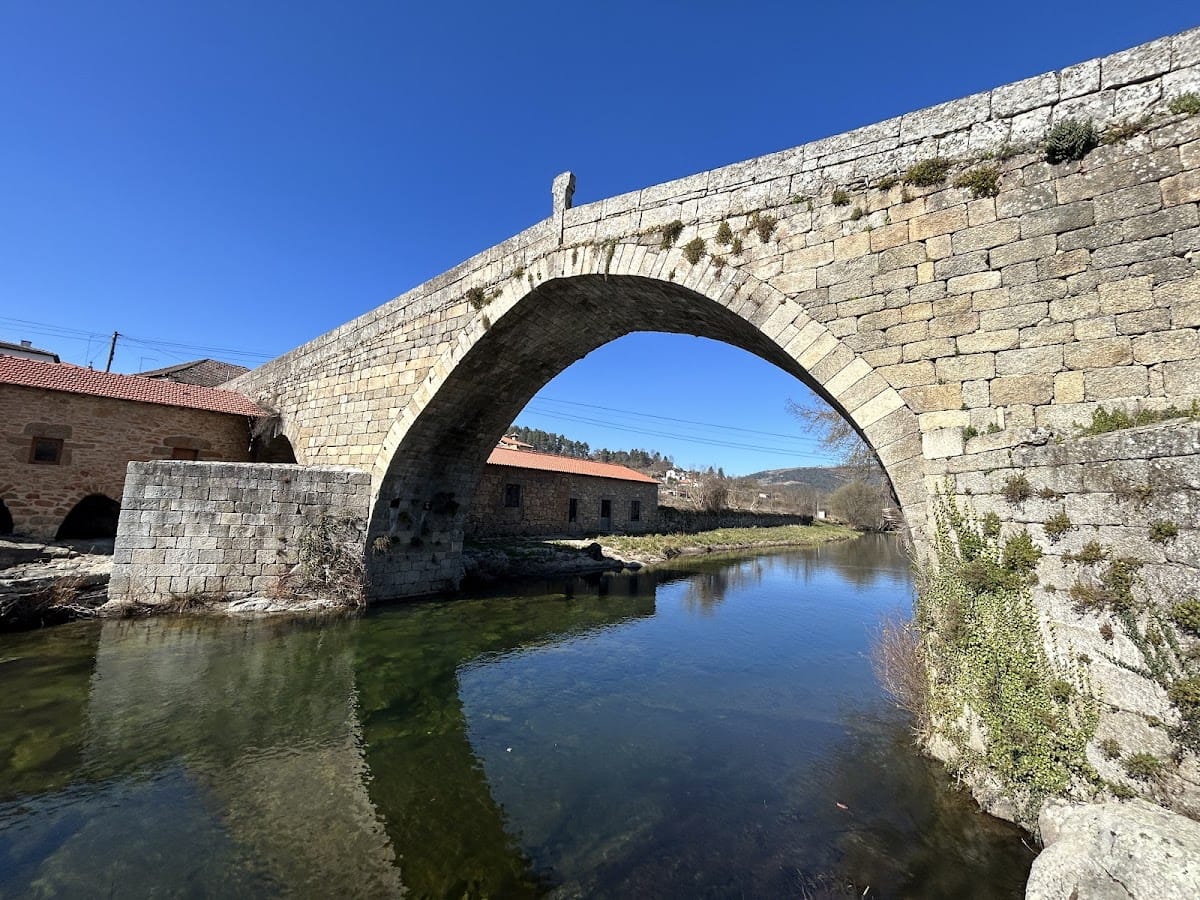
Torre de Ucanha is a fortified bridge and tower complex in Portugal, crossing the River Varosa near Tarouca. The bridge’s existence is documented from the twelfth century, although it may have originated as a Roman bridge linked to an earlier road that passed nearby.
In 1163, Afonso Henriques, the first king of Portugal, granted the domain of Algeriz and the territory of Ucanha to Teresa Afonso, the widow of Egas Moniz. Teresa Afonso founded the Monastery of Santa Maria de Salzedas and later donated the domain to it. The bridge consequently became part of the economic and defensive organization of the monastic estate.
The monks of Salzedas collected tolls from people using the crossing. The Portuguese scholar José Leite de Vasconcelos identified three principal purposes for the bridge and tower: defending the entrance to the monastic domain, expressing the authority of its lord through the tall tower, and providing income for the nearby Cistercian monastery. The Cistercians were a Catholic monastic order known for disciplined communal religious life and the management of monastic estates.
Royal passage and fifteenth-century rebuilding
In 1324, King Dinis, whose reign lasted from 1279 to 1325, granted the people and town of Castro Rei the right to travel from Moimenta to Lamego. Pressure from the monks of Salzedas led him to confirm this passage privilege for Ucanha instead, reinforcing the crossing’s importance within the local road network.
The tower was built and the bridge rebuilt in 1465 on the orders of D. Fernando, abbot of Salzedas. An inscription on the tower records both the commission and the date. As the head of a monastery or monastic community, the abbot directed the rebuilding that gave the crossing its surviving fifteenth-century form.
Torre de Ucanha has been classified as a National Monument of Portugal since 1910. This status recognizes the surviving bridge and tower as part of the country’s protected historic heritage.
Remains
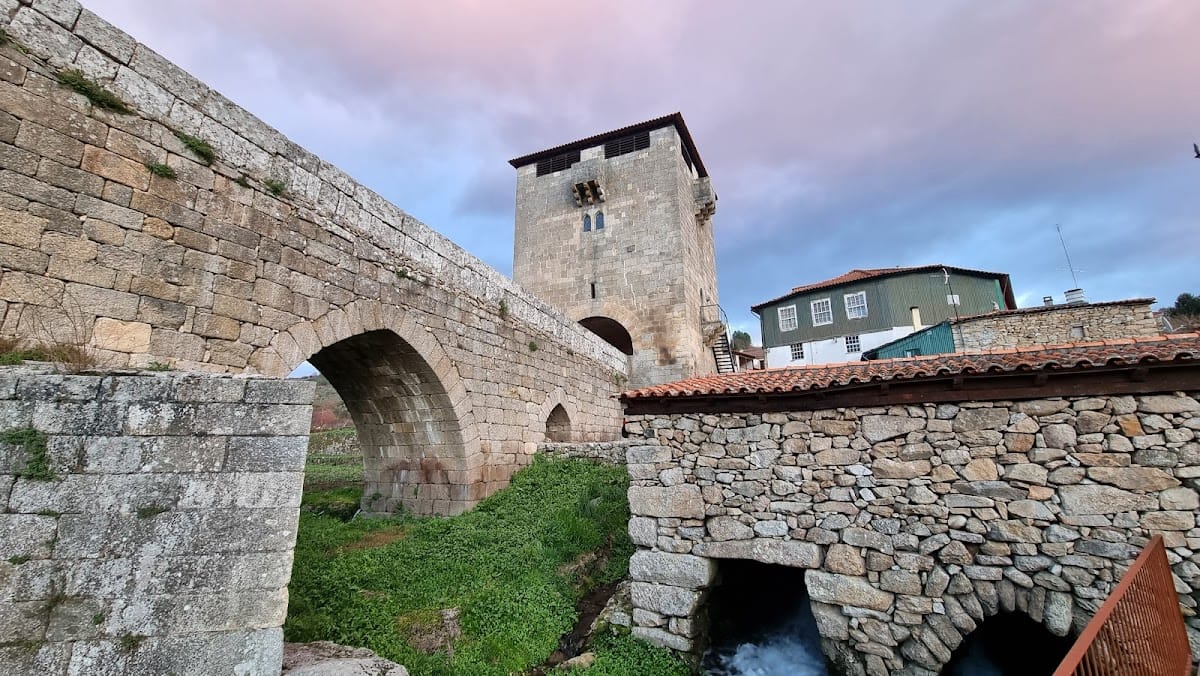
The surviving complex consists of a fortified bridge over the River Varosa and a square tower spanning one end of the crossing. The tower marked the entrance to the Salzedas monastic domain and rises 20 metres above a base measuring 10 metres on each side. Its entrance is set well above ground level, emphasizing the defensive character of the structure.
The tower
The tower is divided internally into three storeys. The lowest level has a single narrow slit, while the middle storey contains paired windows on two faces. The upper level is equipped with four machicolations, projecting defensive openings through which defenders could observe or attack people below. These openings are supported by corbels, which are projecting blocks that carry an architectural element.
An inscription on the base states that the work was ordered by D. Fernando, abbot of Salzedas, in 1465. The inscription connects the surviving tower directly with the rebuilding phase that established its present documented date and purpose.
The fortified bridge
The bridge crosses the River Varosa near Tarouca, a few kilometres from Lamego. Its tower occupies one end of the bridge rather than standing separately from it, combining control of the crossing with defense of the approach to the monastic territory. The bridge’s medieval history, including its use for toll collection and regulated passage, remains closely tied to the tower’s physical position.