Rocca Malatestiana: Medieval Fortress of Verucchio, Italy
Site at a Glance
- Rating
- 4.5
- Popularity
- Medium
- Country
- Italy
- Primary era
- Medieval
- External website
- Open
- Eras represented
- Medieval, Early Modern
- Civilizations
- Holy Roman Empire, Papal States
- Site type
- Military
- Remains
- Castle
On this page13 sections
History
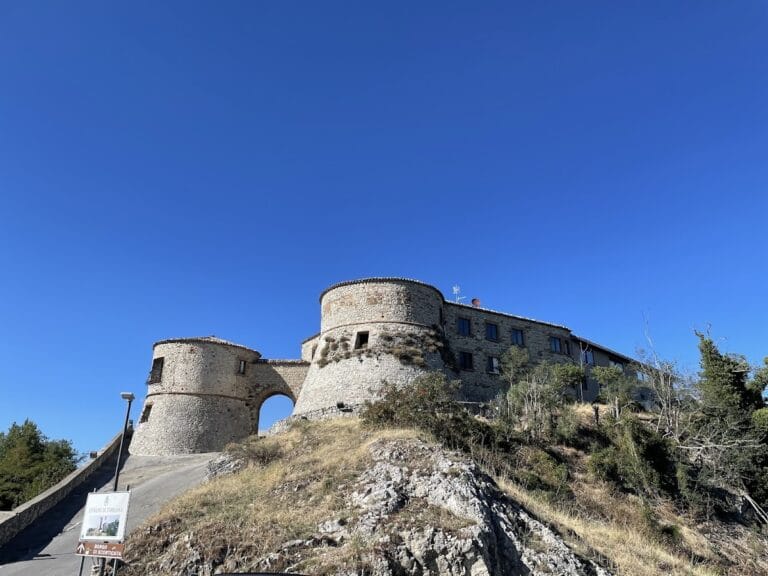
The Rocca Malatestiana, also known as the Rocca del Sasso, is a medieval fortress in Verucchio, Italy, built and enlarged by successive rulers from the tenth through the sixteenth centuries. Occupying the highest part of the settlement’s rocky outcrop, it became the principal Malatesta stronghold for controlling the Valmarecchia and the road from Rimini toward the Val Tiberina, through Montefeltro and onward to Arezzo.
Early fortified settlement
A fortified settlement, or castrum, existed on the site by 1114. Another tradition places a fortified presence there in 962, when Emperor Otto I allegedly granted Verucchio to Ulderico of Carpegna. The diploma associated with that claim is probably a forgery, while a solid masonry watchtower beneath the later fortress has been dated archaeologically to the tenth or eleventh century.
By the end of the twelfth century, the fortress belonged to the Malatesta family. For approximately three centuries, from the late twelfth century until 1462, the family used Verucchio as a strategic base. Malatesta da Verucchio, probably born at the Rocca in 1212, became the first lord of Rimini in 1295. Dante later called him “the Old Mastiff.”
Malatesta rule and the 1462 siege
In 1353, Pope Innocent VI sent Cardinal Gil Álvarez Carrillo de Albornoz, a Spanish cardinal and papal military commander, to recover Romagna for the Papal States. The campaign followed the Avignon Papacy, the period from roughly 1309 to 1377 when the papal court resided in Avignon rather than Rome. Albornoz defeated the Malatestas in 1355 and restored their other possessions to papal authority, but Verucchio remained under Malatesta control. Galeotto Malatesta became papal vicar for Rimini, Fano, and Pesaro.
Malatesta authority was interrupted after Carlo Malatesta’s defeat at the Battle of Zagonara in 1424, when Verucchio came under the influence of the Visconti, the ruling dynasty of Milan. Sigismondo Pandolfo Malatesta carried out the fortress’s final major expansion around 1450, bringing it to its greatest extent. Federico da Montefeltro, duke of Urbino and a prominent military commander, captured the Rocca after a prolonged siege on 31 October 1462, reportedly through betrayal. This ended Malatesta control of the fortress.
Later rule and residential transformation
After the Malatesta period, Verucchio and its fortress passed to Cesare Borgia between 1501 and 1503, the Republic of Venice from 1503 to 1506, and the Papal States during the sixteenth century. In 1516, the pope granted the fief to Giovanni Alemanno Medici, a converted Jew from Germany who had received the Medici name and arms. Verucchio received town status from the pope on 21 March 1518.
Giovanni Alemanno was followed by Count Camillo and then by Zenobio, who was related to the Medici and married Ippolita Comneno. Ippolita made the Rocca her residence, and the fortress was renovated for domestic use. After she remarried Pio da Carpi in 1532, their son Alberto Pio became Duke of Verucchio in 1580. He then suppressed the county on a pretext, placing Verucchio under direct Church rule. The town remained under Church government, with brief interruptions, until Italian unification.
The Rocca is now a restored monument identified as Italian national heritage. It is also presented as a military museum building and historical park, preserving the physical remains of the fortress and the record of its successive military and residential functions.
Remains
Layout and construction
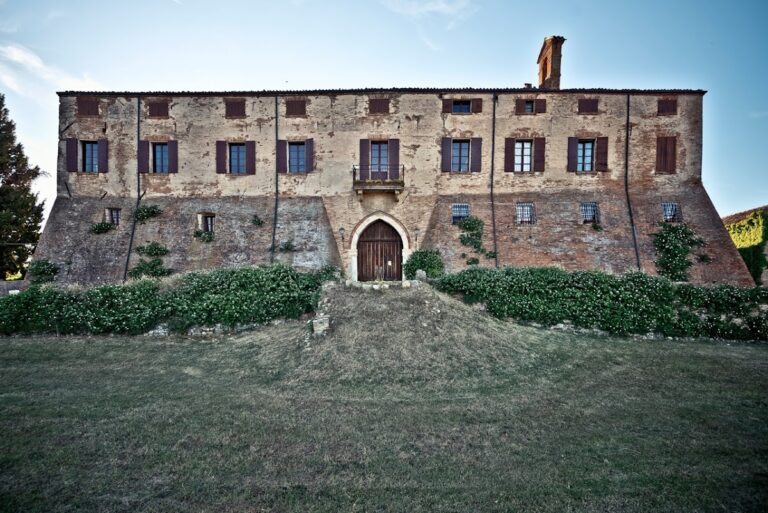
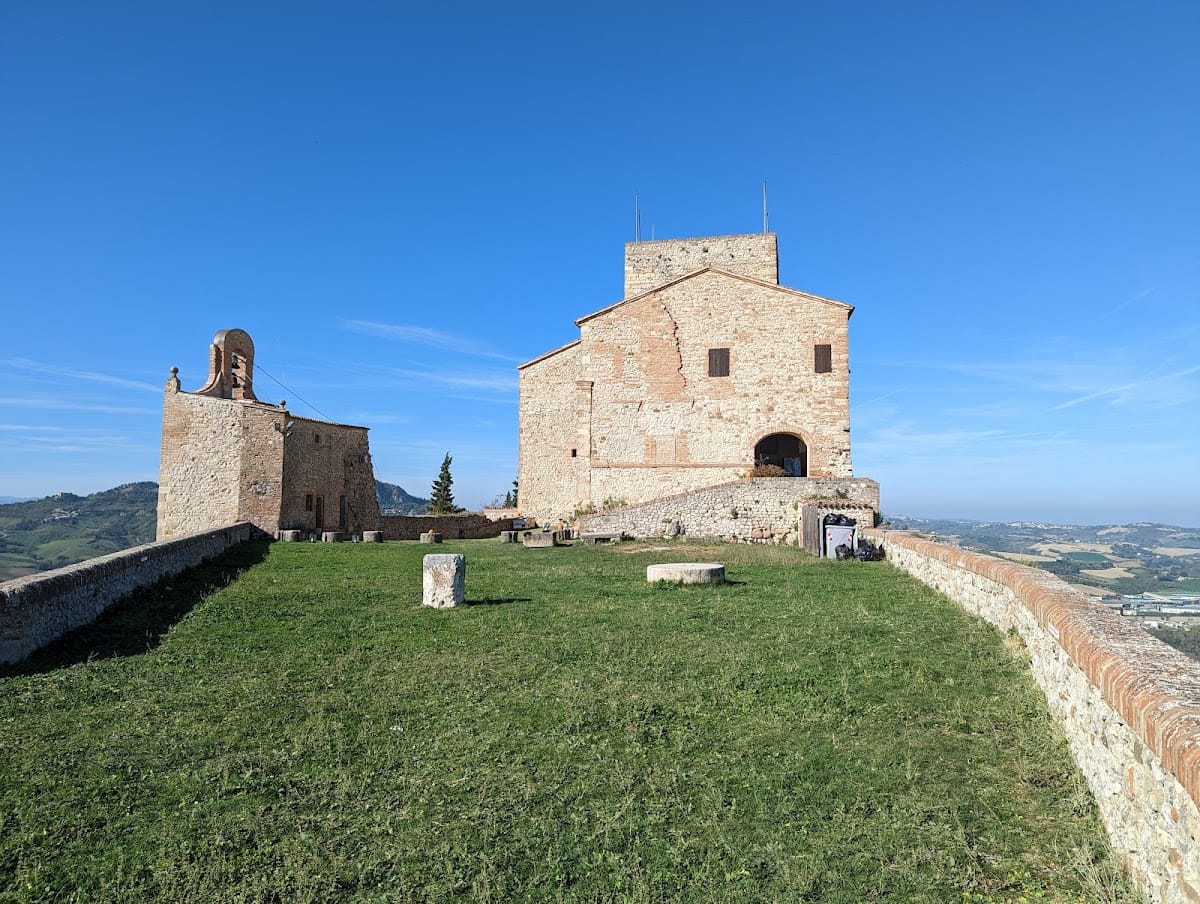
The complex occupies an extensive area on the highest part of Verucchio’s rocky outcrop, an Apennine spur above the town. Its broad site overlooks the surrounding hills, while the upper terrace reaches toward views of the sea. Construction and alteration extended from the tenth through the sixteenth centuries, with further modifications between the twelfth and sixteenth centuries. Rubble stone and brickwork form the masonry. The lower section uses precisely fitted squared stone blocks, around which later constructions were attached. The elevated complex includes two courtyards, the rooms of the Baronial Palace, and the Mastio Tower, the principal fortified tower of the castle.
Entrances and military spaces
Principal entrance and Loggia
The main entrance occupies the position of an earlier gateway equipped with a drawbridge. It leads toward the Guard Tower and an outer military platform once used for military operations, then to the sixteenth-century Loggia. A large wooden portal opens into an interior sequence that includes the Armoury, a small study, a frescoed room in the Mastio Tower, and the Great Hall of the Palatium, the formal palace or principal residence within the fortified complex. The hall formerly served as a training area for troops assigned to the castellan.
Cistern and prison
One courtyard contains a well used for water reserves and leads to a larger cistern, a constructed reservoir for storing water. The narrow, damp underground reservoir also served as a prison. An arrangement of torture instruments remains associated with that use.
Sant’Andrea and Holy Trinity towers
Beneath the ancient tower stand the towers of Sant’Andrea and the Holy Trinity. The Holy Trinity Tower can be entered internally as far as the room containing a bombarda, an early large-calibre gun used in late medieval warfare. A bell tower and the large round tower of Santa Trinità are also associated with the Rocca.
Residential and upper structures
Domus Nova
The sixteenth-century rooms of the Domus Nova were adapted as the apartment of Countess Ippolita. Their conversion reflects the fortress’s later residential use after its principal period as a Malatesta military stronghold.
Mastio Tower and upper terrace
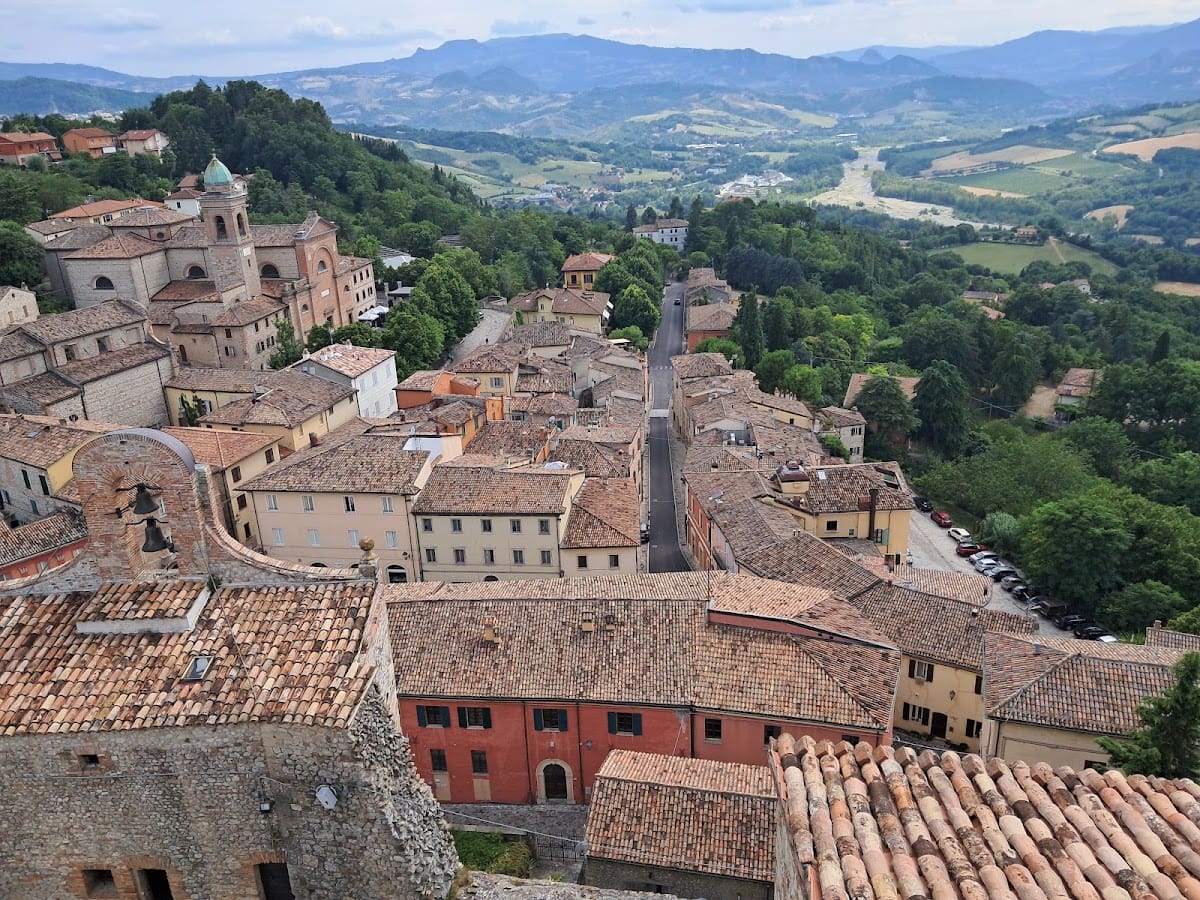
The Mastio Tower rises above the complex and can be climbed to its upper terrace. From there, the site extends across views of the sea, the surrounding hills, and the medieval settlement of Verucchio. An internal family tree of the Malatesta family is preserved within the fortress.
Nearby sites