Castello Due Torri di Scorticata: A Medieval Hilltop Castle in Italy

Site at a Glance
- Rating
- 4.6
- Popularity
- Low
- Country
- Italy
- Primary era
- Medieval
- External website
- Open
- Eras represented
- Medieval
- Civilizations
- Unclassified
- Site type
- Military
- Remains
- Castle
On this page4 sections
History
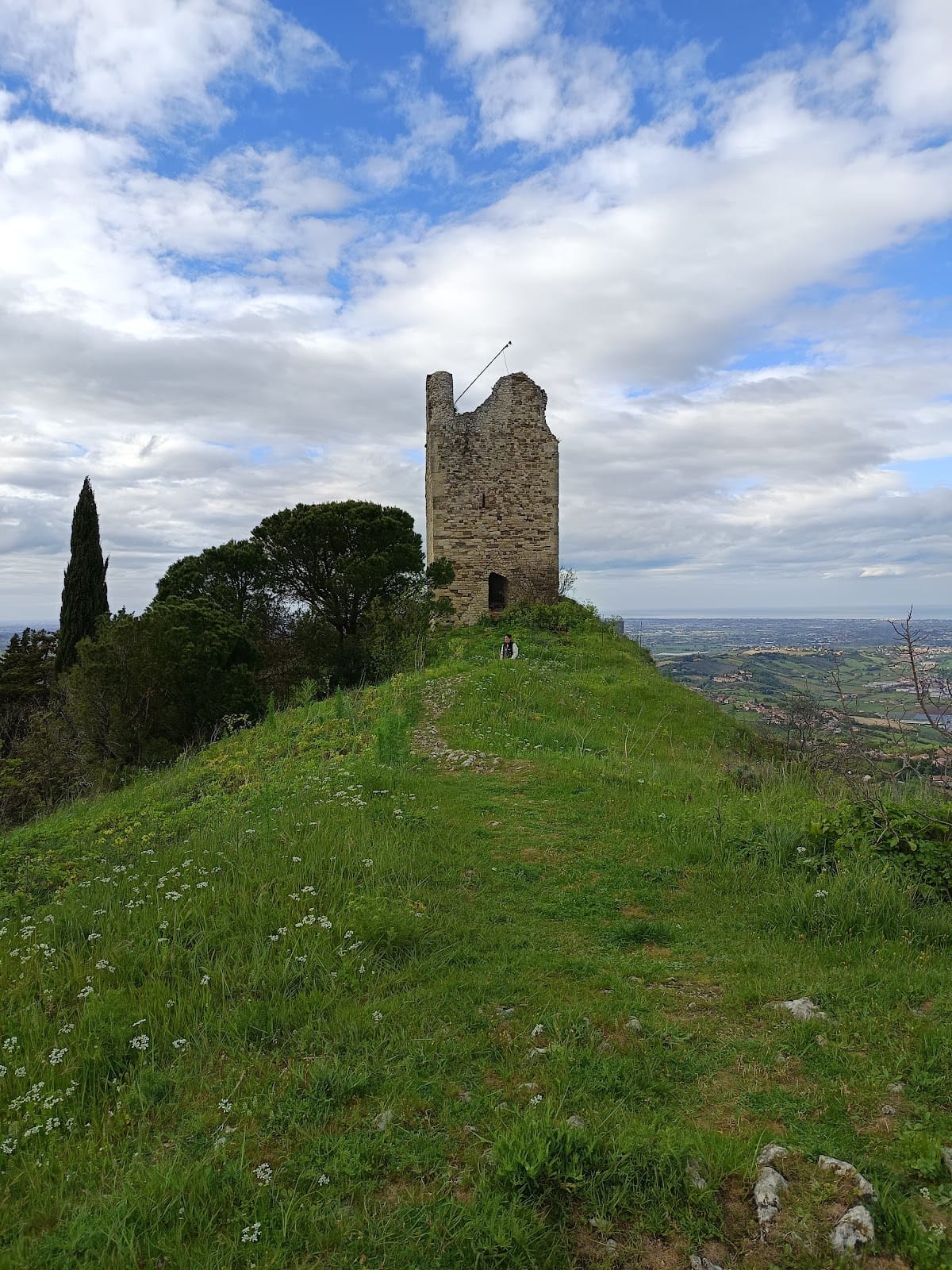
Castello Due Torri di Scorticata is a high-medieval hilltop castle in Italy, at Torriana in the municipality of Poggio Torriana. Its origins are uncertain: tradition places its construction around AD 1000, while another recorded view dates its inception to the twelfth century. Its first securely documented history begins in 1141, when Pope Lucius II donated the castle to the Church of Rimini.
Malatesta and Papal Rule
In 1186, the castle passed to the Malatesta family of Verucchio, a powerful medieval and Renaissance dynasty whose lordship centred on Romagna. It became part of the family’s wider network of fortified settlements around Rimini and remained under Malatesta control until 1462. In that year, Federico da Montefeltro, Duke of Urbino and a major fifteenth-century military commander, captured it again in the name of the Church.
The castle was briefly ruled by Venice at the beginning of the sixteenth century, but by then it had lost its military importance. In 1519, Pope Leo X, head of the Catholic Church from 1513 to 1521, granted the castle and nearby Verucchio as a fief to lesser members of the Medici family. In 1530, the fief passed to Ippolita Comnena, an Albanian-born noblewoman and the widow of Zanobi de Medici. It later went to her son from a second marriage, Alberto IV Pio di Savoia, and after his death was reabsorbed by the Apostolic Chamber, the papal institution responsible for financial and administrative affairs.
Later History and Changing Names
Around 1608, the castle passed to the Municipality of Rimini. For a long period afterward, quarrying and marble extraction eroded the slopes of the castle hill. The stronghold was called Castello di Torriana from 1938 and acquired the name Castello Due Torri around the 1960s. Other historical names include Castello Scorticata and Castrum Scortigatae.
The castle is also associated with a tragic tradition from the Malatesta family’s history. It has been hypothesized as the place where the sons of Paolo Malatesta took revenge on their uncle Gianciotto Malatesta. Gianciotto had killed his wife Francesca da Polenta and her lover Paolo, who was also his brother. Their relationship became one of the best-known tragic episodes in medieval Italian literature through Dante Alighieri’s Divine Comedy. After Gianciotto’s death, his inheritance passed to his sons, including Pandolfo, who received the territories and castles of Fano, Mondolfo, and Scorticata.
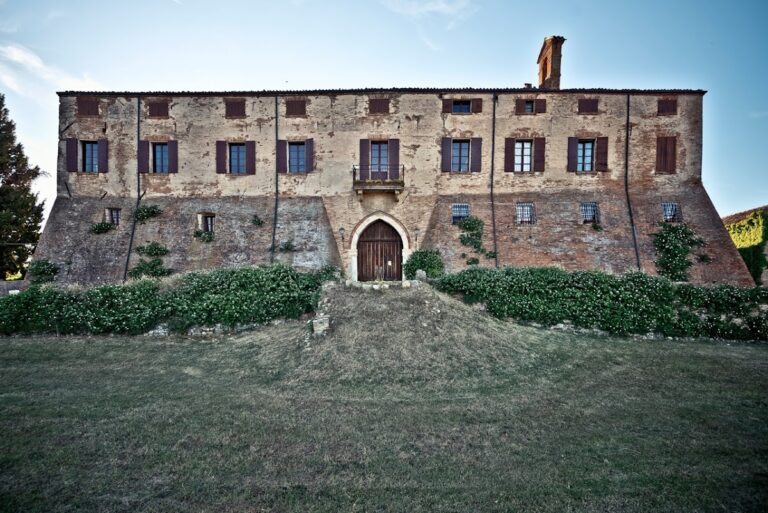
Castello Due Torri is designated Italian national heritage. The complex has been restored, and part of it is now used as a restaurant.
Remains
Castello Due Torri occupies both summits of a hill at Torriana, and its fortification system extended across them for approximately 1,000 metres. The castle is built of rubble stone. Little is known about its internal arrangement, although a description by Cardinal Anglico in 1371 recorded 35 rooms, offering an important glimpse of the medieval complex. The present remains are described as well preserved or restored, with part of the historic structure adapted for use as a restaurant.