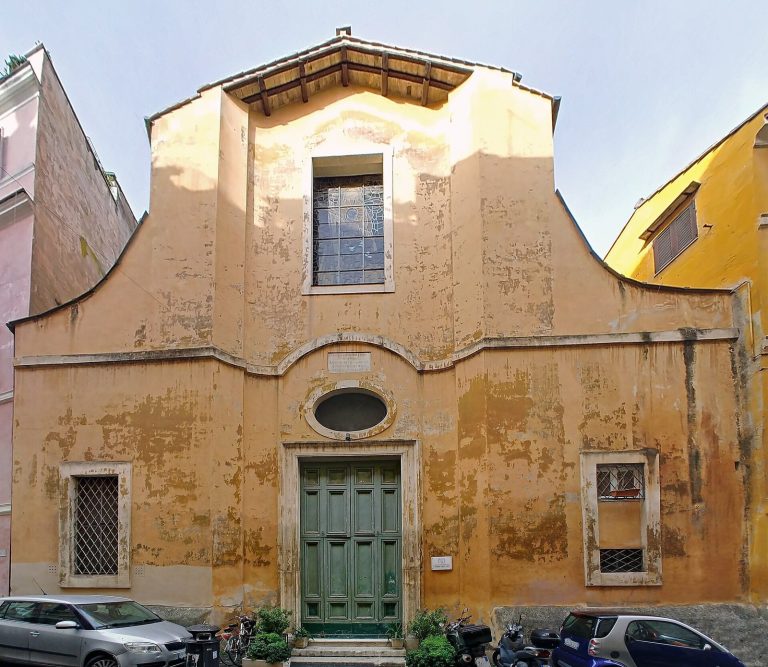
San Bartolomeo all’Isola: A Church and Martyrs’ Memorial in Rome
Site at a Glance
- Popularity
- High
- Country
- Italy
- Primary era
- Medieval
- Eras represented
- Medieval, Early Modern
- Civilizations
- Papal States
- Site type
- Religious
- Remains
- Basilica
On this page13 sections
History
San Bartolomeo all’Isola is a church in Rome, Italy, whose foundation is generally dated to 998 and attributed to Holy Roman Emperor Otto III. Another proposal places it between his visits to Rome in 998 and 1000-1001. Its architecture combines Romanesque, a medieval style associated with rounded arches and massive forms, and Baroque, a later ornate and dramatic style. The church’s history links the island’s ancient healing associations with Christian dedications and a modern memorial.
Roman and early Christian associations
A Roman temple of Aesculapius once occupied the site. Its association with healing helped make Tiber Island a place connected with medical care, a tradition that continued under Christian worship. Over time, Saint Bartholomew also became associated with medicine and hospitals. An earlier church may have stood here before the end of the ninth century, possibly dedicated to the Holy Savior.
Foundation and medieval dedications
Relics of Bartholomew, one of the apostles of Jesus, were taken from Lipari to Benevento in 838. In 983, Holy Roman Emperor Otto II gave Rome a portion of those relics. The church’s first dedications honored Adalbert of Prague, a bishop and missionary venerated as a martyr, and Paulinus of Nola, a bishop and saint.
Adalbert’s association with the church reflected his friendship with Otto III and the presence of an arm relic. Its transfer by Bolesław I the Brave, an early Polish ruler, was understood to strengthen ties between Poland, the imperial court, and Rome. Efforts to establish the dedication to Adalbert were connected with the process of his canonization. The island setting has also been interpreted as a symbolic reference to the place of his martyrdom. Adalbert’s dedication continued into the 1180s, while eleventh- and twelfth-century references also associate the church with Paulinus and Bartholomew. Further renovation took place in 1180.
Later rebuilding and religious use
The church became a titular church on 6 July 1517, a status meaning it was assigned to a cardinal-priest. In 1524 it was entrusted to the Franciscan Observants, a branch of the Franciscan order that followed a stricter observance of its rule; they built a monastery beside it. A flood severely damaged the church in 1557. It was rebuilt in 1583-1585, and restoration followed in 1852, with further renovation in later centuries. The church is also a minor basilica, an honorary designation granted by the Catholic Church, and serves as a rectory, administered by a rector, for the parish of Santa Maria in Portico in Campitelli.
A memorial to Christian martyrs
In 2000 Pope John Paul II dedicated the church to the memory of Christian martyrs of the twentieth and twenty-first centuries. The Community of Sant’Egidio, a Catholic lay community, cares for the memorial. Relics of Polish martyrs recognized as Blessed, a title for people beatified for public veneration, were brought to the basilica in 2012, 2013, and 2023. They include Karolina Kózka, Stanisław Kostka Starowieyski, Jerzy Popiełuszko, Wincenty Matuszewski, Józef Kurzawa, Michał Kozal, and Jan Macha.
Remains
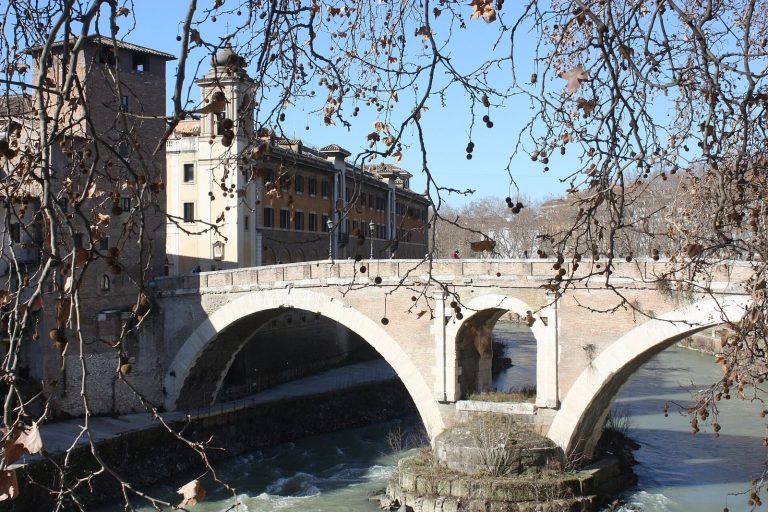
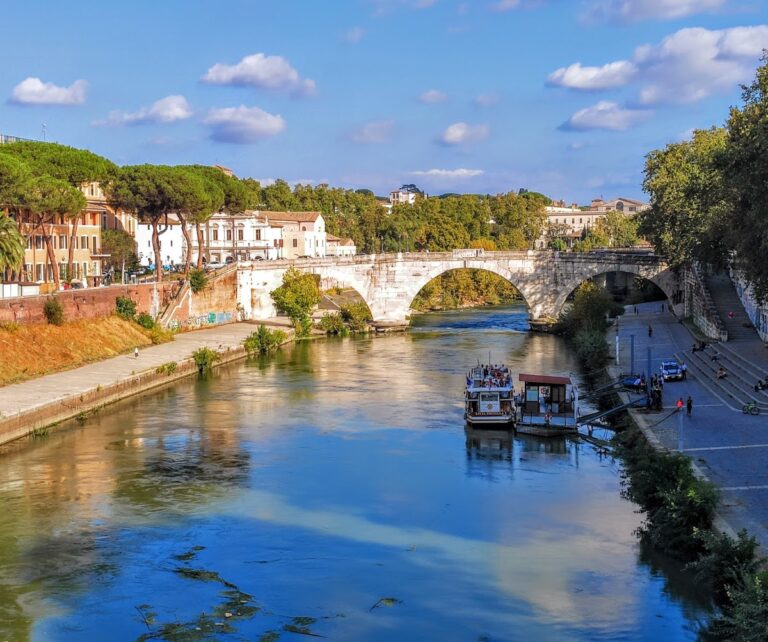
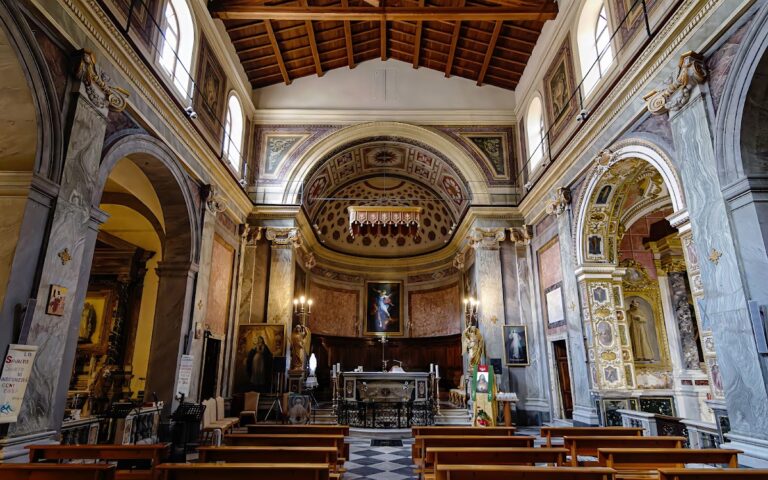
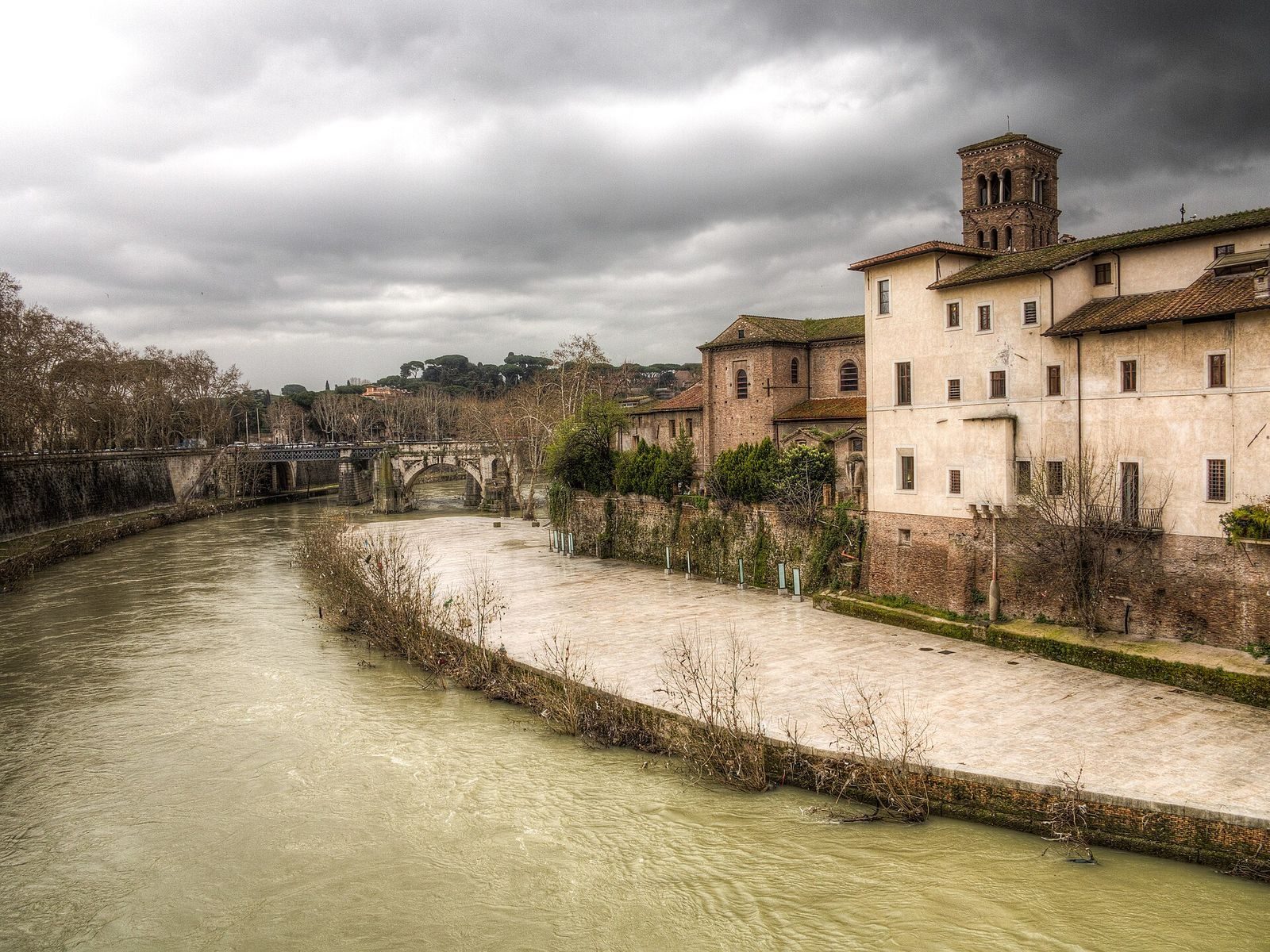
The church stands at the eastern, downstream end of Tiber Island, between the Cestius and Fabricius bridges, which connect Rome’s historic center with Trastevere. In Roman times, the island was clad in marble to resemble a ship, and its prow remains visible. The church measures about 45 metres long and 22 metres wide. Its interior has three aisles, with the central aisle ending in a rounded sanctuary end.
The church interior
Columns and altar
Fourteen ancient Roman columns and two lion supports survive inside the church; the columns date from its earliest reconstruction. The main altar incorporates an ancient sarcophagus, a stone coffin of red-purple porphyry, a hard stone, decorated with lion heads. It is said to contain relics of Saint Bartholomew.
The wellhead
A cylindrical marble wellhead stands above a well on the steps leading to the presbytery, the area around the altar. Set on a square base, it has four panels of figures framed by ornamented arches. They depict Christ, an emperor, Saint Bartholomew, and a bishop identified as either Adalbert or Paulinus. The figures have compact proportions and heavily draped clothing. Christ raises his right hand in blessing and holds a book in his left; Bartholomew carries a knife. The bishop wears a Y-shaped pallium, a vestment worn by senior clergy, and holds a staff and book. The emperor carries a sceptre and a disk showing a church.
The wellhead’s date and the figures’ identities remain uncertain. Proposed dates range from the early eleventh century to the late eleventh or early twelfth century. One influential interpretation places it near 1000 and regards the bishop as a possible early image of Adalbert. Aleksander Gieysztor argued for this identification on historical, symbolic, and stylistic grounds, suggesting the sculpture may have come from northern Europe and reflects Ottonian art, associated with the Holy Roman Empire’s Ottonian rulers, as well as Byzantine influences. Other interpretations identify the bishop as Paulinus and the emperor as Otto III, Henry II, or Otto II.
Exterior and neighboring structures
Baroque façade
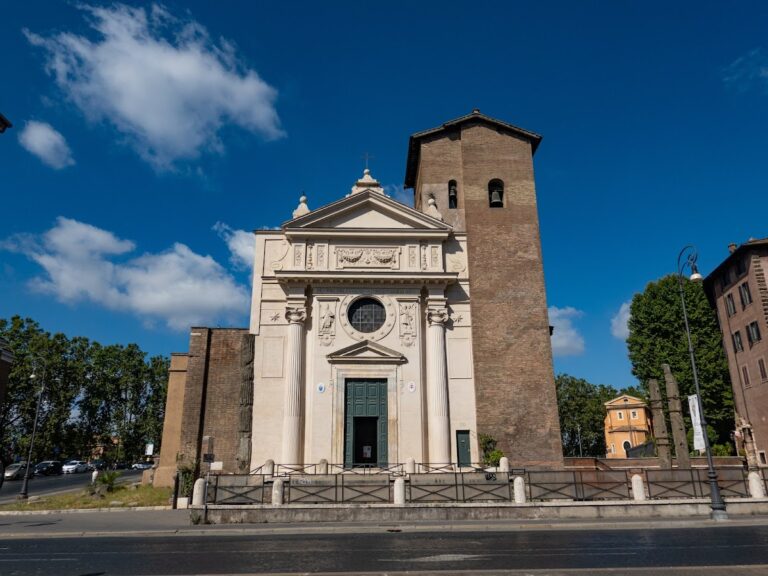
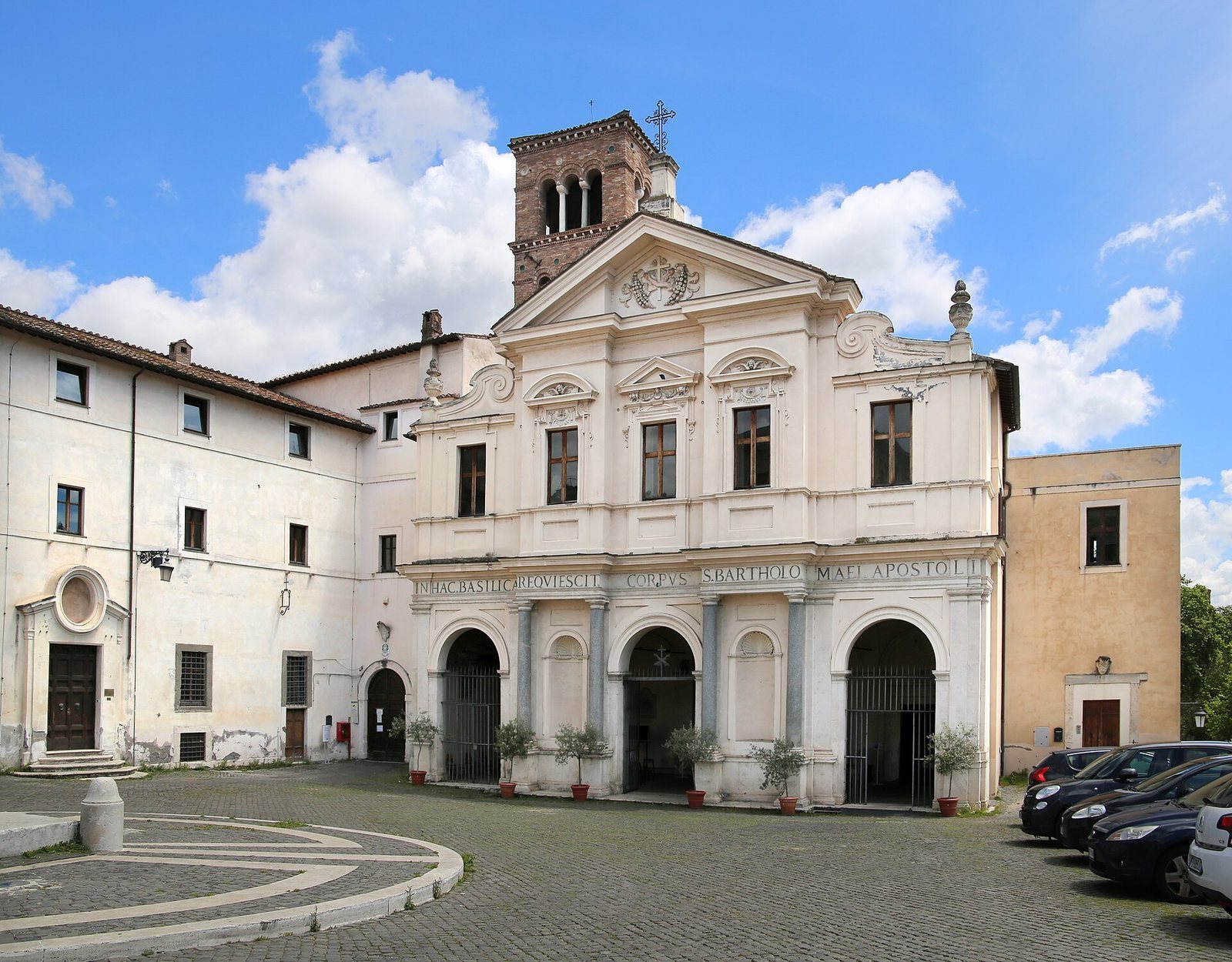
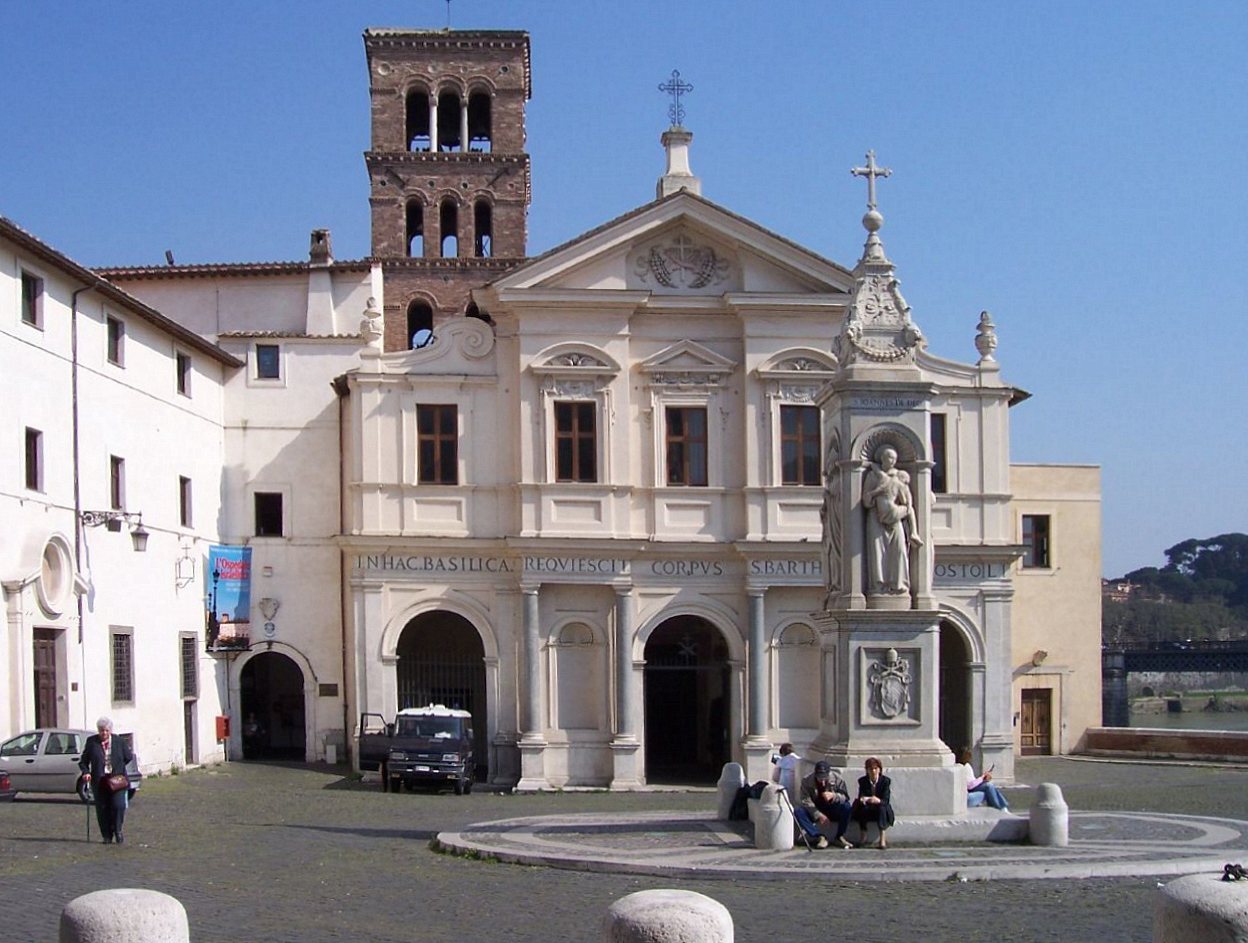
The present Baroque façade dates to a reconstruction in 1624, commissioned by Cardinal Trescio. It forms part of the church’s later architectural fabric.
Tower and square monument
Near the church stands the Torre dei Caetani, a twelfth-century tower and the only surviving part of the medieval castle built on the island by the Pierleoni family. In the small square before the church is a four-sided monument with saints in niches. Made by sculptor Ignazio Jacometti, it was erected in 1869.
Martyr memorial
The side chapels are dedicated to Christian martyrs associated with Africa, the Americas, Europe, the Far East, and Southeast Asia. The Community of Sant’Egidio painted the icon on the main altar. The memorial also includes a piece of rock kept as a relic because it was used in the 1984 killing of Jerzy Popiełuszko, a Polish Catholic priest.