San Michele in Bosco: A Former Olivetan Abbey in Bologna
Site at a Glance
- Popularity
- Medium
- Country
- Italy
- Primary era
- Early Modern
- Eras represented
- Medieval, Early Modern, Modern
- Civilizations
- Italian, Papal States
- Site type
- Religious
- Remains
- Monastery
On this page17 sections
History
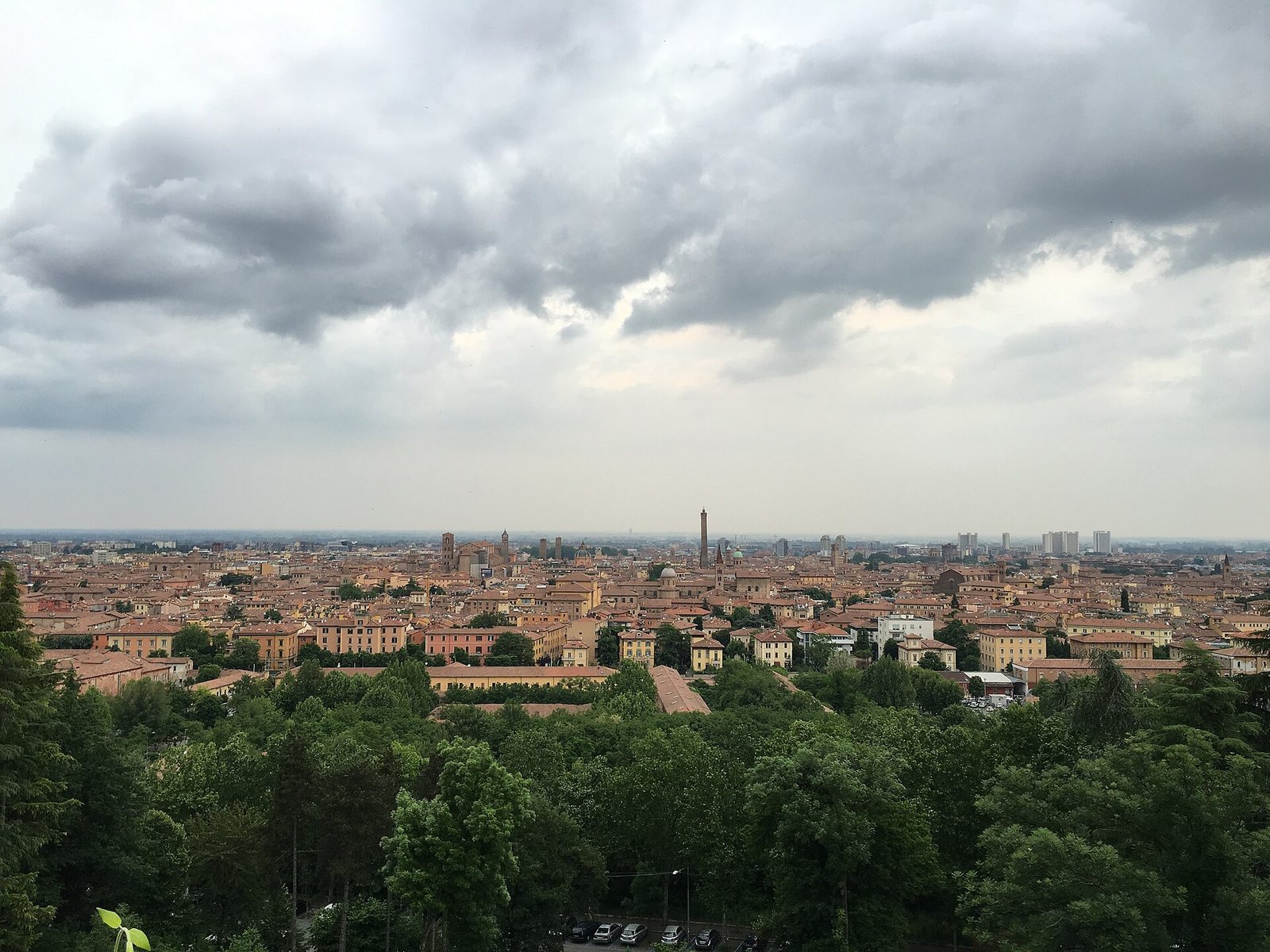
San Michele in Bosco is a former Olivetan abbey on a hill near the historic center of Bologna, Italy. Monastic buildings occupied the site by about the 4th century, and the church was later rebuilt in Renaissance form. Dedicated to the Archangel Michael, the complex became a center for learning and music before later housing the Rizzoli Orthopedic Institute.
Monastic foundations and medieval upheavals
A tradition says that Goths, a Germanic people, dispersed the early monastic community in the early 5th century. After it was re-established, Hungarian raids, conducted by Magyar forces, destroyed the monastery in 906.
Augustinian monks were established at the site by 1107, and documents refer to the monastery in 1120 and 1204. Between 1348 and 1359, plague and the Visconti occupation of Bologna, led by a Milanese ruling dynasty, reduced the community. At times, the complex also served as a fortress defending the town.
Olivetan abbey and Renaissance rebuilding
Olivetans, a branch of the Benedictine religious order, settled at San Michele in Bosco in 1364 at the direction of Pope Urban V. Their presence may have begun earlier, by the middle of the 14th century. After a prolonged period of neglect, the monastery was formally entrusted to the order in 1564.
The church was destroyed in 1430 and rebuilt in stages, with the work substantially complete by 1523. Spanish armies serving the Holy Roman Emperor partially occupied the complex in the 1540s. In the following two centuries, the monastery flourished as a center for schools of learning and music, while new buildings and decorative work reshaped the complex.
In 1539–1540, Giorgio Vasari created works for the monastery’s communal dining hall. The subsequent expansion included a dormitory wing, a staircase, cloisters, and a guesthouse. A funicular, or cable railway, connected San Michele in Bosco with the Giardini Margherita in 1888–1889, opening in connection with Bologna’s 1888 Great Emilian Exhibition.
Suppression and institutional reuse
During the Napoleonic occupation, the complex was expropriated in 1797, and the monks were expelled. The buildings became a barracks, then a prison for people sentenced to life imprisonment in 1804. Franciscan friars arrived in 1838, and the former monastery later served as a residence for the King of Italy.
In July 1796, 31 artworks were taken from Bologna; 16 later returned to Italy. A painting by Guercino, formerly at San Michele in Bosco and depicting Saint Bernard of Clairvaux receiving the rule from Mary, was taken to France and destroyed in a Bordeaux fire in 1871.
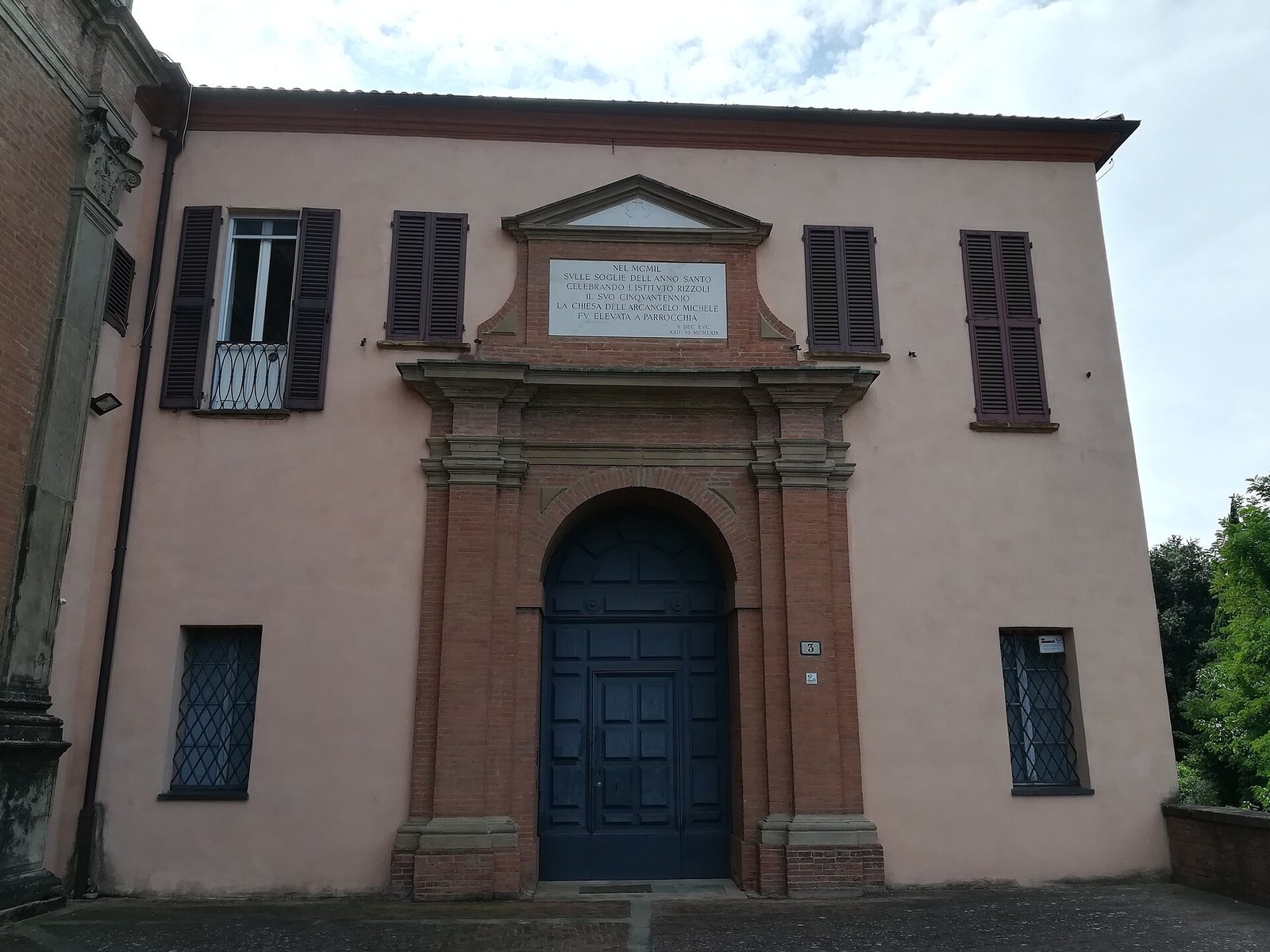
Surgeon Francesco Rizzoli acquired the former monastery in 1880 and donated it to the Province of Bologna for an orthopedic center. Established using his bequest, the Rizzoli Orthopedic Institute was inaugurated by King Umberto I on 28 June 1896. The municipality acquired the monastery buildings in 1955 to house the institute.
Remains
The complex consists of a church and an adjoining monastery. The monastery includes a communal dining hall, a dormitory wing, a guesthouse, a staircase, and several cloisters, covered walkways surrounding open courts. Its surviving architecture reflects successive building campaigns, while the church has a Renaissance façade and a decorated interior.
Church
Facade and interior
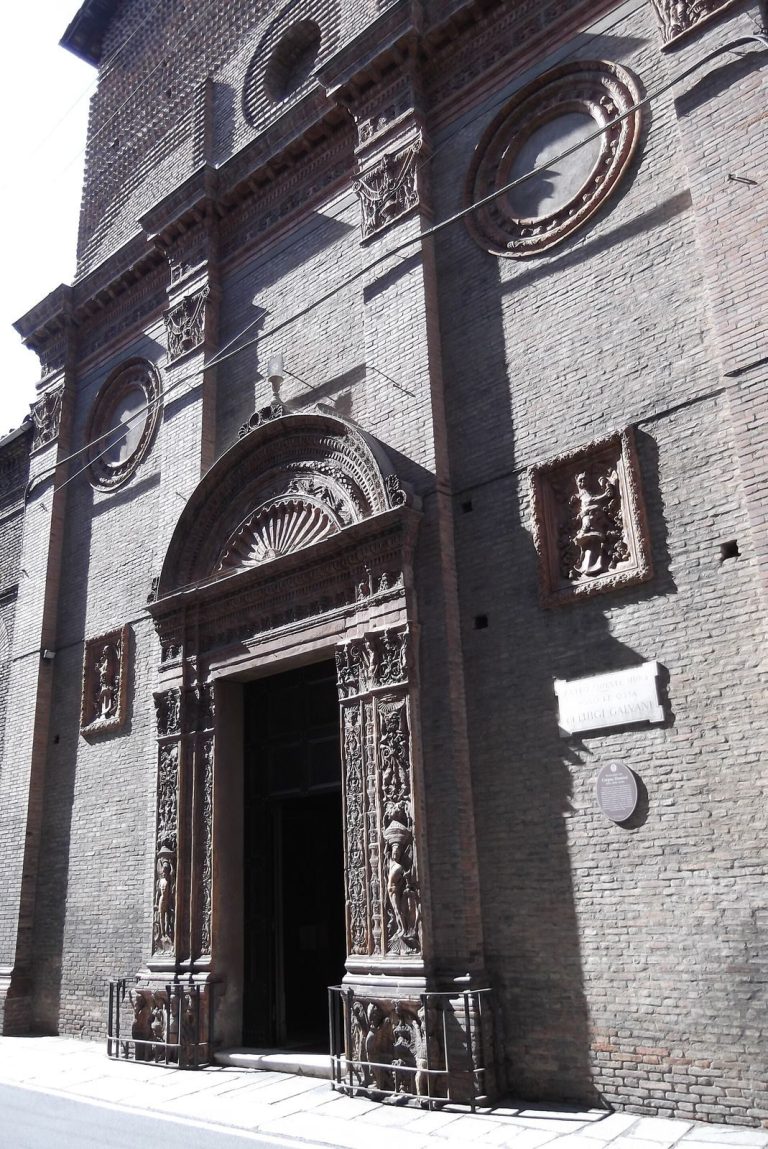
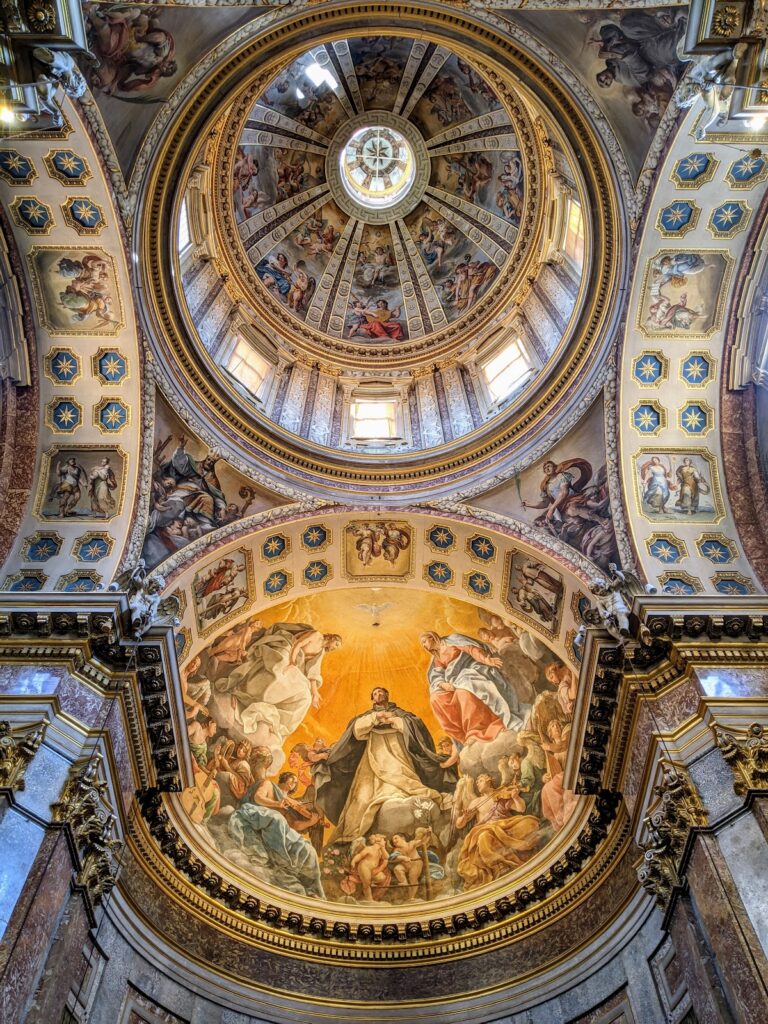
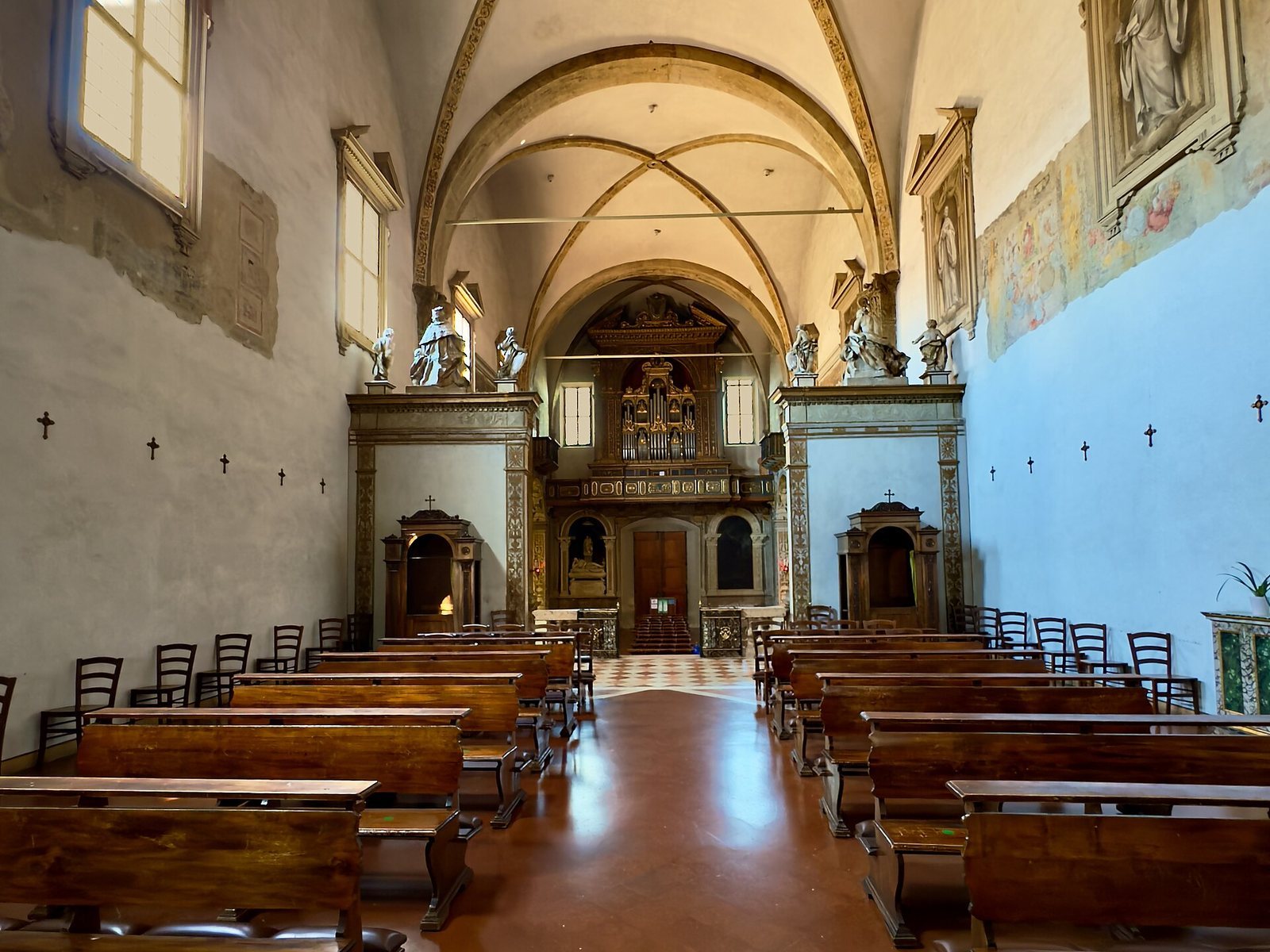
The church’s Renaissance façade was designed by Biagio Rossetti and his workshop. Its marble portal dates to 1521 and was sculpted by Giacomo da Ferrara and Bernardino da Lugano. Inside, one central worship space opens onto four side chapels; screens enclose the presbytery, the area around the main altar. Painted architectural forms create an illusion of three-dimensional space.
Organ and bells
The organ, built by Giovanni Battista Facchetti in 1524–1526 and altered several times afterward, stands on the choir loft. Fra Raffaele da Brescia richly ornamented its wooden case in 1525. The case is divided into five sections. Four bells cast in 1958 by the Lucio Broili foundry of Udine occupy the bell chamber; they swing and are rung electrically.
Church paintings
A detail from a church fresco by P. Tibaldi, dated to about 1553 and depicting Jesus with the Pharisees, is now in Bologna’s National Picture Gallery.
Monastic buildings and cloisters
Refectory
Vasari painted frescoes and panels for the refectory in 1539–1540. Two panels are now in Bologna’s National Picture Gallery, and a copy of a panel is kept at the monastery. Vasari’s Supper of Saint Gregory the Great, originally made for the refectory, is also in the gallery.
Dormitory and service buildings
The dormitory’s side wing was completed in 1567. The monastery’s staircase was completed in 1588, and its guesthouse in 1592. These buildings belong to the sequence of additions that expanded the monastic complex.
Pine Cloister
The Pine Cloister was completed in 1590 and later decorated by Cesare Baglioni.
Octagonal cloister
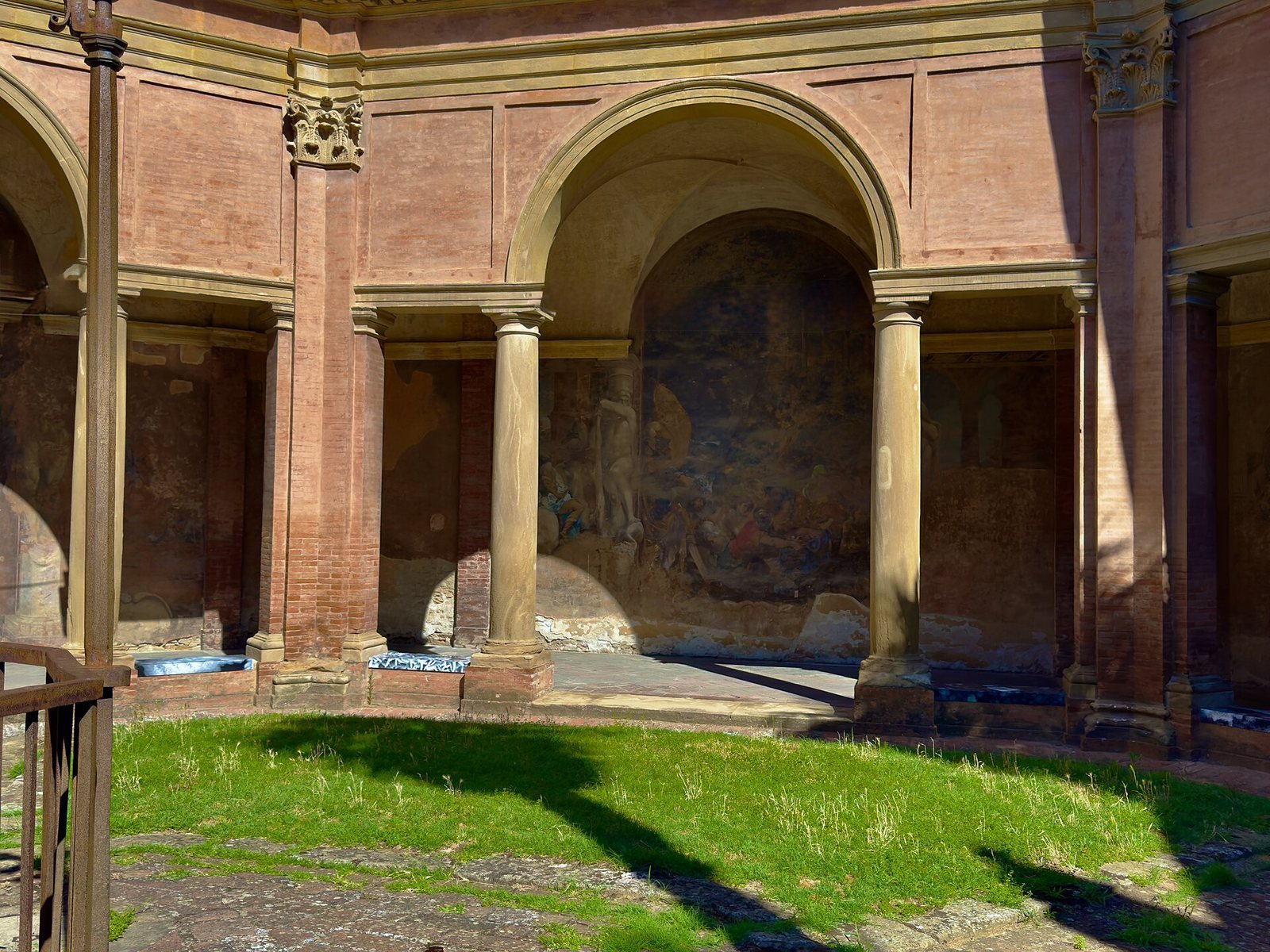
Built in 1602–1603, the octagonal cloister contains frescoes by Ludovico Carracci and his pupils, including Alessandro Albini. The scenes depict the life of Saint Benedict, who is associated with the Benedictine monastic rule, and the early Christian martyrs Cecilia, Tiburtius, and Valerian. Painted in oil on plaster, the scenes survive mainly in fragments and are interspersed with monochrome male figures used as decorative supports.
Corridor, garden, and viewing terrace
Corridor and visual effect
A long corridor and the distant Torre degli Asinelli, a medieval Bologna tower, create an optical effect known as the telescope effect or vista paradox. The tower appears larger as an observer retreats along the corridor and smaller when the observer approaches it. Marco Costa and Leonardo Bonetti of the University of Bologna investigated the effect scientifically.
Garden and viewing terrace
The viewing terrace in front of the church overlooks a restored garden below. In 2010, work returned the Remo Scoto Garden to its late-19th-century form and cleared the terrace, restoring the previously obstructed view across Bologna.