Holyrood Church: A Medieval Parish Church and Merchant Navy Memorial in Southampton
Site at a Glance
- Popularity
- Medium
- Country
- United Kingdom
- Primary era
- Medieval
- Eras represented
- Medieval, Modern
- Civilizations
- British, English
- Site type
- Religious
- Remains
- Church
On this page14 sections
History
Origins and medieval town
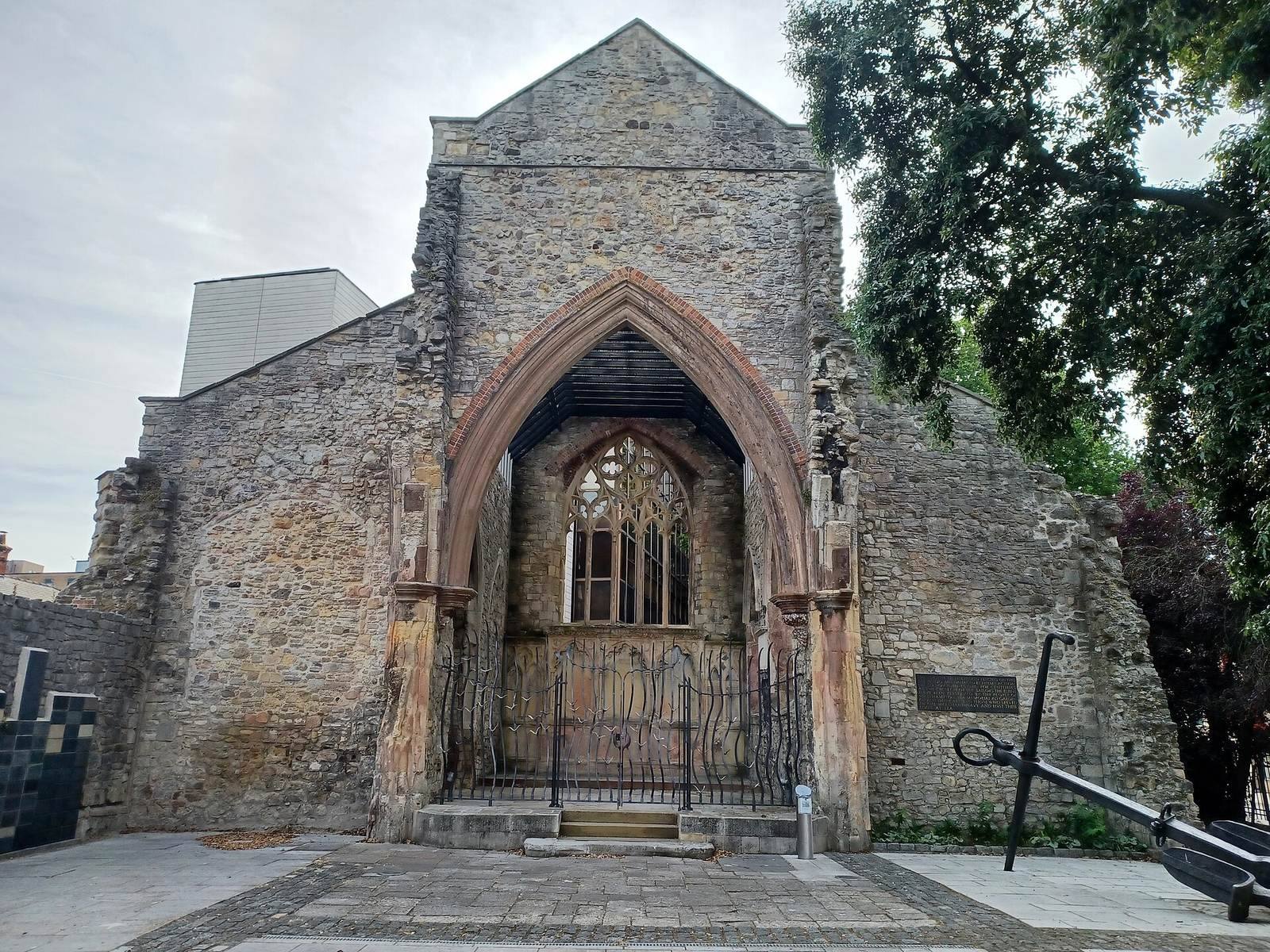
Holyrood Church is a medieval Anglican church in Southampton, United Kingdom, rebuilt at its present site in 1320 and dedicated to the Holy Cross. It was one of five churches serving the old walled town and later stood at the centre of local life.
The church is recorded by 1160, when Henry II, king of England from 1154 to 1189, granted it and three other chapels to the monks of St Denys, a monastic religious community. The name Holy Rood means Holy Cross. It has been interpreted as suggesting Saxon origins, referring to the early medieval period associated with Germanic settlers in Britain. By this interpretation, a church founded after the Norman Conquest of 1066 would have been called St Cross.
Before 1320, Holyrood stood in the middle of the High Street, then known as English Street. It was pulled down and rebuilt on the eastern side of the road. During the Middle Ages, it served the town’s south-eastern quarter as its parish church.
Worship and local life
Holyrood was a place of worship for crusaders, participants in military-religious expeditions to the Holy Land, and for soldiers travelling to the 1415 Battle of Agincourt, a major English-French battle in the Hundred Years’ War. In 1554, King Philip II of Spain passed through while travelling to marry Mary I at Winchester Cathedral.
In 1848–49, the vicar, the Reverend William Wilson, led a restoration that retained parts of the medieval church. The work also demolished the wooden colonnade outside. In 1851, the church had seating for 974 people; the morning service drew 462 attendees and the evening service 405. In the following decades, residents continued to attend its services and sermons. Holyrood became known locally as the Church of the Sailors and was associated with welcoming the New Year.
Bombing, memorial, and conservation
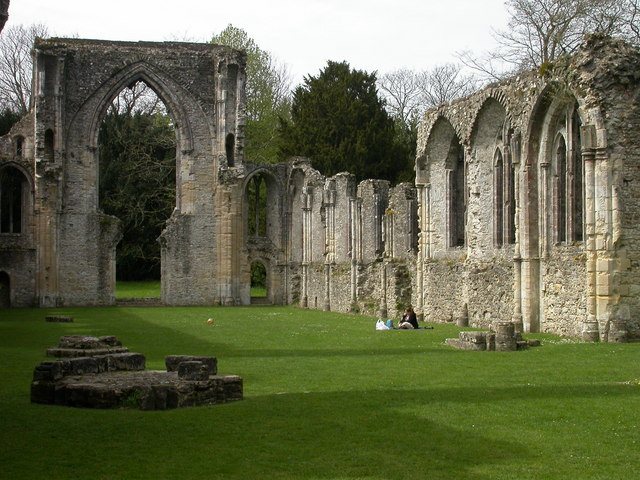
German bombing devastated central Southampton on the night of 30 November 1940, destroying the centre of Holyrood. Together with a raid a week earlier, the attacks killed 214 people and destroyed nearly 500 properties. Seven Southampton churches were lost during the city’s Blitz, the German air raids. A brass lectern dating from the fourteenth or early fifteenth century was rescued from Holyrood’s ruins, restored, and later placed at St Michael’s Church.
In 1953, Holyrood was listed as a Grade II* building, a category for especially important buildings. The ruins were restored and dedicated in 1957 as a memorial to Merchant Navy seafarers. The Merchant Navy is the civilian fleet engaged in commercial transport by sea. That year, the ruins also received scheduled protection, a legal status for nationally important archaeological sites and monuments.
By 2004, weather exposure and structural problems had put the church at risk of collapse. Repairs to the tower and chancel followed in 2004–06, together with improvements to the site. Holyrood continues to serve as a Merchant Navy memorial and hosts an annual Merchant Navy Day service. The nave and chancel are also used for temporary exhibitions and musical events.
Remains
Church fabric and layout
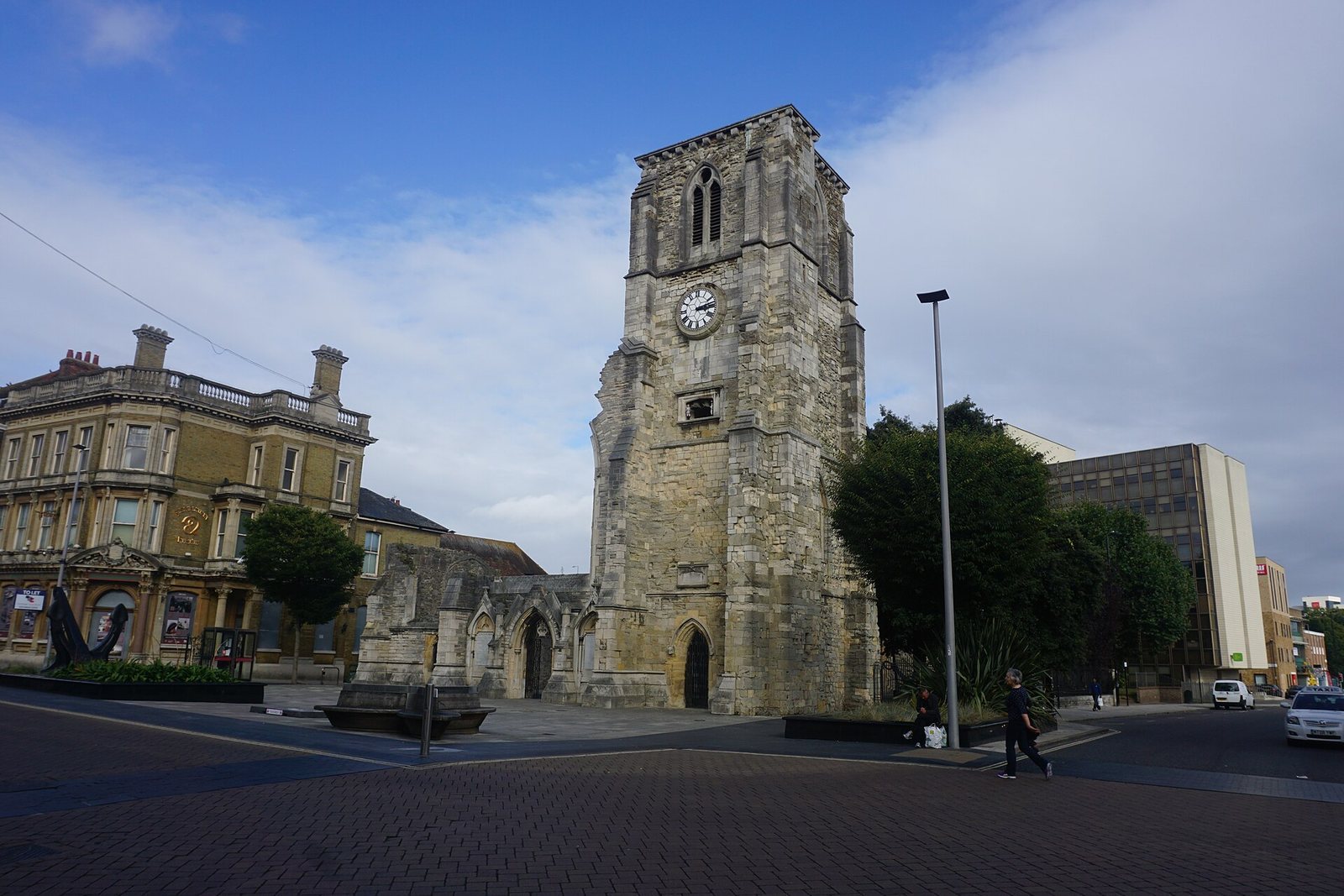
The surviving church preserves parts of its medieval layout: the tower stands at the south-west corner, the chancel occupies the eastern end, and substantial sections of the north walls remain. Before the 1940 destruction, the church had a nave, the main body of the building, with side aisles and a choir or chancel around the altar. Its recorded interior included pointed arches and upper-level clerestory windows.
The tower
A plaque on the tower’s west face commemorates Charles Dibdin, identifying him as a Southampton native and poet, dramatist, and composer of songs including Tom Bowling and Poor Jack. A clock and church bells stand above it. The bells include quarter jacks dating from before 1760, small figures that strike the quarter hours.
The chancel
The chancel has a glass roof. Wrought-iron screens, gates, and railings made by artist metalworker Charles Normandale were installed for the chancel and the Titanic memorial fountain during improvements to the site.
The north walls and former nave
Large sections of the north walls survive alongside the remains of the church’s main body. Earlier interior arrangements included an open timber roof and stalls, or fixed seats. Accounts of the restored interior also describe tall pointed arches between the nave and aisles, upper clerestory windows, and a richly ornamented west window.
Interior furnishings
By 1841, the organ had been moved to the western end of the church; a later description placed it to one side. The interior included a wooden screen attributed to the reigns of Elizabeth I or James I, a Gothic baptismal font, and fragments of painted glass. The font was octagonal and decorated with niches. By 1801, it had been moved from near the church door to beneath the organ loft. A brass eagle lectern, a reading stand supported by an eagle figure, stood in the chancel.
Memorials and later features
Titanic memorial fountain
Beneath the tower is a fountain erected in 1912–13 in memory of people who died when the RMS Titanic sank. It was moved from Cemetery Road on Southampton Common. Four stone columns support it, with a curved pediment on each side bearing Titanic carvings and a small, four-columned roof structure above.
Merchant Navy memorial
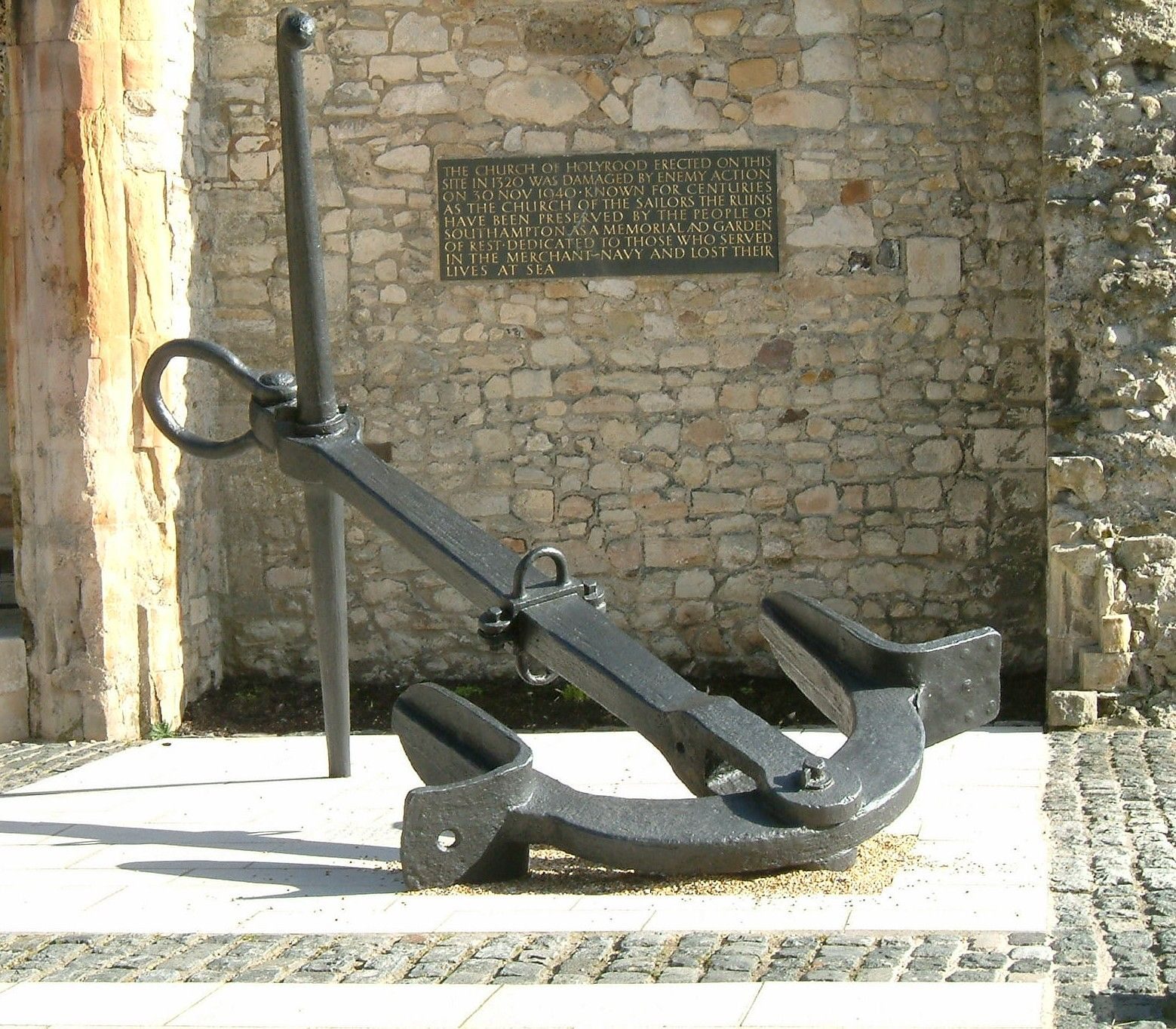
In a corner of the former nave, an anchor stands behind a plaque. The inscription recalls the church’s history and its preservation as a memorial and garden of rest for Merchant Navy seafarers who died at sea.
Audio posts
Audio posts installed in 2007 play historical recordings made by the Southampton Oral History Unit. The recordings address the church’s pre-war appearance and the area’s importance to local people.