Necropolis of Pranu Muttedu: A Prehistoric Burial and Ceremonial Site in Sardinia
Site at a Glance
- Popularity
- Medium
- Country
- Italy
- Primary era
- Stone Age
- Eras represented
- Stone Age
- Civilizations
- Unclassified
- Site type
- Burial
- Remains
- Necropolis
On this page10 sections
History
The Necropolis of Pranu Muttedu is a major funerary and ritual site near Goni in Sardinia, Italy, created by communities of the pre-Nuragic period, before the island’s later culture of monumental stone towers. Its early phase is associated with the final phase of the Ozieri culture, a Late Neolithic culture of Sardinia. Finds date to about 3200–2800 BCE, and use continued from the Late Neolithic into the beginning of the Copper Age.
Tomb II is interpreted as a likely center for communal ceremonies focused on ancestor worship. It is also thought likely to have held the burials of prominent members of the community.
The necropolis was discovered in 1975 in a cork-oak grove on both sides of the Senorbi–Goni road. Archaeologist Enrico Atzeni explored the site from 1975 to 1984, and excavation campaigns began in 1980. In 2025, the necropolis became part of the UNESCO World Heritage property Funerary Tradition in the Prehistory of Sardinia – The Domus de Janas, alongside 26 other Neolithic sites in Sardinia.
Remains
The archaeological park covers about 200,000 square metres on a plateau near Goni, at an elevation of 540 metres. Its features lie on both sides of the Senorbi–Goni road and include standing stones, ringed burial monuments, earth graves, and rock-cut tombs. The tombs vary in size and plan; some have corridors formed by rows of upright slabs.
Standing stones
The western alignment
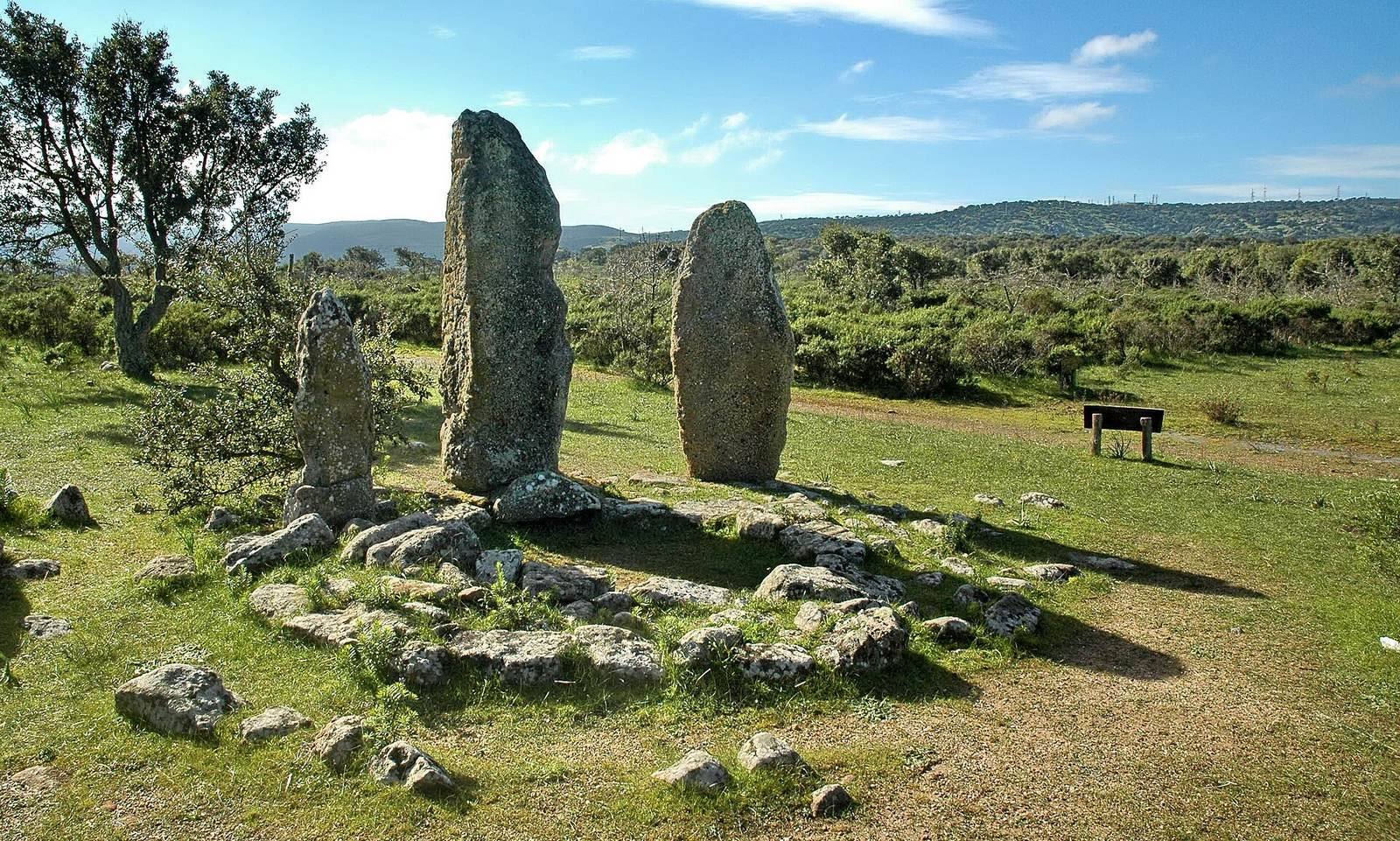
Around 60 menhirs, or upright standing stones, occur across the site as single stones, pairs, lines, and groups. This is Sardinia’s second-largest known concentration, after Biru ’e Concas, where about 200 have been recorded. Most stones are unfigured, while some have early human-like forms. Many were found fallen and re-erected during excavation. In the western part, near Tomb II and the great circle, an east–west alignment extends for 32 metres. Its 18 local sandstone stones stand at irregular intervals of 0.5 to 2 metres and range from 0.5 to 2.7 metres high. Several are broken, and most are heavily weathered; better-preserved examples show fine pecked finishing. Menhirs V, VII, and XII have an ogival outline and a cross-section that is flat on one side and convex on the other.
Other groups
About 30 metres east of the alignment’s last stone, two more monoliths stand outside its axis. A human-like menhir accompanies Tomb V. Near Tomb IV, three slender, column-shaped stones of different sizes form the group called La Triade.
Burial monuments
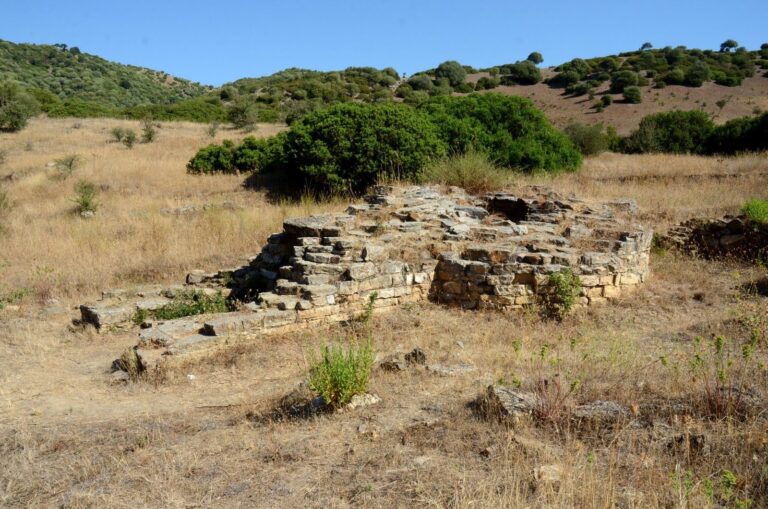
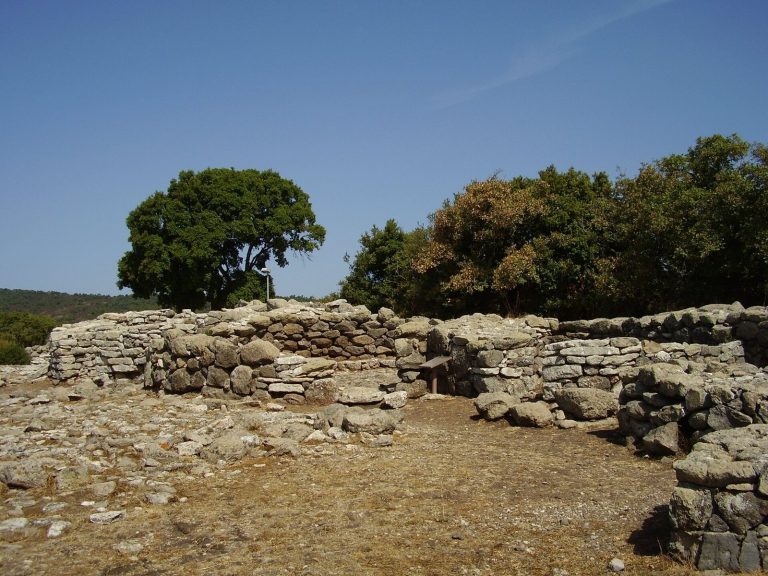
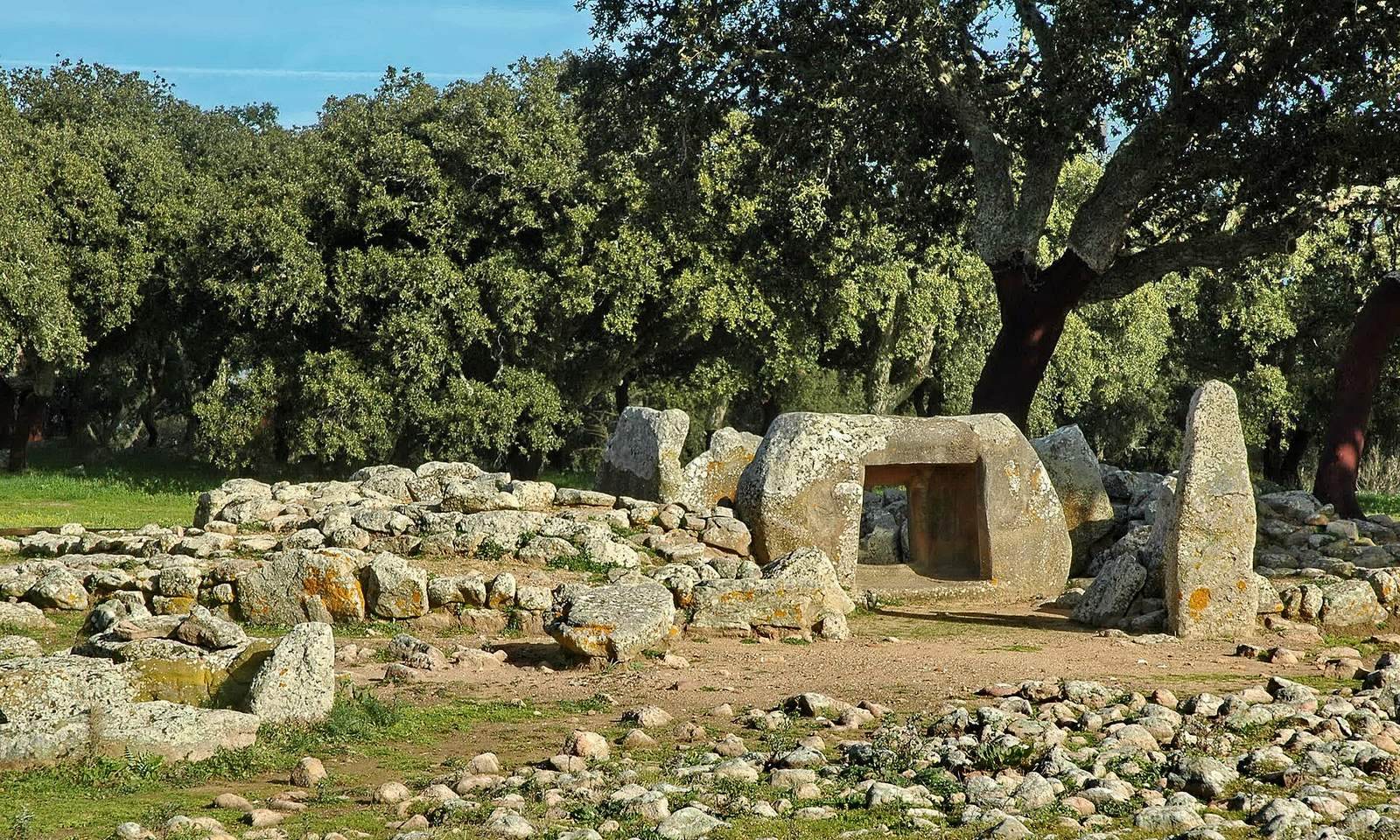
Two larger and three smaller burial mounds lie near the stone alignment. Tombs are often enclosed by two or three rounded or oval rings of stone, sometimes built in steps. Their chambers differ in size and arrangement, while the corridors at Tombs III and V use rows of upright slabs.
Tomb II
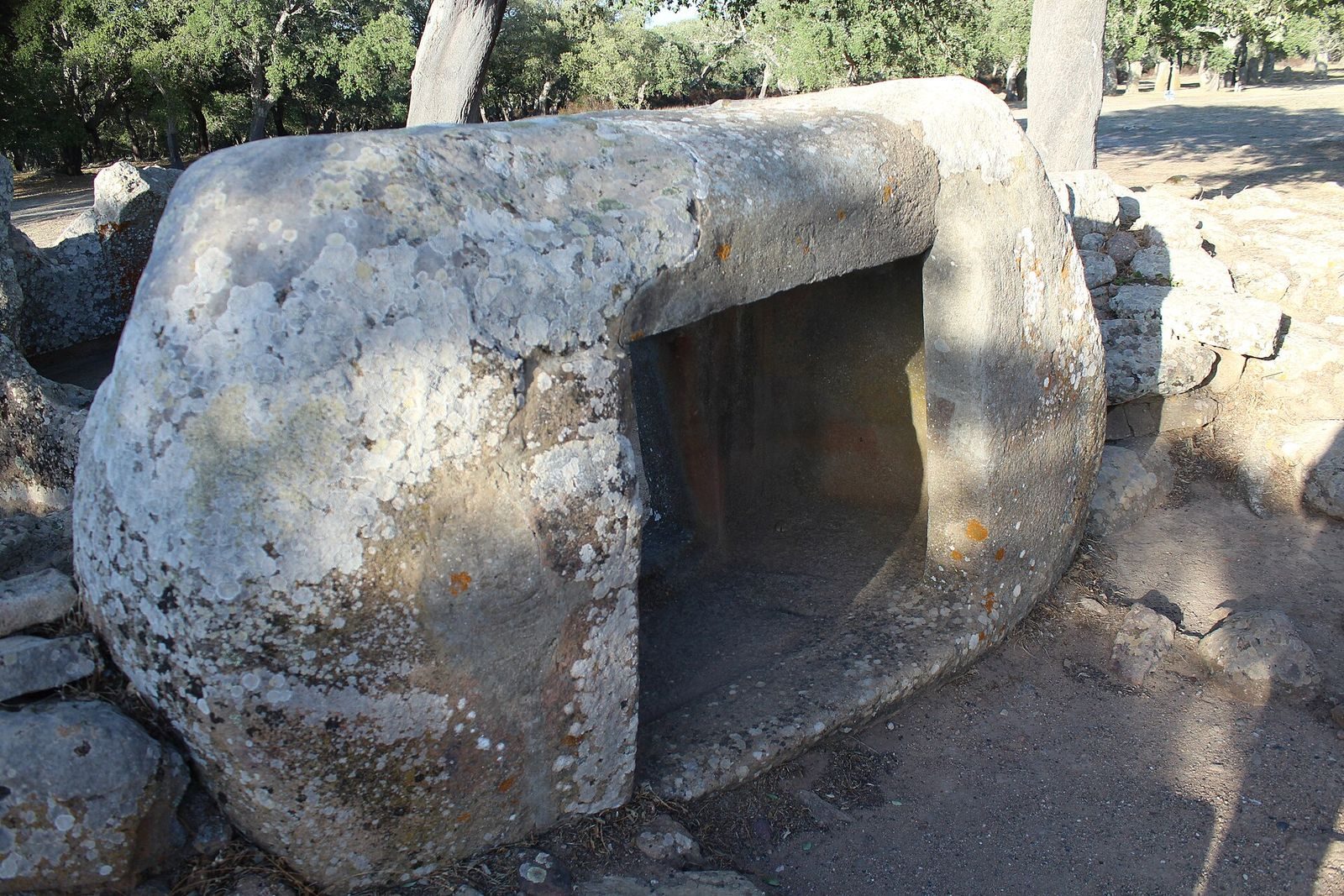
A carefully hammer-worked block of stone forms the core of Tomb II, with small chambers extending from it in a fan-shaped arrangement. A circular ring of stones surrounds the structure, and a wider ring of menhirs with early human-like forms includes some stones set in lines. A low stone circle measuring just over 30 metres across also encloses the tomb, where part of the burial mound survives. The entrance and fragmentary two-cell chamber were made from stone blocks set among upright slabs. A standing stone in front of the tomb is interpreted as a guardian.
Tomb III
About 30 metres north of Tomb I, Tomb III sits within a small elliptical enclosure measuring 7 by 6 metres. Two rows of large blocks form its outer walls, which held the earth-and-stone mound that covered the burial. An east-facing entrance passage, 2.5 metres long and 1 metre wide, is bounded by four upright slabs on each side; some remain about 1 metre high. The central rectangular space measures 0.8 by 0.6 metres and opens east. Upright slabs close its south and west sides, while a stone wall forms the north side. Rubble around the tomb may be the collapsed remains of its mound.
Tomb V and other graves
Tomb V has a four-sided burial chamber enclosed by a ring of stones and approached by a long entrance passage. Larger tombs of this kind have antechambers or side niches, features later characteristic of entrances in the Nuragic tradition. Beyond the road, earth graves have rounded enclosures and flat stone covers. Several smaller rock-cut tombs, known as domus de janas (Sardinian rock-cut tombs), also lie in this part of the site.
Finds and cultural connections
Finds include fragments of Ozieri-culture pottery, a decorated bowl, flint blades, obsidian arrowheads, silver beads, and silver rings whose origin is uncertain. Tomb V yielded two small, finely made flint daggers and two silver necklace elements, among the oldest metal objects found in Sardinia. Flint daggers with long tangs and fine retouch are associated with the Remedello culture, a Copper Age culture of mainland Italy. Stone clubs have been interpreted as evidence of links with the Bell Beaker culture, a widespread late prehistoric European tradition, in northern Sardinia near the end of the Ozieri period.