Castle Beaufort, Luxembourg: A Renaissance Castle and Historic Estate
Site at a Glance
- Popularity
- Very Low
- Country
- Luxembourg
- Primary era
- Early Modern
- Eras represented
- Early Modern
- Civilizations
- Duchy of Luxembourg, Holy Roman Empire, Spanish
- Site type
- Domestic
- Remains
- Castle
On this page9 sections
History
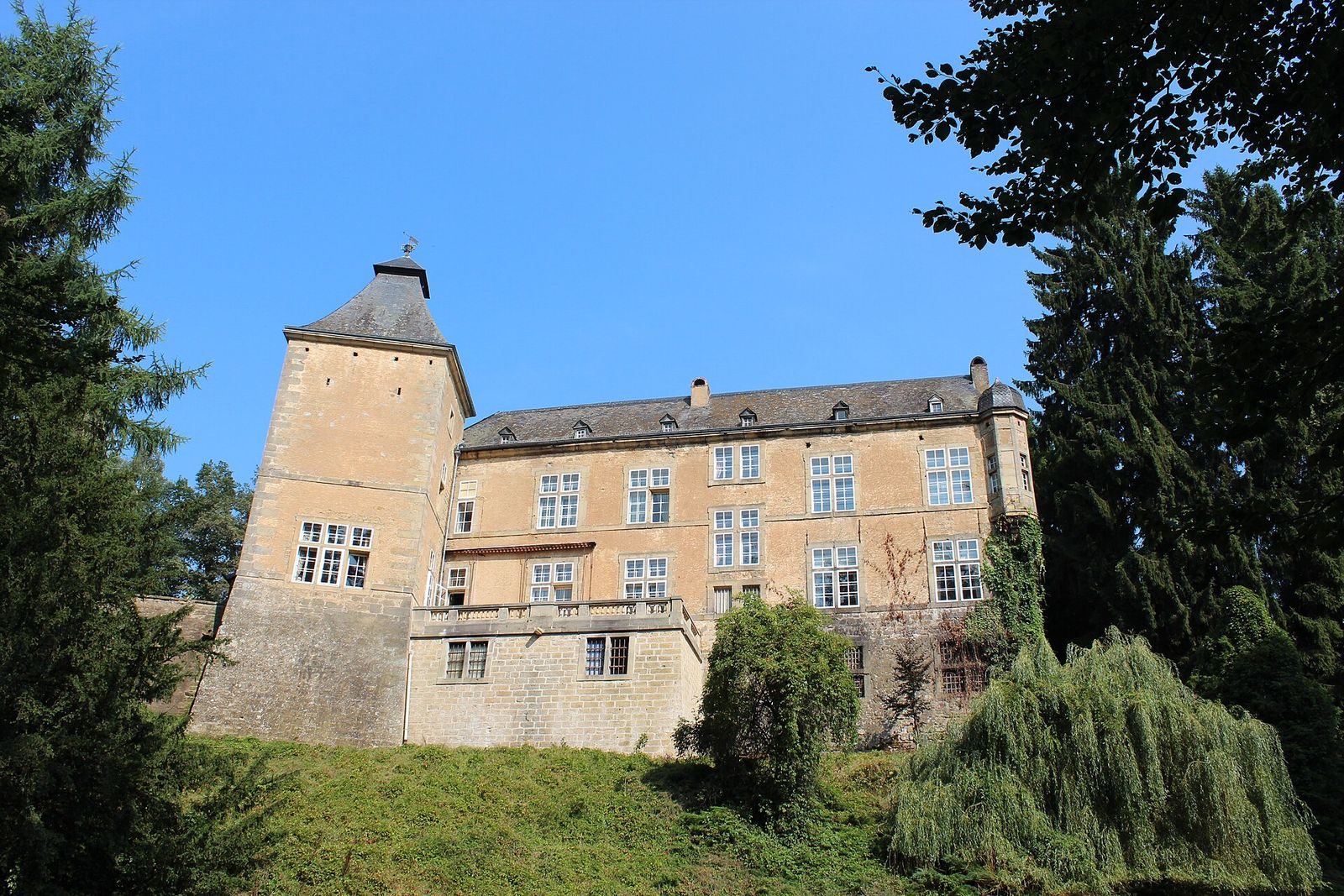
Castle Beaufort is a 17th-century castle in Luxembourg, built in the Renaissance style, a European movement that adapted forms associated with classical antiquity. Construction began in 1643 for Jean de Beck, the governor of the area, and the castle became a residence for his family and later owners of the Beaufort estate.
Construction and the de Beck family
The project was probably directed by Swiss military engineer Isaac de Treybach, a specialist in military construction. De Beck died in a battle near Arras in 1648, before the castle was complete. His son, Jean Georges de Beck, finished the work and lived there with his wife, Antonia von Daun. In 1652, he also had the Donatus Chapel built in nearby woods. Jean Georges’s son Eugène Albert later lived at the castle with his wife, Anna von Botzelaer. The de Beck family remained there until 1698.
Afterward, the estate passed through marriages between the family’s descendants and other noble houses. Maria Regina married Charles Nicolas de Gevigny de la Pointe; later, Joséphine Dorothée married Jean Joseph, Count de l’Épine de la Claireau.
County status and changing ownership
On 17 May 1759, Maria Theresa, the Habsburg monarch who ruled from 1740 to 1780, raised the territory of Beaufort to county status. It comprised Beaufort, Déiljen, Bigelbaach, Konsdref, Bäerdref, Präiteler, Herbourg and Hemstel, as well as the farms Grondhaff, Schéiferei and Dosterthaff, which were leased for limited periods.
Hyacinthe de l’Épine de la Claireau married Louis Gérard de Briey, who sold the estate in either 1774 or 1775 to Pierre Coumont, a cloth merchant from Hodimont, a district of Verviers. In 1788, Coumont’s widow sold it to Jean Théodore, Baron de Tornaco-Vervoy, for 80,000 thalers, a historical silver currency unit.
During the following century, ownership passed through marriages between the Liedekerke-Beaufort and Lannoy-Clervaux families. The owners lived at their ancestral castles and visited Beaufort infrequently. Farming and forestry brought too little income to maintain the buildings, which gradually deteriorated. Edgard de Lannoy-Clervaux, Prince of Rheina-Wolbeck, eventually sold the Beaufort estate.
Renovation and public stewardship
In 1882, an auction in Liège transferred the castle and its associated farm, the Schéiferei, to Henri Even, who had lived and worked there with his family since 1875. Even and his son-in-law Joseph Linckels renovated and partly altered the castle, expanded the farm, and converted some woodland to farmland.
The older castle beside the Renaissance building was cleared of vegetation between 1928 and 1932, and the ruin opened to the public in 1932. Anne-Marie Linckels-Vollmer and her husband, Edmond Linckels, lived in the castle from 1934. After Edmond’s death in 1975, Anne-Marie and the Kuijpers-Fisch family administered the castle and ruin. In 1981, she transferred the castle, ruin and grounds to the Luxembourg state. The association Les amis de l’ancien château de Beaufort was founded that year, with Linckels as its president until her death in 2012. On 16 September 1988, the castle, the older castle and the Donatus Chapel received Luxembourg’s National Monument designation, a formal national heritage-protection status.
Remains
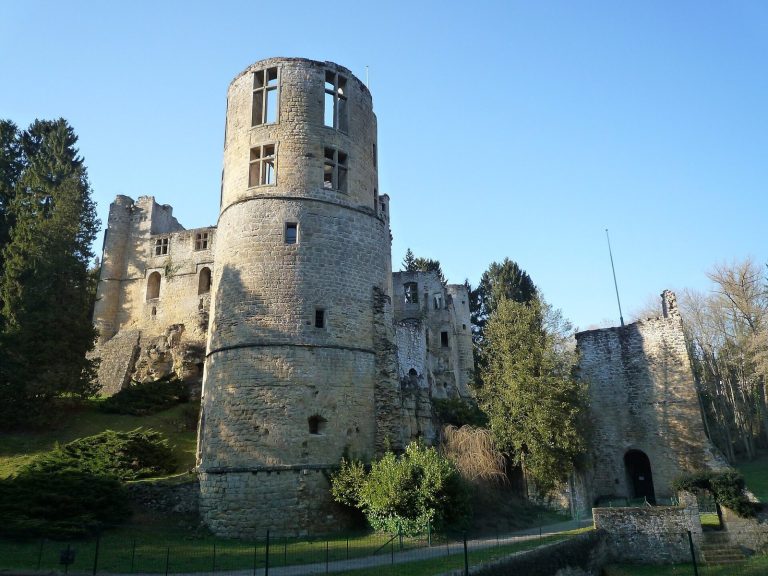
The site brings together the 17th-century Renaissance castle, the ruin of an older castle and the Donatus Chapel in nearby woodland. The Renaissance building has a trapezoidal plan, open toward the older ruin and separated from it by a moat.
Castle complex
Renaissance castle
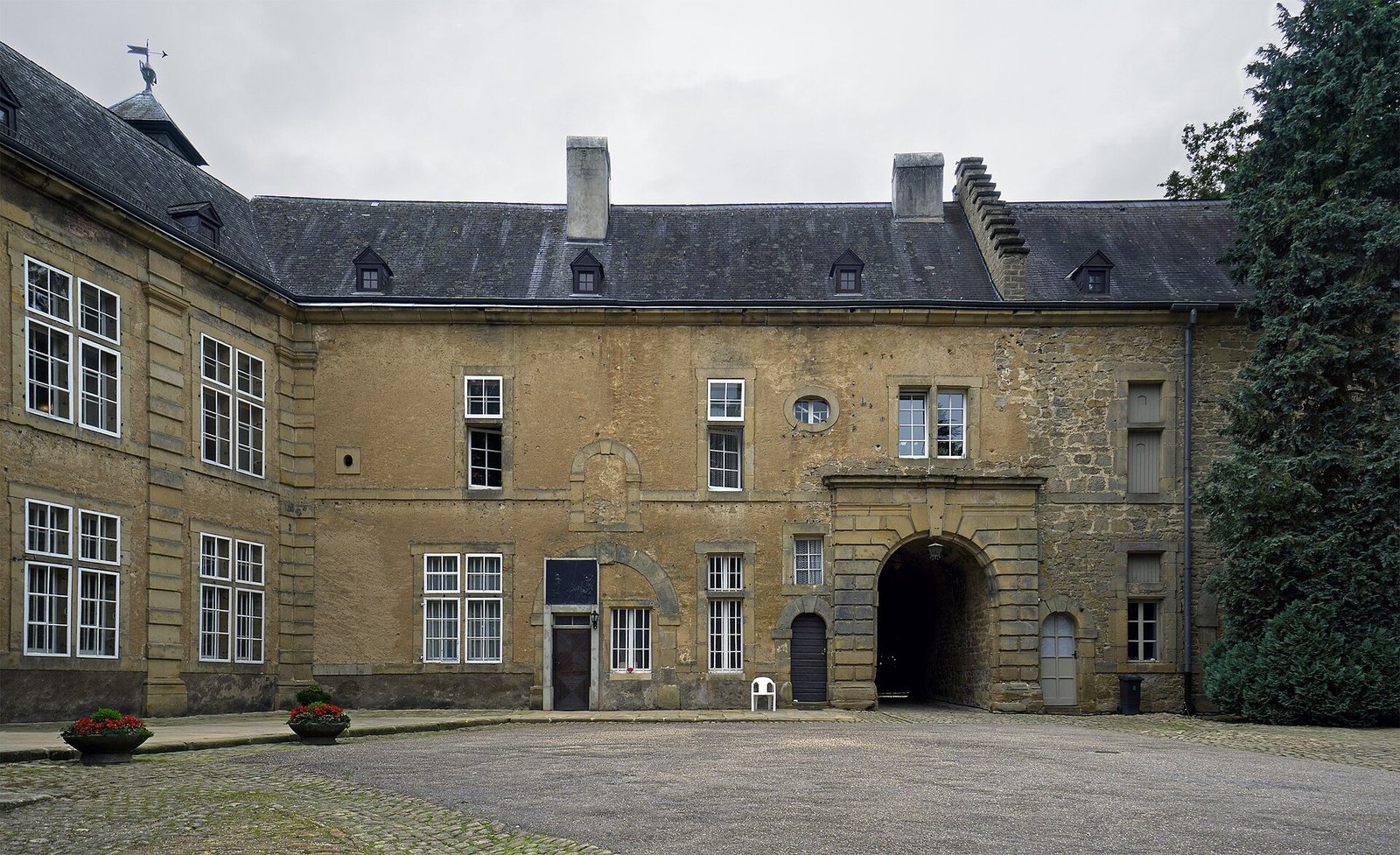
Viewed from the courtyard, the residential building stands to the left of the gate. The other buildings served as farm structures and accommodation for servants, and in the early period also housed soldiers. A water-filled moat fronts the gate, with a drawbridge spanning it. Above the entrance are the de Beck family coat of arms and the date 1649.
Older castle
The older castle survives as a ruin beside the Renaissance building. It had stood uninhabited for about 300 years and was partly used as a source of building stone. Some of its stones went into a mill built in 1740; that mill was later demolished.
Donatus Chapel
The chapel stands in the woods near the castle complex.