Dolmen D6: A Funnel Beaker Passage Grave in the Netherlands
Site at a Glance
- Popularity
- Low
- Country
- Netherlands
- Primary era
- Stone Age
- Eras represented
- Stone Age
- Civilizations
- Unclassified
- Site type
- Burial
- Remains
- Tomb
On this page12 sections
History
Prehistoric origins
Dolmen D6 is a passage grave, a burial chamber reached through an entrance passage or opening, at the eastern edge of Tynaarlo in the Netherlands. It was built by the Western Group of the Funnel Beaker culture, a prehistoric farming culture named for its distinctive funnel-shaped pottery. The tomb is broadly dated to 3470–2760 BCE, with construction more specifically estimated to 3400–3100 BCE.
D6 was probably one of two megalithic tombs in the area. Its companion, D6a, lay to the east and was destroyed at an unknown date. In 1928, remains attributed to D6a were investigated.
Early records and antiquarian study
D6 may have appeared on a map in 1570, but its first secure written mention dates to 1711. Its state of preservation attracted painters in the eighteenth and nineteenth centuries. In 1822, it was described as the best-preserved of the Dutch prehistoric tombs.
Leonhardt Johannes Friedrich Janssen visited the tomb in 1847 and included it in an overview of Dutch megalithic tombs published the following year, with descriptions and schematic plans. In 1874, archaeologist and museum curator Willem Pleyte and photographer Jan Goedeljee systematically photographed the tombs of Drenthe; Pleyte then made prints from their photographs. Museum director Conrad Leemans travelled to Drenthe in 1877, with archaeological plans drawn by Jan Ernst Henric Hooft van Iddekinge, but Leemans’s report was not published.
Concern in England that restoration in the Netherlands might alter the tombs’ original appearance led the Society of Antiquaries of London, a British learned society devoted to history and antiquities, to commission William Collings Lukis and Henry Dryden to record them. In 1878, the two antiquarians surveyed D6 as part of their work on 40 tombs. Their report was not printed at the time; Dutch archaeologist Wijnand van der Sanden published their work in 2015.
Ownership, care, and modern recording
The Dutch state bought D6 in 1880 from members of Tynaarlo’s common-land community. Between 1904 and 1906, Willem Johannes de Wilde prepared plans, photographs, and detailed descriptions of the surviving Dutch tombs, but his notes on D6 have been lost. Albert Egges van Giffen recorded the tomb in 1918 for his atlas of Dutch megalithic monuments.
D6 has never been systematically excavated or restored. Local residents and the Dutch forestry service, Staatsbosbeheer, maintain it. It has been a national monument since 1993. In 2017, the Province of Drenthe and the University of Groningen, through the Gratama Foundation, used photogrammetry, a method of measuring and modeling from photographs, to include D6 in a three-dimensional atlas.
Remains
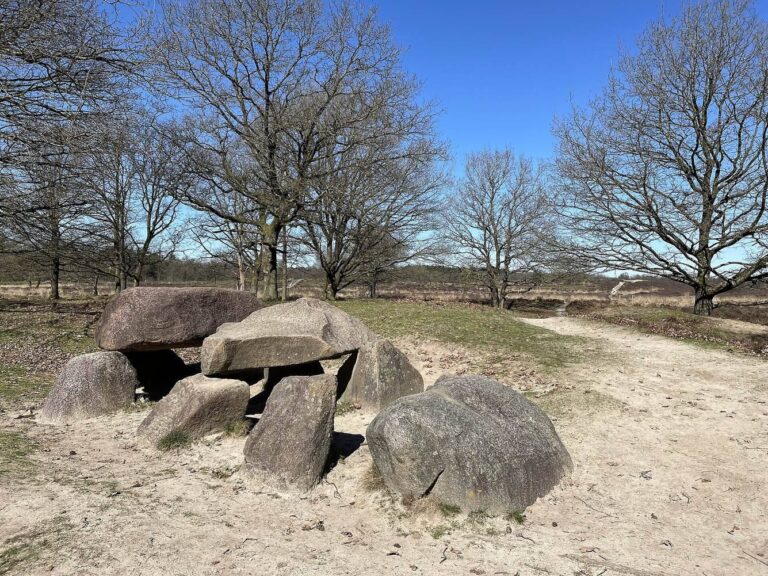
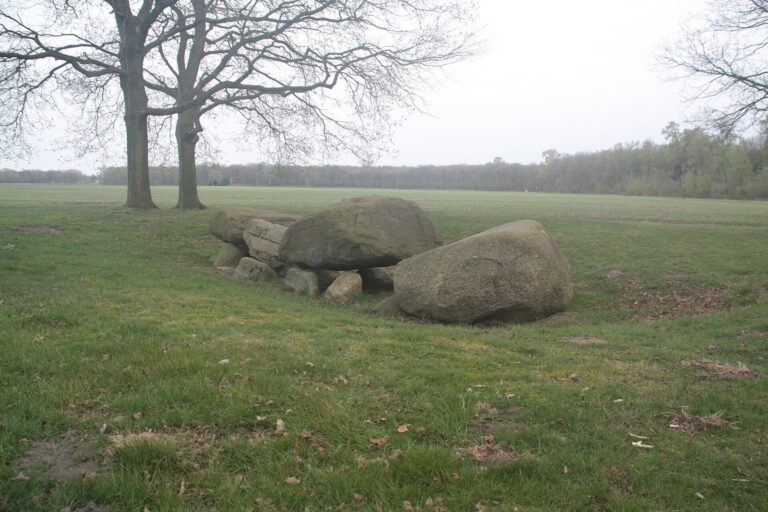
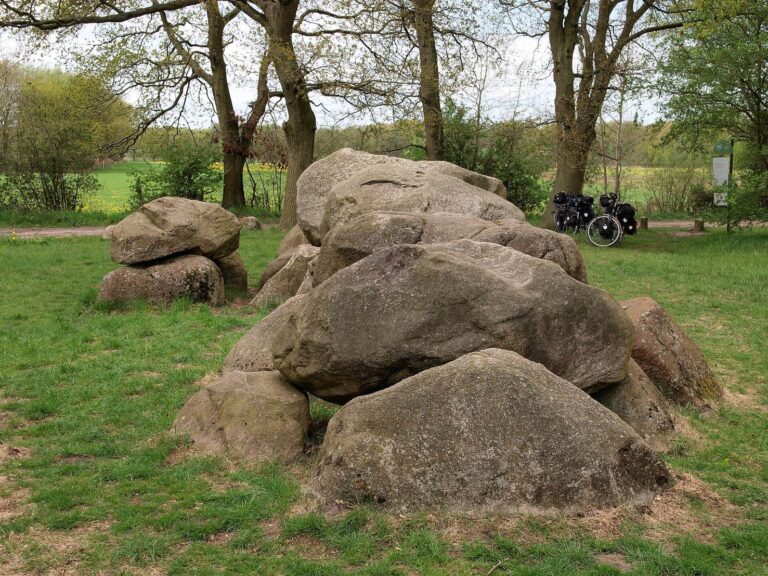
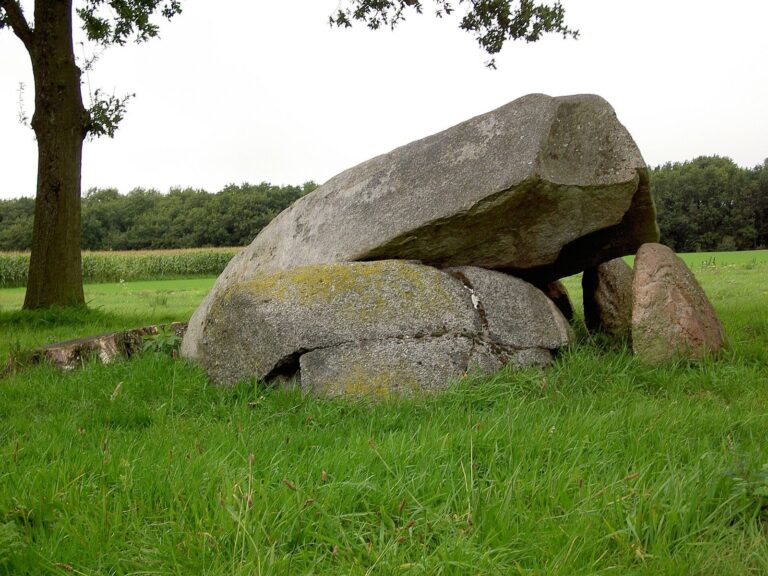
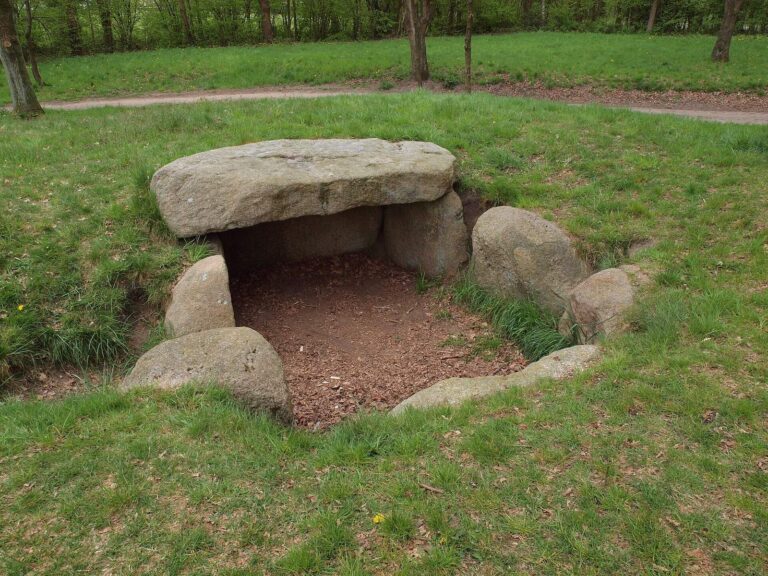
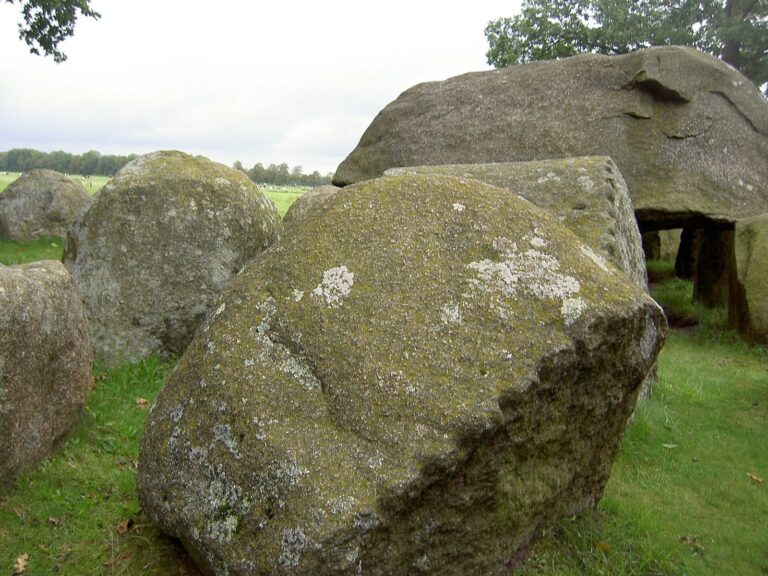
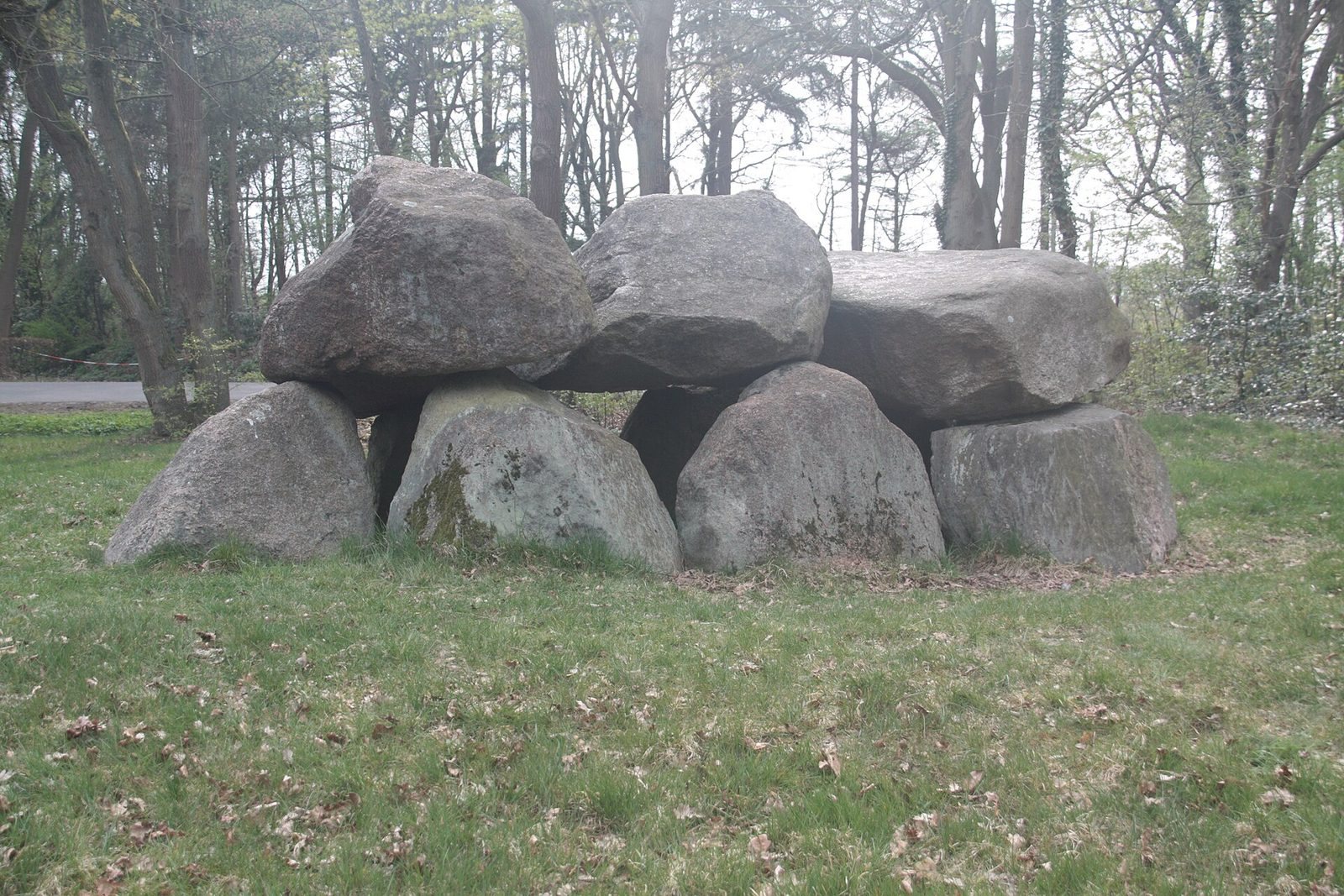
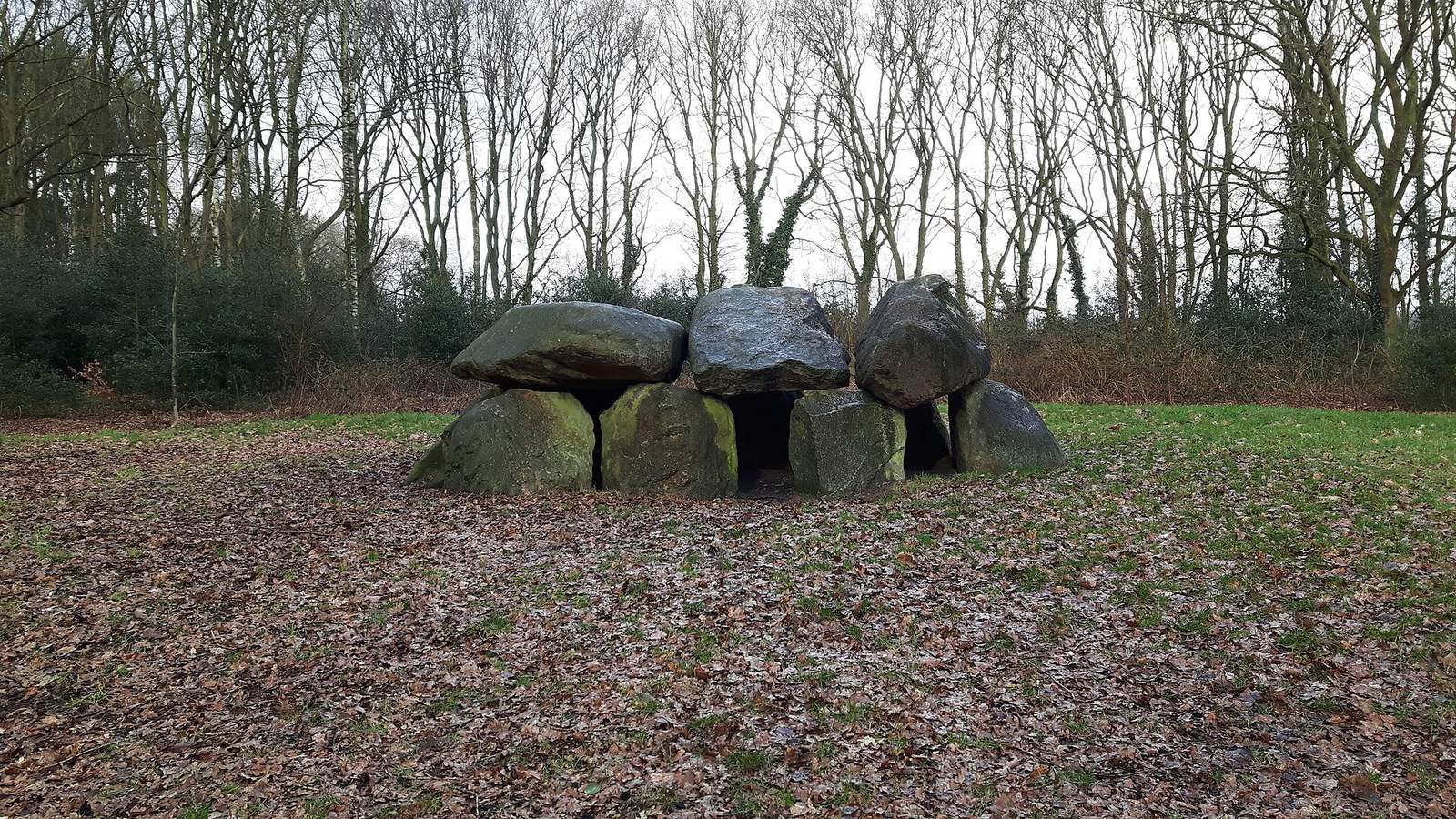
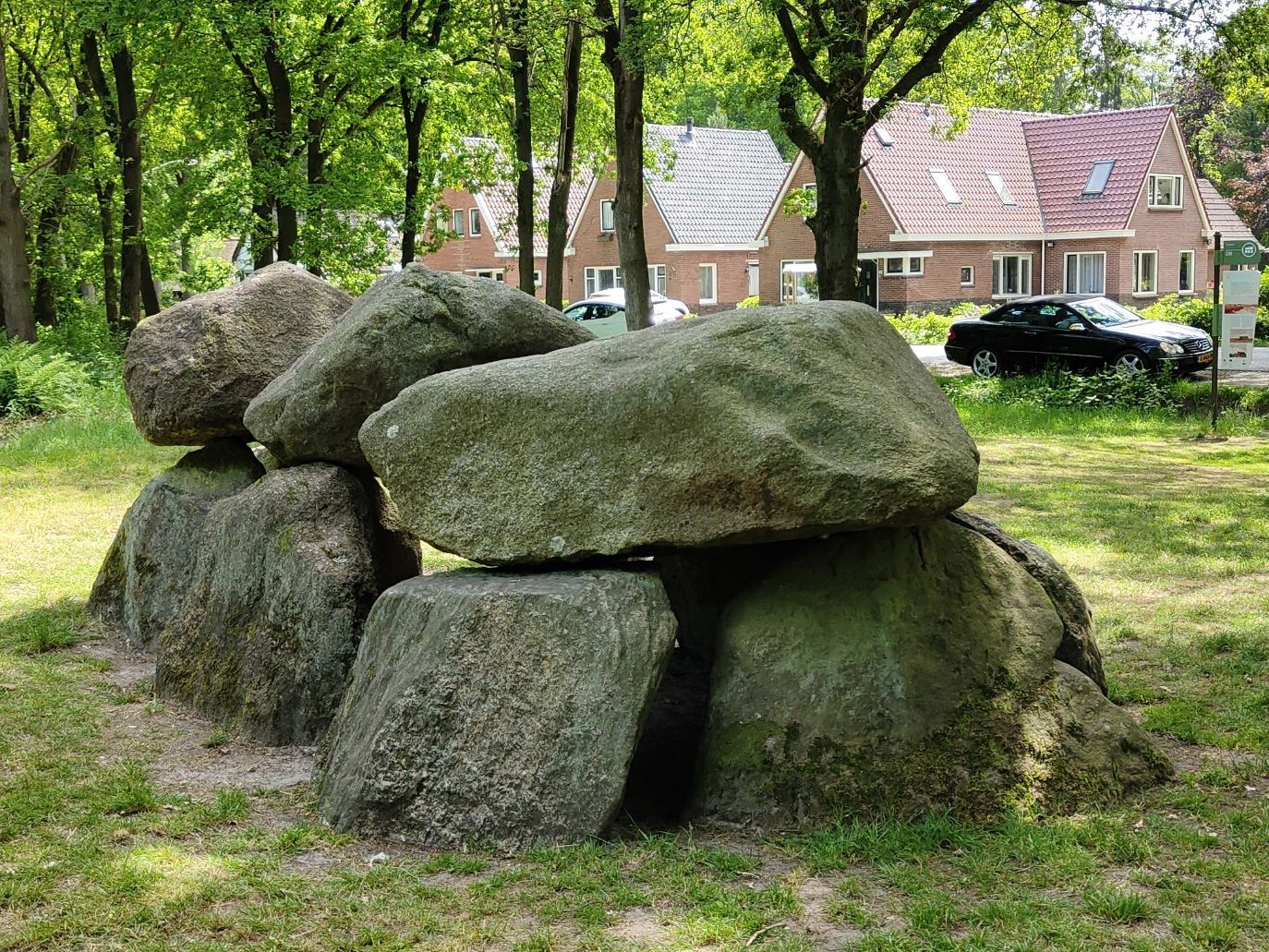
D6 is a stone-built burial chamber immediately north of Hunebedstraat, set at Tynaarlo’s eastern edge in Drenthe. The surviving structure includes its chamber, roof stones, and a south-facing entrance opening.
D6
Chamber and entrance
The chamber runs southeast–northwest and measures 5.5 m long by 3.1 m wide. Three pairs of supporting stones line its long sides, with an end stone at each short end; three capstones cover the chamber and remain in their original positions. The entrance opens from the southwest long side, between the first and second supporting stones when counted from the southeast. A 2011 investigation found that pink granite was used for most of the stones.
Mound traces
In 1878, Lukis and Dryden noted traces of a burial mound about 25 m in diameter, after earth had recently been removed from it. A 1861 painting by Willem Roelofs shows open ground around the tomb, contrasting with the wooded surroundings described today.
Finds and depictions
Lukis and Dryden collected a few pottery sherds from the chamber. Soil investigations have also yielded flint tools, axes, arrowheads, pottery fragments, and amber beads. Two clay bottle necks found east and west of the tomb by Textor, an employee at the railway station, were donated to the Drents Museum.
A description and model of the intact tomb were made in 1845. Roelofs’s painting followed in 1861, and Bernardus Bueninck made a commissioned wall plate titled The Heath with a Dolmen at Tynaarlo.
D6a
Chamber and associated features
The destroyed companion tomb lay east of D6 and was probably oriented east-southeast–west-northwest. Its chamber measured 4.8 m by 2 m, with four pairs of supporting stones along the long sides and an end stone at each short end. Investigators also recorded six postholes and soil discolorations between the stone-setting holes, probably evidence of a post structure associated with the tomb.
Finds
Finds attributed to D6a include 19.4 g of cremated human bone from two people whose ages and sexes could not be determined. Funnel Beaker pottery, flint axes, arrowheads, and amber beads were also recovered, along with sherds of end-Neolithic Bell Beaker pottery, a type named for its bell-shaped form. The tomb yielded 1.5 g of burned animal bone; whether it had been used as tool material or offered as food could not be established.